DOT Oral Fluid Testing: 2026 Rollout, Compliance & Implementation Guide

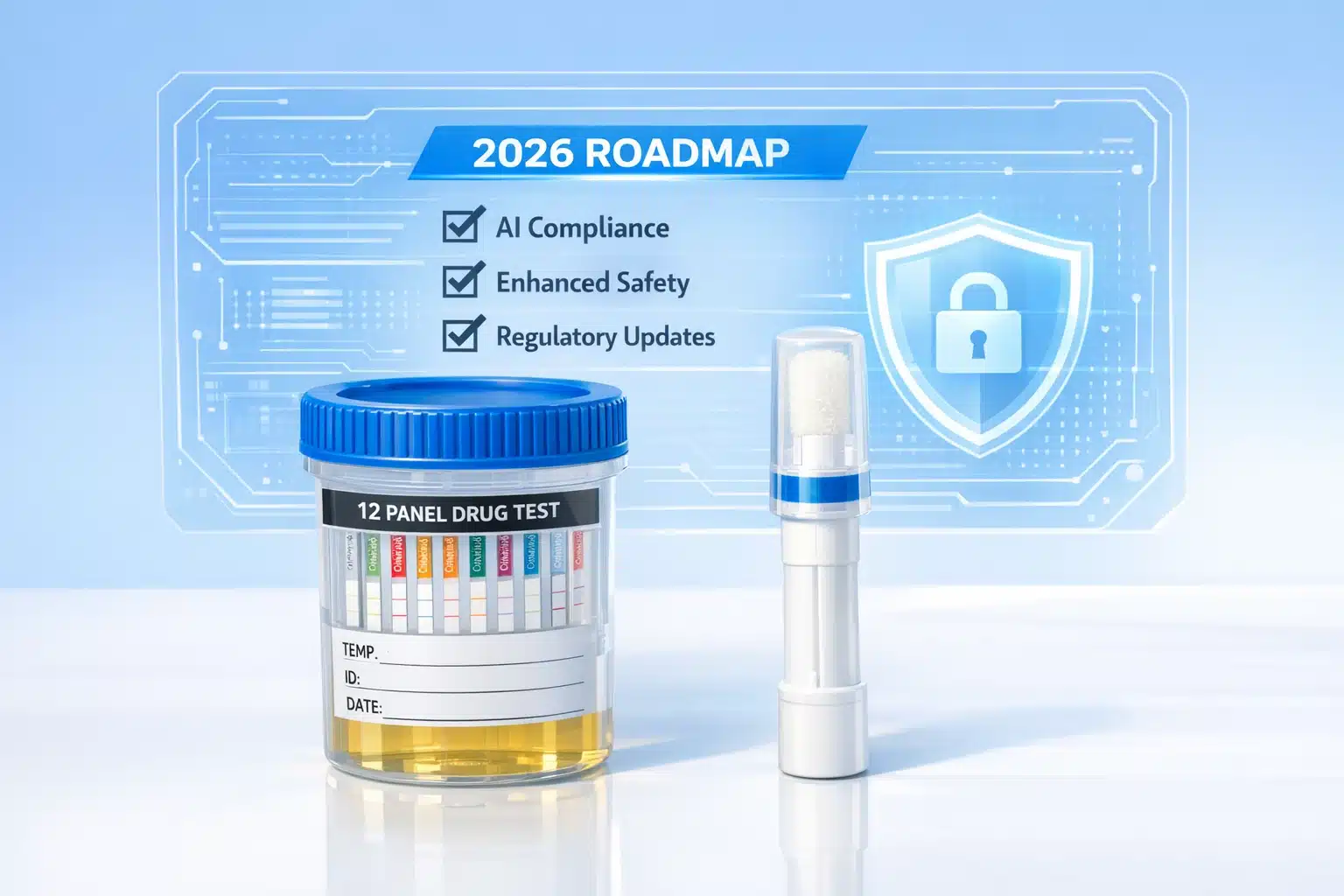
The drug testing landscape is experiencing its most significant shift in decades, and it’s driven by a single, alarming number: a 600% surge in substituted urine specimens. According to the 2024 Quest Diagnostics Index, specimen tampering has reached crisis levels, making traditional testing protocols more vulnerable than ever.
For HR managers, DERs, and fleet operators, this isn’t just a statistic; it’s a direct threat to workplace safety and compliance. As regulatory bodies like the Department of Transportation (DOT) authorize new technologies like oral fluid testing, the key question is no longer what is coming, but how to navigate the complicated transition period we’re in right now. This guide provides the roadmap you need to stay compliant, secure your program, and prepare for the future.
What Is DOT Oral Fluid Testing?
DOT oral fluid testing is a federally authorized drug testing method that analyzes saliva collected from inside an individual’s mouth to detect the recent presence of prohibited substances. Unlike urine testing, which often identifies drug use over several days, oral fluid testing generally focuses on a shorter detection window, making it particularly useful for identifying more recent drug exposure.
The Department of Transportation approved oral fluid testing to strengthen specimen security and reduce opportunities for substitution, adulteration, and other forms of collection fraud. Once fully operational, employers covered by DOT regulations will be able to utilize either urine or oral fluid collections depending on regulatory requirements, laboratory availability, and operational considerations.
Because oral fluid collections are directly observed throughout the collection process, they significantly reduce opportunities for specimen tampering while maintaining standardized chain-of-custody procedures.
Why DOT Oral Fluid Testing Matters
The authorization of DOT oral fluid testing reflects broader changes occurring throughout workplace drug testing. Employers face increasing challenges involving specimen substitution, synthetic urine products, adulteration attempts, and evolving cannabis legislation. Oral fluid testing addresses several of these concerns by providing a collection process that is more resistant to tampering while offering improved insight into recent drug use.
For safety-sensitive industries such as transportation, logistics, construction, and commercial fleet operations, stronger specimen integrity directly supports regulatory compliance, workplace safety, and defensible employment decisions. As implementation expands, understanding how oral fluid testing complements existing drug testing programs will become increasingly important.
The 2026 regulatory pulse: authorized vs. operationally active
The single biggest point of confusion in 2026 is the gap between what is legally allowed and what is practically available. The DOT’s final rule authorized oral fluid testing, but the rollout is stalled by a critical bottleneck: a lack of HHS-certified laboratories to process the specimens.
This leaves many companies in limbo. You want the benefits of recent-use detection and reduced tampering risk, but the infrastructure isn’t fully in place. Understanding this distinction is the first step toward building a resilient testing program.

A quick “authorized vs operational” view helps employers plan around the DOT oral-fluid bottleneck and choose interim testing protocols without guessing.
This delay means that while planning for the future is essential, maintaining a robust, reliable present-day program is non-negotiable.
Understanding the DOT Rollout
The DOT oral fluid testing rollout consists of multiple interconnected components beyond simply authorizing a new collection method. Successful nationwide implementation depends on certified laboratories, qualified collectors, standardized collection devices, laboratory reporting procedures, and updated operational guidance.
Until each part of this infrastructure becomes fully operational, many employers will continue relying primarily on urine testing while preparing internal policies for future oral fluid collections. This phased implementation allows organizations to modernize their drug testing programs without sacrificing regulatory compliance during the transition period.
Employers should also monitor future DOT guidance, laboratory certifications, and procedural updates as implementation continues to evolve.
Why the future is arriving now: the specimen substitution crisis
The push toward new testing methods isn’t just about convenience; it’s a direct response to escalating security threats. The Quest Diagnostics Index revealed that in addition to the 600% rise in substituted specimens, the rate of invalid specimens jumped by 45.2%. Cheating is more sophisticated and widespread, making unobserved urine collection a significant liability.
At the same time, post-accident marijuana positivity remains at a decade-high of 7.3%, highlighting the urgent need for tests that indicate recent use rather than historical presence. This is where different testing matrices show their unique strengths.

Compare matrices at a glance to match your risk profile—recent-use needs, tampering exposure, and operational readiness—before you change vendors or policies.
While 31% of employers plan to add oral fluid testing in the next year, according to a 2026 NDASA survey, the immediate solution is to fortify existing protocols. High-quality, multi-panel urine cups remain the industry standard for reliable, comprehensive screening that can be implemented on-site today.
Understanding Drug Testing Matrices
A drug testing matrix refers to the biological specimen used to detect drug use. Urine, oral fluid, hair, and blood each provide different detection windows, collection procedures, strengths, and limitations depending on the testing objective.
Urine testing remains the most widely used matrix for federally regulated workplace drug testing because of its established laboratory infrastructure and broad regulatory acceptance. Oral fluid testing offers improved protection against specimen substitution while emphasizing recent-use detection. Hair testing provides a substantially longer detection window but is currently not authorized for DOT-regulated testing. Blood testing is generally reserved for specialized medical or forensic situations rather than routine workplace screening.
Understanding how each matrix complements different testing objectives allows employers to build more resilient drug testing programs while preparing for future regulatory developments.
Your oral fluid transition roadmap
Instead of waiting, you can take proactive steps to prepare for the future while strengthening your program now. This phased approach turns the “legal but not available” challenge into a clear, actionable plan.

A phased plan turns the “legal but not available” oral-fluid era into an actionable rollout—policy updates, dual-matrix operations, and a bottleneck fallback until labs scale.
Preparing Your Drug Testing Program
A well-designed workplace drug testing program should be flexible enough to accommodate evolving regulations without requiring significant operational disruption. Organizations should review written drug testing policies, employee handbooks, collection procedures, vendor agreements, and documentation practices to ensure they remain compatible with both urine and future oral fluid testing.
Preparation should also include staff education, collector training, internal communication planning, and regular policy reviews. Building these operational foundations now enables employers to respond more efficiently when DOT oral fluid testing becomes fully available nationwide.
Step 1: Update your policies for “dual-matrix” testing
Your company’s drug testing policy is your primary legal defense. Update it now to explicitly allow for multiple testing methods, including both urine and oral fluid. This gives you the flexibility to use the best available option without having to redraft your entire policy when labs come online.
Step 2: Plan for the observed urine fallback
The DOT has proposed a critical interim solution: using directly observed urine testing when an oral fluid collection site or certified lab isn’t available. This ensures you can still conduct a required test under secure conditions. Integrating high-quality testing supplies into your on-site workflow prepares you for this fallback and gives you more control over the collection process.
Step 3: Vet suppliers and prepare for procurement
Start researching suppliers for new testing equipment now. While you may not be able to implement DOT-compliant oral swabs tomorrow, you can evaluate vendors for non-regulated testing and have them ready. Look for providers who offer FDA-approved and CLIA-waived products to ensure accuracy and reliability.
Comparing Drug Testing Methods
Every drug testing method offers unique advantages depending on the employer’s objectives. Urine testing continues to serve as the established standard for federally regulated workplace testing because of its mature laboratory network and broad regulatory acceptance. Oral fluid testing strengthens specimen integrity while providing a shorter detection window that better reflects recent drug use.
Hair testing offers an extended historical record of drug use and is often utilized for non-DOT employment screening where long-term patterns are relevant. Blood testing remains valuable for medical or forensic investigations but is generally impractical for routine workplace testing because of cost, invasiveness, and operational complexity.
Rather than viewing these methods as competing technologies, employers should understand how each testing matrix supports different compliance, safety, and risk-management objectives.
Integrating AI and new tech: fairness, privacy, and the FHWA
Beyond new collection methods, technology is changing how testing programs are managed. AI is being used to improve the fairness of random testing pools, helping employers avoid potential EEOC bias claims. These systems can create truly random selections without human intervention.
However, this innovation comes with new compliance challenges, especially regarding data privacy. Furthermore, new technologies must integrate with federal databases like the Federal Highway Administration (FHWA) Clearinghouse. As you evaluate new tech, ensure it comes with clear compliance guardrails.

These guardrails help teams adopt AI-enabled testing tools while protecting against bias claims, privacy exposure, and disputes—turning innovation into defensible compliance.
Understanding AI Compliance
AI compliance within workplace drug testing focuses on ensuring automated technologies operate fairly, transparently, securely, and consistently. Organizations adopting AI-supported tools should establish clear governance policies covering algorithm oversight, employee privacy, record retention, cybersecurity, and periodic fairness reviews.
Maintaining detailed audit trails allows employers to demonstrate that automated systems support objective decision-making while reducing the risk of bias claims or regulatory disputes. Human review should remain part of every critical compliance process involving employee testing decisions.
Evaluating Drug Testing Vendors
Choosing a qualified testing vendor involves more than comparing product pricing. Employers should evaluate laboratory capabilities, regulatory expertise, collection services, electronic reporting, customer support, turnaround times, chain-of-custody procedures, and product certifications before selecting a provider.
Suppliers offering FDA-cleared products, CLIA-waived testing solutions where appropriate, and experience supporting DOT-regulated employers may provide additional confidence during the transition toward oral fluid testing. Establishing long-term vendor relationships also improves consistency across workplace drug testing programs.
The “impairment vs. presence” shield in an era of legal cannabis
With varying state laws on cannabis, employers face a growing risk of wrongful termination lawsuits. The legal conversation is shifting from simple “presence” of a substance to evidence of recent use that may correlate with impairment.
This is a move from punitive detection to preventive safety. Oral fluid testing’s shorter detection window (typically 5-48 hours) provides a much better indicator of recent use compared to urine. This data helps you make more defensible decisions that are focused on maintaining a safe workplace, not punishing off-duty conduct.
Take control during the transition
The future of drug testing promises greater accuracy and security, but navigating the current transition is the most important challenge for 2026. While the industry awaits full operational capacity for oral fluid testing, securing your current program against the 600% rise in tampering is the most critical action you can take.
By implementing a robust on-site testing protocol with reliable, FDA-approved drug testing supplies, you build a resilient program that is compliant today and ready for tomorrow. Explore our comprehensive testing solutions to ensure your workplace remains safe, productive, and defensible.
Common DOT Oral Fluid Testing Myths
Misunderstandings surrounding DOT oral fluid testing have become increasingly common as employers prepare for implementation. Addressing these misconceptions helps organizations make informed compliance decisions while avoiding unnecessary operational changes.
One common misconception is that oral fluid testing immediately replaces urine testing. In reality, urine testing remains the primary DOT testing method until oral fluid collection infrastructure becomes fully operational through certified laboratories and approved collection processes.
Another myth is that every laboratory can already process DOT oral fluid specimens. Federal regulations require testing to be performed through appropriately certified laboratories, and laboratory availability remains one of the primary factors affecting implementation timelines.
Some employers also assume oral fluid testing detects every instance of historical drug use. Oral fluid testing generally emphasizes more recent drug exposure, making it different from urine or hair testing, each of which serves different testing objectives.
Finally, adopting AI-supported compliance software does not automatically ensure regulatory compliance. Organizations remain responsible for policy enforcement, recordkeeping, employee privacy, and compliance oversight regardless of the technology used to administer testing programs.
Choosing the Right Drug Testing Strategy
The most effective workplace drug testing strategy depends on the organization’s industry, regulatory obligations, workforce size, operational risks, and safety objectives. DOT-regulated employers should evaluate current compliance requirements while preparing for future oral fluid implementation rather than making unnecessary operational changes before infrastructure is available.
Many employers will continue relying on urine testing while incorporating policy language, vendor evaluations, and internal planning that supports future oral fluid collections. Others may implement oral fluid testing immediately within non-DOT testing programs where appropriate while maintaining separate federally regulated procedures.
A comprehensive strategy should balance compliance, operational efficiency, specimen integrity, employee privacy, technology adoption, and long-term adaptability as workplace drug testing regulations continue evolving.