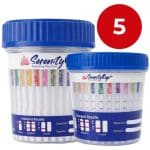
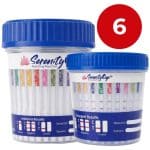
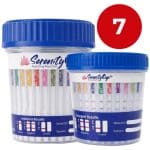
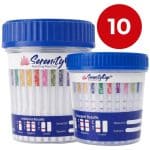
10 Panel Dip Card
10 Panel Dip Cards are a versatile and eye-catching marketing solution designed to present
detailed information in a compact, foldable format. Featuring multiple panels that unfold smoothly,
they allow businesses to showcase products, services, or promotions in an organized and engaging
way. Ideal for brochures, menus, and promotional handouts, these cards combine practicality with a
professional appearance, making them perfect for leaving a lasting impression on customers.

Showing all 3 results

Dip card 10 Panel Detects ETG, FEN & OPI, Serenity Multi level Dip card. As low as $0.94
AMP, BUP, BZO, COC, EtG, FEN, MET, OPI/MOR, PCP, THCForensic UseAs low As$0.94 $0.94 - $1.49
Dip Card 10 Detects K2, KRA, ETG & FEN, Serenity Multi level Dip card As low as $0.94
BUP, BZO, COC, EtG, FEN, K2, KRA, MET, OPI/MOR, THCForensic UseAs low As$0.94 $0.94 - $1.49
Dip card 10 Panel CLIA, detecting OPI & BUP, CLIA Waived & FDA Approved, Serenity Multi-Level Dip Card. As low as $0.99
AMP, BUP, BZO, COC, MDMA, MET, MTD, OPI/MOR, OXY, THCCLIA WAIVED, FDA ApprovedAs low As$ 0.99 $0.99 - $1.59Bulk Pricing that Cuts the Budget in Half
Priority Shipping For Bulk Orders.
Dedicated Wholesale Representative.
Quality That Is Reliable For the Nation.
10 Panel Multi Dip Card Test specifications Red highlighted drug codes are not present on all three cards. See variant table below for which card includes which panels. All three cards require a separate urine collection container. Results in 5 minutes. 99% accuracy. Presumptive positives on Forensic Use Only cards require GC-MS or LC-MS/MS confirmation before formal action. For bulk pricing call 561-897-9238 or email [email protected].
Remove the drug test cup from its sealed pouch and use it as soon as possible. Have the subject provide a urine sample directly into the cup, filling to the indicated line.
At 2–4 minutes, verify the temperature of the specimen using the built-in temperature strip. A green indicator confirms the sample is valid and within the acceptable range of 90–100°F.
Peel back the label when ready to interpret results. Read results within 5 minutes of collection. Do not read results after 8 minutes, as the extended window may affect accuracy.




Key Features of 10 Panel Dip Card
Drug Code
Full Substance Name
Cutoff Level
What It Catches
AMP
Amphetamines
1000 ng/mL
Adderall, Vyvanse, Dexedrine, prescription and illicit amphetamines
BUP
Buprenorphine
10 ng/mL
Suboxone, Subutex, buprenorphine — detects MAT compliance at therapeutic concentrations not visible on a standard OPI strip
BZO
Benzodiazepines
300 ng/mL
Xanax, Valium, Klonopin, Ativan, Restoril, Halcion and the full benzodiazepine class
COC
Cocaine / Benzoylecgonine
300 ng/mL
Cocaine, crack cocaine — detects the primary urinary metabolite benzoylecgonine for 2 to 4 days post-use
EtG
Ethyl Glucuronide (alcohol metabolite)
300 ng/mL
Alcohol consumption up to 80 hours post-ingestion. Detects beer, wine, and spirits via urinary metabolite — not present in CLIA Waived card
FEN
Fentanyl
20 ng/mL
Illicit fentanyl, fentanyl patches, fentanyl lozenges, primary fentanyl analogs — added to SAMHSA federal workplace panels July 2025. Not present in CLIA Waived card
K2
Synthetic Cannabinoids (K2/Spice)
50 ng/mL
K2, Spice, synthetic marijuana — does not cross-react with THC. Requires its own dedicated antibody panel. Present only in K2/KRA/EtG/FEN card
KRA
Kratom (Mitragyna speciosa)
500 ng/mL
Kratom powder, capsules, tea — acts on opioid receptors but does not trigger OPI, BUP, or MTD panels. Only detectable with dedicated KRA antibody. Present only in K2/KRA/EtG/FEN card
MDMA
Methylenedioxymethamphetamine
500 ng/mL
Ecstasy, Molly — present only in the CLIA Waived card. May not appear reliably on a standard AMP strip at recreational concentrations
MET
Methamphetamine
1000 ng/mL
Crystal meth, street methamphetamine — independent dedicated panel, does not share detection with the AMP strip
MTD
Methadone
300 ng/mL
Methadone maintenance medication — does not appear on standard OPI strip. Present only in the CLIA Waived card
OPI/MOR
Opiates / Morphine
300 ng/mL
Heroin (via 6-MAM metabolite), codeine, morphine — present across all three cards
OXY
Oxycodone
100 ng/mL
OxyContin, Percocet, Roxicodone — does not appear on standard OPI strip. Present only in the CLIA Waived card
PCP
Phencyclidine
25 ng/mL
PCP (angel dust) — dissociative hallucinogen. Present only in the EtG/FEN/OPI card
THC
Tetrahydrocannabinol (Marijuana)
50 ng/mL
Cannabis, marijuana, edibles, wax, concentrates — present across all three cards
Choose Your 10 Panel Configuration
Product
Panels Included
Classification
From
10 Panel Dip Card with EtG, FEN and OPI
Best for drug courts, corrections, probationAMP | BUP | BZO | COC
EtG | FEN | PCP
MET | OPI/MOR | THCForensic Use Only
$1.09
10 Panel Dip Card with K2, KRA, EtG and FEN
Best for treatment, MAT, sober living, harm reductionBUP | BZO | COC
EtG | FEN | K2 | KRA
MET | OPI/MOR | THCForensic Use Only
$1.09
10 Panel CLIA Waived Dip Card
Best for workplace, clinical, pain management, MAT documentationAMP | BUP | BZO | COC
MDMA | MTD | OXY
MET | OPI/MOR | THCCLIA Waived
FDA Approved$1.09
Easy Steps To Use The 10 Panel Dip Card
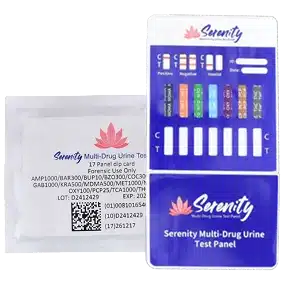
Step 1 — Collect
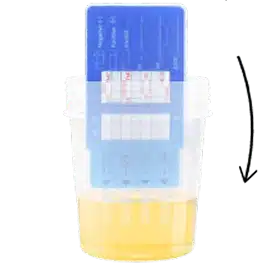
Step 2 — Dip & Wait
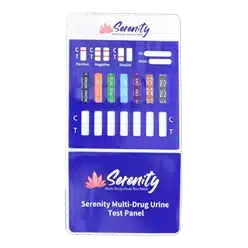
Step 3 — Read

Positive
Two colored bands appear — one in the control region (C) and one in the test region (T). This indicates no drug was detected above the cutoff level.

Negative
Two colored bands appear, one in the control region (C) and another in the test region (T) for the drug in question.

Invalid
The control band fails to appear entirely. Discard the test and retest with a fresh cup within 3 minutes. If the problem persists, contact your distributor.
What are in the 10 Panel Dip Card | CLIA Waived, FEN with EtG, and K2 with Kratom Variants
The 10 panel dip card category from 12 Panel Now contains three distinct Serenity Multi-Level Dip Cards that share the same format, the same $1.09 bulk price, and the same one-step 5-minute result process, but cover three entirely different substance profiles. This is not one product with configuration options. These are three separate card formulations, each built for a different screening population and threat environment. Choosing the right card means matching the substance profile to the substances your program actually needs to detect.
The three 10 panel dip cards and what makes each one distinct:
10 Panel Dip Card with EtG, FEN and OPI — Forensic Use Only
Panels: AMP, BUP, BZO, COC, EtG, FEN, MET, OPI/MOR, PCP, THCThis card trades the MDMA, MTD, and OXY panels found in the CLIA Waived version for three critical forensic-use additions: Fentanyl (FEN) at 20 ng/mL, Ethyl Glucuronide (EtG) at 300 ng/mL for alcohol metabolite detection up to 80 hours post-consumption, and PCP at 25 ng/mL. The practical meaning of this swap is significant. Methadone and Oxycodone are primarily relevant for MAT compliance monitoring and prescription opioid programs. Fentanyl, EtG, and PCP are primarily relevant for forensic programs monitoring individuals in court, corrections, or supervised release where illicit fentanyl exposure, alcohol abstinence, and PCP use are the documentation priorities. This card is built for the forensic population, not the clinical one. Programs that need MTD and OXY should order the CLIA Waived card. Programs that need FEN, EtG, and PCP should order this one.
10 Panel Dip Card with K2, KRA, EtG and FEN — Forensic Use Only
Panels: BUP, BZO, COC, EtG, FEN, K2, KRA, MET, OPI/MOR, THCThis card takes a fundamentally different approach to the 10 panel format. It replaces AMP, PCP, MDMA, MTD, and OXY entirely with five emerging and alternative substance panels: K2 Synthetic Cannabinoids at 50 ng/mL, Kratom (KRA) at 500 ng/mL, Fentanyl (FEN) at 20 ng/mL, and EtG at 300 ng/mL for alcohol, while retaining BUP, BZO, COC, MET, OPI/MOR, and THC as the core opioid and stimulant baseline. No other 10 panel dip card in this range covers K2, Kratom, Fentanyl, and EtG simultaneously. This configuration is built for treatment programs, sober living facilities, harm reduction settings, and MAT programs where synthetic cannabinoid and kratom use are documented within the patient population alongside fentanyl exposure risk. It is not built for clinical CLIA documentation. It is built for the widest emerging-substance coverage in a 10 panel footprint.
10 Panel CLIA Waived and FDA Approved Dip Card
Panels: AMP, BUP, BZO, COC, MDMA, MET, MTD, OPI/MOR, OXY, THCThis is the only CLIA Waived and FDA Approved card in the 10 panel dip card category. Its substance profile covers the classical professional baseline: the full stimulant class (AMP, MET, MDMA), the full opioid class including prescription opioids (BUP, MTD, OPI/MOR, OXY), benzodiazepines (BZO), cocaine (COC), and THC. CLIA Waived status means this card can be used for clinical documentation without external laboratory confirmation in settings that hold a Certificate of Waiver. For workplace programs, pain management clinics, MAT programs, and any setting where the regulatory documentation requirement is CLIA Waived, this is the appropriate card. It does not detect fentanyl, EtG, K2, or Kratom. Programs that need those substances covered should order one of the FUO configurations above.
How to Choose Between the Three Configurations
The decision between the three cards comes down to two questions: regulatory classification and substance priority.
If your program requires CLIA Waived certification for documentation or billing purposes, the only option is the CLIA Waived 10 Panel Dip Card. If your program is Forensic Use and needs fentanyl detection alongside alcohol monitoring and PCP, the EtG/FEN/OPI card is the match. If your program is treating or monitoring a population where K2, Kratom, and fentanyl are documented substances of concern, the K2/KRA/EtG/FEN card is the correct configuration. All three are at the same $1.09 bulk price point, so the selection is entirely about matching substance coverage to program need, not about cost.
Programs that need both a CLIA Waived baseline screen and FEN or EtG coverage can run the CLIA Waived card alongside a standalone fentanyl dip card or EtG single panel dip card from the same specimen. For higher panel count dip card configurations that integrate more of these substances in a single card, see the 12 panel dip card and 13 panel dip card ranges.
10 Panel Dip Card Features: Three Substance Profiles from $1.0
Serenity 10 Panel Multi-Level Dip Cards: Three Configurations for Three Distinct Program Needs, All at $1.09 in Bulk with Same-Day Shipping: The 10 panel dip card range from 12 Panel Now gives programs three distinct substance profiles in a single-price, single-format card. CLIA Waived clinical baseline, FEN and EtG forensic profile, or K2/Kratom harm reduction profile. $1.09 per card in bulk. Results in 5 minutes. Same-day shipping on every order.
- The Only 10 Panel Dip Card with Fentanyl, EtG and PCP in a Single Card at $1.09: The 10 Panel EtG/FEN/OPI Dip Card (AMP, BUP, BZO, COC, EtG, FEN, MET, OPI/MOR, PCP, THC) combines three additions rarely found together at the 10 panel level: Fentanyl at 20 ng/mL, Ethyl Glucuronide (alcohol metabolite) at 300 ng/mL for 80-hour alcohol detection, and PCP at 25 ng/mL. As of July 2025, fentanyl was added to SAMHSA Mandatory Guidelines for Federal Workplace Drug Testing, making FEN detection a documented program priority. EtG closes the alcohol monitoring gap between scheduled collection dates. PCP covers the dissociative class commonly required in forensic supervision orders. All three in one $1.09 card.
- The Only 10 Panel Dip Card Covering K2, Kratom, Fentanyl and EtG Together: The 10 Panel K2/KRA/EtG/FEN Dip Card (BUP, BZO, COC, EtG, FEN, K2, KRA, MET, OPI/MOR, THC) is the only 10 panel card in this range that covers synthetic cannabinoids (K2 at 50 ng/mL) and Kratom (KRA at 500 ng/mL) alongside Fentanyl and EtG. K2 synthetic cannabinoids are documented as significant substances in correctional and residential recovery populations according to NIDA synthetic cannabinoid research. Kratom is a widely available legal substance that acts on opioid receptors and passes every standard OPI panel undetected. Neither K2 nor Kratom appears on any standard cup or dip card at any panel count. This card covers both in the same $1.09 format.
- CLIA Waived and FDA Approved for Clinical Documentation: The Standard Professional Baseline at $1.09: The 10 Panel CLIA Waived Dip Card (AMP, BUP, BZO, COC, MDMA, MET, MTD, OPI/MOR, OXY, THC) covers the complete classical professional baseline including MDMA, Methadone (MTD), and Oxycodone (OXY) panels not present in the FUO configurations. CLIA Waived status allows clinical documentation without external laboratory confirmation in appropriate settings. Per CMS CLIA guidelines, using a CLIA Waived device in a certified setting allows results to be used for clinical decision-making without referral to a laboratory. The only CLIA Waived card in this range, at $1.09 per card in bulk.
- All Three Cards Use the Same One-Step Dip Process, Results in 5 Minutes: Remove from foil pouch. Dip the absorptive end in a fresh urine specimen for 5 to 10 seconds. Lay flat on a clean surface for 5 minutes. Two lines on each panel strip means a negative result for that substance. One control line only means a presumptive positive for that substance. Read and document all strips individually. Results can be photocopied for record keeping. No instruments, readers, or processing equipment required. Requires a separate urine collection container.
- BUP at 10 ng/mL Across All Three Cards: Suboxone Detected on Every Configuration: All three 10 panel dip cards include the Buprenorphine (BUP) panel at 10 ng/mL. At this low cutoff, BUP detects Suboxone and Subutex at therapeutic concentrations that a standard OPI strip completely misses. For MAT programs monitoring buprenorphine compliance, every configuration in this range provides BUP detection as a baseline. OXY at 100 ng/mL for Percocet and OxyContin is only available on the CLIA Waived card. MTD for methadone compliance is only available on the CLIA Waived card.
- Bulk Wholesale from $1.09 Per Card with a 10% Price Beat Guarantee: All three 10 panel dip cards are available at wholesale pricing from $1.09 per card. Send your current supplier pricing to [email protected] and we will beat it by 10% on any configuration. Mix and match all three configurations on a single order. Same-day shipping on all orders placed before 3:00 PM EST. Free shipping on qualifying bulk purchases.
- OEM and Private Label Available on All Three Configurations: All three 10 panel dip cards are available with full OEM and private label support including custom packaging, pouch branding, and box design for distributors, treatment networks, court supply organizations, and harm reduction programs that need professionally branded dip card products.
Contact for Bulk 10 Panel Dip Card Orders, Wholesale Pricing and Private Label: 561-897-9238 | [email protected]
Check other product variations
for Multi Dip Cards
From everyday staples to specialty products:
- Multi Strips
- 5 Panel Dip Cards
- 10 Panel Dip Cards
- 12 Panel Dip Cards
- 14 Panel Dip Cards
- 19 Panel Dip Cards
10 Panel Dip
13 Dip Panel
12 Panel Dip
Dip Cards
10 Panel Dip Cards Custom OEM and Wholesale Deal Available
- Three configurations in one category, all at $1.09 in bulk: 10 Panel with EtG, FEN and OPI (Forensic Use), 10 Panel with K2, KRA, EtG and FEN (Forensic Use), and 10 Panel CLIA Waived (FDA Approved)
- The K2/KRA/EtG/FEN card is the only 10 panel dip card in the US market that covers Kratom, K2, Fentanyl, and EtG simultaneously. The EtG/FEN/PCP card is the forensic standard for court and corrections. The CLIA Waived card is the clinical standard for professional documentation
- All three are Serenity brand, 99% accurate, results in 5 minutes, same-day shipping, and eligible for tiered volume pricing
- Mix all three configurations on a single order. Send your current supplier's pricing to [email protected] and we beat it by 10%
- Full OEM and private label support across all three. Scalable supply for treatment programs, drug courts, corrections, sober living, workplace programs, and distributors
Three cards. Three substance profiles. One price. If your program needs the clinical CLIA baseline, order the CLIA Waived card. If your program needs fentanyl, alcohol monitoring, and PCP in a forensic format, order the EtG/FEN card. If your program is dealing with K2, Kratom, and fentanyl in a treatment or harm reduction population, order the K2/KRA card. All three available now, in stock, shipping same day from 12 Panel Now.
Order 10 Panel Dip Cards in Bulk Today 561-897-9238 [email protected]
For more panels, see our 12 panel dip cards and 13 panel dip cards. For single-substance add-ons, see our single panel dip cards for standalone Kratom, K2, Fentanyl, EtG, and Xylazine tests.
What 12 Panel Now Offers:

220,000 Sq. Ft. Mega
Warehouse
We operate one of the largest drug-testing fulfillment centers in the country, stocked and ready to ship every day.

Lowest Wholesale Pricing. Highest Commissions. Period.
We aggressively price our products so you win more deals, while paying industry-leading commissions to our partners.

Same-Day Blind Drop Shipping
We ship directly to your customers — no branding, no invoices, no paper trail back to us. You keep the relationship. We do the heavy lifting.
Private Label Available
Want your own brand on the box? We’ve got you covered.
Build equity while selling proven products.
Real-Time Partner Portal
Track every order, commission, and customer in one clean dashboard. No guessing. No spreadsheets. Total transparency.
Where 10 Panel Dip Cards Are Used
| Setting | Best Card | Primary Uses | Why This Card Here |
| Drug Courts and Probation Programs | 10 Panel EtG, FEN and OPI | Court-ordered alcohol abstinence monitoring via 80-hour EtG detection, fentanyl screening for participants in illicit opioid supply environments, PCP screening required in forensic supervision orders, core stimulant and opiate panel alongside | The EtG/FEN/PCP configuration directly matches the three substance documentation priorities most commonly specified in forensic supervision orders outside the standard opiate and stimulant classes. NADCP best practice standards recommend comprehensive multi-class substance monitoring. EtG at 300 ng/mL closes the inter-test alcohol window. FEN covers illicit opioid supply contamination. PCP at 25 ng/mL covers the dissociative class at a sensitive threshold. |
| Addiction Treatment and MAT Programs | 10 Panel K2, KRA, EtG and FEN | Kratom use monitoring for patients substituting Kratom for opioids, K2/Spice detection in residential or outpatient populations where synthetic cannabinoids are documented, fentanyl concurrent use screening, alcohol abstinence monitoring via EtG | Kratom (KRA at 500 ng/mL) acts on opioid receptors and is widely used as a self-managed opioid alternative in treatment populations. K2 synthetic cannabinoids are documented in residential recovery settings. Neither appears on any standard cup or dip card. This configuration covers both alongside FEN and EtG for under $1.09 per card. Per SAMHSA MAT guidelines, concurrent substance monitoring is a program compliance requirement. |
| Workplace, Clinical and Pain Management Programs | 10 Panel CLIA Waived | Pre-employment, random, and return-to-duty workplace screening with CLIA Waived professional certification, clinical documentation without laboratory confirmation in settings with a Certificate of Waiver, OXY and MTD compliance monitoring in pain management and MAT contexts | CLIA Waived certification is the regulatory requirement for clinical documentation and professional use without laboratory confirmation. OXY at 100 ng/mL for Percocet and OxyContin and MTD at 300 ng/mL for methadone compliance are only present in this configuration. MDMA at 500 ng/mL as a standalone panel is only present here. For programs where clinical documentation, professional use classification, and the classical prescription opioid panels are required, this is the only appropriate card in this range. |
| Sober Living and Residential Programs | 10 Panel K2, KRA, EtG and FEN or 10 Panel EtG, FEN and OPI | Weekly resident accountability screening with 80-hour alcohol detection via EtG to close the inter-test gap, fentanyl detection for residents in areas with illicit opioid supply contamination, K2 and Kratom detection for programs with documented synthetic cannabinoid and legal substance use in their residential population | Sober living programs running weekly urine collections need EtG at 300 ng/mL to cover the 80-hour alcohol metabolite window between collection dates. Programs with K2 or Kratom in their documented population benefit from the K2/KRA card's combined coverage. Programs where alcohol and fentanyl are the two primary non-standard monitoring priorities can use the EtG/FEN/OPI card, which also adds PCP at 25 ng/mL for complete dissociative coverage. |
| Correctional Facilities | 10 Panel K2, KRA, EtG and FEN | Institutional contraband detection for K2 synthetic cannabinoids introduced via mail or visiting, Kratom detection for legal substance monitoring, fentanyl supply contamination screening, alcohol metabolite screening in alcohol-prohibited facilities | K2 synthetic cannabinoids are among the most significant contraband substances in correctional institutions. They are legal to mail in many jurisdictions, can be introduced via visiting, and pass every standard cup screen that lacks a K2 panel. Kratom is available at retail and is increasingly used in institutional populations as a legal opioid substitute. The K2/KRA card at $1.09 closes both gaps in a single test from the same specimen. Per NIDA synthetic cannabinoid research, K2/Spice is significantly documented in institutional settings. |
Why Drug Courts and Corrections Programs Are Upgrading to the 10 Panel Dip Card with Fentanyl, EtG and PCP
The 10 Panel EtG/FEN/OPI Dip Card from 12 Panel Now addresses this gap directly. It replaces MDMA, Methadone, and Oxycodone with Fentanyl at 20 ng/mL, Ethyl Glucuronide at 300 ng/mL, and PCP at 25 ng/mL, while keeping the core AMP, BUP, BZO, COC, MET, OPI/MOR, and THC panels intact. The EtG panel at 300 ng/mL detects alcohol consumption for up to 80 hours post-use, closing the full weekly inter-test window for programs running weekly urine collection. Fentanyl at 20 ng/mL covers illicit opioid supply contamination. PCP at 25 ng/mL covers the dissociative class at a sensitive enough threshold to detect meaningful use levels.
For drug court programs, this configuration matches what the supervision environment actually requires without adding panels (and cost) for Methadone and Oxycodone that are only relevant in treatment settings rather than forensic supervision. The NADCP best practice standards for adult drug courts recommend multi-class comprehensive substance monitoring that includes alcohol and emerging opioids. Available at $1.09 per card in bulk from 12 Panel Now with same-day shipping.
CLIA Waived 10 Panel Dip Card vs Forensic Use Only: Choosing the Right Configuration for Your Program's Documentation Requirements
Every professional drug testing program that uses a rapid point-of-care dip card needs to make one foundational documentation decision before ordering: does this program require CLIA Waived certification, or is Forensic Use Only classification appropriate? The answer determines which 10 panel dip card to order and directly affects how results can be used, documented, and cited in program records.
CLIA Waived classification, held by the 10 Panel CLIA Waived Dip Card in this range, means the test has been determined by the FDA to be so simple and accurate that it has minimal risk of erroneous results and may be performed without laboratory supervision in settings that hold a Certificate of Waiver. Per CMS CLIA regulations, settings including physician offices, clinics, and treatment programs that hold a Certificate of Waiver may perform CLIA Waived tests and use the results for clinical decision-making and documentation. This matters for billing, for clinical record entries, and for any setting subject to CLIA oversight.
Forensic Use Only classification, carried by both FUO cards in this range, means the device is designed and cleared for use in forensic settings including courts, law enforcement, corrections, probation, parole, and related applications. All presumptive positive results from FUO devices should be confirmed by GC-MS or LC-MS/MS before formal action. FUO devices are not subject to CLIA because they are not clinical diagnostics. The two FUO 10 panel dip cards in this range are entirely appropriate for drug court programs, probation offices, correctional settings, sober living accountability testing, and any program where the substance profile (FEN, EtG, PCP, K2, KRA) rather than the clinical documentation requirement is the primary selection criterion. All three configurations are at $1.09 per card with same-day shipping from 12 Panel Now.
What Does “Forensic Use Only and CLIA Waived” Mean for 10 Panel Dip Cards?
- What it means:CLIA Waived only tests determine program compliance - whether someone violated probation conditions, sober living rules, or custody requirements. They do not diagnose substance use disorder or guide medical treatment. Many courts require laboratory confirmation (GC-MS or LC-MS/MS) before admitting screening results as evidence.All results obtained from CLIA Waived & Fentanyl Drug Test Method tests should be treated as preliminary screening results only and must be confirmed by a certified laboratory using GC-MS (Gas Chromatography-Mass Spectrometry) or LC-MS/MS methodology before any legal, disciplinary, or medical action is taken.
- How results are used: Forensic use only tests determine program compliance - whether someone violated probation conditions, sober living rules, or custody requirements. They do not diagnose substance use disorder or guide medical treatment. Many courts require laboratory confirmation (GC-MS or LC-MS/MS) before admitting screening results as evidence.
- What it means: The product has not undergone FDA 510(k) clearance - the premarket notification process for medical devices. The FDA exercises enforcement discretion over these products because forensic settings have evidentiary protections (rules of evidence, chain of custody, confirmation requirements) not present in clinical settings.
10 Panel Dip Card frequently asked questions
A 10 panel dip card can screen for a combination of drugs such as amphetamines, cocaine, marijuana, benzodiazepines, opiates, methamphetamine, and other substances depending on the card configuration selected.
Yes. Many employers use 10 panel dip cards for pre-employment, random, post-accident, and reasonable-suspicion drug screening programs.
CLIA Waived tests are intended for approved clinical settings, while Forensic Use Only tests are generally used for workplace, court, probation, and compliance monitoring purposes.
The sample should be collected in a clean container according to the manufacturer's instructions to help ensure reliable screening results.
Yes. Depending on the configuration, certain prescription drugs such as buprenorphine, methadone, oxycodone, and benzodiazepines may be included.
When used according to instructions, high-quality dip cards offer a high level of screening accuracy and consistency for preliminary testing.
They are frequently used in healthcare, manufacturing, transportation, treatment programs, corrections, educational institutions, and workplace safety programs.
Yes. Cards that include buprenorphine or methadone panels may assist treatment providers in monitoring medication adherence.
Store tests in a dry environment at the temperature range specified by the manufacturer and avoid excessive heat, moisture, or direct sunlight.
Most 10 panel dip cards deliver preliminary results within approximately 5 minutes after the test is performed, making them suitable for rapid on-site screening.
Some 10 panel dip card configurations include a fentanyl panel, while others do not. Always review the specific panel combination before purchasing.
No. These tests are designed for point-of-care use and can be administered without specialized instruments or laboratory facilities.
An absent control line typically indicates an invalid result. The test should be discarded and repeated using a new device and fresh specimen.
No. Preliminary positive results should be confirmed through laboratory-based methods such as GC-MS or LC-MS/MS before decisions are made.
No. Detection of synthetic cannabinoids like K2 requires a dedicated panel and is only available on specific configurations.
Detection times vary by substance, frequency of use, metabolism, and individual factors, ranging from hours to several days.
Most professional-grade dip cards are sealed individually to maintain cleanliness, product integrity, and ease of storage.
Yes. Organizations often purchase different 10 panel configurations to address varying testing requirements across departments or programs.