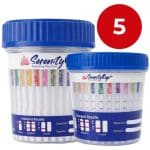
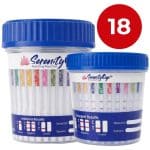
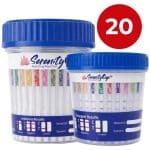
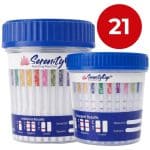
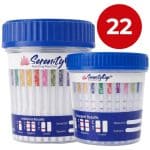
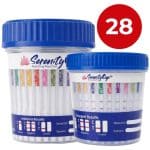
18 Panel Dip Card
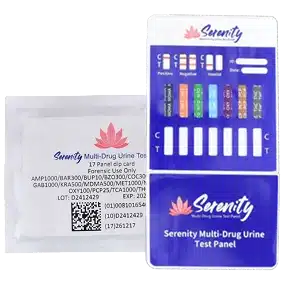
The 18 panel dip card is a fast, reliable, and easy-to-use urine screening device designed to
detect ten commonly abused drugs in a single test format. This multi-drug detection dip card
is widely used in workplaces, rehabilitation programs, probation monitoring, healthcare screening,
law enforcement, and personal testing where accurate and efficient drug screening is required.

Showing the single result

Dip card 18 Panel Detecting, KRA, ETG, FEN, KET, TRA & ADLTX, Short Date Sale, Experation Date,12/14/2026, As low as $1.03
ADLTX, AMP, BAR, BUP, BZO, COC, EtG, FEN, KET, KRA, MDMA, MET, MTD, OPI/MOR, OXY, PCP, THCForensic UseAs low As$1.03 $1.03 - $1.27Bulk Pricing that Cuts the Budget in Half
Priority Shipping For Bulk Orders.
Dedicated Wholesale Representative.
Quality That Is Reliable For the Nation.
The Serenity 18 Panel Dip Card covers 17 drug substance panels plus built-in ADLTX specimen validity (pH, Specific Gravity, Creatinine) — five specialty panels beyond the 12 panel baseline: Kratom, EtG, Fentanyl, Ketamine and Tramadol. Forensic Use Only. Currently on short date sale at $1.03 per card. Results in 5 minutes. Same-day shipping.
18 Panel Multi Dip Card Test specifications Red codes are the five specialty panels absent from any standard 12 panel configuration: EtG, FEN, KET, KRA, and TRA. ADLTX runs simultaneously alongside all 17 drug panels in the same 5-minute dip event. Forensic Use Only — all presumptive positive results require GC-MS or LC-MS/MS laboratory confirmation before formal action. Results in 5 minutes. Requires separate urine collection container. For bulk pricing call 561-897-9238 or email [email protected]. Need fewer panels? See the 16 panel dip card range from $0.99 or the 17 panel dip card range from $0.99. Need Gabapentin added? See the 19 panel dip card which adds GABA/1000ng to every panel on this card from $1.05.
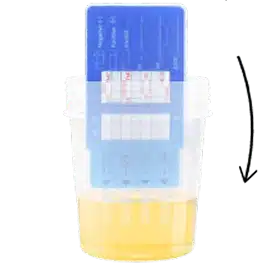
Remove the drug test cup from its sealed pouch and use it as soon as possible. Have the subject provide a urine sample directly into the cup, filling to the indicated line.
At 2–4 minutes, verify the temperature of the specimen using the built-in temperature strip. A green indicator confirms the sample is valid and within the acceptable range of 90–100°F.
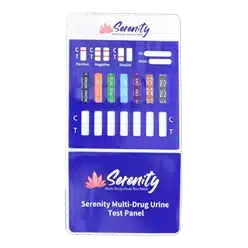
Peel back the label when ready to interpret results. Read results within 5 minutes of collection. Do not read results after 8 minutes, as the extended window may affect accuracy.




Key Features of 18 Panel Dip Card
Code
Full Substance Name
Cutoff
What It Catches
AMP
Amphetamines
1000 ng/mL
Adderall, Vyvanse, prescription and illicit amphetamines
BAR
Barbiturates
300 ng/mL
Phenobarbital, butalbital, secobarbital — sedative class distinct from benzodiazepines
BUP
Buprenorphine
10 ng/mL
Suboxone, Subutex — detects MAT medication compliance at therapeutic concentrations a standard OPI strip misses
BZO
Benzodiazepines
300 ng/mL
Xanax, Valium, Klonopin, Ativan — full benzodiazepine class
COC
Cocaine
300 ng/mL
Cocaine and crack cocaine via benzoylecgonine metabolite
EtG
Ethyl Glucuronide
300 ng/mL
Alcohol metabolite up to 80 hours post-consumption — not detectable on any standard drug panel
FEN
Fentanyl
20 ng/mL
Illicit fentanyl and primary fentanyl analogs — does not cross-react with standard OPI panel. SAMHSA federal mandate July 2025
KET
Ketamine
1000 ng/mL
Special K, ketamine — DEA Schedule III dissociative anesthetic. Not detected by PCP, BZO, or any standard panel
KRA
Kratom
500 ng/mL
Mitragyna speciosa — binds mu-opioid receptors but passes every OPI, BUP, and MTD panel undetected
MDMA
Methylenedioxymethamphetamine
500 ng/mL
Ecstasy, Molly — independent dedicated panel
MET
Methamphetamine
1000 ng/mL
Crystal meth, street methamphetamine
MTD
Methadone
300 ng/mL
Methadone maintenance — does not appear on standard OPI strip
OPI/MOR
Opiates / Morphine
300 ng/mL
Heroin, codeine, morphine
OXY
Oxycodone
100 ng/mL
OxyContin, Percocet — does not appear on standard OPI strip
PCP
Phencyclidine
25 ng/mL
PCP, angel dust — dissociative hallucinogen
THC
Marijuana / Cannabis
50 ng/mL
Cannabis, edibles, concentrates
TRA
Tramadol
1000 ng/mL
Ultram — Schedule IV prescription opioid analgesic. Passes all OPI, OXY, BUP, and MTD panels undetected
ADLTX — Built-In Specimen Validity (counted as the 18th panel position)
pH
Urine pH
3.0 to 11.0
Flags chemical adulteration outside normal urinary pH range
SG
Specific Gravity
1.001 to 1.030
Detects diluted or substituted specimens
CRE
Creatinine
2 to 300 mg/dL
Confirms biological origin and specimen concentration
Product
All 18 Panel Positions
Classification
From
18 Panel Dip Card — KRA, EtG, FEN, KET, TRA and ADLTX
SHORT DATE SALE — Expiry 12/14/2026
SKU: SM-DOA-6185FUOAMP | BAR | BUP | BZO | COC
EtG/300ng | FEN/20ng | KET/1000ng | KRA/500ng | TRA/1000ng
MDMA | MET | MTD | OPI/MOR | OXY | PCP | THC
+ pH | Specific Gravity | Creatinine (ADLTX)Forensic Use Only
$1.03
Short DateEasy Steps To Use The 18 Panel Dip Card
Step 1 — Collect
Step 2 — Dip & Wait
Step 3 — Read

Positive
Two colored bands appear — one in the control region (C) and one in the test region (T). This indicates no drug was detected above the cutoff level.

Negative
Two colored bands appear, one in the control region (C) and another in the test region (T) for the drug in question.

Invalid
The control band fails to appear entirely. Discard the test and retest with a fresh cup within 3 minutes. If the problem persists, contact your distributor.
What is Included in a 18 Panel Dip Card?
The 18 panel dip card (SM-DOA-6185FUO) from 12 Panel Now is the most comprehensive emerging-substance dip card in the range below 19 panels. It covers 17 drug substance panels — the complete 12 panel professional baseline plus five specialty additions — alongside built-in ADLTX specimen validity checks (pH, Specific Gravity, Creatinine) in a single Forensic Use Only card. Currently on short date sale at $1.03 per card through 12/14/2026, making it the most cost-effective comprehensive emerging-substance dip card currently available from 12 Panel Now.
The five specialty panels added over the 12 panel dip card baseline are: EtG (alcohol metabolite), FEN (fentanyl), KET (ketamine), KRA (kratom), and TRA (tramadol). Every one of these five substances passes every panel of every standard 12 panel configuration completely undetected.
The five specialty panels and what they detect that no standard panel can:
EtG / Ethyl Glucuronide at 300 ng/mL — 80-Hour Alcohol Monitoring
EtG is the primary urinary metabolite of alcohol, detectable for 24 to 80 hours post-consumption. For programs running weekly urine collections, EtG at 300 ng/mL covers approximately 70% of the standard 168-hour inter-test interval — providing alcohol abstinence documentation where no breathalyzer or direct alcohol test can reach. Per SAMHSA MAT guidelines, concurrent alcohol monitoring is a documented compliance requirement. No standard multi-panel drug test includes an EtG panel. This is the same EtG panel used in the 14 panel dip card range at the same 300 ng/mL cutoff.
FEN / Fentanyl at 20 ng/mL — Federal Mandate Compliance
Fentanyl is approximately 50 to 100 times more potent than morphine per NIDA fentanyl research, meaning illicit use occurs at urinary concentrations far below what would trigger a standard OPI antibody. FEN at 20 ng/mL provides dedicated point-of-care fentanyl detection for 12 to 48 hours after exposure. Added to SAMHSA federal workplace testing panels effective July 2025. For programs that need clinical-grade FEN detection at 1 ng/mL under CLIA Waived certification, see the 17 panel CLIA dip card.
KET / Ketamine at 1000 ng/mL — Dissociative Anesthetic Detection
Ketamine is a DEA Schedule III dissociative anesthetic used clinically for anesthesia and increasingly prescribed for treatment-resistant depression. It is misused recreationally as Special K. It does not cross-react with PCP, BZO, or any other standard panel antibody — a specimen containing any ketamine concentration returns a negative on every standard multi-panel test. The dedicated KET panel at 1000 ng/mL on the 18 panel card provides point-of-care detection for 1 to 4 days post-use using a ketamine-specific antibody. Programs needing standalone Ketamine detection can also use the 16 panel KRA/KET card.
KRA / Kratom at 500 ng/mL — Legal Opioid Receptor Substance
Kratom (Mitragyna speciosa) binds to mu-opioid receptors but its active alkaloids (mitragynine, 7-hydroxymitragynine) are structurally distinct from all opioid compounds detected by standard OPI, BUP, or MTD antibodies. Legally sold at retail in most US states, Kratom is documented in MAT, treatment, and correctional populations as a self-managed opioid substitute or opioid-adjacent substance. The dedicated KRA panel at 500 ng/mL is the only available point-of-care rapid urine detection method for kratom. Also available as a dedicated specialty panel in the 16 panel dip card and 17 panel dip card ranges.
TRA / Tramadol at 1000 ng/mL — The Prescription Opioid Every Standard OPI Panel Misses
Tramadol (Ultram) is a Schedule IV prescription opioid analgesic with dual mechanism — weak mu-opioid receptor agonism and serotonin-norepinephrine reuptake inhibition — and a molecular structure that does not cross-react with any OPI, OXY, BUP, or MTD antibody. A person taking therapeutic or misuse-level tramadol at any dose returns a completely negative result on every opioid panel of any standard multi-panel drug test. The dedicated TRA panel at 1000 ng/mL closes this specific detection gap. Per NIDA prescription drug misuse data, tramadol misuse is documented in forensic and treatment populations where it is used as a detectable-free opioid substitute.
ADLTX — pH, Specific Gravity, Creatinine — Simultaneous Specimen Validity
The three ADLTX specimen validity markers run simultaneously alongside all 17 drug panels in the same 5-minute dip event. pH outside the 4.5 to 8.5 normal urinary range flags chemical adulteration. Specific Gravity below 1.003 flags dilution. Creatinine below 2 mg/dL flags substitution or extreme dilution. For forensic programs where results may enter legal proceedings, ADLTX documentation provides simultaneous specimen integrity evidence from the same collection event with no additional test strip, no additional cost, and no additional workflow step. The same ADLTX format appears on the 19 panel dip card.
18 Panel vs 19 Panel: The One Substance Difference
The 18 panel card and the 19 panel card are identical in every panel except one: the 19 panel card adds Gabapentin (GABA) at 1000 ng/mL as the 19th panel position. Both cards include the same 17 drug panels and the same ADLTX validity checks. Programs where Gabapentin monitoring is not a priority should order the 18 panel card at $1.03 (short date). Programs where Gabapentin monitoring is a priority — or where the price difference matters — should order the 19 panel card at $1.05 standard price, which actually delivers more coverage at a comparable per-card cost.
18 Panel Dip Card Features Built-In ADLTX, and the Complete Professional Baseline
18 Panel Drug Test Dip Card from 12 Panel Now: KRA, EtG, FEN, KET, TRA and ADLTX Alongside the Complete Baseline — $1.03 Per Card The 18 panel dip card delivers five specialty substance panels that no standard drug test at any count detects, plus built-in ADLTX specimen validity, all in a single Forensic Use Only card at $1.03 per card in bulk on short date sale.
- KRA at 500ng/mL: Kratom Detection — The Legal Opioid Receptor Substance That Passes Every Standard Screen: Kratom acts on mu-opioid receptors but passes every OPI, BUP, and MTD panel because its alkaloids are structurally distinct from all recognized opioid compounds. Legally purchasable in most US states, it is documented in treatment programs, correctional facilities, and sober living programs as a self-managed opioid substitute. The KRA panel at 500 ng/mL is the only available point-of-care multi-panel detection method for Kratom.
- KET at 1000ng/mL: Ketamine on the Same Card as Every Other Standard Substance: Ketamine does not cross-react with PCP, BZO, or any standard antibody panel. A specimen containing any ketamine concentration returns a negative on every standard multi-panel screen. The dedicated KET panel at 1000 ng/mL on the 18 panel card detects ketamine metabolites for 1 to 4 days post-use. For treatment programs where ketamine infusion therapy is prescribed or recreational use is documented, the 18 panel card covers both compliance and misuse detection without a separate test.
- TRA at 1000ng/mL: Tramadol — A Prescription Opioid Every Standard Screen Completely Misses: Tramadol at any dose returns a negative result on every OPI, OXY, BUP, and MTD panel of any multi-panel drug test. The dedicated TRA panel at 1000 ng/mL is the only available rapid point-of-care detection for tramadol in a multi-panel card format. For drug courts and corrections where tramadol is documented as a legal opioid substitute used to evade standard opioid panels, the 18 panel card closes this gap.
- EtG at 300ng/mL: 80-Hour Alcohol Monitoring Across the Weekly Collection Interval: EtG at 300 ng/mL detects alcohol consumption for up to 80 hours — covering the majority of the standard 168-hour weekly inter-test interval. For sober living programs, MAT clinics, and drug courts conducting weekly urine collections, EtG provides the alcohol abstinence documentation window that breathalyzers and direct alcohol tests cannot reach. Per SAMHSA MAT guidelines, concurrent alcohol monitoring is a required compliance component.
- FEN at 20ng/mL: Federal Mandate Compliance in Every Card: Fentanyl at 20 ng/mL is included as a standard panel per the July 2025 SAMHSA Mandatory Guidelines update. The FEN panel detects illicit fentanyl and primary fentanyl analogs in the 12 to 48 hour post-use window — essential for workplace programs, correctional facilities, and any program where fentanyl-contaminated supply is a documented risk per CDC overdose surveillance data.
- ADLTX Built In: pH, Specific Gravity and Creatinine Run Alongside Every Drug Panel — No Separate Strip Required: Three specimen validity markers run simultaneously with all 17 drug panels in the same 5-minute dip event. For forensic programs where results may enter legal proceedings, ADLTX documentation provides simultaneous specimen integrity evidence at no additional cost and no additional workflow step.
- $1.03 Per Card Short Date Through 12/14/26 — Same-Day Shipping, Wholesale at All Volumes: Wholesale pricing available at all order sizes. Send current supplier pricing to [email protected]. Same-day shipping on orders before 3:00 PM EST. Full OEM and private label for distributors and large programs. Confirm stock availability and expiry fits your usage timeline before placing large orders at 561-897-9238.
Contact for Bulk 18 Panel Dip Card Orders, Wholesale Pricing and Private Label: 561-897-9238 | [email protected]
Check other product variations
for Multi Dip Cards
From everyday staples to specialty products:
- Multi Strips
- 5 Panel Dip Cards
- 10 Panel Dip Cards
- 12 Panel Dip Cards
- 14 Panel Dip Cards
- 19 Panel Dip Cards
10 Panel Dip
13 Dip Panel
12 Panel Dip
Dip Cards
Wholesale and Private Label 18 Panel Dip Cards: Bulk Pricing at $1.03, OEM and Custom Branding Available
12 Panel Now offers the 18 Panel Dip Card (SM-DOA-6185FUO) at bulk wholesale pricing starting at $1.03 per card . Tiered volume pricing is available at every order level — the larger the order, the lower the per-card cost. All orders placed before 3:00 PM EST ship the same day. Free shipping on qualifying bulk purchases.
The $1.03 short date price represents the lowest available per-card cost for this configuration. For programs placing large, this pricing delivers 17 drug panels and ADLTX specimen validity — including Kratom, Ketamine, Tramadol, EtG, and Fentanyl detection alongside the complete professional baseline — at a per-card cost below many standard 14 panel configurations. Programs needing the same 17 drug panels plus Gabapentin should compare the 19 panel dip card at standard pricing of $1.05, which adds GABA/1000ng for only $0.02 more per card and has a longer shelf life than the short date 18 panel.
Send us your current supplier's pricing and we'll save you money. Send your current supplier's quote to [email protected]. Call 561-897-9238 to confirm current stock availability at the $1.03 short date price and to verify sufficient stock for your projected bulk order quantity ahead of the December 2026 expiry date.
OEM and Private Label 18 Panel Dip Card
12 Panel Now manufactures the Serenity 18 Panel Dip Card and offers a full OEM and private label program for distributors, healthcare networks, treatment system supply organizations, correctional supply buyers, and drug testing companies requiring a branded high-panel specialty dip card product at manufacturer-direct pricing.
Private label options include:
- Custom foil pouch branding with your organization's logo, color scheme, and product name
- Custom card face printing with branded panel labeling and result guide
- Custom outer box and retail case packaging for distributor resale networks
- White-label configurations at volume pricing for national distribution programs
- OEM manufacturing to custom panel specifications — organizations requiring a different set of 18 specialty panels can specify custom combinations through the OEM program
The 18 panel configuration — covering Kratom, Ketamine, Tramadol, EtG, and Fentanyl alongside the complete 12 panel baseline and built-in ADLTX — represents a specialty product profile not widely available from other multi-panel dip card manufacturers in a single-card format at this price point. Distributors serving addiction treatment networks, court supervision programs, and correctional supply buyers can bring this product to their client base under their own branding at competitive OEM pricing. Minimum order quantities and setup timelines available on request from the private label team.
For wholesale accounts, private label setup, and OEM specifications contact:
12 Panel Now — Wholesale and Private Label
801 N Congress Ave, Suite 101, Boynton Beach FL 33426
561-897-9238 | [email protected]
12panelnow.com/wholesale | 12panelnow.com/private-label
What 12 Panel Now Offers:

Secure, Temperature-Controlled Warehouse
We operate one of the largest drug-testing fulfillment centers in the country, stocked and ready to ship every day.

Lowest Wholesale Pricing. Highest Commissions. Period.
We aggressively price our products so you win more deals, while paying industry-leading commissions to our partners.

Same-Day Blind Drop Shipping
We ship directly to your customers — no branding, no invoices, no paper trail back to us. You keep the relationship. We do the heavy lifting.
Private Label Available
Want your own brand on the box? We’ve got you covered.
Build equity while selling proven products.
Real-Time Partner Portal
Track every order, commission, and customer in one clean dashboard. No guessing. No spreadsheets. Total transparency.
Where 18 Panel Dip Cards Are Used
| Setting | Primary Applications | Why the 18 Panel Dip Card |
| MAT and Addiction Treatment Programs | Kratom monitoring for patients using it as an opioid substitute alongside BUP or MTD, Tramadol diversion detection, Ketamine concurrent use in patients receiving therapeutic infusions, EtG alcohol abstinence monitoring, FEN for illicit supply contamination screening, complete MAT compliance baseline (BUP/10ng, MTD, OPI, OXY) | All five specialty substances documented in MAT populations are covered in one $1.03 card: Kratom as a legal opioid substitute, Tramadol as a detectable-free prescription opioid, Ketamine as a clinical and recreational substance, EtG for alcohol monitoring per SAMHSA MAT guidelines, and Fentanyl for illicit supply contamination detection. The complete MAT compliance baseline (BUP/10ng, MTD, OPI, OXY) confirms medication adherence simultaneously. |
| Correctional Facilities | Comprehensive institutional substance screening covering Kratom, Tramadol, and Ketamine — three documented contraband substances that pass every standard cup screen — alongside Fentanyl supply detection, alcohol monitoring via EtG, and ADLTX for specimen manipulation prevention, all in one $1.03 card | Kratom, Tramadol, and Ketamine are all legally obtainable substances documented as correctional contraband that pass every standard drug screen. Fentanyl is confirmed in drug supply in all 50 US states per CDC overdose data. ADLTX prevents specimen dilution evasion. The 18 panel card closes all five detection gaps simultaneously with built-in specimen validity for $1.03 per collection event. |
| Drug Courts and Probation | Court-ordered comprehensive substance monitoring for polydrug-using supervised populations, ADLTX specimen validity documentation for legal proceedings, EtG alcohol abstinence monitoring, Tramadol detection for supervised individuals using it as a legal opioid alternative, Fentanyl supply documentation | Per NADCP best practice standards, comprehensive substance monitoring including emerging substances and specimen validity is required for court-supervised programs. ADLTX validity documentation is legally significant when results enter court proceedings. Tramadol and Kratom are documented legal substance workarounds in court supervision populations. The 18 panel card covers all at $1.03 with ADLTX built in. |
| Sober Living Programs | Weekly resident accountability screening with 80-hour EtG alcohol detection, Kratom monitoring for residents using it as a self-managed opioid alternative, Ketamine detection for programs with documented dissociative substance use, Tramadol screening, Fentanyl supply detection, ADLTX for specimen integrity | Sober living facilities conduct weekly collections where EtG at 300 ng/mL provides the alcohol monitoring coverage that covers most of the inter-test interval. Kratom and Tramadol are both legal and readily accessible, documented as substance workarounds in residential recovery settings. ADLTX confirms specimen integrity for accountability documentation. All five specialty monitoring needs addressed in one $1.03 card per collection event. |
18 Panel Dip Card with ADLTX: How Built-In Specimen Validity Changes the Forensic Documentation Picture
Standard dip cards and multi-panel cups without built-in adulteration checks produce a drug screening result but no simultaneous documentation of specimen integrity. When a drug court, probation officer, or correctional administrator acts on a positive result, or a defense attorney challenges a positive result in proceedings, the specimen integrity question — was this a valid, unaltered biological specimen from this individual — is as legally significant as the substance result itself.
The ADLTX markers on the 18 panel dip card run simultaneously with all 17 drug panels in the same 5-minute dip event. pH, Specific Gravity, and Creatinine results are read at the same moment as the drug panel results, from the same card, in the same collection event. For drug courts and correctional programs where results enter proceedings and may be challenged, this simultaneous validity documentation strengthens the evidentiary position of the result without any additional test strip, any additional cost, or any additional collection workflow step. For programs currently running a separate adulteration strip alongside their standard multi-panel card at $0.35 to $0.45 per strip, the built-in ADLTX check on the 18 panel card eliminates this additional cost while delivering more substance panel coverage simultaneously. Contact 12 Panel Now at 561-897-9238 for bulk pricing.
18 Panel vs 19 Panel Dip Card: The Single Substance Difference and Which Programs Should Choose Each
The 18 panel dip card and the 19 panel dip card are identical in 17 drug panels and ADLTX validity. They share AMP, BAR, BUP, BZO, COC, EtG, FEN, KET, KRA, MDMA, MET, MTD, OPI/MOR, OXY, PCP, THC, TRA, plus ADLTX. The 19 panel card adds one substance: Gabapentin (GABA) at 1000 ng/mL as the 19th panel position.
The decision between the two cards comes down to a single question: does the program need to detect Gabapentin? Gabapentin is a prescription anticonvulsant (Neurontin) widely misused in opioid-adjacent populations and documented in treatment programs, correctional facilities, and pain management settings. It passes every standard multi-panel drug screen entirely. If Gabapentin monitoring is a documented priority for the specific program's population, the 19 panel card adds it for $1.05 per card in standard stock. If Gabapentin is not a priority, the 18 panel card at $1.03 short date provides equivalent coverage at a lower price vs the 19 panel card's standard full-shelf-life stock at $1.05. For most programs where Gabapentin is a concern in their screening population, the $0.02 difference and longer shelf life of the 19 panel card make it the better procurement decision.
What Does “Forensic Use Only” Mean for 18 Panel Dip Cards?
- What it means:CLIA Waived only tests determine program compliance - whether someone violated probation conditions, sober living rules, or custody requirements. They do not diagnose substance use disorder or guide medical treatment. Many courts require laboratory confirmation (GC-MS or LC-MS/MS) before admitting screening results as evidence.All results obtained from CLIA Waived & Fentanyl Drug Test Method tests should be treated as preliminary screening results only and must be confirmed by a certified laboratory using GC-MS (Gas Chromatography-Mass Spectrometry) or LC-MS/MS methodology before any legal, disciplinary, or medical action is taken.
- How results are used: Forensic use only tests determine program compliance - whether someone violated probation conditions, sober living rules, or custody requirements. They do not diagnose substance use disorder or guide medical treatment. Many courts require laboratory confirmation (GC-MS or LC-MS/MS) before admitting screening results as evidence.
- What it means: The product has not undergone FDA 510(k) clearance - the premarket notification process for medical devices. The FDA exercises enforcement discretion over these products because forensic settings have evidentiary protections (rules of evidence, chain of custody, confirmation requirements) not present in clinical settings.
18 Panel Dip Card Frequently Asked Questions
Testing frequency depends on the organization's policies, compliance requirements, and risk level. Many programs conduct random, scheduled, post-incident, or reasonable-suspicion testing to maintain a consistent monitoring process.
Yes. The 18 panel dip card is commonly used in random testing programs because it provides broad substance coverage in a single screening device, helping organizations streamline testing procedures.
Proper sample collection, correct test administration, adherence to timing instructions, and appropriate storage conditions all contribute to accurate screening results.
Yes. Its rapid screening process and multi-panel design make it a practical option for organizations conducting large numbers of tests while maintaining operational efficiency.
All non-negative or presumptive positive results should be reviewed according to program policies and confirmed through laboratory testing when required before making employment, legal, or disciplinary decisions.
Personnel should receive instruction on specimen collection procedures, test operation, result interpretation, documentation requirements, and chain-of-custody practices when applicable.
Yes. Configurations that include specimen validity checks can help identify indicators of dilution, substitution, or sample tampering, supporting more reliable screening outcomes.
Test devices should be stored according to the manufacturer's instructions, typically in a clean, dry environment away from excessive heat, cold, moisture, and direct sunlight.
Temperature verification can help confirm that the sample was recently provided and may assist testing programs in maintaining specimen integrity during the collection process.
Organizations often retain collection records, result logs, chain-of-custody forms, testing dates, and confirmation reports to support compliance and auditing requirements.
Yes. Laboratory confirmation is commonly recommended whenever a presumptive positive result may be used to support legal, employment, clinical, or compliance-related decisions.
Bulk purchasing programs, volume discounts, consolidated ordering schedules, and long-term supply agreements can help lower overall testing expenses.
Expanded-panel testing is frequently used in workplaces, rehabilitation centers, healthcare organizations, correctional facilities, transportation programs, and compliance-monitoring environments.
By screening for a broad range of substances in a single test, organizations can strengthen monitoring efforts, improve policy enforcement, and support workplace safety objectives.
Yes. Many organizations include expanded-panel screening as part of post-incident investigations and reasonable-suspicion testing procedures when permitted by applicable policies and regulations.
Follow the manufacturer's instructions carefully. If uncertainty remains, consider repeating the screening with a new device or obtaining laboratory confirmation for definitive results.
Unopened tests may remain in inventory until their listed expiration date when stored according to manufacturer guidelines. Always verify expiration dates before use.
Expanded-panel tests provide broader substance coverage, helping organizations address evolving testing requirements while reducing the need for multiple separate screening devices.
Using one device can simplify workflows, reduce administrative burden, minimize collection time, and improve overall testing efficiency.
Decision-makers should evaluate their testing goals, monitored population, compliance requirements, budget considerations, and desired substance coverage when selecting a testing solution.