Drug Test Tampering: A 2026 Guide to Specimen Integrity & Detection

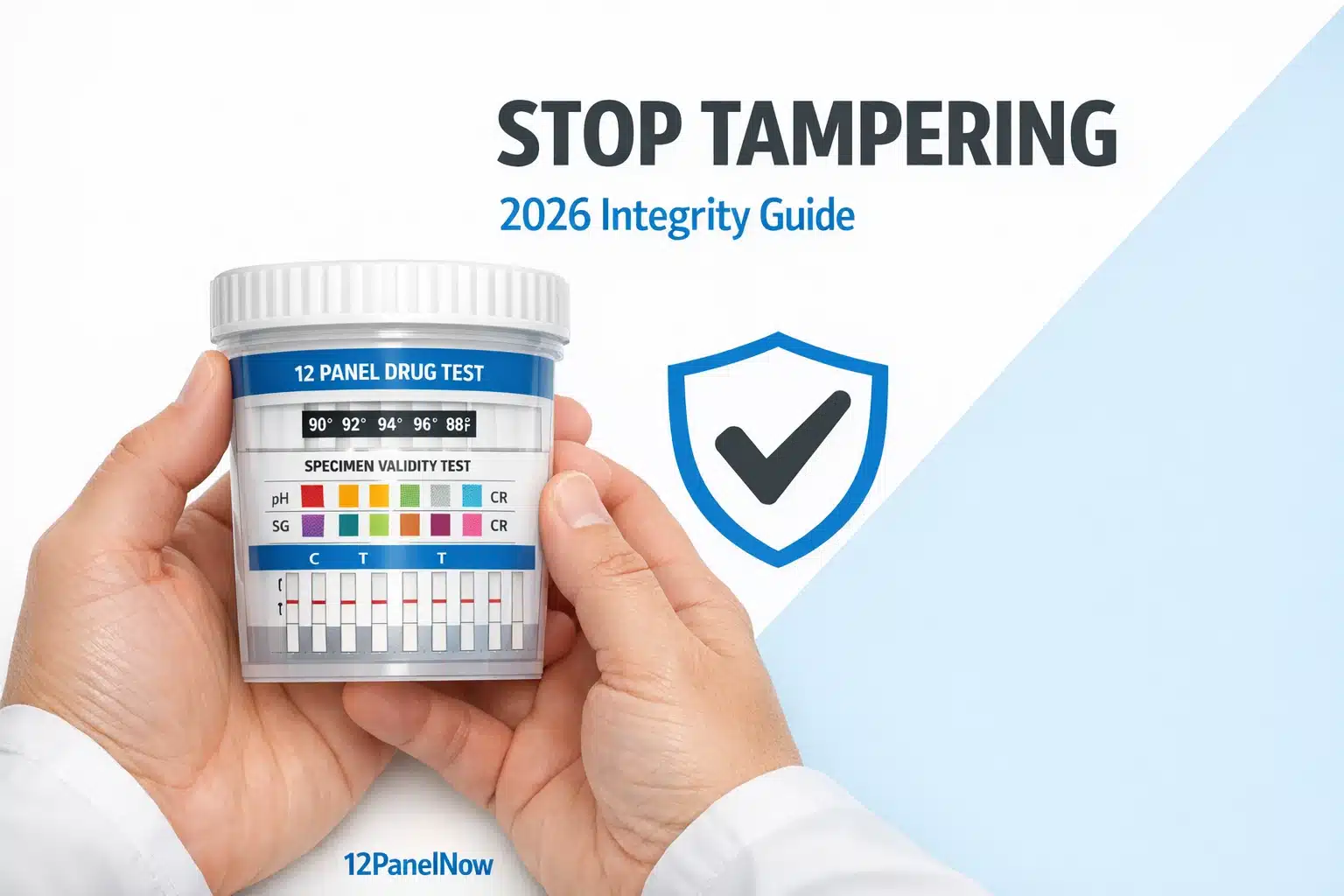
The data is impossible to ignore. According to the 2024 Quest Diagnostics Drug Testing Index, the rate of substituted urine specimens in the general workforce has surged by nearly 733%. This isn’t a gradual increase; it’s a clear signal that casual, check-the-box drug screening is no longer enough. The market for synthetic urine and masking agents is more sophisticated than ever, and a testing program that hasn’t evolved is a program that’s already been beaten.
For a manager in a safety-sensitive role, an undetected user increases the risk of a workers’ compensation claim by 3.6 times. The stakes are far too high for uncertainty.

This guide moves beyond simple checklists. It provides a strategic framework for defensibility and deterrence, helping you protect your workplace, ensure the integrity of your testing program, and make confident decisions without creating a culture of hostility.
What Is Drug Test Tampering?
Drug test tampering refers to any attempt to alter, substitute, dilute, or otherwise manipulate a biological specimen to interfere with accurate drug testing results. These efforts may involve synthetic urine, chemical adulterants, excessive fluid consumption, substituted specimens, or products specifically designed to mask drug metabolites.
Tampering attempts occur across many industries but create especially significant concerns within safety-sensitive workplaces where impaired employees may increase operational risks. Detecting specimen manipulation protects not only testing accuracy but also the integrity of the entire workplace drug testing program.
Because tampering methods continue evolving, employers increasingly rely on specimen validity testing, observed collection procedures, secure chain-of-custody practices, and advanced laboratory confirmation to identify suspicious specimens before employment decisions are made.
Why Specimen Integrity Matters
Specimen integrity forms the foundation of every reliable workplace drug testing program. Even the most accurate laboratory analysis cannot produce meaningful results if the submitted specimen has been substituted, diluted, adulterated, or otherwise compromised before testing begins.
Maintaining specimen integrity protects employers against false-negative results, strengthens regulatory compliance, supports defensible workplace policies, and helps reduce unnecessary legal disputes surrounding employee drug testing decisions. Strong collection procedures also promote consistency, fairness, and confidence throughout the testing process.
From suspicion to certainty: a framework for test integrity
The core challenge for any program manager is balancing the need for a drug-free workplace with the need to maintain trust. You’re not trying to become a surveillance state; you’re trying to manage risk effectively. A defensible program accomplishes this by layering simple, non-invasive protocols that work together to deter tampering and validate results.
When a sample’s integrity is in question, this layered model provides a clear, documented path for escalation, from the initial collection to a final, legally sound conclusion.

This approach is built on four distinct levels of defense.
Understanding Specimen Validity Testing (SVT)
Specimen Validity Testing (SVT) consists of laboratory or rapid screening procedures that evaluate whether a urine specimen appears consistent with normal human urine before interpreting drug test results. Rather than detecting drug metabolites directly, SVT identifies evidence of substitution, dilution, adulteration, or chemical manipulation that could invalidate testing outcomes.
Most specimen validity testing evaluates characteristics such as temperature, creatinine concentration, specific gravity, pH, and the presence of oxidants or adulterants. These measurements help determine whether a specimen remains suitable for accurate drug testing or requires additional review and confirmation.
Integrating SVT into workplace drug testing programs significantly strengthens specimen integrity by identifying compromised samples before employers rely on potentially inaccurate test results.
Levels 1 & 2: Mastering the basics of collection and observation
The first line of defense against tampering happens at the point of collection. These steps are simple, procedural, and highly effective at deterring the most common methods of cheating.
The collection environment
A secure collection site immediately discourages tampering. This includes standard protocols like:
- Securing water sources or using “blue water” dye in the toilet to prevent dilution.
- Removing soaps, cleaning agents, and other potential adulterants from the restroom.
- Requiring donors to leave bags, coats, and personal items outside the collection area.
Physical specimen indicators
Before you even consider chemistry, the sample itself provides crucial clues. The most important physical check is temperature. A valid human urine sample should be between 90°F and 100°F. This must be checked within four minutes of collection, which is why integrated temperature strips are a non-negotiable feature on any professional test cup.
Other visual flags include unusual color (e.g., clear like water or a strange tint), lack of foam when shaken, or an unusual smell, like bleach or chemicals. These physical checks catch amateur attempts and provide the first piece of evidence if a sample seems off.
Common Drug Test Tampering Methods
Individuals attempting to defeat workplace drug testing may use several different approaches depending on the testing method and collection procedures. The most common methods include urine substitution, excessive dilution through fluid consumption, synthetic urine products, chemical adulterants, and masking agents intended to interfere with laboratory analysis.
Commercial synthetic urine products have become increasingly sophisticated by mimicking characteristics such as color, pH, specific gravity, and creatinine concentration. As a result, employers increasingly rely on expanded specimen validity testing rather than visual inspection alone to detect modern tampering attempts.
Understanding these tampering techniques allows employers to develop collection procedures and testing protocols that better protect specimen integrity while minimizing the likelihood of false-negative results.
Understanding Urine Drug Testing
Urine drug testing remains the most widely used workplace drug testing method because it combines established laboratory infrastructure, standardized collection procedures, broad regulatory acceptance, and cost-effective screening.
A complete urine drug testing process includes secure specimen collection, temperature verification, chain-of-custody documentation, specimen validity testing, laboratory analysis where appropriate, Medical Review Officer (MRO) review when required, and confirmatory testing for non-negative results. Each stage contributes to maintaining specimen integrity while supporting accurate and legally defensible drug testing decisions.
Level 3: Chemical detection and the synthetic urine arms race
This is where most basic testing programs fail in 2026. While physical checks can catch simple dilution, they won’t stop sophisticated adulterants or high-quality synthetic urine. This requires robust chemical analysis, also known as specimen validity testing (SVT).
What standard SVT looks for
A basic SVT panel checks for three key markers to confirm a sample is human urine and has not been diluted or altered.
- pH: Measures the acidity or alkalinity. Normal urine falls between 4.5 and 8.0. Anything outside this range suggests an adulterant like bleach or ammonia was added.
- Specific Gravity: Tests the density of the liquid compared to water. Normal values are between 1.003 and 1.030. Low specific gravity points to dilution.
- Creatinine: A waste product produced by muscle metabolism. Real urine will have creatinine levels above 20 mg/dL. Anything lower indicates the sample is not human or has been heavily diluted.
The 2026 problem: The synthetic urine arms race
Commercially available synthetic urine products like “Quick Fix” are now engineered to pass basic 3-strip SVT checks. They contain urea, are balanced for pH and specific gravity, and can mimic the appearance of real urine. This is where the “arms race” begins.
To defeat these products, you need a test that looks for the very chemicals used to create them or to mask drug metabolites. Advanced cups with built-in adulterant testing now include additional SVT strips that detect:
- Nitrites: Often added to urine to oxidize and break down drug metabolites.
- Glutaraldehyde: A chemical agent known to interfere with some drug testing assays.
- Oxidants/PCC: This includes substances like bleach, hydrogen peroxide, and pyridinium chlorochromate (PCC). These are hallmark ingredients in many “urine cleaning” products and are almost never found in human urine. Their presence is a direct indicator of tampering.
Comparing Drug Testing Technologies
Drug testing technologies vary in both analytical capability and operational purpose. Rapid immunoassay tests provide fast preliminary screening that supports efficient workplace decision-making, while laboratory-based testing offers expanded analytical sensitivity and confirmatory analysis when additional verification is required.
For specimens that raise validity concerns or produce non-negative screening results, confirmatory laboratory testing using Gas Chromatography-Mass Spectrometry (GC-MS) provides a highly specific analytical method capable of distinguishing individual compounds with exceptional accuracy. This layered approach strengthens both specimen integrity and legal defensibility.
Rather than viewing rapid testing and laboratory confirmation as competing methods, organizations should understand how each technology contributes to a comprehensive workplace drug testing program.
Choosing the right level of protection
Not every organization faces the same level of risk. A low-risk office environment may only need baseline SVT, while a construction, logistics, or healthcare organization needs the expanded panel that detects oxidants and nitrites. The key is to match your testing tools to your risk profile.

This is also why professional-grade tests are critical. A rapid test from a dollar store might detect a drug metabolite, but it offers zero protection against tampering. Furthermore, professional tests use more sensitive cutoff levels (e.g., 20 ng/mL vs. 50 ng/mL for certain substances), increasing accuracy and reducing the chances of a “borderline” adulterated sample producing a false negative.
Choosing Drug Testing Supplies
Drug testing supplies should be evaluated according to accuracy, specimen integrity features, regulatory acceptance, ease of use, and compatibility with workplace testing procedures. Products that incorporate integrated temperature strips, specimen validity testing, secure collection systems, and clear result interpretation provide stronger protection against specimen tampering.
Organizations should also consider whether testing products are FDA-cleared, CLIA-waived where appropriate, supported by reliable manufacturers, and compatible with laboratory confirmation workflows. Selecting professional-grade testing supplies helps improve consistency across every stage of the testing process while strengthening defensible workplace practices.
Level 4: Confirmation, policy, and taking action
When a sample fails a physical or chemical validity check, your response needs to be calm, consistent, and guided by policy.
The conversation you need to have right
If a temperature strip is out of range or an SVT panel shows a clear failure, the situation requires immediate and careful handling. The goal is to document everything and follow a pre-approved workflow.
- Document the finding. Note the temperature reading or the specific SVT marker that failed. If possible, have a second staff member witness and sign off.
- Calmly inform the donor. Explain that the specimen is outside the acceptable range for a valid test and that a second sample under direct observation will be required.
- Adhere to your policy. Your company’s drug-free workplace policy should clearly state the procedure for an invalid specimen.
Crucially, under both SAMHSA and Department of Transportation (DOT) guidelines, a confirmed adulterated or substituted specimen is legally classified as a “Refusal to Test.” This is a critical distinction that provides a firm, defensible foundation for taking administrative action.

For absolute certainty, especially in situations leading to termination, a failed sample should be sent to a laboratory for Gas Chromatography-Mass Spectrometry (GC-MS) confirmation. This is the gold standard and provides an irrefutable result for any legal or administrative challenge.
Developing a Defensible Drug Testing Program
A defensible workplace drug testing program combines written policies, standardized collection procedures, specimen validity testing, employee education, collector training, documentation practices, and laboratory confirmation into a consistent compliance framework. Each component supports the overall integrity of the testing process while reducing administrative and legal risk.
Organizations should periodically review their policies to ensure they reflect current workplace practices, applicable regulations, advances in specimen tampering techniques, and evolving testing technologies. Regular policy reviews also help maintain consistency across multiple testing locations and collection personnel.
DOT & SAMHSA Compliance
Employers conducting federally regulated workplace drug testing should understand how Department of Transportation (DOT) and Substance Abuse and Mental Health Services Administration (SAMHSA) guidance affects specimen collection, documentation, Medical Review Officer (MRO) involvement, observed collections, and laboratory confirmation procedures.
Following established federal guidance strengthens legal defensibility while helping employers respond consistently when specimens are determined to be adulterated, substituted, invalid, or otherwise inconsistent with accepted specimen validity standards. Maintaining compliance also reduces uncertainty when administrative action becomes necessary after confirmed specimen tampering.
Protecting your program and your people
Ensuring specimen integrity isn’t about catching people; it’s about upholding the standard of a safe and productive workplace. By implementing a layered defense, you deter tampering attempts before they happen and create a clear, fair process for handling samples that fall outside the valid range.
Investing in high-quality test cups with advanced SVT isn’t just an operational expense; it’s a core component of your risk management strategy. For organizations that require consistent, reliable testing, programs with affordable bulk pricing make it possible to deploy the best tools without compromising your budget.
Explore our CLIA-waived and FDA-approved testing supplies today, or contact our team to discuss the right level of protection for your organization.
Common Drug Test Tampering Myths
As specimen manipulation techniques become more widely discussed online, several misconceptions continue to create confusion for employers and employees alike. Understanding these myths helps organizations develop stronger testing protocols while avoiding unnecessary assumptions during the collection process.
One common myth is that modern synthetic urine products are impossible to detect. While some products closely imitate normal urine characteristics, expanded specimen validity testing and laboratory confirmation can identify many sophisticated adulteration methods when appropriate procedures are followed.
Another misconception is that temperature strips alone are sufficient to verify specimen authenticity. Temperature verification remains an essential collection step, but specimen integrity also depends on chemical validity testing, chain-of-custody procedures, and proper documentation.
Some individuals believe excessive water consumption guarantees a negative drug test result. In practice, dilution often produces abnormal creatinine concentrations and specific gravity values that specimen validity testing is specifically designed to identify.
It is also incorrect to assume that every invalid specimen represents drug use. An invalid specimen simply indicates that the sample cannot be confidently interpreted according to established testing standards. Additional collection procedures or laboratory confirmation may be necessary before any employment decision is made.
Finally, rapid drug tests and laboratory confirmation should not be viewed as interchangeable. Rapid screening provides timely preliminary information, while confirmatory laboratory analysis offers a higher level of analytical specificity when definitive results are required.
Choosing the Right Drug Testing Strategy
The most appropriate workplace drug testing strategy depends on the organization’s industry, workforce, regulatory requirements, operational risks, and testing objectives. Construction companies, transportation providers, manufacturers, healthcare organizations, educational institutions, and office environments may each require different levels of specimen validity testing and collection security.
Organizations operating in safety-sensitive industries often benefit from expanded specimen validity testing, observed collections when appropriate, detailed documentation procedures, and access to laboratory confirmation services. Lower-risk workplaces may emphasize efficient screening while still maintaining appropriate safeguards against specimen tampering.
Developing a comprehensive testing strategy requires evaluating collection procedures, employee education, policy enforcement, testing technology, supplier quality, documentation standards, and ongoing compliance monitoring. Together, these elements create a workplace drug testing program capable of adapting as new tampering methods and regulatory expectations continue to evolve.