Drug Test Specimen Collection: A Complete Guide to Accurate & Defensible Testing

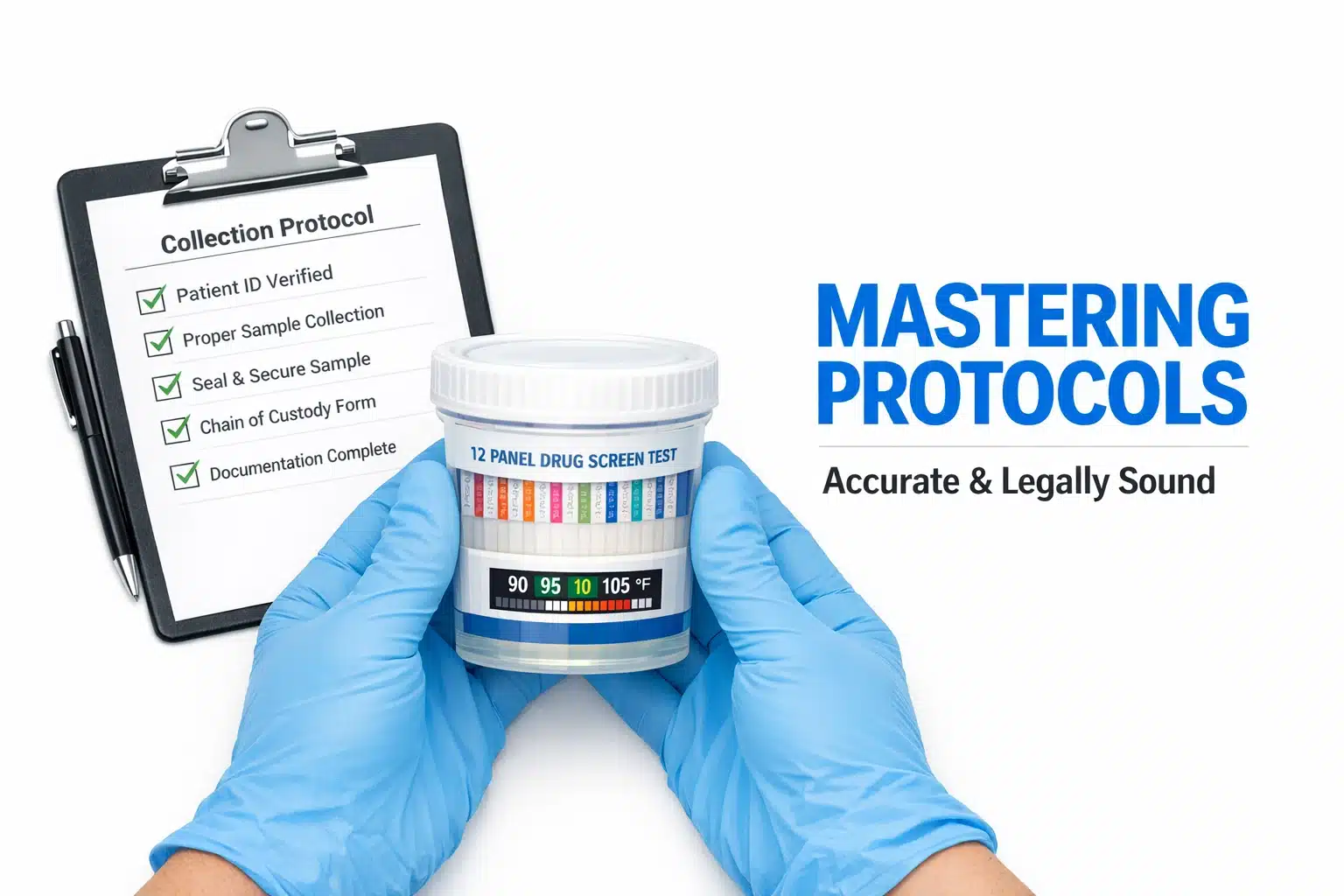
Invalid urine test results have surged by as much as 80% in some workforces. This isn’t just a statistical anomaly; it’s a direct threat to workplace safety and a significant source of legal liability for administrators. In a high-stakes environment, the difference between a defensible drug testing program and a failed one comes down to the integrity of your collection protocol.
Many administrators know how to read the lines on a cup, but few are trained to manage the human-centric challenges that occur before the test even begins: detecting tampering, navigating difficult donor interactions, and documenting every step with precision.
This guide provides a defensible blueprint for on-site sample collection. It moves beyond basic instructions to give you the specific, on-the-ground protocols needed to reduce errors, protect your organization, and ensure every test is accurate and reliable.
What Is Drug Test Specimen Collection?
Drug test specimen collection is the standardized process of obtaining, documenting, securing, and transferring a biological specimen for workplace drug testing. The collection process includes preparing the collection environment, verifying donor identity, collecting the specimen, checking specimen temperature, maintaining chain of custody documentation, and ensuring the sample reaches the appropriate testing destination without compromising its integrity.
While laboratory analysis ultimately determines whether drug metabolites are present, the collection process itself establishes the reliability of every subsequent testing step. Even the most sophisticated laboratory cannot compensate for errors that occur during specimen collection or documentation.
Modern drug test specimen collection emphasizes consistency, repeatability, and defensibility. Every collection should follow the same standardized workflow so that employers can confidently rely on the results if employment decisions or legal questions arise.
Why Specimen Collection Matters
Specimen collection directly influences the accuracy, reliability, and legal defensibility of workplace drug testing. Poor collection practices increase the risk of specimen substitution, adulteration, chain of custody errors, invalid specimens, and administrative disputes that may undermine otherwise accurate laboratory findings.
Strong collection procedures also improve employee confidence by ensuring every donor follows the same standardized process. Consistency protects both employers and employees while supporting fair workplace drug testing practices.
The administrator’s field guide to subversion red flags
The most common point of failure in any testing program is the collection environment itself. A well-prepared collection site is your first line of defense against tampering and adulteration. Before the donor even enters the room, you should implement an anti-subversion protocol.
Understanding Specimen Validity
Specimen validity refers to the process of determining whether a collected urine specimen displays the characteristics of authentic human urine and remains suitable for drug testing analysis. Specimen validity testing (SVT) complements routine drug screening by identifying evidence of dilution, substitution, adulteration, or other forms of specimen manipulation before drug test results are interpreted.
Modern specimen validity evaluations commonly assess temperature, creatinine concentration, specific gravity, pH, and additional adulterant indicators. Together, these measurements provide valuable evidence that the specimen has maintained its integrity throughout the collection process.
Incorporating specimen validity procedures into drug test specimen collection significantly strengthens workplace drug testing programs while reducing the likelihood of inaccurate or legally challenged results.
Securing the collection environment
Your goal is to minimize opportunities for a donor to compromise their sample. Simple environmental controls are non-negotiable.
- Secure water sources: Shut off the water supply to the toilet or sink if possible. If you can’t, place blueing agent in the toilet tank and bowl to prevent dilution.
- Remove potential adulterants: Clear the restroom of all soap, disinfectants, cleaning agents, and personal products. Donors may attempt to add these to the specimen to mask results.
- Conduct a pre-collection check: Ensure no foreign objects are hidden in the room, in the trash, or around the toilet.

Invalid specimens are rising. Use a defensible anti-subversion setup and a clear red-flag field guide to reduce errors, refusals, and liability during on-site collections.
Identifying red flags during collection
Once the environment is secure, your focus shifts to the donor’s behavior and the specimen itself. Administrators who can spot signs of subversion protect the integrity of their entire program.
- Behavioral Red Flags: Pay attention to unusual nervousness, bulky clothing that could conceal a device, or an unwillingness to follow instructions. Listen for sounds of unwrapping or pouring in the restroom.
- Visual Specimen Red Flags: Look for unusual colors (e.g., very dark or clear) or a lack of foam when swirled gently. Real urine contains proteins that create some foam.
- Olfactory Specimen Red Flags: Does the sample smell like a chemical, bleach, or have no scent at all? Synthetic urine often has a distinct chemical odor or none whatsoever, which is a major red flag. Our modern urine analysis cups often include specimen validity test (SVT) strips that check for creatinine, pH, and specific gravity to help you detect these anomalies immediately.
The shy bladder masterclass: a 3-hour protocol
One of the most stressful scenarios for a collector is when a donor claims they are unable to provide a specimen. This “shy bladder” event triggers a strict protocol that, if not followed perfectly, can be considered a “fatal flaw” in legal challenges.
According to federal guidelines, you must follow a precise 3-hour window.
Step-by-step shy bladder procedure
If a donor cannot produce the required amount of urine, you begin the clock and the documentation process immediately.
- Start the Log: Document the exact time the collection process began.
- Provide Fluids: Offer the donor up to 40 ounces of water over the next three hours. It is critical to provide this fluid in smaller, tracked increments, such as 8 ounces every 30 minutes. Do not provide all 40 ounces at once.
- Maintain Observation: The donor must remain in a controlled area under observation to prevent any attempts to tamper with a future sample.
- Attempt Collection: Ask the donor to attempt to provide a sample periodically throughout the 3-hour window.
- Final Determination: If the donor is still unable to provide a sample at the end of three hours, the process stops. This is typically documented as a “refusal to test” unless a medical evaluation proves the donor has a condition preventing urination.

When a donor can’t provide a specimen, the details matter. This decision tree and log structure help you follow the 3-hour window and fluid limits without creating litigation risk.
Medical vs. forensic: avoiding the ACR confusion trap
A common point of confusion for administrators is the difference between a medical urine test and a forensic (toxicology) drug screen. One of the most frequently confused tests is the Urine Albumin-to-Creatinine Ratio (ACR) test. Mistaking one for the other can lead to significant liability.
What is an ACR test?
An ACR test is a medical diagnostic tool used to screen for kidney disease, particularly in patients with diabetes or hypertension. It measures the amount of albumin (a protein) and creatinine in the urine. It has nothing to do with detecting illicit substances.
Why the confusion creates risk
An employee sent for a “urine test” might inadvertently receive a medical ACR test at a clinic instead of a workplace drug screen. If that result is then used to make an employment decision, your organization is exposed.
- ACR Test: Measures kidney function. It is a medical test protected by health privacy laws.
- Toxicology Screen: Detects the presence of specific drug metabolites. It is a forensic test used for workplace safety and compliance.
Using a medical test for an employment decision is a serious error. Ensure your instructions to both the employee and the clinic specify a “forensic toxicology screen” or a “workplace drug test.” Our comprehensive multi-panel drug test cups are designed specifically for the forensic needs of workplace testing programs.

ACR is a medical kidney test—not a drug screen. This comparison helps administrators avoid wrong-test mistakes and choose the defensible option for workplace programs.
Understanding Chain of Custody
Chain of custody is the documented process that tracks a specimen from the moment it is collected until final testing, storage, and reporting are complete. Every transfer of possession should be recorded to demonstrate that the specimen remained secure and free from unauthorized handling throughout the testing process.
Proper chain of custody documentation protects specimen integrity by identifying who collected the specimen, when transfers occurred, how the specimen was secured, and where it was transported. These records become particularly valuable if workplace drug testing results are challenged during regulatory reviews, legal proceedings, or internal investigations.
A complete chain of custody process also promotes consistency among collectors by establishing standardized documentation procedures that reduce administrative errors and strengthen confidence in every specimen collected.
The legal defense kit: temperature, timing, and documentation
Even with a perfect collection, your efforts are useless without meticulous documentation. The Chain of Custody (CoC) form and specimen log are your primary evidence in any legal dispute.
The 4-minute temperature window
The single most critical data point recorded immediately after collection is the specimen’s temperature.
- The Rule: You must check the temperature strip on the collection cup within four minutes of receiving the sample from the donor.
- The Range: The temperature must be between 90°F and 100°F (32°C and 38°C).
- Why It Matters: A sample outside this range is the number one indicator of tampering (e.g., using cold synthetic urine or a diluted sample).
If the temperature is out of range, you must initiate a second collection under direct observation immediately.
Interaction scripts for high-tension moments
Confronting a donor about an out-of-range temperature can be tense. Use a neutral, protocol-driven script.
Instead of saying, “This sample is cold, what did you do?”
Try saying, “The temperature is outside the acceptable range of 90 to 100 degrees. Per federal protocol, we are required to conduct a second collection immediately under direct observation.”
This approach removes personal accusation and frames the next step as a mandatory, non-negotiable procedure.

The fastest way to reduce collection errors is better documentation. This SOP kit visualizes the temperature window, acceptable range, and the exact logs that make your process defensible.
Common Collection Mistakes
Even experienced collectors can introduce unnecessary risk when standardized procedures are not followed consistently. Many collection errors occur because documentation is incomplete, temperature verification is delayed, collection sites are not properly prepared, or chain of custody procedures are interrupted.
Additional mistakes include failing to recognize specimen tampering indicators, overlooking specimen validity concerns, allowing unauthorized items into the collection area, or providing inconsistent instructions to donors. Establishing repeatable collection protocols and regular staff training significantly reduces these preventable errors.
Comparing Workplace Drug Testing Methods
While urine specimen collection remains the most widely used workplace drug testing method, employers may also utilize oral fluid, hair, or laboratory-based testing depending on operational needs, regulatory requirements, and organizational risk profiles. Each testing method offers distinct advantages regarding detection windows, collection procedures, and testing objectives.
Regardless of the specimen type selected, maintaining collection integrity, accurate documentation, and standardized procedures remains essential for producing reliable and defensible results. Selecting the appropriate testing method should reflect organizational policies, applicable regulations, and the specific circumstances surrounding each testing event.
DOT & SAMHSA Collection Standards
Organizations subject to Department of Transportation (DOT) regulations or Substance Abuse and Mental Health Services Administration (SAMHSA) guidance should ensure their specimen collection procedures align with applicable federal requirements. These standards establish expectations for collector responsibilities, observed collections, documentation, shy bladder procedures, and handling specimens that may have been adulterated or substituted.
Following established federal collection standards promotes consistency, strengthens legal defensibility, and supports workplace drug testing programs operating within regulated industries. Even organizations outside federally regulated environments often adopt similar collection procedures because they represent recognized best practices for specimen integrity.
Preparing Collection Personnel
Successful drug test specimen collection depends not only on written procedures but also on well-trained collection personnel. Collectors should understand specimen validity principles, chain of custody requirements, communication techniques, documentation standards, donor privacy considerations, and procedures for responding to unusual collection scenarios.
Ongoing training helps ensure collection personnel remain familiar with evolving specimen tampering methods, regulatory expectations, and organizational policies. Consistent collector education improves specimen integrity while reducing procedural variability across multiple testing locations and collection teams.
Building a defensible collection process
A successful on-site drug testing program relies on more than just high-quality supplies. It requires a robust, repeatable, and well-documented protocol that protects against subversion and stands up to legal scrutiny. By securing your environment, mastering challenging scenarios like shy bladder, understanding the tests you’re administering, and documenting every step precisely, you transform your collection process from a liability into a core strength of your safety program.
To ensure your program is built on a foundation of reliability, explore our full range of CLIA-waived and FDA-approved drug testing supplies. Arming your team with the right tools and protocols is the first step toward confident, accurate testing.
Choosing Drug Testing Supplies
Selecting the right drug testing supplies is an important component of specimen collection accuracy. Collection cups, specimen containers, temperature strips, chain of custody forms, specimen validity testing (SVT) capabilities, and collection accessories should all support consistent workplace procedures and reliable documentation.
Organizations should evaluate whether testing products are FDA-cleared, CLIA-waived where appropriate, and suitable for the operational requirements of their workplace drug testing program. Professional-grade collection supplies help improve consistency while reducing opportunities for specimen substitution, adulteration, and documentation errors.
For employers operating in safety-sensitive industries, integrated specimen validity testing and clear temperature verification features provide additional confidence that collected specimens accurately represent the donor’s sample before laboratory analysis begins.
Common Specimen Collection Myths
Several misconceptions continue to create unnecessary confusion regarding workplace drug test specimen collection. Understanding these myths helps organizations strengthen collection procedures while reducing preventable collection errors.
One common misconception is that collecting the urine specimen is the only important part of the process. In reality, preparation of the collection site, donor identification, specimen validity checks, temperature verification, documentation, and chain of custody all contribute to the defensibility of the final result.
Another myth suggests that visual inspection alone can detect specimen tampering. While appearance, odor, and temperature provide valuable information, specimen validity testing and proper documentation offer additional safeguards that visual observations alone cannot provide.
Some administrators assume every urine test is identical. Medical diagnostic tests, such as the Urine Albumin-to-Creatinine Ratio (ACR), serve entirely different purposes than forensic workplace drug testing and should never be used interchangeably when making employment decisions.
It is also incorrect to believe that documentation can be completed later if collection becomes busy. Accurate, contemporaneous documentation remains one of the strongest protections against administrative disputes and legal challenges.
Choosing the Right Collection Process
Every workplace has different operational risks, regulatory obligations, and testing objectives. As a result, organizations should develop specimen collection procedures that align with their industry, workforce, testing frequency, and compliance requirements.
Construction companies, transportation providers, manufacturing facilities, healthcare organizations, educational institutions, and office environments may require different collection workflows while still maintaining the same fundamental principles of specimen integrity, standardized documentation, and chain of custody.
Periodic reviews of collection procedures help organizations adapt to changing regulations, evolving specimen tampering techniques, and improvements in drug testing technology. Continuous improvement strengthens both workplace safety and long-term program defensibility.