What Is COC on a Drug Test?


If you see “COC” on a drug test, it usually means cocaine. COC is a commonly used abbreviation for the cocaine panel on urine drug test cups, dip cards, cassettes, and multi-panel screening devices.
Most COC drug tests do not simply look for cocaine itself. They primarily detect benzoylecgonine, a major metabolite produced when the body processes cocaine. Depending on the test’s cutoff level, a COC screen may indicate whether benzoylecgonine is present at or above the test’s detection threshold.
This guide explains what COC means on a drug test, what the COC panel detects, how to read COC results, common cutoff levels, detection windows, and what a positive or negative result actually means.
What Does COC Mean on a Drug Test?
COC means cocaine on a drug test.
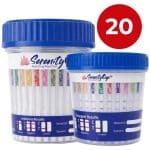
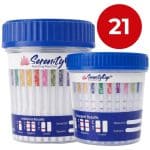
The COC panel is designed to screen urine or another specimen for cocaine-related compounds, primarily benzoylecgonine. COC may appear on:
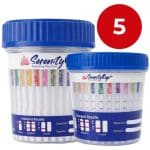
- 5-panel drug tests
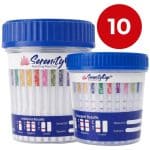
- 10-panel drug tests
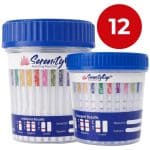
- 12-panel drug tests
- Multi-panel urine drug test cups
- Drug test strips
- Rapid test cassettes
- Laboratory drug screening reports
A negative COC result generally means the target cocaine metabolite was not detected or was below the test’s cutoff level.
A presumptive positive COC result means the screening test detected the target analyte at or above its cutoff. In employment, legal, or clinical testing, a presumptive positive may require confirmatory laboratory testing.
Important: A COC result does not by itself determine how much cocaine was used, when it was used, or whether someone is currently impaired.
What Does COC Stand For?
COC is the standard abbreviation for cocaine used on many drug-testing devices and laboratory reports.
You may see COC alongside abbreviations such as:
| Abbreviation | Drug/Drug Class |
|---|---|
| COC | Cocaine |
| THC | Marijuana/cannabis |
| AMP | Amphetamine |
| MET | Methamphetamine |
| OPI | Opiates |
| OXY | Oxycodone |
| BZO | Benzodiazepines |
| BUP | Buprenorphine |
| MTD | Methadone |
| PCP | Phencyclidine |
The exact panels included depend on the particular drug test.
For example, if a urine cup has a strip labeled COC, that strip is the cocaine screening panel.
What Does the COC Drug Test Detect?
A common misconception is that a COC test detects only unchanged cocaine.
In many urine screening tests, the primary target is benzoylecgonine, a major metabolite of cocaine.
After cocaine enters the body, it is metabolized relatively quickly. Benzoylecgonine remains available for detection longer than cocaine itself, making it a practical target for urine drug screening.
In simple terms:
Cocaine → metabolism → benzoylecgonine → urine → COC drug screen
The test uses antibodies designed to recognize the target compound or related cocaine metabolites. If the concentration reaches the test’s cutoff, the screening result may be interpreted as presumptive positive.
How Does a COC Drug Test Work?
Most rapid COC urine tests use an immunoassay.
The urine sample moves through a testing membrane by capillary action. The test contains antibodies and other reagents designed to interact with the target cocaine metabolite.
Because many rapid drug tests use competitive immunoassay technology, the lines can work differently from what people expect.
Negative COC result
A typical negative result shows:
- A control line (C)
- A test line (T)
This indicates that the target cocaine metabolite is either absent or below the test’s cutoff concentration.
Presumptive positive COC result
A typical presumptive positive result shows:
- A control line (C)
- No test line (T)
This indicates that the target analyte may be at or above the screening cutoff.
Invalid result
An invalid test occurs when the required control line does not appear.
An invalid result can occur because of:
- Insufficient specimen
- Incorrect testing procedure
- Damaged test device
- Expired test
- Improper storage
- Other procedural problems
An invalid test should not be interpreted as either positive or negative.
COC Drug Test Results: What Do the Lines Mean?
If you are looking at a COC strip on a urine drug test cup, the basic interpretation commonly looks like this:
| COC Result | Control Line | Test Line | General Interpretation |
|---|---|---|---|
| Negative | Present | Present | Cocaine metabolite below cutoff |
| Presumptive Positive | Present | Absent | Cocaine metabolite at/above cutoff |
| Invalid | Absent | May or may not appear | Test cannot be interpreted |
Does a faint COC line mean positive?
Usually, no.
For many competitive immunoassay drug tests, any visible test line in the correct reading window is interpreted as negative, even if that line is very faint.
However, the exact interpretation depends on the manufacturer’s instructions. Always follow the package insert or instructions for the specific test being used.
A faint line should not automatically be interpreted as a weak positive.
What Is the COC Cutoff Level?
The cutoff level is the concentration used by a screening test to distinguish a negative screening result from a presumptive positive one.
Different COC tests can have different cutoff levels.
Common COC screening products may use cutoffs such as:
- 150 ng/mL
- 300 ng/mL
The exact cutoff depends on the specific test, intended use, regulatory requirements, and manufacturer.
For example, a COC test designed with a 150 ng/mL cutoff interprets the specimen according to that threshold. A different product may use a 300 ng/mL cutoff.
Why does the cutoff matter?
Imagine two urine samples:
Sample A: Benzoylecgonine concentration below the test’s cutoff
→ COC screen may be negative
Sample B: Benzoylecgonine concentration at or above the cutoff
→ COC screen may be presumptive positive
Therefore, a negative result does not necessarily mean that absolutely no cocaine-related metabolite is present. It means the concentration was not detected at or above that test’s cutoff under the test’s conditions.
How Long Does COC Stay Detectable in Urine?
The COC detection window varies between individuals and testing situations.
For many people, cocaine metabolites can be detected in urine for approximately 1 to 4 days after use, although the actual window can be shorter or longer.
Factors that can influence detection include:
- Frequency of use
- Amount used
- Individual metabolism
- Kidney function
- Hydration and urine concentration
- Test sensitivity and cutoff
- Pattern of repeated use
- Specimen type
With heavier or repeated use, detection may extend beyond the typical range.
Does COC detect cocaine use from weeks ago?
A standard urine COC screen is generally intended to detect relatively recent exposure, not historical cocaine use from weeks or months ago.
The exact detection period cannot be predicted from the test result alone.
COC vs. Cocaine: Are They the Same Thing?
COC is the abbreviation used for the cocaine panel, while the test commonly targets benzoylecgonine in urine.
This distinction is important.
Cocaine
Cocaine is the parent drug.
Benzoylecgonine
Benzoylecgonine is a major metabolite produced when the body processes cocaine.
COC
COC is the test abbreviation/panel designation used to identify the cocaine screening assay.
So when a drug test says:
COC — Negative
it generally means the cocaine-related analyte targeted by that particular COC assay was not detected at or above its cutoff.
What Does a Positive COC Drug Test Mean?
A presumptive positive COC result means the screening assay detected the target cocaine metabolite at or above its established cutoff.
It does not necessarily tell you:
- The exact amount of cocaine used
- The exact time of use
- The route of administration
- Whether the person is impaired
- Whether the result is a confirmed laboratory positive
Rapid immunoassay tests are screening tools.
For workplace, legal, or other high-consequence testing, a presumptive positive is generally handled according to the applicable testing protocol and may be followed by confirmatory laboratory analysis.
What Does a Negative COC Drug Test Mean?
A negative COC result generally means the target cocaine metabolite was:
- Not detected, or
- Detected below the test’s cutoff level.
It does not necessarily prove that a person has never used cocaine.
For example, if the concentration is below the test’s cutoff, the screening test may report negative even though a small amount of the target compound is present.
This is why cutoff level and detection window are important when interpreting any drug test.
Can a COC Drug Test Be Wrong?
Like other screening tests, COC immunoassays have limitations.
A result can potentially be affected by:
- Improper testing technique
- Incorrect timing
- Expired test devices
- Improper storage
- Specimen problems
- Interfering substances
- Cross-reactivity
- Testing outside the manufacturer’s instructions
A presumptive positive should therefore be interpreted according to the applicable testing protocol.
Why confirmation testing matters
Laboratory confirmation methods such as GC-MS (gas chromatography-mass spectrometry) or LC-MS/MS (liquid chromatography-tandem mass spectrometry) can provide more specific identification of target substances or metabolites.
This is particularly important when the result could affect employment, legal proceedings, medical decisions, or other significant outcomes.
Can Medication Cause a Positive COC Result?
People often ask whether prescription or over-the-counter medications can cause a COC positive.
The answer depends on the specific assay and substance involved.
Modern drug-testing assays are designed to be selective, but immunoassays can have limitations and potential cross-reactivity. A screening result should therefore be interpreted using the manufacturer’s documentation and, when necessary, confirmed through an appropriate laboratory method.
Do not assume that a positive COC screen automatically identifies the exact source of the result without confirmation.
COC on a 5, 10, or 12 Panel Drug Test
COC can appear as one component of a larger multi-panel drug test.
For example, a multi-panel urine cup might test for:
AMP | COC | MET | OPI | THC | BZO | OXY | PCP | …
In this situation, the COC strip is specifically associated with cocaine screening.
The number of panels does not change what COC stands for.
Whether the test is a 5-panel, 10-panel, 12-panel, 14-panel, or another configuration, COC generally refers to the cocaine assay.
What changes is the number of other drug classes included in the product.
COC on a Drug Test Cup vs. COC Lab Report
You may encounter COC in several formats.
On a urine drug test cup
You might see:
COC
next to a test strip.
This identifies the cocaine panel.
On a dip card
The card may have:
COC 150
or
COC 300
The number generally identifies the assay’s cutoff concentration in ng/mL.
On a laboratory report
COC may appear as a shorthand designation for the cocaine analyte or testing category.
Always check the laboratory’s report legend because abbreviations can vary between laboratories.
What Does “COC 300” Mean on a Drug Test?
If your drug test says COC 300, the number generally refers to a 300 ng/mL screening cutoff for the target cocaine metabolite.
In simple terms:
COC = cocaine panel
300 = 300 ng/mL cutoff
The result is interpreted relative to that threshold.
Likewise, a test marked COC 150 generally indicates a 150 ng/mL cutoff.
Always verify the cutoff printed on the specific test’s packaging or instructions because products can differ.
What Is the Difference Between COC and BZE?
You may also encounter BZE, which refers to benzoylecgonine.
The terms are related but aren’t always used identically.
- COC commonly identifies the cocaine screening panel.
- BZE/benzoylecgonine identifies the primary cocaine metabolite targeted by many urine assays.
This is why a COC urine test can detect cocaine exposure even though the test is primarily measuring a metabolite rather than unchanged cocaine.
Why Is Benzoylecgonine Used for Cocaine Testing?
Cocaine itself is metabolized relatively quickly.
Benzoylecgonine has a longer presence in the body than cocaine, making it a useful marker for urine drug screening.
The test therefore focuses on a metabolite that provides a more practical detection target.
This is also why the COC result should not be interpreted as a direct measurement of current intoxication.
How to Read a COC Test on a Multi-Panel Cup
If your test cup contains several drug panels, first locate the section labeled COC.
Then follow the manufacturer’s reading instructions.
For a typical competitive urine immunoassay:
Two lines: C + T
Negative
A control line and test line are visible.
One line: C only
Presumptive positive
The control line is visible, but no test line appears.
No C line
Invalid
The test cannot be interpreted.
Important
Do not compare the darkness of the COC line with another drug panel and assume that darker or lighter means a different drug concentration. Visual line intensity is generally not a quantitative measurement.
Does a Darker COC Line Mean More Cocaine?
No—not reliably.
Rapid immunoassay drug tests are generally qualitative screening tests, not quantitative concentration meters.
A darker or lighter line should not be used to estimate:
- How much cocaine was used
- When it was used
- The exact concentration in urine
- The degree of impairment
Follow the manufacturer’s interpretation instructions instead.
What Factors Can Affect a COC Drug Test Result?
Several factors can influence whether a cocaine metabolite is detected.
1. Test Cutoff
A lower cutoff may detect concentrations that a higher-cutoff test would classify as negative.
2. Time Since Exposure
The amount of benzoylecgonine available for detection changes over time.
3. Pattern of Use
Repeated or heavy use may result in a longer detection period than occasional exposure.
4. Urine Concentration
The concentration of the specimen can influence measured analyte levels.
5. Test Quality
The test must be properly manufactured, stored, and used.
6. Testing Procedure
Incorrect specimen handling or reading the result outside the specified time window can affect interpretation.
COC Drug Test: Screening vs. Confirmation
It is important to understand the difference between a screening test and a confirmatory test.
Screening test
A rapid COC urine test typically uses immunoassay technology.
Its advantages include:
- Fast results
- Simple operation
- No complex laboratory equipment for many point-of-care products
- Ability to test multiple drug classes
- Convenient workplace and clinical screening
Confirmatory test
A laboratory method such as GC-MS or LC-MS/MS can provide more specific identification.
This distinction is especially important when a presumptive positive result could have significant consequences.
Is COC Included in a 12 Panel Drug Test?
Often, yes—but you should always check the specific panel configuration.
Many 12-panel drug tests include COC (cocaine) alongside other substances such as THC, amphetamines, methamphetamine, opioids, benzodiazepines, oxycodone, methadone, or other analytes.
However, there is no universal list that applies to every product marketed as a “12-panel” test.
The manufacturer’s panel specification is the best way to determine exactly what a particular 12-panel test detects.
COC Drug Test FAQ
What does COC mean on a drug test?
COC means cocaine. It is the abbreviation commonly used to identify the cocaine screening panel on many drug tests.
What does COC test for?
Many COC urine assays primarily detect benzoylecgonine, a major metabolite of cocaine.
Is COC the same as cocaine?
COC is the abbreviation for the cocaine testing panel. The assay may actually detect benzoylecgonine or another cocaine-related target rather than unchanged cocaine.
What does COC 300 mean on a drug test?
COC 300 generally indicates a 300 ng/mL screening cutoff for the cocaine metabolite targeted by that particular assay.
What does COC 150 mean?
COC 150 generally refers to a cocaine screening assay with a 150 ng/mL cutoff.
What does a negative COC result mean?
It generally means the target cocaine metabolite was not detected or was present below the test’s cutoff.
What does a positive COC result mean?
It means the screening test detected the target analyte at or above its cutoff. In many settings, this is considered a presumptive positive and may require confirmation.
Does a faint COC line mean positive?
For many competitive immunoassay tests, any visible test line during the correct reading period is interpreted as negative, regardless of how faint it appears. Always follow the instructions for your specific test.
How long can COC be detected in urine?
A commonly cited urine detection range is approximately 1–4 days, but the actual window varies based on individual and testing factors.
Does COC test for crack cocaine?
Yes. Crack cocaine is a form of cocaine, and cocaine-related metabolites can be detected by a COC assay designed for cocaine screening.
Does COC test for benzoylecgonine?
Many COC urine tests are specifically designed to detect benzoylecgonine, the major cocaine metabolite.
Can a COC test tell how much cocaine someone used?
No. A rapid COC screening test is generally qualitative and cannot reliably determine the amount used.
Can a COC test tell when cocaine was used?
No. A positive screening result cannot establish the exact time of cocaine use.
Does a COC positive result prove impairment?
No. A drug screening result does not by itself establish current impairment or intoxication.
Can medications cause a COC positive?
Potential cross-reactivity depends on the specific assay. Unexpected or consequential presumptive positive results should be evaluated according to the applicable testing protocol and, when appropriate, confirmed by a laboratory.
What Is COC on a Drug Test?
COC on a drug test means cocaine.
It is the panel designation used to screen for cocaine-related compounds, commonly benzoylecgonine, in urine and other testing formats.