Instant Urine Cup vs Lab-Based Urine Testing: Which Is Right for Your Workplace?


Both use urine, both are accurate, and they are not competitors. An instant cup and a lab-based urine test do different jobs, and the strongest workplace programs use them together: the cup to screen fast and cheap, the lab to confirm the few results that carry a consequence. Understanding the division of labor is what keeps your program both efficient and defensible.
Instant Urine Cup vs Lab Urine Test: Which Should Your Workplace Use?
For most workplace testing, the answer is both, used in sequence. An instant urine cup is the right tool for the first pass: it gives an on-site, same-day result in about five minutes, costs little enough to screen everyone, and clears the large majority of donors who test negative without any lab involvement. A lab-based urine test is the right tool for the second pass: it confirms any non-negative result with GC/MS or LC/MS, quantifies the substance, and (with Medical Review Officer review) rules out a legitimate prescription before you act. Use the cup to screen and the lab to confirm. Relying on the cup alone for adverse decisions, or sending every specimen to a lab, is the mistake, one too risky, the other too slow and expensive.
What an instant urine cup does best
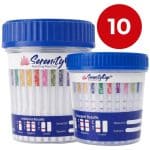
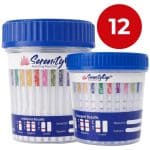
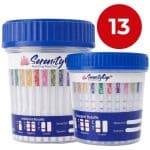
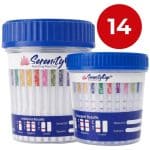
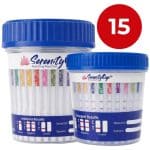
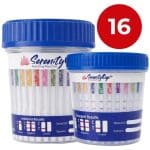
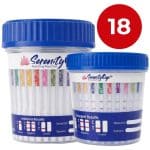
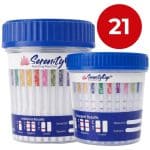
An instant cup is a screening tool built for speed and volume. It reads on-site in about five minutes, needs no lab turnaround, and costs little enough to test at scale, which is why it is ideal for pre-employment (same-day clearance for negative candidates), random testing, and initial post-incident screening. A CLIA-waived urine cup lets HR run the screen in-house without a lab license. Its one limit is the point of the next section: the result is presumptive, not final.
What lab-based urine testing does best
A lab performs confirmatory testing that an instant cup cannot. Using GC/MS or LC/MS, a certified lab identifies the specific molecule rather than a structural look-alike, quantifies how much is present, and produces a result that holds up to legal challenge. Paired with a Medical Review Officer, it can distinguish a prescribed medication from misuse, which protects both the employer and the employee. The trade-off is turnaround (a few business days) and cost, which is exactly why you reserve it for the results that matter.
Why the cup-then-lab model wins
The instant cup handles the bulk of your testing at low cost and clears most people immediately. Only the small percentage that screen non-negative go to the lab, where the higher cost and slower turnaround are justified by the stakes. This model gives you the best of both: fast, affordable screening across everyone, and airtight confirmation on the handful of results that could lead to an employment decision. Budget for lab confirmation on your expected non-negative rate, not your whole volume, and you get defensibility without paying lab prices on every test.
When you might skip the instant cup
Some employers in tightly regulated contexts send specimens straight to a lab because their rules require it (DOT-regulated testing is lab-based by law). If your program is not regulated, the cup-then-lab model is almost always more efficient. And some very low-volume employers who rarely test may find a lab-only arrangement simpler than stocking cups. For most workplaces running regular testing, though, screening with cups first is the cost-effective path. Stocking cups in bulk brings the per-screen cost down further.
Getting the handoff right
The reliability of the model depends on the handoff. Maintain chain of custody from collection through the lab so a confirmed result is defensible. Never take an adverse action on an unconfirmed instant result. And apply the same screen-then-confirm process to every donor, because inconsistency is where legal challenges begin. Done right, the cup and the lab together give you a workplace program that is fast where it can be and rigorous where it must be. Build your on-site screening supplies from the workplace testing range.
FAQ
Is a lab urine test more accurate than an instant cup?
For confirmation, yes. Labs use GC/MS or LC/MS to identify and quantify the specific substance. Instant cups are accurate screening tools but produce presumptive results.
Can I fire someone based on an instant cup result?
Not safely. Confirm any non-negative at a certified lab, ideally with MRO review, before any adverse action.
Why not just send every test to a lab?
Cost and turnaround. Screening with instant cups first clears most donors same-day and reserves lab spending for the few non-negative results that need confirmation.
Do instant cups and lab tests use the same cutoffs?
They are aligned but the lab provides a precise quantified measurement against the cutoff, while the cup gives a presumptive positive or negative at that threshold.