Role of Drug Testing in Rehabilitation: Ensuring Recovery Success


Drug Testing Rehabilitation helps American rehabilitation center administrators find the right solutions to ensure lasting patient recovery. More than just a box to check, drug testing is a foundational tool for supporting accountability, tracking treatment progress, and preventing relapse in substance abuse programs. Effective supply choices enable your center to monitor abstinence, meet legal standards, and respect patient dignity, setting the stage for stronger outcomes and continued compliance.
Table of Contents
- Defining Drug Testing in Rehabilitation Programs
- Types of Drug Tests Used in Treatment Centers
- Implementing Drug Testing: Processes and Protocols
- Legal and Ethical Standards for U.S. Rehab Centers
- Accountability, Relapse Prevention, and Common Pitfalls
Defining Drug Testing Rehabilitation Programs
Drug testing is a critical component in modern substance abuse treatment that helps healthcare professionals monitor patient recovery and prevent potential relapse. Comprehensive drug testing practices enable rehabilitation centers to track patient progress and support long-term recovery goals.
In rehabilitation settings, drug testing involves systematically collecting and analyzing biological samples – such as urine, blood, hair, or saliva – to detect the presence of specific substances. These tests serve multiple strategic purposes:
- Verify patient abstinence from prohibited substances
- Monitor treatment effectiveness
- Support accountability in recovery programs
- Provide objective evidence of patient progress
- Help customize individualized treatment plans
The Substance Abuse and Mental Health Services Administration (SAMHSA) views drug testing as more than just a surveillance tool. Recovery process monitoring represents a holistic approach that emphasizes patient dignity, hope, and personal transformation.
Rehabilitation programs typically implement different drug testing strategies depending on patient needs and treatment phases. Some centers utilize random testing to maintain accountability, while others follow a structured schedule to track recovery milestones. The frequency and type of testing can vary based on individual patient risk factors, treatment intensity, and clinical recommendations.
Pro tip: Develop a transparent drug testing protocol that patients understand as a supportive tool for recovery, not a punitive measure.
Types of Drug Tests Used in Treatment Centers
Treatment centers employ multiple drug testing methodologies to monitor patient recovery and substance use patterns. Comprehensive drug testing approaches help rehabilitation professionals track patient progress and ensure comprehensive substance abuse monitoring.
The most common drug testing methods in rehabilitation settings include:
- Urine Drug Screening:
- Most widely used testing method
- Detects recent drug use
- Cost-effective and reliable
- Can identify multiple substance types
- Oral Fluid Testing:
- Less invasive alternative
- Shorter detection window
- Difficult to tamper with
- Immediate results possible
- Blood Testing:
- Most accurate detection method
- Used for specific clinical scenarios
- Provides precise substance concentration levels
- More expensive and invasive
- Hair Follicle Testing:
- Longest detection window (up to 90 days)
- Provides historical substance use information
- Less susceptible to tampering
- Used for comprehensive long-term tracking
Urine drug screens remain the gold standard in rehabilitation settings, offering a balance between accuracy, cost-effectiveness, and practical implementation. These tests can detect a wide range of substances including amphetamines, methamphetamine, and MDMA, providing crucial insights into a patient’s recovery journey.
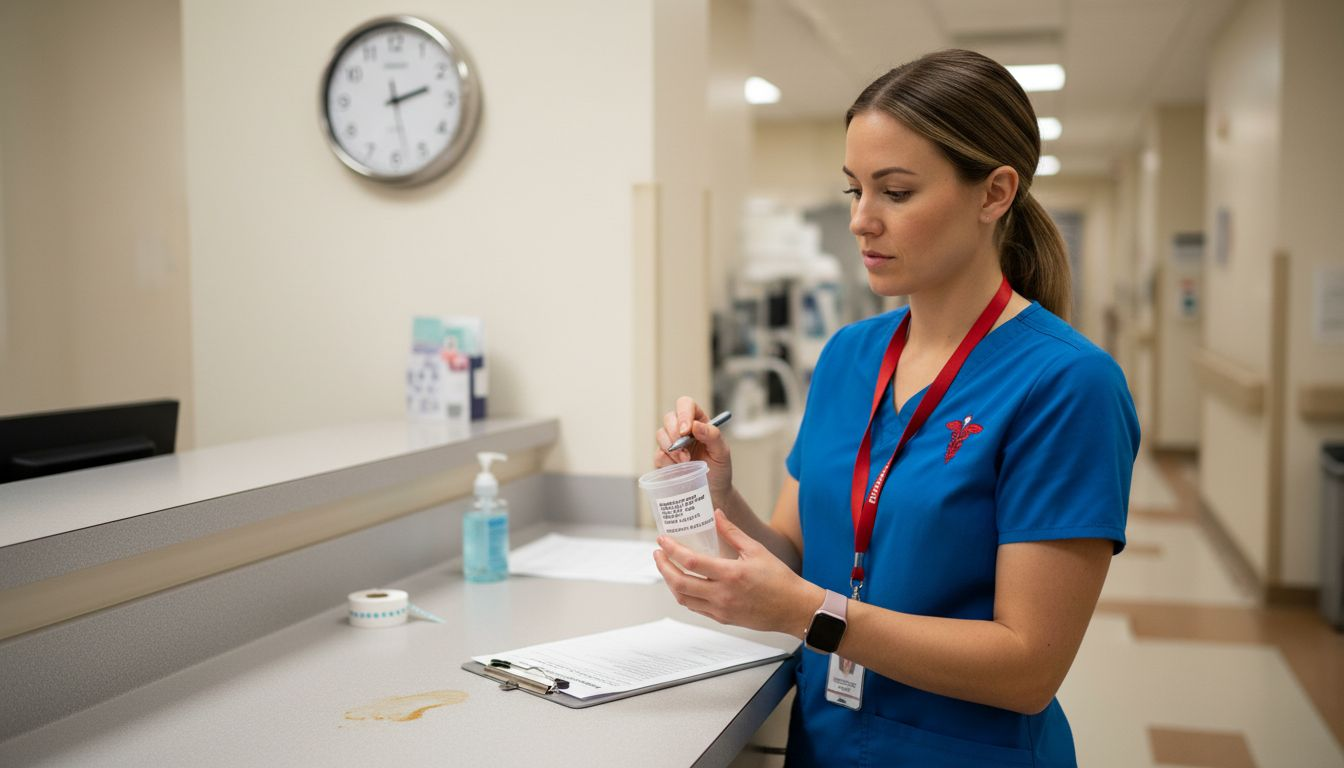
Here’s a comparison of drug testing methods used in rehabilitation centers and their most effective scenarios:
| Method | Best For | Detection Window | Notable Limitation |
|---|---|---|---|
| Urine Screening | Routine monitoring | 1-3 days | Can be tampered with |
| Oral Fluid Testing | Rapid result needs | Few hours to 2 days | Short window |
| Blood Testing | Acute intoxication checks | Hours to 2 days | Highly invasive, costly |
| Hair Follicle Testing | Long-term history review | Up to 90 days | Not ideal for recent use |
Each testing method offers unique advantages, and rehabilitation centers often combine multiple approaches to create a comprehensive monitoring strategy. The selection depends on factors like treatment phase, patient history, and specific clinical requirements.
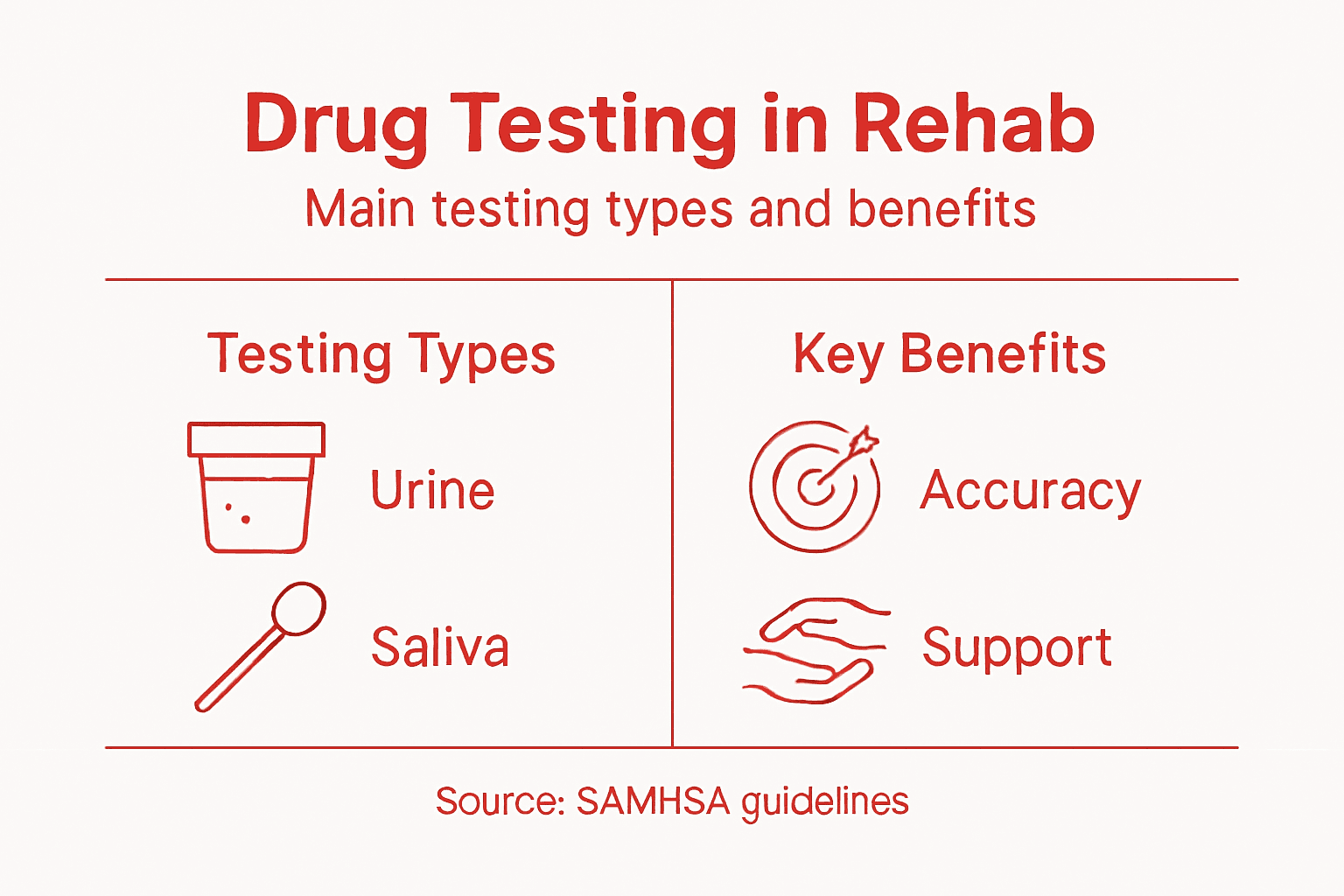
Pro tip: Select drug testing methods that balance scientific accuracy with patient comfort and treatment goals.
Implementing Drug Testing: Processes and Protocols
Drug testing in rehabilitation requires a systematic and legally compliant approach that prioritizes accuracy, patient privacy, and treatment integrity. Comprehensive testing protocols ensure reliable substance use monitoring while maintaining ethical standards for patient care.
The drug testing implementation process involves several critical stages:
- Preparation Stage:
- Develop clear testing policies
- Train collection personnel
- Establish confidentiality guidelines
- Select appropriate testing methods
- Specimen Collection:
- Follow strict chain of custody procedures
- Use certified collection sites
- Maintain patient privacy
- Prevent potential specimen tampering
- Laboratory Analysis:
- Utilize HHS-certified laboratories
- Conduct initial screening tests
- Perform confirmatory testing for positive results
- Ensure precise result interpretation
Federal regulations mandate specific protocols that rehabilitation centers must follow to maintain testing validity. These guidelines include detailed requirements for specimen handling, medical review officer evaluations, and managing potentially compromised samples.
Medical review officers play a crucial role in interpreting test results, distinguishing between legitimate medical treatments and potential substance misuse. They provide an additional layer of verification, ensuring that test results are accurately contextualized within a patient’s overall medical history.
Drug testing protocols must balance scientific rigor with patient dignity and treatment objectives.
Pro tip: Develop a transparent drug testing process that patients understand as a supportive tool for recovery, not a punitive measure.
Legal and Ethical Standards for U.S. Rehab Centers
U.S. rehabilitation centers must navigate a complex legal landscape that balances patient privacy, treatment effectiveness, and regulatory compliance. Ethical drug testing guidelines provide critical frameworks for implementing responsible substance abuse monitoring programs.
Key legal and ethical considerations include:
- Patient Rights Protection:
- Maintain strict confidentiality
- Ensure non-discriminatory practices
- Obtain informed consent
- Protect medical information privacy
- Regulatory Compliance:
- Follow Americans with Disabilities Act (ADA)
- Adhere to HIPAA regulations
- Implement transparent testing policies
- Respect individual medical histories
- Ethical Testing Principles:
- Use testing as treatment support
- Avoid punitive approaches
- Provide clear communication
- Maintain professional boundaries
Federal regulations mandate comprehensive guidelines that rehabilitation centers must follow. These regulations emphasize that drug testing should serve as a supportive tool within broader treatment strategies, not as a means of punishment or surveillance.
Medical professionals must carefully balance scientific requirements with patient dignity, ensuring that drug testing protocols respect individual rights while supporting recovery objectives. This approach requires ongoing training, transparent policies, and a patient-centered perspective that prioritizes treatment and rehabilitation.
Below is a summary of core ethical and legal priorities for U.S. rehab centers:
| Priority Area | Central Goal | Impact on Recovery |
|---|---|---|
| Patient Rights | Protect privacy and dignity | Builds trust with patients |
| Regulatory Policies | Ensure law compliance | Maintains treatment legality |
| Ethical Principles | Support, not punish, patients | Enhances recovery outcomes |
Ethical drug testing transforms from a compliance requirement to a compassionate recovery support mechanism.
Pro tip: Design drug testing protocols that prioritize patient trust and treatment success over administrative control.
Accountability, Relapse Prevention, and Common Pitfalls
Accountability serves as a cornerstone of successful substance abuse recovery, transforming treatment from passive intervention to active patient engagement. Evidence-based accountability strategies help rehabilitation centers support long-term patient recovery and minimize relapse risks.
Key components of effective accountability include:
- Personal Responsibility:
- Acknowledge substance use history
- Accept treatment recommendations
- Commit to behavioral changes
- Participate actively in recovery process
- Monitoring Mechanisms:
- Regular drug testing
- Counseling check-ins
- Progress tracking
- Transparent communication
- Relapse Prevention Strategies:
- Identify potential triggers
- Develop coping mechanisms
- Create support networks
- Implement backup intervention plans
Treatment accountability measures play a crucial role in reinforcing patient commitment and preventing potential setbacks. By integrating systematic monitoring with compassionate support, rehabilitation centers can help patients navigate the complex journey of recovery.
Common pitfalls in accountability include over-reliance on punitive testing approaches, insufficient personalized support, and failure to address underlying psychological factors contributing to substance abuse. Successful programs recognize that accountability is not about punishment, but about empowering patients to take ownership of their recovery journey.
Accountability transforms from an external requirement to an internal motivation for sustained recovery.
Pro tip: Design accountability protocols that motivate and support patients rather than making them feel policed or judged.
Enhance Recovery Success with Reliable Drug Testing Solutions
Ensuring recovery success in rehabilitation programs hinges on accurate and consistent drug testing to support accountability and relapse prevention. This article highlights the need for clear drug testing protocols that prioritize patient dignity and treatment goals while monitoring progress effectively. At 12 Panel Now, we understand the challenges faced by healthcare providers in selecting reliable and easy-to-use drug testing supplies that align with these principles.
Explore our Complete Drug Test Knowledge Base – 12 Panel Now to discover comprehensive information on various drug testing methods used in treatment settings. Whether you are looking for urine drug screens or other testing kits, our high-quality products help you implement a transparent, patient-focused drug testing strategy that can enhance recovery accountability. For answers to common questions and best practices around drug testing, visit our Drug Testing FAQs: Unravel the Mysteries about Drug Testing.
Don’t let unreliable testing supplies slow down patient progress. Act now to get your trusted drug testing tools from 12 Panel Now. Equip your program with the resources it needs to support recovery every step of the way.
Frequently Asked Questions
What is the purpose of drug testing in rehabilitation programs?
Drug testing in rehabilitation programs serves to monitor patient recovery, verify abstinence from substances, track treatment effectiveness, and provide support for individualized treatment plans.
What types of drug tests are commonly used in rehabilitation centers?
Common drug testing methods used in rehabilitation centers include urine drug screening, oral fluid testing, blood testing, and hair follicle testing, each with different detection windows and applications.
How often is drug testing performed in rehabilitation programs?
The frequency of drug testing in rehabilitation programs can vary depending on patient needs, treatment phases, and clinical recommendations, with some centers utilizing random testing and others following a structured schedule.
What legal and ethical considerations are involved in drug testing for rehab patients?
Legal and ethical considerations include protecting patient rights and confidentiality, ensuring regulatory compliance with laws like HIPAA and the ADA, and using drug testing as a supportive tool rather than a punitive measure.
Recommended
- Study: Drug Testing’s Impact on Long-Term Sobriety – 12PanelNow | 12 Panel Drug Test | Free Shipping
- 7 Essential Drug Testing Facts for Rehab Centers
- Substance Abuse vs. Workplace Productivity: Key Insights – 12PanelNow | 12 Panel Drug Test | Free Shipping
- Legal Considerations Drug Testing Guide for Compliance