DOT Compliance and Drug Testing—What Healthcare Must Know


Table of Contents
- Defining DOT Compliance In Drug Testing
- DOT-Regulated Industries And Testing Scenarios
- Key Requirements For DOT Drug Tests
- Legal Framework And Federal Oversight
- Common DOT Compliance Risks And Pitfalls
Defining DOT Compliance in Drug Testing
DOT compliance in drug testing represents a comprehensive regulatory framework established to ensure safety across transportation industries. The Department of Transportation (DOT) mandates strict guidelines for drug and alcohol testing among safety-sensitive employees, creating standardized protocols that protect workplace environments and public safety.
The core of DOT compliance stems from the Omnibus Transportation Employee Testing Act of 1991, which established uniform standards for drug and alcohol screening across multiple transportation sectors. DOT drug testing procedures are governed by 49 CFR Part 40, a critical regulation that specifies precise requirements for:
- Specimen collection protocols
- Testing methodologies
- Verification processes
- Reporting standards
- Employee privacy protections
These regulations apply comprehensively across various transportation modes, including:
- Commercial trucking
- Aviation
- Railroad operations
- Public transit systems
- Maritime transportation
DOT compliance isn’t optional – it’s a mandatory safety requirement for regulated transportation industries.
The primary goal of these regulations is preventing substance abuse from compromising transportation safety. By establishing rigorous testing standards, the DOT aims to reduce accidents, protect employee health, and maintain high safety standards across transportation networks.
Pro tip: Healthcare administrators should maintain meticulous documentation of drug testing procedures to demonstrate consistent DOT compliance and protect their organization from potential regulatory penalties.
DOT-Regulated Industries and Testing Scenarios
DOT drug testing regulations extend across multiple transportation sectors, creating comprehensive safety protocols for employees performing safety-sensitive functions. DOT drug panels play a critical role in maintaining workplace safety and regulatory compliance across various transportation industries.
The primary industries subject to DOT drug testing regulations include:
- Commercial motor vehicle operators
- Aviation professionals
- Railroad employees
- Public transit workers
- Maritime transportation personnel
- Pipeline and hazardous materials transportation workers
- Trucking and interstate transportation professionals
Each of these industries requires specific testing scenarios designed to ensure public safety and minimize workplace risks. These testing scenarios encompass multiple critical stages:
Here’s a summary of DOT-regulated industries, their oversight agency, and each industry’s safety-sensitive roles:
| Industry | Federal Oversight Agency | Examples of Safety-Sensitive Roles |
|---|---|---|
| Commercial Motor Vehicles | FMCSA | Truck drivers, bus drivers |
| Aviation | FAA | Pilots, mechanics |
| Railroads | FRA | Engineers, conductors |
| Public Transit | FTA | Transit operators, maintenance staff |
| Maritime Transportation | USCG | Ship captains, vessel crew |
| Pipeline/Hazmat Transportation | PHMSA | Pipeline controllers, hazmat response |
- Pre-employment screening
- Random periodic testing
- Post-accident investigation
- Reasonable suspicion assessment
- Return-to-duty verification
- Follow-up monitoring
DOT regulations mandate systematic drug testing to protect public safety across transportation networks.
The comprehensive nature of these testing requirements reflects the DOT’s commitment to maintaining high safety standards. By implementing rigorous screening processes, transportation organizations can effectively identify and mitigate potential substance abuse risks that could compromise employee and public safety.
Pro tip: Develop a standardized tracking system for drug testing documentation to streamline compliance and demonstrate proactive safety management across your organization.
Key Requirements for DOT Drug Tests
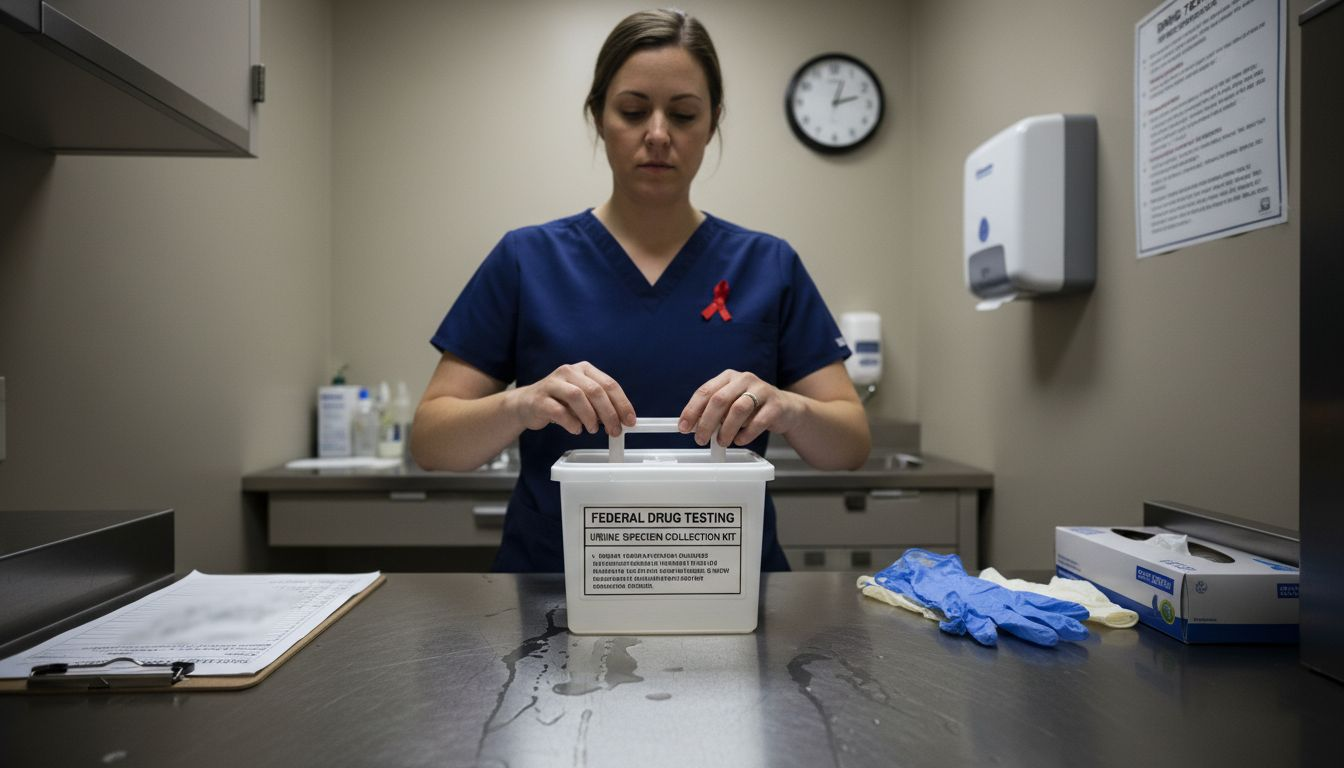
DOT drug testing mandates strict compliance protocols that healthcare organizations must carefully navigate. Best practices for drug testing require comprehensive understanding of the regulatory framework established under 49 CFR Part 40, which governs every aspect of substance screening for safety-sensitive employees.
The core requirements for DOT drug tests include several critical components:
- Specific testing panel configurations
- Certified collection site procedures
- Strict chain of custody documentation
- Laboratory-based confirmatory testing
- Medical review officer (MRO) verification
- Confidential result reporting
The testing process involves multiple sophisticated stages designed to ensure accuracy and prevent potential manipulation:
- Specimen collection at DOT-approved facilities
- Initial screening using immunoassay technologies
- Confirmation testing with gas chromatography/mass spectrometry
- Comprehensive result analysis by certified medical professionals
- Detailed reporting and potential follow-up actions
- Maintaining strict confidentiality protocols
Precision and integrity are fundamental to DOT drug testing standards.
Healthcare organizations must implement robust systems that not only meet but exceed these regulatory requirements. The comprehensive approach ensures workplace safety while protecting individual employee rights through carefully designed screening mechanisms.
Pro tip: Develop a centralized training program that keeps all personnel updated on the latest DOT drug testing regulations and procedural nuances.
Legal Framework and Federal Oversight
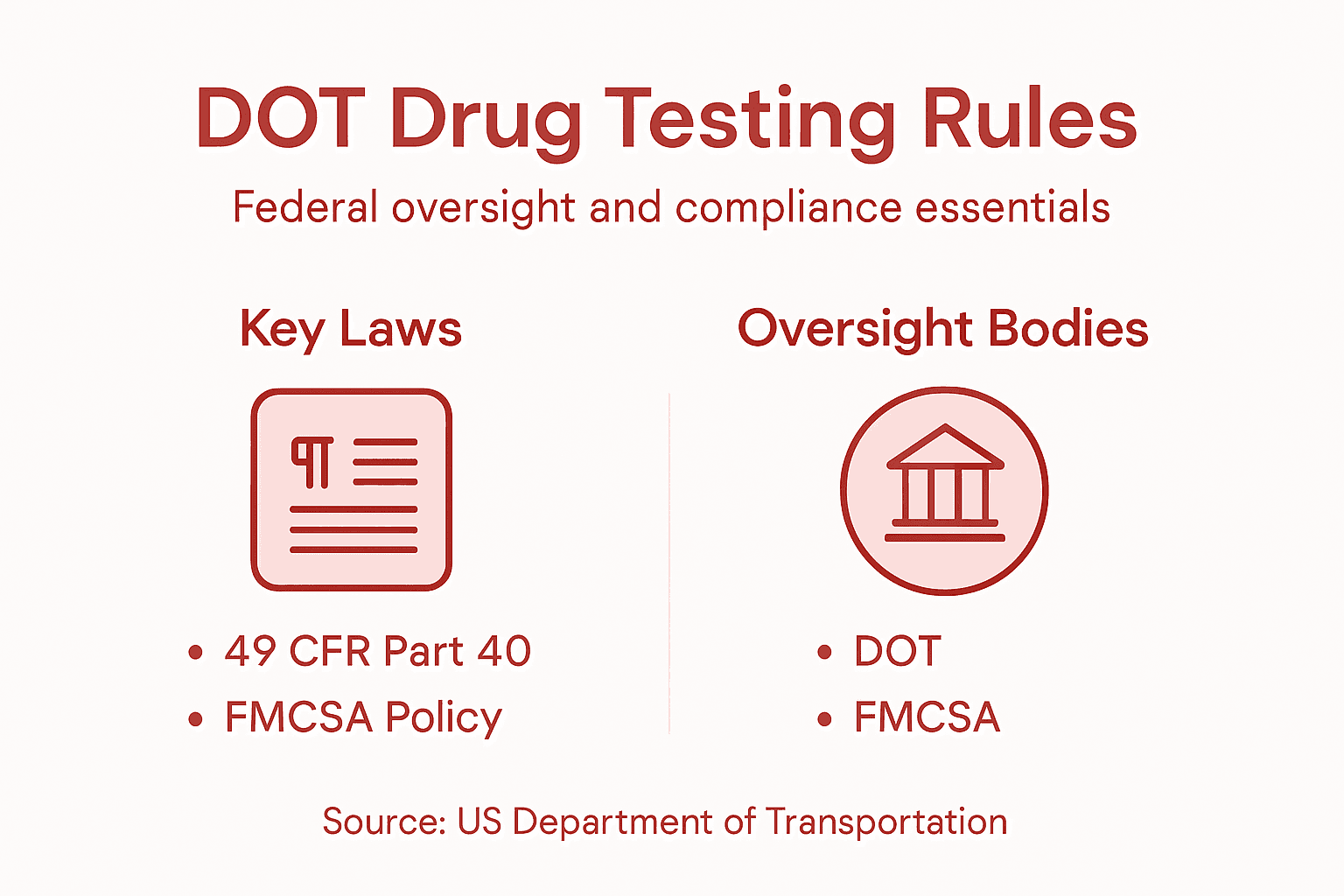
The legal foundation for transportation drug testing is anchored in the Omnibus Transportation Employee Testing Act of 1991, establishing comprehensive regulatory standards across multiple federal agencies. DOT drug test guidelines provide a robust framework that ensures consistent safety protocols and compliance mechanisms for transportation industries.
Key federal agencies responsible for oversight include:
- Department of Transportation (DOT)
- Federal Motor Carrier Safety Administration (FMCSA)
- Federal Aviation Administration (FAA)
- Pipeline and Hazardous Materials Safety Administration (PHMSA)
- Federal Railroad Administration (FRA)
- United States Coast Guard (USCG)
The regulatory landscape encompasses multiple critical components:
- Establishing standardized testing procedures
- Defining safety-sensitive job classifications
- Implementing mandatory screening requirements
- Creating consequence management protocols
- Ensuring employee privacy protections
- Developing consistent enforcement mechanisms
Federal regulations provide a comprehensive framework designed to protect workplace and public safety.
Transportation organizations must navigate a complex web of federal regulations that mandate rigorous drug testing standards. These regulations are continually evolving to address emerging workplace safety challenges and technological advancements in substance screening methodologies.
Pro tip: Conduct quarterly reviews of federal regulatory updates to ensure your organization maintains full compliance with the latest DOT drug testing requirements.
Common DOT Compliance Risks and Pitfalls
Navigating DOT compliance requirements demands meticulous attention to detail and comprehensive understanding of potential procedural risks. Legal considerations for drug testing reveal numerous complex pitfalls that can compromise an organization’s regulatory standing and expose it to significant legal vulnerabilities.
The most frequent compliance risks include:
- Inadequate employee training programs
- Improper specimen collection procedures
- Insufficient documentation management
- Failure to conduct required random testing
- Inconsistent communication of testing policies
- Lack of supervisor substance abuse recognition training
Critical areas where organizations frequently encounter compliance challenges involve:
- Misinterpreting testing frequency requirements
- Neglecting confidentiality protocols
- Failing to implement proper medical review processes
- Incomplete recordkeeping
- Inconsistent enforcement of testing standards
- Inadequate follow-up procedures for positive test results
Regulatory compliance is not optional – it’s a fundamental safety requirement.
Healthcare and transportation organizations must develop comprehensive strategies that anticipate and mitigate potential compliance risks. This requires ongoing education, systematic documentation, and a proactive approach to understanding evolving regulatory landscapes.
This comparison outlines common DOT compliance pitfalls and strategies to effectively mitigate each risk:
| Compliance Risk | Impact on Organization | Effective Mitigation Strategy |
|---|---|---|
| Inadequate employee training | Increased violation risk | Mandatory regular training sessions |
| Improper specimen collection procedures | Unreliable test results | Strict collection site protocols |
| Insufficient documentation management | Regulatory penalties | Digital recordkeeping system |
| Failure to conduct random testing | Legal repercussions | Automated random testing schedule |
| Inconsistent policy communication | Employee confusion, poor compliance | Clear policy distribution and review |
| Lack of supervisor recognition training | Missed warning signs | Supervisor certification programs |
Pro tip: Implement a quarterly compliance audit system that systematically reviews all drug testing procedures and documentation to identify and address potential regulatory vulnerabilities.
Simplify DOT Compliance with Trusted Drug Testing Supplies
Navigating the complex DOT compliance requirements outlined in the article presents a significant challenge for healthcare and transportation organizations. From precise specimen collection protocols to maintaining strict documentation and chain of custody, every step demands accuracy and reliability. The pressure to meet federal standards while safeguarding employee privacy and ensuring workplace safety can create uncertainty and risk.
At 12 Panel Now, we understand these pain points and provide healthcare facilities with high-quality drug testing supplies designed to support your strict compliance goals. Our dependable products help streamline your DOT drug testing process enabling you to maintain rigorous standards such as those governed by 49 CFR Part 40. Explore our selection of certified collection kits and essential supplies tailored for safety-sensitive roles to reduce compliance risks and keep your organization ready for regulatory audits.
Take control of your compliance strategy today by visiting 12 Panel Now to discover trusted drug testing products. Ensure your facility meets DOT drug test requirements with confidence and stay ahead of evolving regulations by partnering with an expert supplier you can rely on.
Frequently Asked Questions
What is DOT compliance in drug testing?
DOT compliance in drug testing refers to the regulatory framework established by the Department of Transportation to ensure safety among employees in safety-sensitive positions. It involves adherence to stringent guidelines set forth in the Omnibus Transportation Employee Testing Act and its regulations, including specimen collection procedures and testing methodologies.
Which industries are subject to DOT drug testing regulations?
DOT drug testing regulations apply to various transportation industries, including commercial trucking, aviation, railroads, public transit, maritime transportation, and pipeline/hazmat transportation. Employees in safety-sensitive roles within these industries must comply with these testing regulations.
What are the key requirements for conducting DOT drug tests?
Key requirements for DOT drug tests include specific testing panel configurations, certified collection site procedures, chain of custody documentation, laboratory-based confirmatory testing, medical review officer (MRO) verification, and confidential result reporting to ensure accuracy and employee rights protection.
What are common compliance risks in DOT drug testing?
Common compliance risks include inadequate employee training, improper specimen collection procedures, insufficient documentation management, failure to conduct required random testing, and lack of supervisor substance abuse recognition training. Organizations need to implement robust strategies to mitigate these risks.