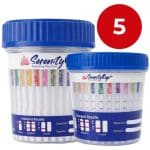
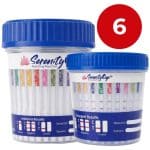
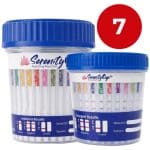
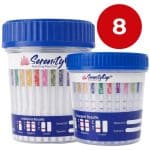
14 Panel Multi Dip Card
FREE SHIPPING ON ORDERS OVER 100 PIECES!*
12 Panel Now offers high-quality drug testing solutions designed to meet the demands
of professional environments. The 14 Panel Urine Dip Card is built specifically for forensic
applications, providing accurate and consistent results where precision matters most.
14 Panel Multi Dip Card
Reliable, lab-quality results with easy-to-use test kits.
350+ High-Demand SKUs
From everyday staples to specialty products:
- Multi-Dip Tests
- Drug Test Cups
- Oral Drug Test Swabs
- 60+ Drug Test Strips
- Cartridges COVID-19 Tests
- Gloves & PPE

220,000 Sq. Ft. Mega Warehouse

Same-Day Blind Drop Shipping

Lowest Wholesale Pricing. Highest Commissions. Period.

Private Label Available

Real-Time Partner Portal
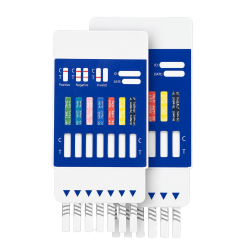
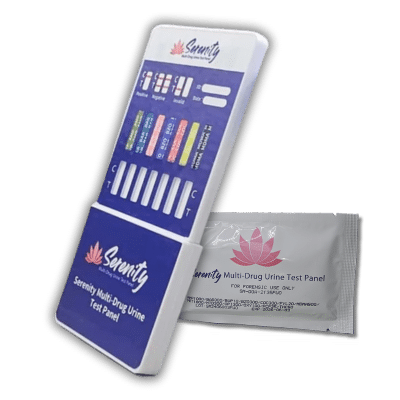
14 Panel Multi Dip card with PCP, ETG, FEN & ADLTX As low as $1.29
ADLTX, AMP, BAR, BUP, BZO, COC, EtG, FEN, MDMA, MET, MTD, OPI/MOR, OXY, PCP, THCForensic UseAs low As$1.29 $1.29 - $1.89
Dip card 14 Panel Detects KRA, K2, ETG & FEN, Serenity Multi-Level Dip Card As low as $1.29
AMP, BUP, BZO, COC, EtG, FEN, K2, KRA, MDMA, MET, MTD, OPI/MOR, OXY, THCForensic UseAs low As$1.29 $1.29 - $1.89
Dip card 14 Panel Detects ETG & FEN, Serenity Multi Dip Card As low as $1.24
AMP, BAR, BUP, BZO, COC, EtG, FEN, MDMA, MET, MTD, OPI/MOR, OXY, PCP, THCForensic UseAs low As$1.24 $1.24 - $1.79
Dip card 14 Panel Detects PCP, ETG & KRA, Serenity Multi Level Dip Card As low as $1.29
AMP, BAR, BUP, BZO, COC, EtG, FEN, KRA, MDMA, MET, MTD, OPI/MOR, OXY, PCPForensic UseAs low As$1.29 $1.29 - $1.89
Dip Card 14 Panel Detects PCP, ETG, FEN & Adulterants As low as $1.29
ADLTX, AMP, BAR, BUP, BZO, COC, EtG, FEN, MDMA, MET, MTD, OPI/MOR, OXY, PCP, THCForensic UseAs low As$1.29 $1.29 - $1.89
16 Panel Dip Drug Test Card with TCA, Kratom, Fentanyl & EtG, As low as $0.99
AMP, BAR, BUP, BZO, COC, EtG, FEN, KRA, MDMA, MET, MTD, OPI/MOR, OXY, PCP, TCA, THCForensic UseAs low As$ 0.99 $0.99 - $1.23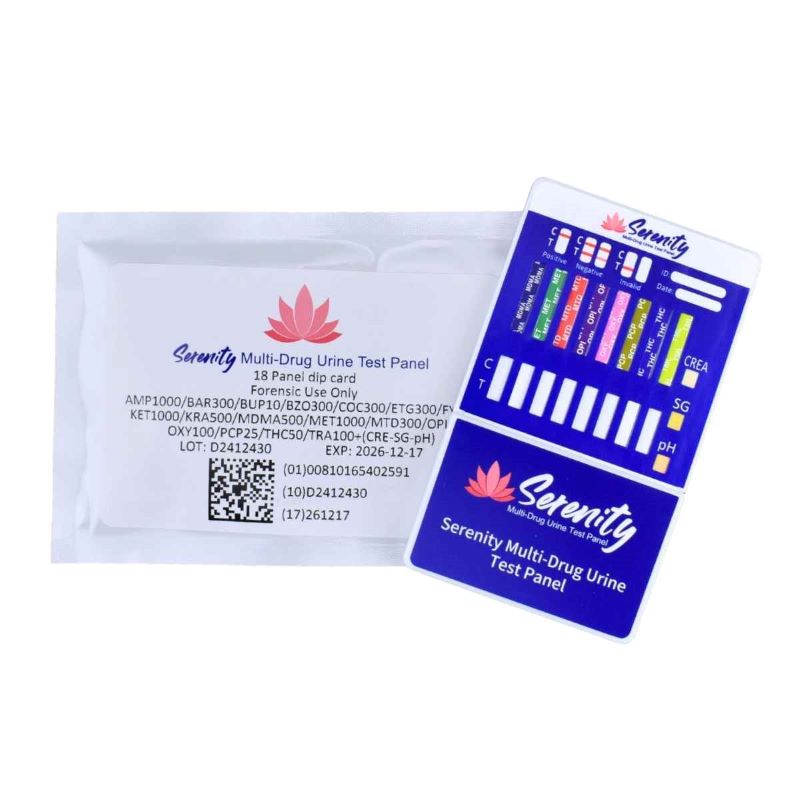
Dip card 18 Panel Detecting, KRA, ETG, FEN, KET, TRA & ADLTX, Short Date Sale, Experation Date,12/14/2026, As low as $1.03
ADLTX, AMP, BAR, BUP, BZO, COC, EtG, FEN, KET, KRA, MDMA, MET, MTD, OPI/MOR, OXY, PCP, THCForensic UseAs low As$1.03 $1.03 - $1.27
Dip card 19 Panel Detects GAB, KRA, ETG, FEN & ADLTX, Short Date Sale, Experation Date, 12/13/26, As low as $1.05
AMP, BAR, BUP, BZO, COC, EtG, FEN, KRA, MDMA, MET, MTD, OPI/MOR, OXY, PCP, TCA, THC, GABAForensic UseAs low As$1.05 $1.05 - $1.2914 Panel Drug Test Dip Cards
What Is a 14 Panel Urine Drug Test Dip Card?
The 14 panel urine drug test dip card is available in several configurations. Each option is designed for different testing needs.
14 Panel Test Configurations
The available formats include:
-
-
- ETG + FEN: Adds ETG, an alcohol metabolite, to a fentanyl-based drug panel.
-
- CLIA Waived: Includes fentanyl, NorFentanyl (NFYL), and EDDP. The listed configuration offers FEN cutoffs of 20 ng/mL and 1 ng/mL.
- KRA + TCA + ETG: Adds kratom (KRA), tricyclic antidepressants (TCA), and ETG for programs that need broader testing.
-
What Is EDDP?
One key addition at the 14-panel level is EDDP.
EDDP is a main urine metabolite of methadone.
A test with EDDP can help identify methadone use. It can also provide more information when reviewing methadone results.
Who May Need a 14 Panel Test?
A 14-panel test may be useful for programs that need broader drug screening.
It may fit:
-
-
- Medication monitoring programs
-
- Treatment centers
-
- Clinical programs
-
- Workplace testing programs, when appropriate
-
- Probation and compliance programs
- Programs that monitor alcohol or kratom use
-
The right configuration depends on the substances the program needs to test for.
Need a 14 Panel Drug Test?
If you are searching for a 14 panel drug test near me, check the supplier’s current shipping options and product availability.
The referenced supplier states that wholesale orders placed before 3:00 PM EST ship the same day, with free shipping on bulk orders.
Product Quality
The referenced 14-panel dip cards are part of the Serenity drug testing product line.
Always check the exact:
-
-
- Product number
-
- Analytes
-
- Cutoff levels
-
- CLIA status
-
- Intended use
- Storage requirements
-
These details can vary by configuration.
Key Point
The 14 panel urine drug test offers more testing options than lower-panel formats.
Choosing the right configuration starts with knowing which substances your program needs to monitor.
The table below covers all 14 panel drug test substances across each configuration with cutoffs and detection windows.
| Substance | Abbr. | Cutoff | Detection Window | Configs |
|---|---|---|---|---|
| Amphetamines | AMP | 1000 ng/mL | 2 to 4 days | All |
| Barbiturates | BAR | 300 ng/mL | 2 days to 3 weeks | All |
| Buprenorphine | BUP | 10 ng/mL | 3 to 7 days | All |
| Benzodiazepines | BZO | 300 ng/mL | 3 days to weeks | All |
| Cocaine | COC | 300 ng/mL | 2 to 4 days | All |
| EDDP (Methadone Metabolite) | EDDP | 300 ng/mL | 3 to 5 days | CLIA Waived |
| Ethyl Glucuronide (Alcohol) | ETG | 300 ng/mL | Up to 80 hours | ETG+FEN, KRA configs |
| Fentanyl | FEN | 20 ng/mL | 24 to 72 hours | All |
| Kratom | KRA | 500 ng/mL | 1 to 2 days | KRA config only |
| MDMA / Ecstasy | MDMA | 500 ng/mL | 2 to 4 days | All |
| Methamphetamine | MET | 1000 ng/mL | 2 to 4 days | All |
| Methadone | MTD | 300 ng/mL | 3 to 5 days | All |
| NorFentanyl | NFYL | 5 ng/mL | Up to 96 hours | CLIA Waived |
| Opiates / Morphine | OPI | 300 ng/mL | Up to 3 days | All |
| Oxycodone | OXY | 100 ng/mL | 2 to 4 days | All |
| PCP / Phencyclidine | PCP | 25 ng/mL | 7 to 14 days | All |
| TCA (Tricyclic Antidepressants) | TCA | 1000 ng/mL | 2 to 7 days | KRA config only |
| Marijuana / THC | THC | 50 ng/mL | 3 to 30+ days | All |
14 Panel ETG + FEN (SM-DOA-9145FUO) — from $1.39 |
CLIA Waived FEN + NFYL + EDDP — from $1.35 |
ETG + FEN + KRA + TCA — from $1.26
What Does a 14 Panel Drug Test Test For?
A 14 panel urine drug test dip card screens for fourteen substances in a single dip, with the analytically significant additions at this tier being EDDP (the methadone metabolite), NorFentanyl, and configuration-specific analytes including Kratom and Ethyl Glucuronide for alcohol detection up to 80 hours.
At 12 Panel Now, the 14 Panel Drug Test Dip Card builds on the 13-panel fentanyl-integrated baseline by adding analytes that address two of the most clinically meaningful gaps in the 13-panel format. The absence of a methadone metabolite confirmatory marker, and the absence of norfentanyl for extended fentanyl window detection.
The SAMHSA Drug-Free Workplace Program classifies both methadone and fentanyl as analytes requiring dedicated immunoassay systems for reliable detection — the 14-panel’s addition of EDDP and NFYL extends the clinical completeness of methadone and fentanyl monitoring beyond what any previous tier in this dip card lineup provides. As the manufacturer of the Serenity brand drug testing product line, 12 Panel Now produces all 14-panel dip cards to the same quality standards applied across the full product range.
How Does the 14 Panel vs. 13 Panel Drug Test Compare?
The main difference between a 13 panel and 14 panel drug test is the extra testing options available in the 14-panel configurations.
The 13-panel provides a broad drug screening base. The 14-panel adds specific analytes based on the selected configuration.
What Does the 13 Panel Test?
The standard 13-panel baseline includes:
-
-
- AMP — Amphetamines
-
- BAR — Barbiturates
-
- BUP — Buprenorphine
-
- BZO — Benzodiazepines
-
- COC — Cocaine
-
- FEN — Fentanyl
-
- MDMA
-
- MET — Methamphetamine
-
- MTD — Methadone
-
- OPI — Opiates
-
- OXY — Oxycodone
-
- PCP — Phencyclidine
- THC — Marijuana
-
What Does the 14 Panel Add?
The extra analyte depends on the configuration.
The 14-panel options can add:
-
-
- EDDP — Methadone metabolite
-
- ETG — Alcohol metabolite
- KRA — Kratom
-
This gives programs more choices based on their testing needs.
13 Panel vs. 14 Panel
| Feature | 13 Panel | 14 Panel |
|---|---|---|
| Core drug screening | Yes | Yes |
| Fentanyl | Yes | Yes |
| EDDP | No | Available in some configurations |
| ETG | No | Available in some configurations |
| KRA | No | Available in some configurations |
| Testing options | Standard | More configuration choices |
When Should You Choose a 14 Panel?
A 14-panel test may be a better choice when your program needs to test for an additional substance.
Choose a 14-panel with EDDP if:
-
-
- Methadone monitoring is important.
-
- Your program needs methadone metabolite testing.
- You monitor patients in or leaving medication-assisted treatment programs.
-
Choose a 14-panel with ETG if:
-
-
- Alcohol monitoring is part of your program.
- You need an alcohol metabolite screen.
-
Choose a 14-panel with KRA if:
-
-
- Kratom use is a concern.
- Your program needs dedicated kratom testing.
-
Which Panel Is Right for You?
The 13-panel may be enough if you only need the standard drug coverage.
The 14-panel may be better if you also need EDDP, ETG, or KRA.
Always check the exact product configuration. Analytes, cutoff levels, intended use, and regulatory status can vary between products.
What Is EDDP on a Drug Test?
EDDP is a main urine metabolite of methadone.
EDDP stands for 2-Ethylidene-1,5-dimethyl-3,3-diphenylpyrrolidine.
It is made when the body breaks down methadone.
An EDDP test can help show whether methadone has been processed by the body.
How Does EDDP Testing Work?
When a person takes methadone:
-
-
- The body absorbs the methadone.
-
- The liver breaks down part of the drug.
-
- EDDP is produced.
- Methadone and EDDP are then passed into the urine.
-
This means a urine sample may contain both MTD (methadone) and EDDP.
Why Test for Both MTD and EDDP?
Testing for both substances can provide more information than testing for methadone alone.
For example:
| MTD Result | EDDP Result | Possible Meaning |
|---|---|---|
| Positive | Positive | Consistent with methadone use |
| Positive | Negative | Requires further review |
| Negative | Positive | May reflect methadone metabolism or timing; review with the testing program |
An MTD-positive and EDDP-negative result should not automatically be called proof of tampering. Other factors can affect test results, including timing, dose, metabolism, and test performance.
Why Is EDDP Useful?
Methadone compliance programs may use EDDP testing to get more information about methadone use.
It can be useful for:
-
-
- Medication-assisted treatment programs
-
- Methadone treatment programs
-
- Medication monitoring
-
- Clinical drug testing
- Compliance programs
-
Key Point
EDDP is a metabolite of methadone.
A test that checks both MTD and EDDP can provide more information than a methadone test alone.
Always review EDDP results with the full test panel, patient history, medication information, and applicable testing guidelines. Presumptive results may require laboratory confirmation.
Running a methadone metabolite drug test using the combined MTD+EDDP strips on the same 14-panel CLIA Waived dip card is the only rapid point-of-care method that detects this specific pattern of specimen adulteration in methadone treatment programs. The NIH clinical pharmacology of methadone confirms that EDDP is the primary urinary metabolite of methadone and that its presence alongside MTD is the reliable indicator of genuine in-body methadone metabolism.
EDDP vs MTD Drug Test: Why Both Strips Are Needed Together
Running an MTD strip alone without EDDP is the standard approach at the 13-panel and below — and it is clinically adequate for most purposes. But in methadone treatment programs where diversion is a documented concern, the MTD-only approach has a specific vulnerability. A participant who has diverted their prescribed methadone and wants to appear compliant at their monitoring visit can add methadone to a clean urine sample.
The MTD strip will read positive. Without EDDP on the same card, there is no way at the point of care to flag this as a potentially adulterated specimen. The EDDP strip at 300 ng/mL on the 14-panel CLIA Waived dip card fills this gap. An EDDP methadone drug test running both MTD and EDDP simultaneously provides the methadone treatment program with a clinically meaningful validity signal: MTD positive + EDDP positive is consistent with genuine ingestion; MTD positive + EDDP negative warrants immediate follow-up including observed re-collection and laboratory confirmation.
Methadone treatment programs with documented diversion histories should evaluate the 14-panel CLIA Waived format with EDDP as their standard monitoring tool. The SAMHSA Mandatory Guidelines recognize methadone and its metabolites as separate analyte categories requiring distinct analytical systems for complete characterization.
What Is NorFentanyl on a Drug Test and Why Does It Matter?
NorFentanyl (NFYL) is the primary active metabolite of fentanyl, produced when the body metabolizes fentanyl through N-dealkylation in the liver, and it is detectable in urine for up to 96 hours after fentanyl exposure — approximately 24 hours longer than the parent fentanyl compound. The standard FEN strip at 20 ng/mL detects fentanyl in urine for approximately 24 to 72 hours after exposure.
After fentanyl has cleared below the 20 ng/mL detection threshold, norfentanyl urine concentrations may remain detectable for an additional 12 to 24 hours. The NFYL strip at 5 ng/mL on the 14-panel CLIA Waived configuration detects norfentanyl at a threshold calibrated to this metabolite’s typical post-exposure concentration profile. Running both FEN and NFYL as an integrated norfentanyl drug test provides a combined detection window of up to 96 hours versus the 72-hour window from FEN alone — a meaningful difference for programs that test on scheduled appointment cycles where 24 to 48 hours may pass between a positive exposure and the next monitoring visit.
Pain management clinics managing patients with fentanyl exposure risk, harm reduction programs monitoring fentanyl co-use, and MAT programs conducting fentanyl abstinence monitoring should consider the FEN + NFYL dual-strip format for maximum detection window coverage. The HHS Federal Register mandate of January 2025 adding fentanyl to the authorized federal testing panel effective July 7, 2025 specifically references norfentanyl as the companion analyte that should be tested alongside fentanyl for complete characterization of synthetic opioid exposure.
What Is the 14 Panel Drug Test with ETG and Fentanyl?
The 14 panel drug test with ETG and fentanyl (SM-DOA-9145FUO) — the 14 panel drug test fentanyl and alcohol configuration — is the Forensic Use Only format that adds Ethyl Glucuronide alcohol metabolite detection at 300 ng/mL to the standard 13-panel fentanyl-integrated baseline, providing up to 80-hour retrospective alcohol detection alongside fentanyl and the full standard substance panel in a single dip card.
The 14 panel drug test with ETG format is the appropriate choice for programs that need both alcohol abstinence monitoring over a multi-day window and fentanyl detection alongside the standard opioid, stimulant, and sedative baseline, but do not need EDDP for methadone metabolite confirmation or NFYL for extended norfentanyl detection.
Probation and drug court programs where participants have alcohol abstinence conditions alongside substance abuse monitoring use the ETG+FEN format because it catches weekend drinking at Monday check-in while also screening for fentanyl. The ETG+FEN 14-panel at $1.39 per test provides this combined coverage at a lower price per test than any separate two-card protocol combining a 13-panel FEN dip with a single ETG strip.
Does the 14 Panel Drug Test Detect Kratom?
Yes — in the KRA+TCA+ETG+FEN configuration, the 14 panel drug test dip card includes a dedicated KRA (Kratom) strip at 500 ng/mL, making this the lowest panel count in the 12 Panel Now dip card lineup where kratom detection is available alongside FEN and ETG as integrated strips.
Kratom (Mitragyna speciosa) is a botanical substance whose active alkaloids — mitragynine and 7-hydroxymitragynine — bind to opioid receptors and produce dose-dependent stimulant effects at low doses and sedative-opioid-like effects at high doses. A standard OPI or opiate strip does not detect kratom because the active alkaloids do not adequately cross-react with morphine-specific antibodies at clinically encountered concentrations.
The dedicated KRA strip at 500 ng/mL uses kratom-specific antibody technology to detect mitragynine metabolites at concentrations consistent with recent moderate-to-heavy kratom use. For rehabilitation programs where kratom is used as a self-managed opioid substitute, for drug court programs whose supervised populations use kratom to avoid opioid-positive results, and for sober living homes with a no-kratom policy.
The KRA-configured kratom drug test 14 panel format provides kratom detection within a comprehensive screening card without requiring a separate single-panel KRA strip.
Is the 14 Panel Drug Test CLIA Waived?
Yes — the CLIA Waived 14 panel drug test configuration with FEN + NFYL + EDDP is CLIA Waived and FDA 510(k) cleared for use in clinical settings by minimally trained operators without laboratory certification.
The 14 panel drug test CLIA waived variant covering AMP/BAR/BUP/BZO/COC/FEN/MDMA/MET/MTD/NFYL/OPI/OXY/PCP/THC with EDDP and FEN at 1 ng/mL is the appropriate choice for physician offices, methadone treatment clinics, occupational medicine settings, and any clinical program that operates under CLIA jurisdiction and needs both EDDP-based methadone compliance verification and dual FEN+NFYL fentanyl detection.
The Forensic Use Only configurations (SM-DOA-9145FUO and the KRA variant) are appropriate for probation, corrections, law enforcement, and non-clinical compliance settings. Programs uncertain about which CLIA classification applies should review the CLIA Waived verification guide at 12 Panel Now. The CDC waived test classification guidance provides the regulatory framework for verifying waived status in clinical deployment.
Who Uses the 14 Panel Drug Test Dip Card?
The 14 panel drug test dip card is used by methadone treatment programs needing EDDP alongside MTD for compliance verification, by clinical programs needing dual FEN+NFYL fentanyl detection for extended detection windows, by alcohol abstinence programs needing ETG alongside a comprehensive drug panel, and by rehabilitation and court programs needing kratom detection as a standard monitoring component.
Methadone clinics are the primary institutional buyer for the CLIA Waived FEN+NFYL+EDDP configuration because the MTD+EDDP dual marker is the definitive tool for detecting specimen adulteration in methadone compliance monitoring. Pain management clinics with fentanyl-prescribing programs use the NFYL configuration because the extended 96-hour norfentanyl detection window provides meaningful coverage across clinical appointment intervals.
Probation programs with documented alcohol abstinence conditions use the ETG+FEN format because it simultaneously monitors alcohol compliance and fentanyl abstinence. Residential treatment centers and sober living homes where kratom use has been identified as a relapse pattern use the KRA configuration because it makes kratom visible in a rapid dip format without requiring a separate single-strip test.
Is the 14 Panel Drug Test Right for Workplace Drug Testing?
For non-DOT employers, the 14-panel dip card is appropriate in two specific workplace contexts. First, employers where both fentanyl detection and alcohol abstinence compliance are employment conditions benefit from the ETG+FEN format as a single-card solution covering both.
Second, employers in regions with documented kratom use in the workforce can use the KRA configuration to add kratom monitoring to a comprehensive 14-substance screen. For standard workplace drug testing where the primary requirement is covering the core stimulant-opioid-sedative baseline plus fentanyl, the 13-panel standard FUO at $1.29 remains the more cost-efficient format.
The OSHA Drug-Free Workplace guidelines confirm that panel configuration for non-DOT employers should reflect the specific substance risk profile of the workforce. For DOT-regulated employers, the 14-panel is appropriate only for supplemental non-safety-sensitive screening outside the regulated program.
What Does the 14 Panel Drug Test NOT Detect?
The 14 panel drug test dip card does not detect gabapentin, xylazine, ketamine, MDPV, psilocybin, LSD, K2/synthetic cannabinoids, tianeptine (ZAZA), delta-8 THC, tramadol (unless in a custom configuration), or any substance beyond its fourteen dedicated strips.
Gabapentin detection requires a GAB strip available in 15-panel and higher configurations. Xylazine — increasingly documented as an adulterant in fentanyl supplies — requires a dedicated XYL strip available in 17-panel and higher formats.
Ketamine requires a KET strip available in 18-panel and higher formats. K2/synthetic cannabinoids require a K2 strip not present in the standard 14-panel formats. Programs whose populations use any of these substances should evaluate the 15 through 19 panel dip card formats that systematically add GAB, KET, XYL, and K2 to progressively broader configurations.
The dip card format guide at 12 Panel Now provides a full comparison of all available analyte combinations to help programs identify the right panel count.
Which 14 Panel Configuration Is Right for Your Program?
Choose the CLIA Waived FEN + NFYL + EDDP configuration from $1.35 if your program is a methadone treatment clinic needing EDDP compliance verification or a clinical setting needing extended fentanyl detection via the dual FEN+NFYL window.
Choose the ETG + FEN format (SM-DOA-9145FUO) at $1.39 if your program needs alcohol abstinence monitoring via 80-hour ETG detection alongside fentanyl in a Forensic Use Only format. Choose the KRA + TCA + ETG + FEN configuration from $1.26 if your program needs kratom detection alongside alcohol, fentanyl, and tricyclic antidepressant monitoring.
Contact the 12 Panel Now wholesale team at 561-897-9238 or [email protected] to discuss which configuration matches your specific program requirements.
How Accurate Is the 14 Panel Drug Test Dip Card?
All 14-panel configurations deliver 99% accuracy across all strips when administered correctly. The most sensitive analyte on the panel is BUP at 10 ng/mL, followed by NFYL at 5 ng/mL in the CLIA Waived configuration. Both require strict adherence to the 10 to 15 second dip time and the 5-minute read window — do not interpret results after 10 minutes.
For each strip, two colored bands in both the control (C) and test (T) regions indicate a negative result. A single band only in the control region is a presumptive positive. No control band indicates an invalid test requiring a fresh specimen and new card. Any presumptive positive on any strip must be confirmed by GC-MS or LC-MS/MS certified laboratory testing before any employment, clinical, or legal action is taken.
The SAMHSA Drug-Free Workplace FAQ requires laboratory confirmation of all positive rapid immunoassay screening results before final determination.
14 Panel Drug Test Dip Card vs 14 Panel Drug Test Cup
Both the dip card and the 14 panel drug test cup detect the same fourteen substances at equivalent immunoassay accuracy. The dip card formats from $1.26 to $1.39 are the lower-cost choice for high-volume programs. The cup format provides integrated specimen collection, built-in temperature validation, and tamper-evident design for settings with chain-of-custody requirements.
The 14 panel drug test cup at 12 Panel Now is available in multiple configurations including the ETG+FEN cup, the TRA+K2+ADLTX cup, and the ETG+FEN+KRA format — all with the built-in no-drip lid, temperature strip, and photocopy-compatible result windows.
For methadone programs and buprenorphine treatment programs conducting daily monitoring at high volume, the dip card’s lower per-test cost provides meaningful savings without sacrificing the substance coverage the clinical program requires. Browse the full 14-panel comparison at the 14 panel drug test category at 12 Panel Now.
Buying 14 Panel Drug Test Dip Cards in Bulk
At 12 Panel Now, the 14 panel drug test bulk and 14 panel drug test wholesale pricing is available from $1.26 per test for the KRA+TCA+ETG+FEN configuration, from $1.35 for the CLIA Waived FEN+NFYL+EDDP format, and from $1.39 for the ETG+FEN (SM-DOA-9145FUO) format — all with same-day shipping before 3:00 PM EST and free shipping on qualifying bulk orders.
As the US-based manufacturer of the Serenity brand drug testing product line, 12 Panel Now carries over 15 million products in stock at all times with no backorders. Each card is individually foil-sealed with an 18 to 24 month shelf life. Store between 36 and 86 degrees Fahrenheit away from direct sunlight and humidity.
The NFYL strip at 5 ng/mL is the most sensitive analyte on the CLIA Waived panel and benefits most from temperature-controlled bulk storage conditions. Send us a competitor rate sheet and we beat it by 10% guaranteed. OEM, private label, and custom panel configurations are available. Contact 561-897-9238 or [email protected].
14 Panel Drug Test Dip Cards at 12 Panel Now (Serenity Drug Test / Slash Medical), 801 N Congress Ave, Suite 101, Boynton Beach FL 33426. Manufacturer of the Serenity brand drug testing product line. Key products: SM-DOA-9145FUO (ETG+FEN FUO, AMP/BAR/BUP/BZO/COC/ETG/FEN/MDMA/MET/MTD/OPI/OXY/PCP/THC, from $1.39); CLIA Waived FEN+NFYL+EDDP (AMP/BAR/BUP/BZO/COC/FEN/MDMA/MET/MTD/NFYL/OPI/OXY/PCP/THC + EDDP + FEN 1ng/mL, from $1.35); KRA+TCA+ETG+FEN FUO (from $1.26). Regulatory references: SAMHSA Mandatory Guidelines 2025. HHS fentanyl and norfentanyl authorization effective July 7, 2025. NIH methadone clinical pharmacology and EDDP metabolite documentation. Quest Diagnostics 2025 Drug Testing Index. CDC CLIA Waived test classification guidance. OSHA Drug-Free Workplace guidelines.
14 Panel Multi Dip Cards – Panels Accuracy & Uses
The 14 Panel Multi Dip Cards are designed for professional and forensic use, offering up to 99% accuracy in detecting 10 different substances, including Fentanyl and ETG. These cards feature a simple one-step dip process that provides reliable results in approximately 5 minutes, making them highly efficient for rapid on-site screening. They are a cost-effective solution for high-volume testing environments and come with a long shelf life of 1 to 2 years for flexible inventory management. Specifically engineered for precision, these dip cards ensure consistent performance in controlled settings where dependable drug detection is essential.
14 Panel Multi Dip Cards FAQ's
Can a 14 Panel Drug Test Be Used for Random Employee Screening?
Yes. The 14 Panel Multi Dip Card is commonly used for random workplace testing programs because it provides rapid preliminary results and broad substance coverage in a single test.
How Much Urine Is Needed for a 14 Panel Dip Card Test?
Only a small urine sample is required. The absorbent strips need to be immersed for the recommended time to activate all testing panels and generate accurate results.
Are 14 Panel Drug Test Dip Cards Suitable for High-Volume Testing Programs?
Yes. Their low per-test cost, simple administration process, and fast result turnaround make them an efficient choice for organizations conducting large numbers of screenings.
Can a 14 Panel Drug Test Be Performed Outside of a Laboratory?
Yes. These dip cards are designed for point-of-care and on-site testing environments, allowing screening to be conducted without specialized laboratory equipment.
What Happens If a Test Strip Does Not Show a Control Line?
A missing control line indicates an invalid test result. The test should be discarded and repeated using a new dip card and a fresh specimen.
Are 14 Panel Dip Cards Easy to Store in Bulk?
Yes. Individually sealed packaging and long shelf life make them ideal for clinics, employers, treatment centers, and distributors maintaining inventory for future testing needs.
Can Multiple Tests Be Administered at the Same Time?
Yes. Organizations frequently conduct simultaneous screenings using multiple dip cards, helping streamline testing events and improve operational efficiency.
Do 14 Panel Drug Test Dip Cards Require Special Equipment?
No. Aside from a specimen collection container and standard testing procedures, no additional instruments or electronic readers are required.
What Types of Organizations Commonly Purchase 14 Panel Dip Cards in Bulk?
Occupational health providers, rehabilitation programs, staffing agencies, correctional facilities, educational institutions, and workplace testing programs commonly purchase them in larger quantities.
Why Choose a Multi-Panel Dip Card Instead of Individual Drug Test Strips?
A multi-panel dip card allows multiple substances to be screened simultaneously, reducing testing time, simplifying administration, and improving overall testing efficiency.