Rethinking the at-home drug test: from ‘gotcha’ to a tool for trust

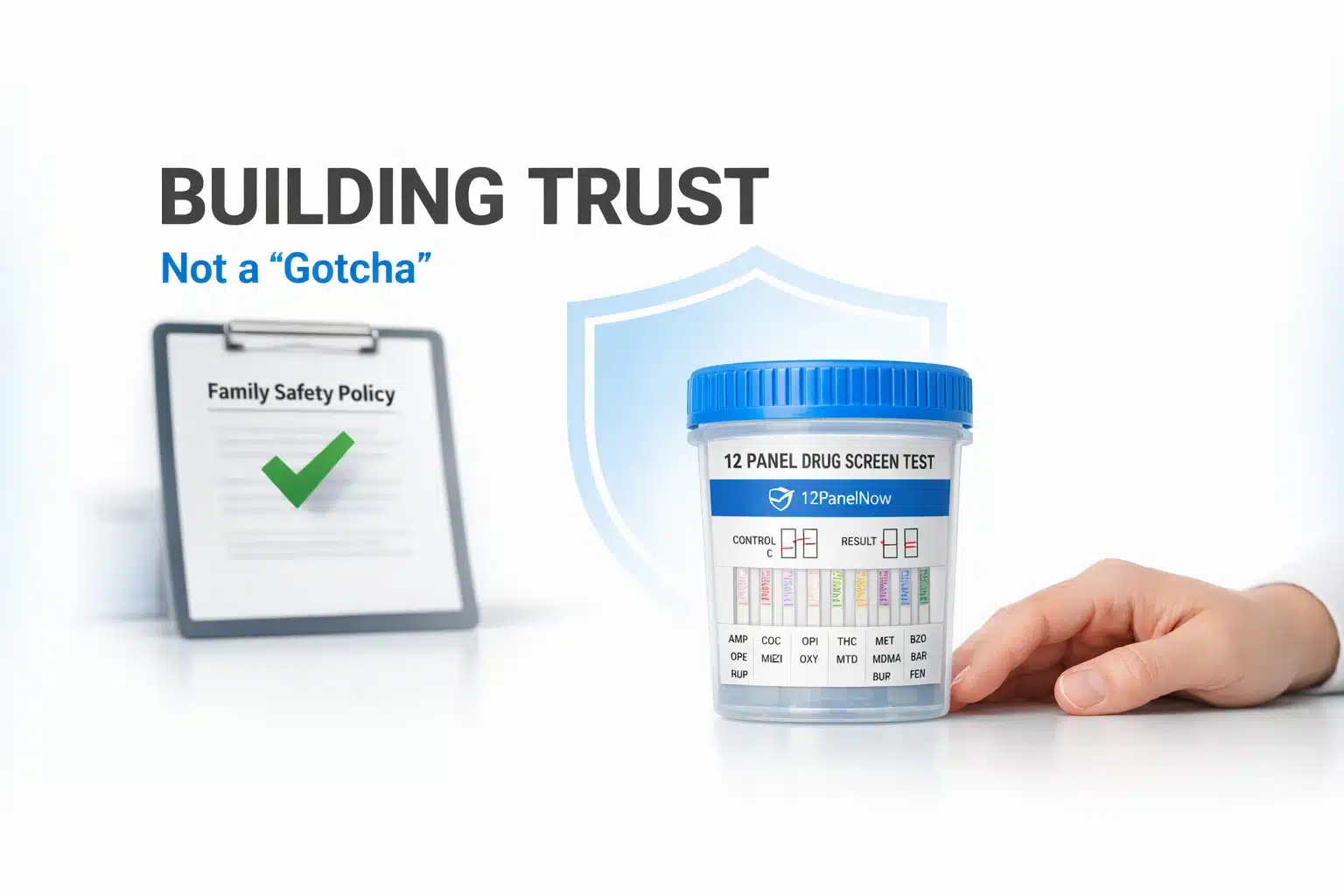
When you search for at-home drug tests online, you find two very different worlds. On one side are the sterile, commercial product grids from major pharmacies focused only on panel counts and high accuracy. On the other, you find cautionary articles from medical groups, often advising against testing because it can damage trust with your child.
This leaves proactive parents in a difficult position, caught between wanting to protect their family and fearing they might create a rift in their relationship.
There is a middle path. By reframing the drug test from a punitive “gotcha” tool to a proactive “safety shield,” you can build a family health policy grounded in open dialogue and mutual respect. This approach transforms the test into a health diagnostic, much like a thermometer or a COVID test, used to ensure well-being, not to catch someone in the act.
A clear middle path: use at-home testing as a shared safety policy that supports education and open conversation—not a surprise “gotcha.”
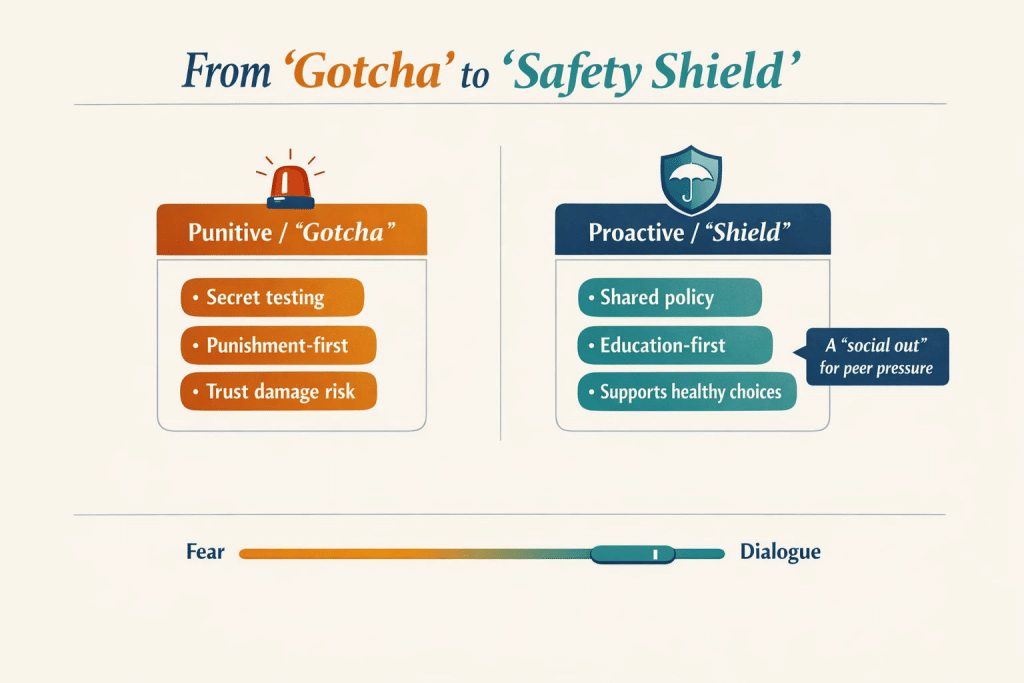
The ‘safety shield’: establishing a proactive family health policy
The most successful prevention strategies are built on communication long before a problem is suspected. Instead of using a test as a reaction to suspicious behavior, introduce it as a consistent, transparent part of your family’s approach to health and safety.
This isn’t about a lack of trust; it’s about creating a shared boundary that protects everyone. It establishes a clear, consistent expectation that helps your teen navigate difficult social situations. The goal is to make testing a normal, predictable part of staying safe, removing the element of surprise and accusation.
By creating a policy together, you shift the dynamic from confrontation to collaboration.
Choosing the right test for prevention, not just detection
Once you decide to implement a testing policy, selecting the right tool is critical. Standard 4 or 5-panel tests found at many local pharmacies often miss synthetic opioids like fentanyl, which represents a significant and growing risk in 2026. A prevention-first strategy requires a more comprehensive approach.
Consider these factors when evaluating your options:
-
- Panel Coverage: Look for tests that screen for a wide array of substances. For example, comprehensive 12-panel drug test cups provide a much wider safety net, often including tests for substances like fentanyl and other prescription drugs that are commonly misused.
- Accuracy and Reliability: Choose products that are CLIA-waived. This ensures the test meets federal standards for accuracy, with data showing a 90-98% agreement with lab tests for substances like THC and cocaine, and near 100% for opiates.
- Ease of Use: The process should be simple and straightforward to minimize user error and anxiety for everyone involved.
Your choice of test sends a message. A comprehensive panel demonstrates that your policy is about overall safety in today’s complex landscape, not just a narrow focus on a few specific substances.
Panel count isn’t the whole story—ensure your plan covers today’s risk landscape, including fentanyl, and choose a kit that matches your prevention goals.

The first conversation: giving your teen a ‘social out’
The single biggest fear for parents is that initiating testing will signal a breach of trust. You can overcome this by framing the test as a tool for your teen, not against them. Position it as a “social out”—a ready-made excuse to resist peer pressure.
When you have the first conversation, focus on support, not suspicion.
A sample script might sound like this:
“We see the pressures you and your friends are under, and we want to give you a tool to help you navigate it. We’re starting a regular, at-home health screening as part of our family’s safety plan. This isn’t because we don’t trust you. It’s so you always have an easy out. If you’re ever in a situation where you feel pressured, you can honestly say, ‘I can’t, my parents test me.’ We will always have your back on this, no questions asked.”
This approach accomplishes several things:
-
- It removes the burden from your teen: They don’t have to invent an excuse or feel socially awkward. The family policy becomes the reason.
- It reinforces your role as an ally: You are providing a shield, not wielding a weapon.
- It opens the door for future dialogue: By starting with a supportive framework, you make it easier for them to talk to you about challenging situations later.
The first conversation matters: frame testing as a shared safety policy and a ready-made excuse your teen can use to resist peer pressure.

Understanding the results: a guide to technical truths
A proactive testing policy also requires understanding the limitations and realities of the tests themselves. Being informed helps you interpret results fairly and take appropriate next steps.
-
- Detection Windows Vary: It’s important to know that different substances remain detectable for different lengths of time. Understanding drug detection windows is key to reading results accurately — THC from heavy cannabis use can be present for over two weeks, while substances like cocaine or heroin are often clear from a urine sample within one to three days. This context is key to understanding what a test can and cannot tell you.
- False Positives are Possible, but Rare: High-quality tests are very accurate, but no test is perfect. Certain over-the-counter medications or even foods like poppy seeds can, in rare cases, trigger a false positive. If you get an unexpected result, the first step should be a calm conversation, not an immediate conclusion.
- Know When to Escalate: An at-home test is a screening tool. A non-negative result is an indicator that a follow-up is needed. The safest next step is always confirmation through a professional laboratory, not a conclusion drawn from the screen alone.
Having this knowledge helps you manage the process with confidence and fairness. For more in-depth information, you can find more resources on drug testing best practices to help build your family’s policy.
Use at-home tests wisely: understand detection windows, expect occasional false positives, and know when lab confirmation is the safest next step.

Building a foundation of safety and trust
An at-home drug test can be much more than a simple chemical screen; it can be the foundation of an ongoing conversation about health, safety, and making smart choices. By adopting a proactive, non-punitive approach, you create a powerful tool for prevention that reinforces trust rather than eroding it.
Our mission at 12 Panel Now is to provide families and organizations with affordable, reliable testing supplies to support these safety goals. Our CLIA-waived supplies are designed to give you the clear, accurate information you need to implement your family health policy with confidence.
If you have questions about which product is right for your family’s policy, our team is here to help. You can contact us for guidance on selecting the best solution for your needs.