Presumptive vs. confirmed drug test positives: The path to definitive results

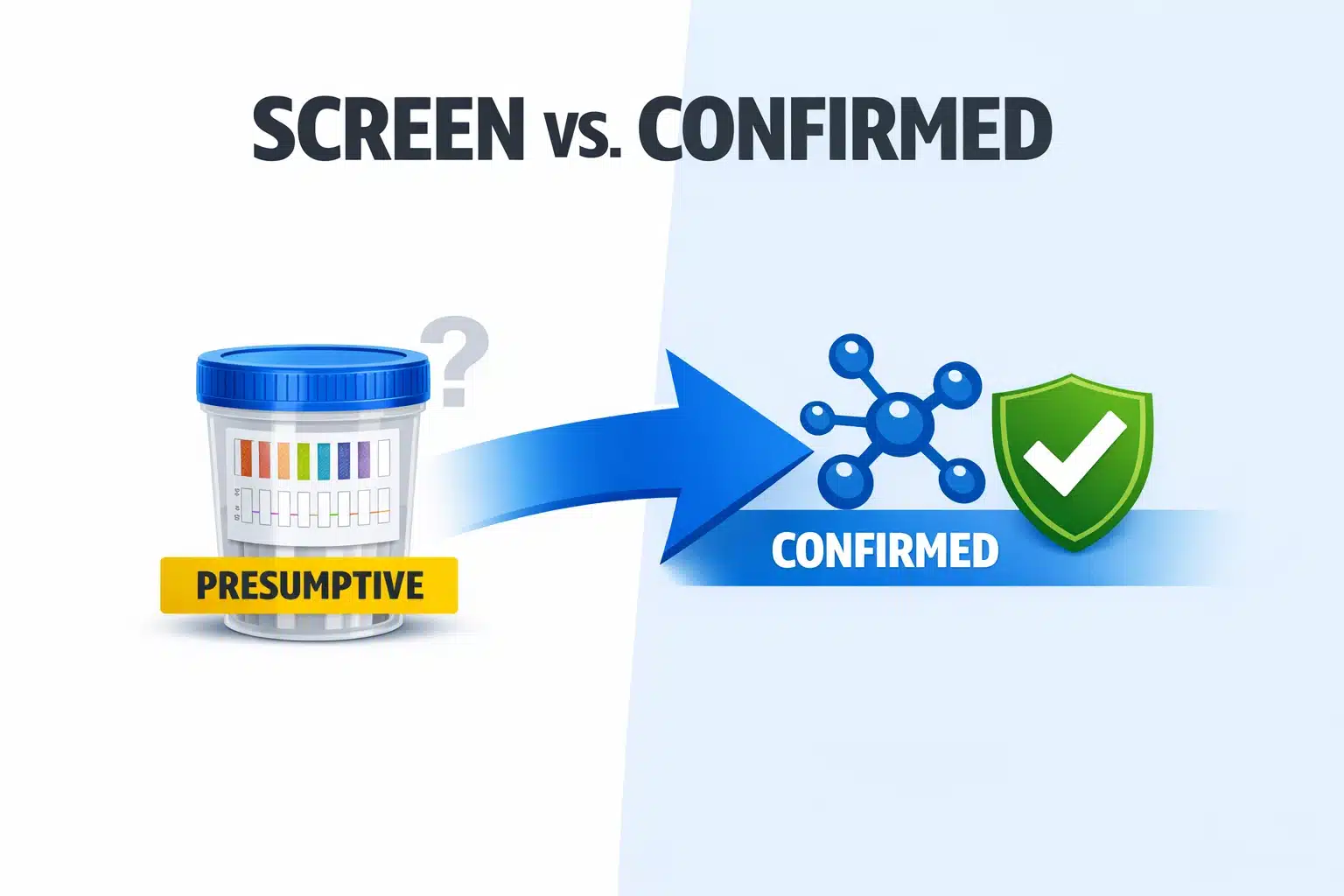
A positive result from an initial drug screen can feel definitive, but it’s not the end of the story. It’s a preliminary finding, known as a presumptive positive, and it requires a second, more specific step to be considered conclusive. In fact, research shows that approximately 32.9% of specimens that test positive on an initial immunoassay screen are later found to be negative after laboratory confirmation.
This distinction is the most critical concept in drug testing. Understanding the difference between a presumptive and a confirmed positive protects employees, ensures fairness for individuals, and shields employers from legal risk. This guide breaks down the science, the procedure, and why you should never make a final decision based on a screening result alone.
What is a presumptive positive?
A presumptive positive comes from a rapid screening test, such as a urine drug test cup or dip card. These tests are built on immunoassay technology, which uses antibodies to detect the presence of drug metabolites.
Think of it as a highly sensitive security system. Its primary job is to cast a wide net and flag anything that looks suspicious. This sensitivity is a feature, not a flaw. It ensures that potential positives are not missed. However, this high sensitivity can sometimes lead to cross-reactivity, where the test reacts to a substance with a similar chemical structure to the target drug, resulting in a false positive.
The journey from screen to confirmation
Receiving a presumptive positive triggers a specific, multi-step verification process designed to ensure accuracy and fairness before any final conclusions are drawn.
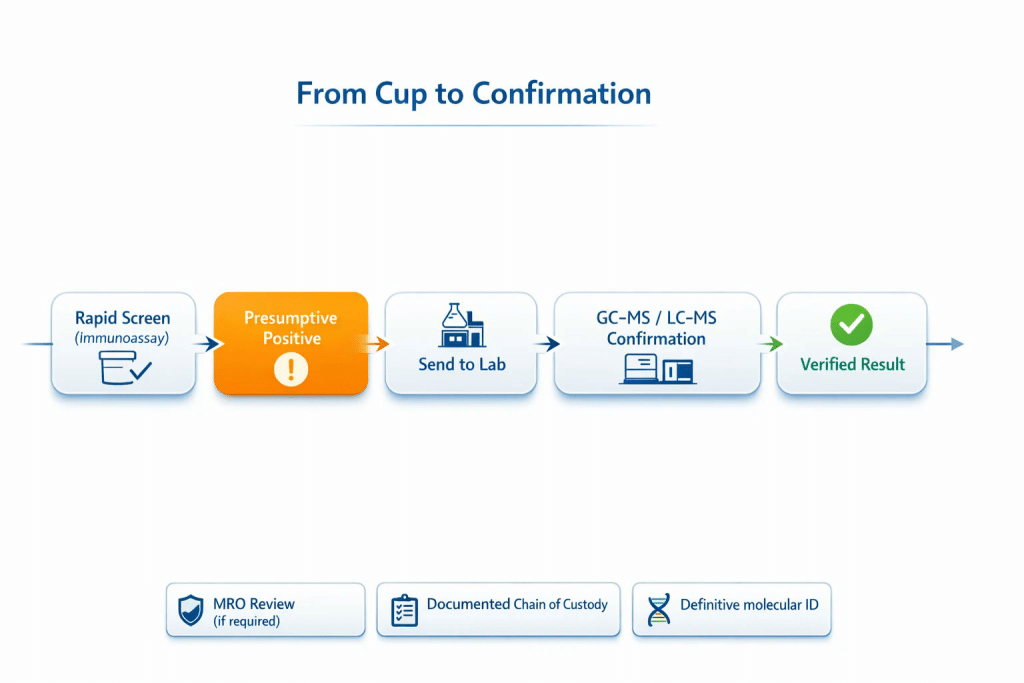
A presumptive positive is an early warning, not a final verdict. This process map shows the exact steps—screen, lab confirmation, and verification—used to reach defensible results.
What is a confirmed positive?
A confirmed positive, also called a definitive positive, is the result of a second, more sophisticated laboratory test. This follow-up analysis is the gold standard for drug testing and is required to verify any presumptive positive result from an initial screen.
The most common confirmation methods are:
- Gas Chromatography/Mass Spectrometry (GC-MS)
- Liquid Chromatography/Mass Spectrometry (LC-MS)
These techniques don’t just detect the presence of a drug class; they identify the specific molecular structure of a substance. It’s like the difference between describing a vehicle as “a red car” (presumptive) and identifying it by its license plate and VIN (confirmed). GC-MS and LC-MS can distinguish between the actual illicit drug and a cross-reacting prescription medication, effectively eliminating false positives.

Use this comparison to decide what a result can support. Rapid screens are fast and sensitive; GC-MS/LC-MS confirmation is what holds up for HR, legal, and clinical decisions.
Why confirmation testing is non-negotiable
Acting on a presumptive positive without confirmation is a significant liability. For employers, it can lead to wrongful termination lawsuits. For clinical settings, it can lead to misdiagnosis. The initial screen is an effective and affordable tool for identifying potential substance use, but it should never be the basis for a final decision.
Studies show that immunoassay screens for certain drug classes, like amphetamines, can have false-positive rates as high as 43%. This volatility is precisely why a two-step process is the industry standard and, in many cases, a legal requirement.

These numbers explain why a presumptive result shouldn’t be treated as final. Confirmation testing reduces risk when the outcome affects jobs, legal status, or patient care.
Common prescriptions that cause presumptive positives
One of the most frequent causes of a presumptive positive is cross-reactivity with common prescription and over-the-counter medications. The molecular structure of these medications can be similar enough to a targeted drug that an immunoassay screen flags it.
For example, a significant body of research from the National Institutes of Health confirms that bupropion, a common antidepressant (Wellbutrin), is highly likely to trigger a presumptive positive for amphetamines. This is not a faulty test; it’s a predictable chemical interaction. You can read more about medications that cause false positives and how to handle them before your test.
Here are a few common examples:

If you take common prescriptions, a rapid screen can misread the signal. Use this table to match medications to likely presumptive triggers and the most defensible next step.
A lab confirmation with GC-MS or LC-MS would easily differentiate between bupropion and actual amphetamines, clearing the result.
The role of the Medical Review Officer (MRO)
For federally regulated and many private-sector drug tests, the process includes a final safeguard: the Medical Review Officer (MRO). An MRO is a licensed physician who is responsible for receiving and reviewing laboratory results and evaluating medical explanations for them.
If a confirmed positive result is returned from the lab, the MRO will contact the donor for a confidential interview. During this call, the donor has the opportunity to provide a legitimate medical explanation, such as a valid prescription, for the result. If the MRO verifies the prescription, the final result is reported to the employer as negative. This step protects the private medical information of the individual while ensuring a fair and accurate outcome.
The right tool for the right job
Rapid screening tests are indispensable for their speed, affordability, and ability to provide immediate preliminary results. They are the ideal tool for the first step in any comprehensive drug testing program, from workplace screening to clinical monitoring.
At 12 Panel Now, we provide CLIA-waived drug testing supplies designed for high-accuracy presumptive screening. We believe in empowering our customers with reliable tools and the knowledge to use them responsibly. By understanding that a screen is the beginning of the process, not the end, you can build a testing protocol that is fast, effective, and fair.
When you need a reliable first step, browse our selection of multi-panel urine cups and oral swabs to find the right screening solution for your needs.