Does Phentermine Show Up on a 10 Panel Drug Test?

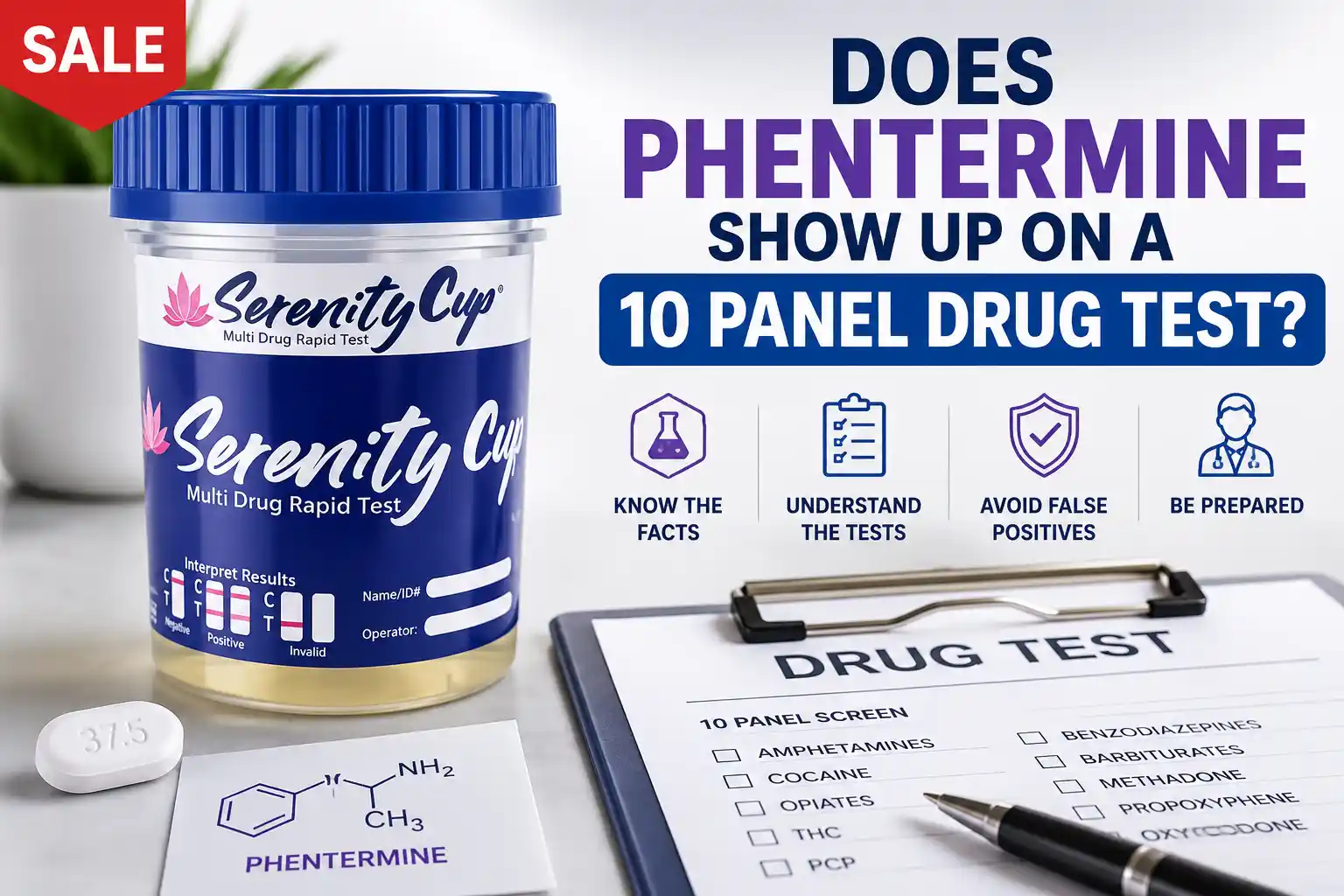
If you’re taking phentermine (Adipex-P, Lomaira) and have an upcoming workplace, pre-employment, DOT, or court-ordered drug test, it’s natural to wonder whether the medication could affect your results.
The short answer is yes—but not in the way many people think.
A standard 10 panel drug test does not specifically test for phentermine. However, because phentermine is a sympathomimetic amine with a chemical structure similar to amphetamine, it can sometimes trigger a presumptive positive on the amphetamine portion of an immunoassay urine drug screen. Fortunately, confirmatory laboratory testing using Gas Chromatography-Mass Spectrometry (GC-MS) or Liquid Chromatography-Tandem Mass Spectrometry (LC-MS/MS) can accurately distinguish phentermine from illegal amphetamines.
Understanding how drug screening works, what employers actually test for, and what to do before your test can help you avoid unnecessary stress and prevent misunderstandings.
Quick Answer
Does phentermine show up on a 10 panel drug test?
Not directly.
A standard 10 panel urine drug test does not include a dedicated test for phentermine. Instead, phentermine may cause a false-positive or presumptive positive result for amphetamines during the initial immunoassay screening because the medication shares structural similarities with amphetamine-based compounds.
In most professional testing programs, a positive screening result is not considered a final positive. Certified laboratories perform GC-MS or LC-MS/MS confirmation testing, which identifies the exact compound present in the urine specimen. These confirmation methods can reliably differentiate prescription phentermine from methamphetamine, amphetamine, MDMA, or other illicit stimulants.
If you have a valid prescription, inform the testing facility or Medical Review Officer (MRO) before or immediately after testing and provide documentation if requested.
Key Takeaways
- Standard 10 panel drug tests do not specifically test for phentermine
- Phentermine may trigger the amphetamine panel during initial screening
- Initial immunoassay results are presumptive—not final
- GC-MS and LC-MS/MS confirmation testing can distinguish phentermine from illicit amphetamines
- A valid prescription helps the MRO verify legitimate medication use
What Is Phentermine?
Phentermine is a prescription weight-loss medication approved for the short-term treatment of obesity when combined with diet, exercise, and lifestyle changes. It belongs to a class of medications called anorectics or sympathomimetic amines, which stimulate the central nervous system (CNS) to reduce appetite.
Common brand names include:
- Adipex-P
- Lomaira
- Generic Phentermine
Healthcare providers typically prescribe phentermine for adults with:
- Body Mass Index (BMI) of 30 or higher
- BMI of 27 or higher with obesity-related conditions such as hypertension, diabetes, or high cholesterol
Phentermine works by increasing the activity of neurotransmitters including:
- Norepinephrine
- Dopamine
- Serotonin (to a lesser extent)
These neurotransmitters signal the hypothalamus to suppress hunger while increasing alertness and energy expenditure.
Because phentermine has stimulant-like properties and is classified as a Schedule IV controlled substance, employers and drug testing laboratories sometimes pay closer attention when an amphetamine screen is positive.
Does a Standard 10 Panel Drug Test Test for Phentermine?
No.
A routine 10 panel drug test is designed to detect commonly abused drugs—not prescription weight-loss medications.
Most workplace drug tests look for specific drug classes rather than every medication available by prescription.
A standard urine 10 panel typically screens for:
- Amphetamines
- Cocaine
- Marijuana (THC)
- Opiates
- Phencyclidine (PCP)
- Benzodiazepines
- Barbiturates
- Methadone
- Propoxyphene (or MDMA depending on panel)
- Methamphetamine or another designated drug class
Notice that phentermine is not listed.
Instead, the concern arises because phentermine’s molecular structure resembles amphetamine. During the initial immunoassay screening, antibodies may recognize phentermine as an amphetamine-like compound, causing a preliminary positive result even though no illegal stimulant was taken.
This is why professional laboratories perform confirmation testing before reporting a verified positive.
Why Phentermine Can Trigger an Amphetamine Positive
Many people assume a positive amphetamine result automatically means someone used illegal drugs.
That isn’t always true.
Phentermine belongs to the sympathomimetic amine family, which shares structural similarities with amphetamine compounds. During an initial screening, the laboratory uses antibodies designed to recognize specific chemical patterns rather than identify every molecule individually.
Because phentermine closely resembles amphetamine chemically, these antibodies can bind to phentermine metabolites and produce a cross-reactive response.
This produces what laboratories call a:
- Presumptive positive
- Preliminary positive
- Initial reactive result
It does not automatically mean amphetamine abuse occurred.
Cross-reactivity is a known limitation of immunoassay drug testing and is one reason confirmatory laboratory analysis is considered the diagnostic standard.
How Immunoassay Drug Tests Work
Most pre-employment urine drug tests begin with an immunoassay screening.
Immunoassay testing is fast, inexpensive, and highly sensitive, making it ideal for screening large numbers of urine specimens.
Here’s how the process works:
Step 1: Urine Collection
A donor provides a urine specimen under standard collection procedures while maintaining chain of custody when required.
Step 2: Initial Screening
The sample is tested using antibodies designed to detect metabolites associated with each drug class.
Instead of identifying exact drugs, immunoassay identifies substances that are chemically similar to target drugs.
Step 3: Screening Result
Results are classified as either:
- Negative
- Non-reactive
- Presumptive Positive (Reactive)
A reactive result simply means the sample exceeded the laboratory cutoff concentration.
Step 4: Confirmation Testing
Reactive samples are forwarded for highly specific laboratory analysis using:
- GC-MS
- LC-MS/MS
These analytical techniques separate molecules according to their chemical fingerprints, eliminating most false positives caused by cross-reactivity.
Because phentermine has its own unique molecular signature, confirmation testing can accurately identify it rather than incorrectly labeling it as illicit amphetamine use.
Can GC-MS or LC-MS/MS Tell the Difference?
Yes.
This is the most important part of the drug-testing process.
Gas Chromatography-Mass Spectrometry (GC-MS) and Liquid Chromatography-Tandem Mass Spectrometry (LC-MS/MS) are considered the gold standard for confirmatory drug testing.
Unlike immunoassay screening, these techniques do not rely on antibodies.
Instead, they:
- Separate individual compounds
- Measure molecular mass
- Identify unique chemical fingerprints
- Confirm exact drug identity
- Reduce false-positive results
These laboratory methods can distinguish:
- Phentermine
- Amphetamine
- Methamphetamine
- MDMA
- Prescription stimulants
- Illicit stimulants
Because of this high analytical specificity, laboratories can determine whether the positive screening was caused by a legally prescribed medication or an illicit drug.
This is why employers generally rely on confirmed laboratory results—not screening tests alone—before making employment decisions.
Does Phentermine Cause a False Positive?
It can, but it’s more accurate to call it a presumptive positive rather than a true false positive.
Here’s why.
The initial immunoassay correctly recognizes a substance that resembles amphetamine. However, it cannot identify the exact drug responsible.
After GC-MS or LC-MS/MS testing:
- The laboratory identifies phentermine specifically.
- The result is corrected.
- The Medical Review Officer reviews prescription documentation.
- The final report reflects verified findings.
Therefore:
✔ Initial screen → Possible positive for amphetamines
✔ Confirmation → Identifies prescription phentermine
✔ Final interpretation → Legitimate prescribed medication (when appropriately documented)
For this reason, taking phentermine exactly as prescribed does not automatically mean you will fail a professional drug test.
What Drugs Are Included in a 10 Panel Drug Test?
Although drug panels vary slightly by manufacturer, laboratory, and employer, a standard 10 panel urine drug test commonly screens for the following drug classes:
| Drug Class | Common Examples | Typical Purpose |
|---|---|---|
| Amphetamines (AMP) | Amphetamine, Methamphetamine | Stimulants |
| Cocaine (COC) | Cocaine metabolites | Illegal stimulant |
| Marijuana (THC) | Cannabis metabolites | Recreational drug |
| Opiates (OPI) | Morphine, Codeine | Opioids |
| Phencyclidine (PCP) | PCP | Hallucinogen |
| Benzodiazepines (BZO) | Xanax, Valium | Sedatives |
| Barbiturates (BAR) | Phenobarbital | Sedatives |
| Methadone (MTD) | Methadone | Opioid treatment |
| Propoxyphene (PPX) or MDMA | Depending on panel | Pain medication or Ecstasy |
| Methamphetamine or additional stimulant | Varies by manufacturer | Extended stimulant detection |
Important: Phentermine is not a standard target analyte in most 10 panel drug tests. Its relevance comes from possible cross-reactivity with the amphetamine screening assay—not because laboratories routinely test for phentermine itself.
Will Phentermine Affect…
5 Panel Drug Test
A standard 5 panel drug test includes amphetamines, cocaine, marijuana (THC), opiates, and PCP. Phentermine isn’t one of the target drugs, but it may trigger a presumptive positive on the amphetamine screen due to structural similarity.
10 Panel Drug Test
The 10 panel expands testing to additional prescription and illicit drugs such as benzodiazepines, barbiturates, methadone, and others. Phentermine still isn’t directly tested, but it may affect the amphetamine portion of the screen.
12 Panel Drug Test
A 12 panel drug test adds more drug classes—often including oxycodone, buprenorphine, MDMA, or other substances depending on the manufacturer. Like the 5- and 10-panel tests, phentermine is generally not a dedicated analyte but can still cross-react with the amphetamine immunoassay.
DOT Drug Test
Department of Transportation (DOT) urine drug testing follows federally regulated procedures under SAMHSA guidelines. Initial immunoassay screening is followed by mandatory confirmation testing for non-negative results. If you’re legally prescribed phentermine, the Medical Review Officer will review your prescription and confirm whether it explains the laboratory findings before reporting the verified result.
Does Phentermine Stay Detectable?
One of the most common follow-up questions after “Does phentermine show up on a 10 panel drug test?” is how long it remains detectable. The answer depends on the type of drug test, your metabolism, kidney function, dosage, and how long you’ve been taking the medication.
Phentermine has an average elimination half-life of approximately 19–24 hours. In most healthy adults, it takes about 4 to 6 days for the drug to be largely eliminated from the body. However, detection windows vary depending on the testing method.
| Drug Test Type | Typical Detection Window | Notes |
|---|---|---|
| Urine | 1–4 days (sometimes up to 5–6 days) | Most common for workplace and pre-employment testing |
| Blood | Up to 24 hours | Used mainly in medical or legal investigations |
| Saliva (Oral Fluid) | 24–48 hours | Detects recent use |
| Hair Follicle | Up to 90 days | Rarely used for routine employment screening |
Urine Drug Test
Urine testing is by far the most common specimen used for 5-panel, 10-panel, and 12-panel drug tests.
Phentermine metabolites are eliminated primarily through the kidneys, making urine the preferred sample for workplace testing.
Although standard urine drug screens do not specifically test for phentermine, the medication may cause the amphetamine immunoassay to react because of its similar chemical structure.
For most people, phentermine may remain detectable in urine for 1 to 4 days after the last dose, though individuals taking higher doses or using the medication for longer periods may test positive for several additional days.
Blood Test
Blood testing has the shortest detection window.
Phentermine is usually detectable for about 24 hours after the last dose because blood reflects what is actively circulating in the bloodstream rather than stored metabolites.
Blood testing is uncommon for employment drug screening but may be ordered during:
- Medical emergencies
- Impaired driving investigations
- Hospital toxicology evaluations
- Certain forensic cases
Saliva Drug Test
Oral fluid testing detects very recent drug use.
Phentermine may remain detectable in saliva for approximately 24 to 48 hours after the last dose.
Saliva tests are becoming more common because collections are directly observed and difficult to adulterate, but they are still less frequently used than urine testing for pre-employment screening.
Hair Follicle Test
Hair testing offers the longest detection window.
Small amounts of phentermine become incorporated into the growing hair shaft from the bloodstream.
Hair tests may detect use for up to 90 days, depending on hair length.
However, hair testing is:
- More expensive
- Less common for routine hiring
- Usually reserved for specialized employment, legal investigations, or long-term monitoring
It’s also worth noting that a single dose may not always be detected in hair because enough drug must be incorporated into the hair shaft.
Factors That Affect Detection Time
Detection windows are only estimates. Every person’s body processes medications differently.
Several biological and medical factors influence how long phentermine stays in your system.
Metabolism
People with faster metabolic rates generally eliminate medications more quickly than those with slower metabolisms.
Age
Older adults often clear medications more slowly because kidney and liver function naturally decline with age.
Kidney Function
Phentermine is primarily eliminated through the kidneys.
Reduced kidney function can significantly increase detection time.
Liver Function
Although phentermine undergoes limited liver metabolism, impaired liver health may still influence overall drug elimination.
Dosage
Higher daily doses generally remain detectable longer than lower doses.
Length of Use
Someone taking phentermine for several months may have greater accumulation than someone taking it for only a few days.
Urine pH
This is one factor many people overlook.
Because phentermine is a weak base:
- Acidic urine speeds elimination.
- Alkaline urine slows elimination.
This explains why two people taking the same dose can have different detection times.
Hydration
Normal hydration supports healthy kidney function.
However, drinking excessive water does NOT remove phentermine faster or guarantee a negative drug test. Laboratories routinely check urine dilution using specimen validity testing.
Body Chemistry
Genetics, body composition, medications, and overall health also influence how quickly the body eliminates phentermine.
Should You Tell the Drug Testing Facility?
Yes.
If you’re taking phentermine under a valid prescription, you should disclose it before or during the testing process.
Being proactive helps prevent unnecessary delays if the initial screening produces an unexpected amphetamine-positive result.
You should inform:
- The collection site
- The testing clinic
- The Medical Review Officer (MRO), if contacted
Most employers do not receive a list of your medications.
Instead, the Medical Review Officer confidentially verifies whether a legitimate prescription explains the laboratory findings.
Medical Review Officer (MRO): What Happens After a Positive Screen?
Many people panic after hearing they screened positive for amphetamines.
Fortunately, the testing process doesn’t end there.
If an immunoassay screening is positive:
Step 1: Initial Screening
The laboratory reports a presumptive positive.
This is not the final result.
Step 2: Confirmatory Testing
The sample is analyzed using:
- GC-MS (Gas Chromatography-Mass Spectrometry)
- LC-MS/MS (Liquid Chromatography-Tandem Mass Spectrometry)
These highly specific analytical methods identify the exact compound present.
Step 3: MRO Review
A licensed Medical Review Officer contacts you privately.
They may ask for:
- Prescription information
- Pharmacy records
- Prescribing physician
- Date medication was prescribed
Step 4: Final Determination
If your prescription is valid and laboratory confirmation identifies phentermine rather than illicit amphetamine or methamphetamine, the result is generally reported as a negative or legitimate medical explanation, according to employer policy.
Can You Fail a Pre-Employment Drug Test While Taking Phentermine?
Usually not—if you have a valid prescription and complete the verification process.
Here’s what typically happens:
- Initial urine screen may flag amphetamines.
- Confirmation testing identifies phentermine.
- MRO verifies your prescription.
- Employer receives the verified laboratory result.
Problems are more likely to occur if:
- You don’t disclose your prescription.
- You cannot verify the prescription.
- You’re taking phentermine without medical supervision.
- You’re using someone else’s medication.
- The prescription has expired.
For safety-sensitive jobs (such as certain DOT-regulated positions), employers may have additional fitness-for-duty requirements even when medication use is legitimate.
What Should You Bring to the Test?
Preparation can make the entire process smoother.
Bring:
- Your government-issued photo ID
- Current prescription bottle
- Pharmacy printout (if available)
- Prescribing physician’s contact information
- Insurance medication record (optional)
You usually won’t need every document, but having them readily available can help resolve questions quickly.
Common Myths About Phentermine Drug Testing
Myth: A 10-panel drug test directly tests for phentermine.
Fact: Most standard 10-panel drug tests screen for amphetamines, not phentermine specifically.
Myth: Drinking lots of water will flush phentermine out.
Fact: Overhydration will not eliminate phentermine faster and may produce a diluted specimen that requires recollection.
Myth: A positive screening automatically means you failed.
Fact: Screening tests are preliminary. Confirmation testing is designed to distinguish prescription medications from illicit drugs.
Myth: GC-MS cannot tell phentermine from methamphetamine.
Fact: GC-MS and LC-MS/MS accurately identify individual compounds using their unique chemical signatures.
Myth: You should stop taking your prescription before a drug test.
Fact: Never stop prescribed medication without consulting your healthcare provider. Abruptly stopping medication solely to influence a drug test may not be medically appropriate.
FAQs
Does phentermine show up on a 10-panel drug test?
Not as a separate drug. However, it can trigger a presumptive positive for amphetamines during the initial immunoassay screening. Confirmatory testing using GC-MS or LC-MS/MS can identify phentermine separately.
Can phentermine cause a false positive for amphetamines?
Yes. Because phentermine has a chemical structure similar to amphetamine, some immunoassay urine drug screens may produce an initial positive result.
Will GC-MS confirm that I’m taking phentermine?
Yes. GC-MS and LC-MS/MS are highly specific laboratory methods that can distinguish phentermine from methamphetamine, amphetamine, and other stimulant medications.
How long does phentermine stay in urine?
Most people remain detectable for 1 to 4 days after their last dose, although heavy or prolonged use may extend detection.
Is phentermine included on a 5-panel drug test?
No. A 5-panel test does not specifically include phentermine. However, it may still trigger the amphetamine screening portion because of cross-reactivity.
Does phentermine affect a 12-panel drug test?
Yes. Similar to a 10-panel test, it may produce a preliminary amphetamine-positive result during immunoassay screening before confirmation testing identifies the medication correctly.
Should I tell my employer I’m taking phentermine?
You generally don’t need to disclose medications directly to your employer. Instead, provide prescription information to the Medical Review Officer (MRO) if requested during the verification process.
Can I lose my job for taking prescribed phentermine?
Having a legitimate prescription does not automatically mean you’ll fail a workplace drug test. Most employers rely on the MRO verification process. However, certain safety-sensitive positions may have additional medical or fitness-for-duty requirements.
Can a DOT drug test detect phentermine?
DOT urine drug testing also begins with immunoassay screening and confirmatory laboratory testing. If phentermine triggers an amphetamine screen, the MRO reviews your valid prescription before reporting the final result.
Does Adipex-P show up differently than generic phentermine?
No. Brand-name Adipex-P and generic phentermine contain the same active ingredient, so they behave the same way during drug testing.