How to Pass a Cotton Swab Test for Weed: THC Detection Guide

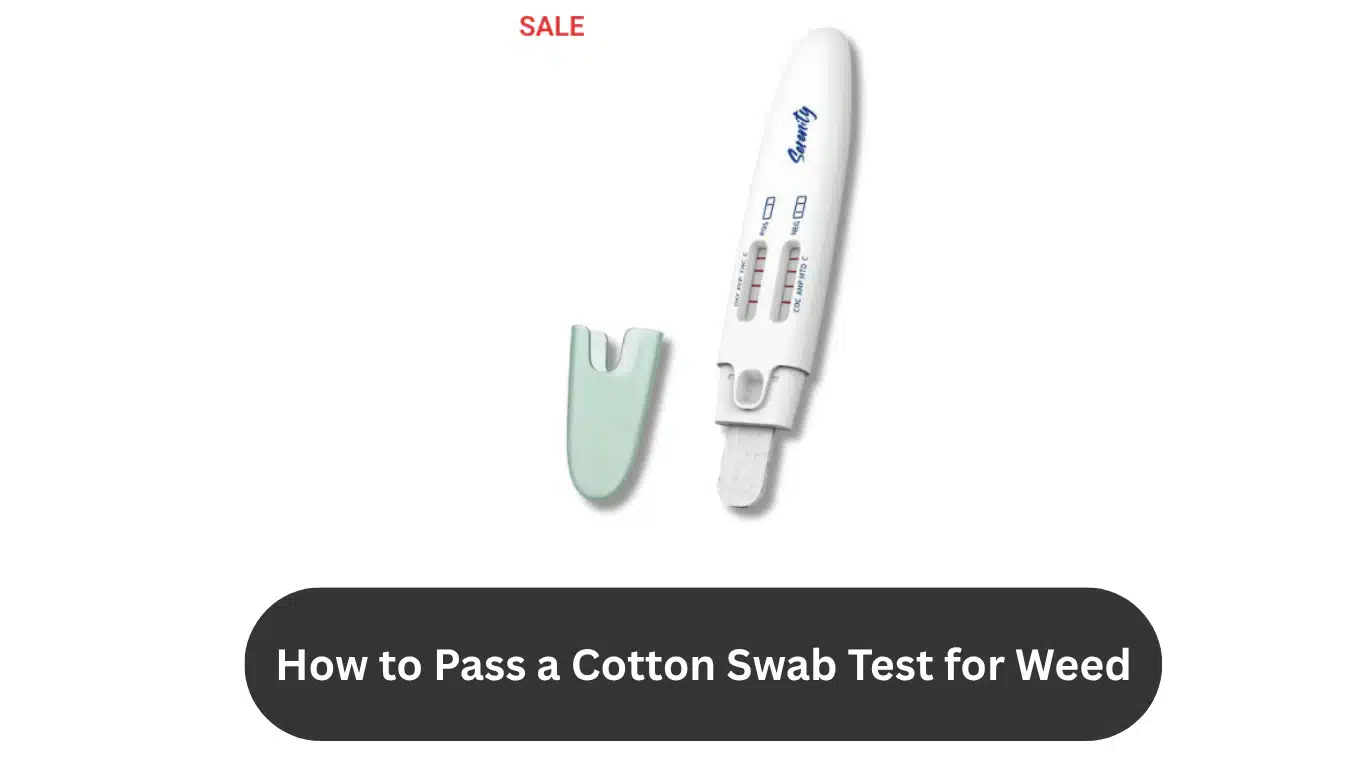
A cotton swab drug test, also called a mouth swab drug test, oral fluid drug test, or saliva drug test, is a type of drug screening that analyzes saliva collected from inside your mouth. During the test, a trained collector uses a soft absorbent swab to gather oral fluid from the cheeks, gums, and under the tongue. The sample is then analyzed for the presence of specific drugs or their markers.
Unlike urine or hair testing, oral fluid testing is designed to identify recent drug exposure rather than drug use that occurred days or weeks earlier. This makes it a popular option when employers, healthcare providers, and law enforcement agencies need to determine whether someone may have used drugs shortly before testing.
For people searching how to pass a cotton swab test for weed, understanding how the test works is far more valuable than relying on internet myths or so-called “instant fixes.” Detection depends on factors such as the timing of cannabis use, the amount consumed, individual biology, and the type of test being used—not on miracle products.
Common names for this test
Although the names are often used interchangeably, they all refer to the same testing method:
- Cotton swab drug test
- Mouth swab drug test
- Oral swab drug test
- Saliva drug test
- Oral fluid drug test
- Buccal swab drug test
These tests are available in multiple panel configurations, including 5-panel, 10-panel, 12-panel, and 14-panel oral drug tests, depending on which substances need to be screened.
Why Employers Use Oral Fluid Drug Testing
Oral fluid drug testing has become increasingly common because it offers a practical balance of speed, convenience, accuracy, and security. Many organizations use it when they need to determine whether drug use may have occurred shortly before work or during a safety-sensitive activity.
Compared with urine collection, saliva testing is less invasive, easier to observe directly, and much more difficult to substitute or tamper with.
Common situations where employers use oral fluid testing include:
- Pre-employment drug screening
- Random workplace drug testing
- Post-accident investigations
- Reasonable suspicion testing
- Return-to-duty and follow-up testing
- Probation and court-ordered monitoring
- Rehabilitation and treatment programs
- Healthcare and clinical settings
Industries that frequently rely on mouth swab testing include:
- Transportation
- Manufacturing
- Construction
- Healthcare
- Warehousing
- Public safety
- Government agencies
- Law enforcement
Because saliva primarily reflects recent exposure, oral fluid testing is especially useful when employers want to know whether an employee may have used cannabis or another drug shortly before reporting to work.
How Cotton Swab Drug Tests Detect THC
One of the biggest misconceptions is that a mouth swab searches the entire body for marijuana. It doesn’t.
Instead, an oral fluid drug test looks for THC (delta-9-tetrahydrocannabinol) that is present in saliva and oral tissues shortly after cannabis exposure.
When marijuana is:
- Smoked
- Vaped
- Dabbed
small amounts of THC remain inside the mouth. The drug can temporarily coat:
- The tongue
- Inner cheeks
- Gums
- Teeth
- Roof of the mouth
During sample collection, the swab absorbs saliva from these areas. If THC is present above the laboratory or device cutoff concentration, the screening produces a non-negative result that may require laboratory confirmation.
Unlike urine testing, oral fluid testing is not intended to measure long-term cannabis use.
This is why many people who search:
- how to pass a cotton swab test for weed
- how to pass a mouth swab test
- how to pass a saliva drug test
are actually asking about recent THC exposure, not historical cannabis use.
THC Residue vs THC Metabolites
Understanding this distinction is essential because many websites confuse these two concepts.
THC Residue
THC residue refers to unchanged THC that remains inside the mouth after smoking or vaping cannabis.
This residue can:
- Stick to oral tissues
- Mix with saliva
- Be collected directly by the swab
Oral fluid tests primarily detect this recent contamination.
THC Metabolites
THC metabolites are substances created after the body processes THC through the liver.
These metabolites circulate through:
- Blood
- Urine
- Hair
Urine drug tests primarily detect THC-COOH, which is a metabolite—not the original THC compound.
Why this matters
This difference explains why:
| Oral Fluid Test | Urine Test |
|---|---|
| Detects recent THC exposure | Detects THC metabolites |
| Shorter detection window | Longer detection window |
| Useful for recent impairment screening | Useful for historical drug use |
Understanding the difference between THC residue and THC metabolites helps explain why saliva tests and urine tests often produce very different detection windows.
How Long Does Weed Stay Detectable in Saliva?
There is no universal detection time because THC clearance varies from person to person.
Several factors influence how long cannabis remains detectable in oral fluid, including:
- Frequency of cannabis use
- THC potency
- Method of consumption
- Individual metabolism
- Saliva production
- Test sensitivity
- Screening cutoff level
General estimates reported in scientific literature suggest:
| User Type | Typical Oral Detection Window |
|---|---|
| Single or occasional use | Around 12–24 hours (sometimes up to 48 hours) |
| Moderate use | Approximately 24–48 hours |
| Frequent or daily use | Often 48–72 hours or longer |
| Heavy chronic use | May remain detectable beyond 72 hours in some individuals |
These are general ranges rather than guarantees. Two people who consume the same amount of cannabis may have different detection times because of biological variation and differences in the testing device.
This is why no article can honestly promise that someone will pass after a specific number of hours.
What Factors Affect Oral THC Detection?
Several biological and testing-related variables influence whether THC is still detectable during a mouth swab drug test.
The most important factors include:
Frequency of cannabis use
Occasional users generally eliminate detectable THC more quickly than people who consume cannabis daily.
Time since last use
The longer the interval between cannabis use and testing, the more opportunity the body has to naturally reduce THC residue in the mouth.
Method of consumption
Smoking and vaping place THC directly inside the mouth, while edible products follow a different absorption pathway.
THC potency
Products with higher THC concentrations may leave greater oral exposure immediately after use.
Saliva flow
Normal saliva production continually helps clear substances from the oral cavity.
Individual metabolism
Age, health status, genetics, hydration, and overall physiology may all influence detection times.
Test cutoff level
Different oral fluid tests use different analytical cutoff concentrations, which can affect whether a sample is reported as negative or non-negative.
The combination of these factors explains why detection windows vary considerably among individuals rather than following a fixed timetable.
Does Smoking, Vaping, or Edibles Change Detection?
Yes. The way cannabis is consumed can influence how it appears during an oral fluid drug test. This is because mouth swab tests analyze saliva and oral tissues rather than urine or blood. Different consumption methods expose the mouth to different amounts of THC, which can affect how long it remains detectable.
Smoking Cannabis
Smoking marijuana generally leaves the highest amount of THC residue inside the mouth immediately after use.
As cannabis smoke passes through the oral cavity, THC can temporarily coat the:
- Tongue
- Inner cheeks
- Gums
- Teeth
- Roof of the mouth
Because oral fluid drug tests collect saliva from these surfaces, smoking typically creates the greatest chance of detecting recent cannabis use.
Vaping THC
Many people believe vaping cannot be detected by a cotton swab drug test. That isn’t accurate.
Although vaping produces less combustion than smoking, THC-containing vapor still passes through the mouth, allowing THC to contact oral tissues before reaching the lungs.
The detection window may vary depending on:
- THC concentration
- Device type
- Frequency of vaping
- Time since last use
A mouth swab test is still capable of detecting recent THC exposure after vaping.
Eating Cannabis Edibles
Edibles behave differently because THC is absorbed primarily through the digestive system instead of entering the lungs.
Since edible products do not produce smoke or vapor, they generally leave less immediate THC residue in the mouth once swallowed.
However, edible users can still produce positive oral fluid results because THC enters the bloodstream after digestion and may later appear in oral fluid. Detection depends on the product, dose, timing, and individual metabolism.
Cannabis Oils and Tinctures
THC oils and tinctures may be placed under the tongue or held inside the mouth before swallowing.
Because these products come into direct contact with oral tissues, they may temporarily increase THC levels in saliva shortly after use.
Does the Method Matter?
Yes—but time since last use remains the single biggest factor affecting oral fluid testing.
Regardless of whether cannabis is:
- Smoked
- Vaped
- Dabbed
- Consumed as an edible
- Taken as an oil or tincture
oral fluid drug tests are designed to detect recent THC exposure, not long-term cannabis history.
What Happens During a Mouth Swab Test?
Many first-time test takers are surprised by how simple and quick the collection process is. Unlike urine testing, oral fluid collection is non-invasive, requires no restroom, and is usually completed within a few minutes.
A typical cotton swab drug test follows these steps:
Step 1: Identity Verification
The collector verifies your identity and explains the testing procedure. You may be asked whether you have recently eaten, drank, smoked, chewed gum, or used tobacco products, as some testing protocols require waiting before collection.
Step 2: Sample Collection
A sterile collection device with an absorbent swab is placed inside the mouth.
The collector gently rubs or holds the swab against areas such as:
- Inside both cheeks
- Along the gums
- Under the tongue
The swab remains in place until enough oral fluid has been collected.
Step 3: Sample Preparation
After collection, the swab is placed into a testing device or collection tube.
Depending on the testing program, the sample is either:
- Analyzed immediately using a rapid test device, or
- Sealed and transported to a certified laboratory.
Step 4: Reading the Results
Rapid oral fluid tests typically produce results within 5 to 10 minutes.
Possible outcomes include:
- Negative: No drugs detected above the cutoff concentration.
- Non-negative: One or more substances require laboratory confirmation.
- Invalid: The sample or test device did not perform correctly and may need to be repeated.
Screening Test vs Confirmation Test
Many people assume a rapid positive result automatically means they failed the drug test. In reality, workplace drug testing often uses a two-step process.
Initial Screening Test
The first stage is a rapid immunoassay screening.
This test is designed to quickly identify whether THC or another drug may be present above a predetermined cutoff level.
Screening tests are:
- Fast
- Cost-effective
- Highly sensitive
- Suitable for workplace testing
However, they are considered presumptive tests, meaning an unexpected result may require additional analysis.
Confirmation Testing
If the screening result is non-negative, many employers send the sample to a certified laboratory.
Confirmation testing commonly uses highly specific analytical techniques such as:
- Gas Chromatography-Mass Spectrometry (GC-MS)
- Liquid Chromatography-Tandem Mass Spectrometry (LC-MS/MS)
These methods can accurately identify specific drug compounds and significantly reduce the likelihood of false-positive results.
In many workplace programs, a confirmed laboratory result is reviewed by a Medical Review Officer (MRO) before the final report is issued.
Can Secondhand Marijuana Smoke Cause a Positive Test?
This is one of the most frequently searched questions about cotton swab drug testing.
For most real-world situations, casual secondhand marijuana smoke is unlikely to cause a confirmed positive oral fluid drug test.
Modern testing programs use cutoff concentrations designed to minimize positives from incidental environmental exposure.
For example, briefly being:
- Near someone smoking marijuana outdoors
- Passing through an area with cannabis smoke
- Spending a short time in a ventilated room
is generally not expected to produce a confirmed positive result.
However, prolonged exposure in a small, enclosed, poorly ventilated space where cannabis is actively being smoked could temporarily increase oral THC contamination. Even then, confirmation testing helps distinguish meaningful drug exposure from incidental contamination.
If you know you have an upcoming drug screening, avoiding environments where cannabis smoke is present is the safest approach.
Can CBD Cause a Positive THC Result?
CBD (cannabidiol) itself is not the target of a standard oral fluid drug test. However, some CBD products may contain small amounts of THC, which is the psychoactive compound screened for in most workplace cannabis tests.
Whether CBD use affects your test depends largely on the type of product you use.
CBD Isolate
CBD isolate contains purified cannabidiol with no intended THC content. These products generally present the lowest risk of a THC-positive result when manufactured correctly.
Broad-Spectrum CBD
Broad-spectrum products remove most THC but may still contain trace amounts depending on manufacturing quality and product testing.
Full-Spectrum CBD
Full-spectrum CBD products legally may contain up to 0.3% THC in many jurisdictions. Frequent use of these products could expose users to small amounts of THC over time.
Product Quality Matters
Not all CBD products are manufactured to the same standards. Independent testing has found that some products contain more THC than stated on the label or inaccurate ingredient information.
For individuals subject to workplace drug testing, choosing products that provide third-party laboratory certificates of analysis (COAs) may help verify cannabinoid content.
While CBD itself does not trigger a THC test, THC contamination or trace THC in certain CBD products can increase the likelihood of a positive cannabis result.
Common Myths About Passing a Cotton Swab Test
Searching online for how to pass a cotton swab test for weed brings up thousands of videos, forum posts, and advertisements promising instant solutions. Unfortunately, many of these claims are based on anecdotes, outdated information, or marketing rather than scientific evidence.
Understanding the facts can help separate common myths from what is actually known about oral fluid drug testing.
Myth 1: Mouthwash Guarantees You’ll Pass
One of the oldest internet claims is that rinsing with mouthwash immediately before a saliva drug test will eliminate THC.
While mouthwash may temporarily change the chemistry inside the mouth, there is no scientific evidence that ordinary mouthwash can reliably prevent a positive oral fluid drug test.
Modern workplace testing programs often use laboratory confirmation if a screening result is non-negative, making simple rinses an unreliable strategy.
Myth 2: Drinking Large Amounts of Water Flushes THC Out of Saliva
Unlike urine testing, oral fluid drug tests are not diluted by drinking excessive amounts of water.
Staying normally hydrated supports healthy saliva production, but drinking gallons of water immediately before testing does not remove THC from oral tissues or guarantee a negative result.
Myth 3: Brushing Your Teeth Removes All THC
Good oral hygiene is always beneficial for oral health, but brushing alone cannot instantly eliminate all THC that may be present.
THC may remain in:
- Saliva
- Soft oral tissues
- Gum surfaces
- Areas that brushing cannot completely remove
Brushing should never be viewed as a guaranteed way to influence a drug test result.
Myth 4: Hydrogen Peroxide Always Beats a Mouth Swab Test
Hydrogen peroxide is one of the most frequently discussed internet “hacks.”
Although some online sources claim it temporarily alters oral chemistry, scientific evidence supporting consistent success is limited. Excessive use may also irritate oral tissues, and some testing programs include procedures designed to identify sample adulteration.
Myth 5: Sour Candy or Chewing Gum Eliminates THC
Chewing gum or sucking on sour candy increases saliva production, but more saliva does not necessarily mean THC disappears.
These products cannot instantly remove cannabinoids from oral tissues or override the natural detection process.
Myth 6: You Can Fool Every Cotton Swab Test
Modern oral fluid drug testing has improved significantly over the past decade.
Many testing programs now use:
- Directly observed sample collection
- Tamper-resistant collection devices
- Laboratory confirmation testing
- Strict quality-control procedures
- Medical Review Officer (MRO) review when appropriate
These safeguards make it much more difficult to manipulate results than many internet articles suggest.
What the Evidence Shows
Rather than relying on viral tips or miracle products, research consistently shows that the most important factor influencing an oral fluid drug test is simply the amount of time since cannabis was last used.
No product, rinse, or home remedy can guarantee a negative result for every individual or every testing program.
What Actually Influences Test Results?
Instead of focusing on internet myths, it is more useful to understand the factors that genuinely affect oral fluid drug testing.
Time Since Last Cannabis Use
The strongest predictor of an oral fluid drug test result is how recently cannabis was used.
As more time passes, THC naturally decreases within the oral cavity, reducing the likelihood of detection.
Frequency of Use
People who use cannabis occasionally often have shorter detection windows than individuals who consume cannabis daily or multiple times each day.
Repeated exposure increases the likelihood that THC remains detectable for a longer period.
Type of Cannabis Product
Detection may differ depending on whether cannabis is consumed through:
- Smoking
- Vaping
- Concentrates
- Edibles
- Oils or tinctures
Products that come into direct contact with oral tissues generally create greater short-term THC exposure inside the mouth.
Individual Biology
Every person processes cannabinoids differently.
Factors that may influence detection include:
- Natural saliva production
- Metabolism
- Age
- Overall health
- Frequency of cannabis use
- Individual physiological variation
No two people have identical detection windows.
Test Sensitivity
Not every oral fluid drug test uses the same cutoff concentration.
Different manufacturers may have different detection thresholds, while laboratory confirmation testing is generally more specific than rapid screening devices.
Proper Sample Collection
Accurate results also depend on correct testing procedures.
Professional collectors follow standardized collection protocols to ensure that:
- Enough saliva is collected
- Samples are handled properly
- Quality-control requirements are met
- Chain-of-custody documentation is maintained when required
Proper collection helps improve both accuracy and reliability.
How Accurate Are Cotton Swab Drug Tests?
Modern cotton swab drug tests are considered highly reliable for detecting recent drug exposure when they are used correctly and according to manufacturer instructions.
Because oral fluid collection is directly observed, these tests are widely used in workplace, healthcare, criminal justice, and rehabilitation settings.
What Makes Oral Fluid Testing Accurate?
Several factors contribute to the reliability of saliva drug testing:
- Directly observed collection reduces opportunities for tampering.
- Samples are collected quickly without special facilities.
- Standardized collection devices improve consistency.
- Laboratory confirmation can verify non-negative screening results.
- Strict quality-control procedures help maintain testing accuracy.
When properly performed, oral fluid testing provides dependable screening for many commonly abused substances, including cannabis.
Can False Positives Occur?
Although uncommon, false-positive screening results can occasionally happen.
Possible reasons include:
- Cross-reactivity with certain medications
- Technical testing errors
- Collection problems
- Device malfunction
For this reason, many workplace drug testing programs confirm unexpected screening results using advanced laboratory methods before reporting a final positive.
Why Confirmation Testing Matters
Laboratory confirmation using techniques such as:
- Gas Chromatography-Mass Spectrometry (GC-MS)
- Liquid Chromatography-Tandem Mass Spectrometry (LC-MS/MS)
can accurately identify specific drug compounds while greatly reducing the possibility of false-positive results.
This two-step approach improves confidence in the final reported result.
Frequently Asked Questions
Does a cotton swab drug test detect weed immediately after smoking?
Yes. Smoking marijuana can leave THC residue inside the mouth almost immediately. Oral fluid drug tests are specifically designed to detect recent cannabis exposure, which is why smoking shortly before testing carries the greatest likelihood of detection.
Is a cotton swab drug test easier to pass than a urine drug test?
These tests measure different things. Oral fluid testing focuses on recent drug exposure, while urine testing primarily detects drug metabolites that may remain in the body much longer. Neither test should be considered “easy” or “hard” to pass because detection depends on the substance used, frequency of use, and timing.
How long does THC usually stay in saliva?
There is no fixed detection window for every person. Research generally suggests that occasional users may clear THC sooner than daily users, while heavy cannabis use can remain detectable for several days in some individuals. Individual biology and test sensitivity both influence results.
Can eating food before a mouth swab drug test affect the result?
Many testing programs ask individuals to avoid eating, drinking, smoking, or chewing gum for a short period before sample collection to help ensure an adequate saliva sample. Following the collector’s instructions helps improve sample quality.
Will prescription medications affect a saliva drug test?
Some prescription or over-the-counter medications may occasionally interfere with initial screening tests. If an unexpected result occurs, confirmation testing and Medical Review Officer (MRO) review can help determine whether a legitimate medication explains the finding.
Can employers watch you during a cotton swab drug test?
Yes. Unlike urine collection, oral fluid testing is typically performed under direct observation because the sample is collected from inside the mouth using a swab. This observed collection helps maintain sample integrity and reduces opportunities for tampering.
Are at-home saliva drug tests accurate?
Many FDA-cleared or professionally manufactured at-home oral fluid drug tests provide reliable preliminary screening when used according to the instructions. However, workplace or legal testing programs may require laboratory confirmation for non-negative results.
What drugs can a cotton swab drug test detect besides marijuana?
Depending on the testing panel, oral fluid drug tests may screen for substances such as:
- Amphetamines
- Methamphetamine
- Cocaine
- Opiates
- Oxycodone
- Benzodiazepines
- Methadone
- Buprenorphine
- PCP
- MDMA (Ecstasy)
- Fentanyl (on applicable panels)
The exact drugs detected depend on the specific oral fluid testing panel selected.