Opioid Drug Test Guide: Opiates, Detection Windows & Toxicology Explained

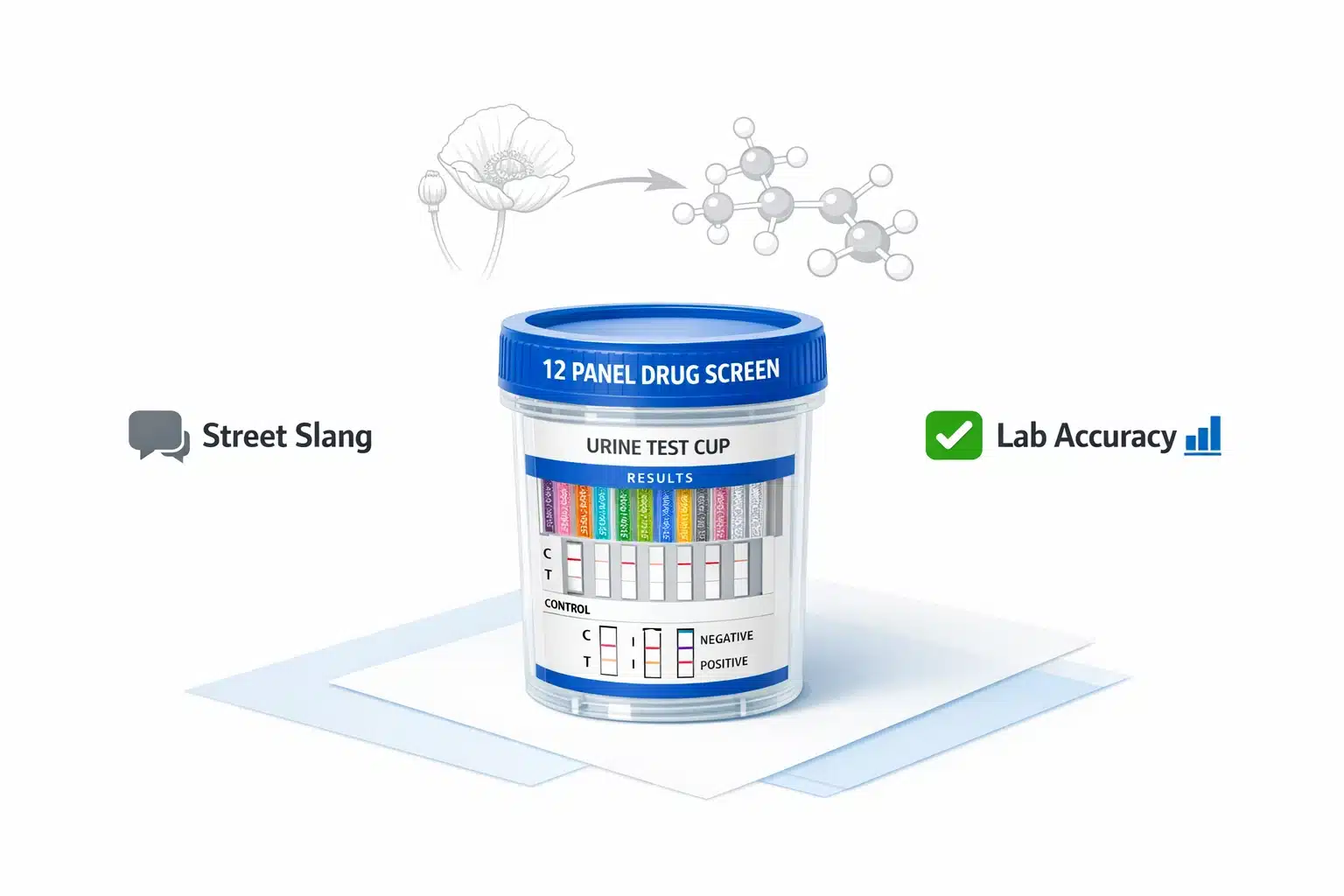
What do “jigs,” “buttons,” and “paper” have to do with an opioid drug test? In most cases, nothing at all. This disconnect between street terminology and clinical reality creates dangerous confusion. Identifying a substance is the first step, but understanding how it behaves in the body—and how it appears on a drug screen—is critical for safety and accuracy.
This guide closes that gap. We’ll translate the complexity of opioid and opiate toxicology into clear, actionable information, moving from initial identification to the specific science of detection.

Many common slang terms are mistakenly associated with opioids, leading to incorrect assumptions. For example:
- Jigs: Regional slang for MDMA (Ecstasy).
- Buttons: Often refers to peyote (mescaline).
- Trips or Paper: Typically describes LSD.
- Soft: Refers to powder cocaine.
Misidentification isn’t just a vocabulary error; it’s a safety risk. The first step in responsible testing is knowing exactly what you’re dealing with.
How Opioid Drug Testing Works
Most opioid drug testing programs follow a standardized laboratory workflow designed to maximize both scientific accuracy and legal defensibility. Rather than relying solely on a rapid screening result, laboratories use multiple quality-control measures before reporting confirmed positive findings.
The process begins with specimen collection under documented chain-of-custody procedures. Urine remains the most common specimen for opioid testing because it offers an effective balance between detection window, affordability, and laboratory reliability. Depending on the testing objective, oral fluid, blood, or hair specimens may also be collected.
Following collection, specimens undergo an initial immunoassay screening designed to rapidly identify opioid metabolites above established cut-off levels. Samples producing non-negative results are automatically forwarded for confirmatory analysis using highly specific techniques such as Gas Chromatography-Mass Spectrometry (GC-MS) or Liquid Chromatography-Tandem Mass Spectrometry (LC-MS/MS). Only after laboratory confirmation is a verified positive result reported.
Opiate vs. Opioid: Why the Biological Split Matters
The terms “opiate” and “opioid” are often used interchangeably, but their biological origins and metabolic pathways are fundamentally different. This distinction is crucial for understanding drug effects, risks, and testing results.
Opiates are natural alkaloids derived directly from the opium poppy.
- Examples: Morphine, codeine, and heroin (a semi-synthetic derivative of morphine).
- Metabolism: They primarily undergo a simple, one-step process called Phase II metabolism, mainly using the UGT2B7 enzyme to become water-soluble for excretion.
Opioids are synthetic or semi-synthetic drugs created in a lab to produce opiate-like effects.
- Examples: Oxycodone, hydrocodone, methadone, buprenorphine, and tramadol.
- Metabolism: These substances require a more complex, multi-step process. They first go through Phase I metabolism, relying on CYP450 enzymes like CYP3A4 and CYP2D6 to be broken down before they can be eliminated.
This difference in metabolic pathways is a critical decision factor for both patients and clinicians. Individuals with liver enzyme variations may process synthetic opioids differently, affecting both therapeutic efficacy and detection windows.
Understanding Opioid Metabolism
Once an opioid enters the body, it begins a complex metabolic journey involving absorption, distribution, metabolism, and elimination. Understanding this process helps explain why detection windows vary so widely between different opioid medications.
Natural opiates such as morphine and codeine are metabolized differently than synthetic opioids. Some drugs produce active metabolites that continue exerting pharmacological effects after the parent drug has been metabolized, while others produce inactive metabolites that primarily serve as markers for laboratory detection.
The liver serves as the primary site of opioid metabolism through enzyme systems including CYP3A4, CYP2D6, CYP2B6, UGT1A1, and UGT2B7. Following hepatic metabolism, most opioid metabolites are eliminated through the kidneys into the urine, making urine testing the preferred specimen for many workplace and clinical drug testing programs.
Because individuals naturally vary in liver enzyme activity, genetics, age, kidney function, hydration, medication interactions, and overall health all influence how long opioids remain detectable above laboratory reporting thresholds.
Not Everything for Pain is an Opioid
Confusion often arises when medications used for pain management are mistaken for opioids. A common example is sumatriptan, a medication for migraines. While it acts on receptors in the brain, it is not an opioid, has no potential for addiction, and will not trigger a positive result on an opiate test. The same is true for NSAIDs like ibuprofen or naproxen.

Metabolism and Detection: The Master Table
How long a substance remains detectable depends on its chemical structure, its metabolic pathway, its half-life, and the sensitivity of the test. Each drug has a unique fingerprint. Understanding the basics of what opiates show up as on a drug test provides a foundation, but the specifics vary significantly between substances.
This table provides a high-level overview of key opioids and opiates, focusing on their primary metabolic enzyme, typical detection window in urine, and standard cutoff levels for screening.

| Substance | Class | Primary Metabolic Enzyme | Typical Urine Detection Window | Standard Cutoff Level (SAMHSA) |
| Morphine | Opiate | UGT2B7 (Phase II) | 2–4 days | 2,000 ng/mL |
| Codeine | Opiate | UGT2B7, CYP2D6 | 2–3 days | 2,000 ng/mL |
| Heroin | Opiate | Metabolizes to 6-AM & Morphine | 1–3 days | 2,000 ng/mL (as Morphine) |
| Oxycodone | Opioid | CYP3A4, CYP2D6 | 2–4 days | 100 ng/mL |
| Hydrocodone | Opioid | CYP2D6, CYP3A4 | 2–4 days | 300 ng/mL |
| Buprenorphine | Opioid | CYP3A4, UGT1A1 | 3–6 days | 10 ng/mL |
| Methadone | Opioid | CYP3A4, CYP2B6, CYP2D6 | 3–14 days | 300 ng/mL |
| Tramadol | Opioid | CYP2D6, CYP3A4, CYP2B6 | 1–4 days | 200 ng/mL |
Detection windows are estimates and can vary based on dosage, frequency of use, metabolism, and hydration.
The distinct cutoff levels are essential for accurate interpretation. A comprehensive screen, like a 12-panel drug test cup, is designed to detect these varied substances at their specific thresholds. For a deeper dive into what these numbers mean, our guide to drug test cutoff levels breaks down the industry standards.
Choosing the Right Opioid Drug Test
Selecting the appropriate opioid drug test depends on the testing objective, detection window required, and regulatory requirements. No single specimen type is ideal for every situation.
Urine testing remains the workplace standard because it balances affordability, broad detection windows, and extensive laboratory validation.
Oral fluid testing is increasingly used for post-accident investigations and reasonable suspicion testing because it primarily detects recent drug exposure and is more difficult to adulterate during collection.
Blood testing offers the clearest indication of current impairment but has relatively short detection windows, making it more appropriate for emergency medicine or forensic investigations than routine workplace screening.
Hair follicle testing provides the longest historical record of opioid exposure, often extending to approximately 90 days. While highly valuable for documenting long-term patterns of drug use, hair testing is generally less effective at identifying very recent exposure.
Choosing the correct specimen helps improve clinical interpretation while ensuring testing aligns with workplace policies, pain management programs, or legal requirements.
Factors That Affect Opioid Detection Windows
Drug detection windows are influenced by far more than the substance itself. Even individuals taking identical medications at identical doses may produce different laboratory results due to normal biological variation.
Important factors include:
- Daily dosage and treatment duration
- Immediate-release versus extended-release formulations
- Body mass and body fat percentage
- Hydration status
- Liver function
- Kidney function
- Age
- Individual metabolic enzyme activity
- Concurrent prescription medications
- Overall health status
These variables explain why published detection windows should always be interpreted as estimates rather than guaranteed timelines. Laboratory cutoff concentrations, testing methodology, and specimen type also influence whether a substance remains detectable.
The Danger Zone: Potentiation Risks and Cross-Reactivity
Beyond simple detection, two factors create significant health risks and testing complications: potentiation and cross-reactivity.
Potentiation: When 1 + 1 Equals 5
Potentiation occurs when one substance increases the effects of another. This can happen in two ways:
- Pharmacokinetic Interaction: One drug inhibits the enzymes needed to break down another. For example, some common medications like the heartburn reducer cimetidine or even grapefruit juice can inhibit CYP3A4, causing synthetic opioids like oxycodone to remain in the system longer and at higher concentrations.
- Pharmacodynamic Interaction: Two drugs have an additive effect on the central nervous system (CNS). This is the most dangerous type of interaction. Combining opioids with other CNS depressants like benzodiazepines, alcohol, or even over-the-counter antihistamines like Benadryl can severely slow breathing. Research shows that combining opioids with gabapentinoids (like Gabapentin) can increase the risk of fatal respiratory depression by up to four times.
Cross-Reactivity: The Challenge of False Positives
A false positive occurs when an immunoassay test incorrectly identifies a substance. This happens because the test antibodies react with a compound that has a similar chemical structure to the target drug.
- Common Culprits: Certain antibiotics, particularly quinolones like Levofloxacin, have been known to trigger false positives for opiates.
- The Poppy Seed Myth: This one is actually true. Consuming poppy seeds from bagels or pastries can introduce enough morphine and codeine into your system to cause a positive result on a sensitive opiate screen.
When an initial screening result is unexpected, confirmatory testing (GC-MS or LC-MS/MS) is the gold standard. These lab-based methods are highly specific and can distinguish between the target drug and an interfering substance, ensuring test integrity.

Understanding Opioid Drug Test Results
Receiving laboratory results can be confusing without understanding the terminology used throughout the testing process.
Negative Result: No opioid metabolites exceeded the laboratory reporting cutoff.
Presumptive Positive: The initial immunoassay screen detected opioid metabolites above the screening threshold. Confirmation testing is required before reporting a verified positive.
Confirmed Positive: GC-MS or LC-MS/MS verified the presence of specific opioid metabolites above established confirmation cutoffs.
Dilute Specimen: The urine contains unusually low creatinine or specific gravity values, suggesting excessive fluid intake or specimen dilution.
Invalid Specimen: The laboratory could not accurately evaluate the specimen because of testing interference or abnormal specimen characteristics.
Adulterated Specimen: Foreign substances were detected that may have been intentionally added to interfere with laboratory testing.
Substituted Specimen: The specimen appears inconsistent with normal human urine based on laboratory validity testing, indicating possible substitution.
Understanding these reporting categories helps donors, employers, and healthcare providers interpret laboratory findings appropriately while reducing confusion throughout the testing process.
Prescription Opioids vs. Illicit Opioids
One of the most important distinctions in opioid drug testing is the difference between prescribed opioid medications and illicit opioid use. Although laboratory instruments detect the presence of opioid compounds or their metabolites, interpreting those findings requires medical context.
Prescription opioids—including oxycodone, hydrocodone, morphine, buprenorphine, methadone, fentanyl, and codeine—are commonly prescribed for pain management or medication-assisted treatment (MAT). A positive drug test involving these medications does not automatically indicate misuse.
Instead, many workplace and federally regulated drug testing programs rely on a Medical Review Officer (MRO) to determine whether there is a legitimate medical explanation for a confirmed laboratory result. During this confidential review process, donors may provide prescription documentation that verifies authorized therapeutic use before any final result is reported.
Illicit opioids present a different toxicological challenge. Heroin rapidly metabolizes into 6-monoacetylmorphine (6-AM), a unique metabolite that specifically confirms heroin exposure. Illicitly manufactured fentanyl and its analogs have also become increasingly common and frequently require dedicated fentanyl assays because many traditional opiate screening panels were not originally designed to detect them.
Understanding the source of opioid exposure is therefore just as important as identifying the substance itself. Laboratory science identifies compounds, while medical review provides the clinical interpretation necessary for accurate reporting.
Workplace & DOT Opioid Drug Testing
Opioid drug testing is widely used across regulated and non-regulated workplaces to promote employee safety, comply with federal regulations, and support drug-free workplace programs. Although laboratory methods remain similar, testing requirements vary depending on the organization and applicable regulations.
Department of Transportation (DOT) testing follows strict federal requirements established under 49 CFR Part 40. These regulations define specimen collection procedures, chain of custody documentation, laboratory confirmation methods, Medical Review Officer responsibilities, and reporting protocols for employees performing safety-sensitive duties.
Outside DOT-regulated industries, employers may establish testing policies based on company safety objectives, state regulations, insurance requirements, or contractual obligations. Common testing scenarios include:
- Pre-employment testing
- Random drug testing
- Reasonable suspicion testing
- Post-accident testing
- Return-to-duty testing
- Follow-up testing
Successful workplace drug testing programs combine scientifically validated laboratory procedures with written policies, consistent enforcement, employee education, and partnerships with accredited laboratories. These measures help ensure testing remains accurate, fair, and legally defensible.
Common Myths About Opioid Drug Testing
Misinformation continues to create confusion surrounding opioid drug testing. Separating myths from toxicology helps individuals better understand their results and make informed decisions.
Myth: Every opioid appears on every drug test.
Reality: Standard opiate immunoassays primarily target morphine derivatives. Synthetic opioids such as fentanyl, methadone, tramadol, and buprenorphine often require dedicated testing panels.
Myth: Prescription opioids automatically cause a failed workplace drug test.
Reality: Legitimate prescriptions may be reviewed by a Medical Review Officer before verified results are reported, depending on the testing program.
Myth: Poppy seeds always cause positive opioid tests.
Reality: While poppy seeds can occasionally trigger sensitive immunoassay screens, modern workplace cutoffs and confirmatory laboratory testing significantly reduce this possibility.
Myth: All opioids remain detectable for the same amount of time.
Reality: Detection windows differ considerably depending on metabolism, dosage, drug formulation, frequency of use, specimen type, and individual physiology.
Myth: Drinking large amounts of water eliminates opioids before testing.
Reality: Excessive hydration may dilute urine but does not immediately remove opioid metabolites from the body. Laboratories routinely evaluate specimen validity to detect dilution or adulteration.
Make Confident Decisions with Reliable Testing
Navigating the world of opioid and opiate toxicology requires clarity, from identifying substances correctly to understanding their complex interactions within the body. Assumptions based on slang or incomplete information can lead to poor safety decisions and inaccurate test interpretations.
By choosing reliable, FDA-approved, and CLIA-waived testing supplies, you equip yourself with the tools needed to get clear, accurate results. At 12 Panel Now, we are committed to providing affordable, high-quality solutions that remove guesswork and promote safety.
Explore our range of multi-panel drug test cups and other screening tools to find the right solution for your workplace, clinic, or personal needs.