Amphetamine Drug Test Guide: Prescription Medications, Detection & MRO Verification

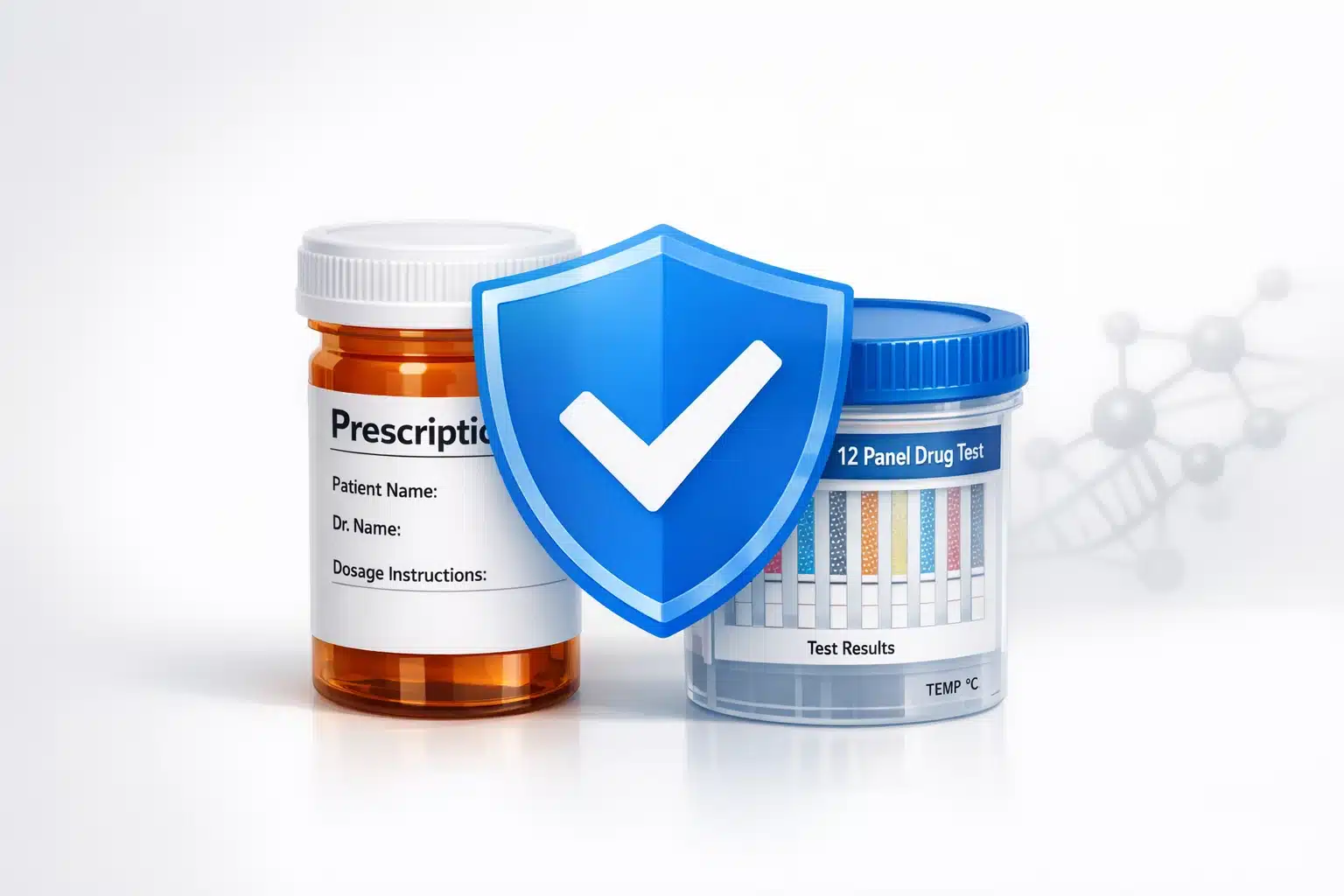
You have a prescription for Adderall, Vyvanse, or another amphetamine-based medication. You also have a mandatory drug test in a few days. The primary question isn’t whether the drug will be in your system; it’s how you prove your use is legitimate and not illicit. This guide moves beyond generic detection windows to give you a clear, forensic-level understanding of the testing process, from initial screening to the crucial conversation with the Medical Review Officer (MRO).
Most online resources treat all amphetamine use as abuse, leaving prescribed users anxious and unprepared. Here, we’ll focus on the technical details that matter: cut-off levels, metabolic variables, and the exact steps to navigate the verification process without stress.
How Amphetamine Drug Testing Works
Most workplace amphetamine drug testing follows a structured process designed to ensure accuracy, fairness, and regulatory compliance. Rather than relying on a single screening result, laboratories follow multiple verification steps before reporting a confirmed positive finding.
The process begins with specimen collection under documented chain-of-custody procedures. The collector verifies specimen integrity but does not evaluate medications or determine whether a prescription is valid. Their responsibility is to collect the sample according to established procedures while maintaining secure documentation throughout transportation and laboratory processing.
After collection, the specimen undergoes an initial immunoassay screening. Samples producing non-negative results are automatically forwarded for highly specific confirmatory testing using Gas Chromatography-Mass Spectrometry (GC-MS) or, in many laboratories, Liquid Chromatography-Tandem Mass Spectrometry (LC-MS/MS). Only after confirmation and Medical Review Officer review is a final result reported to the employer or requesting agency.
Understanding amphetamine detection windows
The first question most people ask is, “How long will it stay in my system?” The answer depends on several factors: the type of specimen collected, your unique metabolism, dosage, and even the pH level of your urine. While every individual is different, standard detection windows provide a reliable baseline for what to expect.
Amphetamines, including prescribed medications and illicit methamphetamine, are typically detectable in urine for 1 to 4 days, in blood for up to 48 hours, and in saliva for 1 to 2 days. Hair follicle tests can detect use for up to 90 days, offering a much longer history of exposure.

A quick-reference detection matrix helps you compare specimen types at a glance—then interpret your result in context (dose, timing, and metabolism).
Understanding Amphetamine Metabolism
Amphetamine metabolism is considerably more complex than many people realize. After ingestion, medications such as Adderall or Vyvanse are absorbed into the bloodstream before being distributed throughout the body. Vyvanse (lisdexamfetamine) must first be converted into active dextroamphetamine, whereas Adderall contains mixed amphetamine salts that become active immediately after absorption.
The liver performs part of the metabolic process, while the kidneys play the primary role in eliminating amphetamine from the body through urine. Because urinary elimination is highly dependent on urine acidity, two individuals taking identical doses can produce different detection windows despite following the same prescription schedule.
This explains why laboratory interpretation focuses on scientifically validated cut-off levels rather than attempting to estimate exactly when medication was taken. Drug testing identifies whether amphetamine concentrations exceed established reporting thresholds—not whether someone is impaired or using medication exactly as prescribed.
Your metabolism: The variables that matter
The metabolic half-life of amphetamine for a typical adult is between 9 and 11 hours. This means it takes about that long for half of the substance to be eliminated from your body. However, this is not a fixed number. According to research in the Journal of Analytical Toxicology, urine pH is a significant variable.
- Acidic urine (pH 5.5–6.0): Speeds up excretion, reducing the half-life to 7-8 hours.
- Alkaline urine (pH 7.5–8.0): Slows down excretion, extending the half-life to as long as 18-34 hours.
To put this in a relatable context, consider caffeine. Most people have a general sense of how long a cup of coffee affects them. You can use that as a rough “metabolic benchmark” to understand if your body processes substances quickly or slowly, though the chemical pathways are different.
The two-step process: Screening vs. confirmation
A positive result on an initial screen does not automatically mean a failed test. Workplace and clinical testing follows a two-step protocol mandated by federal guidelines to ensure accuracy and fairness.
Step 1: The initial screen (immunoassay)
The first test is a screening test, often performed with easy-to-use multi-panel urine cups. These tests use an immunoassay method designed for speed and sensitivity. The goal is to quickly identify presumptive positive samples.
Federal guidelines, such as those from SAMHSA, set the initial screening cut-off for amphetamines at 1000 ng/mL. Some workplace policies may use a lower cut-off of 500 ng/mL. If your sample contains amphetamine metabolites below this level, it is reported as negative. If it’s above the cut-off, it is flagged for a second, more specific test.
Step 2: The confirmation test (GC-MS)
All presumptive positive screens must be verified using a different, more precise method: Gas Chromatography/Mass Spectrometry (GC-MS). This is the gold standard in toxicology. GC-MS not only confirms the presence of the substance but also identifies the specific molecules, which is critical for distinguishing between different drugs.
The confirmation cut-off is typically lower, often 500 ng/mL for amphetamine and methamphetamine. This two-tier system prevents a false positive on an initial screen from becoming a final reported failure.

Cutoffs change outcomes. This visual shows how screening and confirmation use different methods—and why numbers like 500 vs 1000 ng/mL matter.
Choosing the Right Amphetamine Drug Test
Different testing methods serve different clinical and workplace objectives. Selecting the appropriate specimen depends on whether the goal is identifying recent use, documenting historical exposure, or complying with regulatory requirements.
Urine testing remains the most widely used method because it balances detection window, affordability, laboratory availability, and regulatory acceptance. It is commonly used for workplace, DOT, clinical, and court-ordered testing programs.
Oral fluid testing detects more recent drug use and is increasingly adopted for reasonable suspicion and post-accident testing because specimen collection is directly observable and less susceptible to adulteration.
Blood testing offers the shortest detection window and is generally reserved for clinical or forensic investigations where recent impairment is being evaluated.
Hair testing provides the longest historical record of exposure, detecting amphetamine use for up to approximately 90 days. While valuable for documenting long-term patterns of use, it is generally less useful for identifying very recent consumption.
The risk of false positives from common medications
Immunoassay screens are sensitive but not perfectly specific. They look for general structures, meaning other substances with similar molecular shapes can sometimes trigger a positive result. This is known as cross-reactivity.
Confirmation testing with GC-MS almost always resolves these issues by identifying the exact substance. However, knowing the potential triggers can help you prepare for a conversation with an MRO.
Common sources of false positives for amphetamines include:
- Antidepressants: Bupropion (Wellbutrin) is a significant factor. Some clinical studies show it accounts for up to 41% of unconfirmed amphetamine positives.
- Decongestants: Pseudoephedrine and phenylephrine, found in many cold and allergy remedies, can cross-react.
- ADHD Medications: Non-amphetamine ADHD drugs like methylphenidate (Ritalin, Concerta) do not typically cause a positive for amphetamines, but others like desoxyn (methamphetamine hydrochloride) will.
- Nasal Inhalers: The Vicks VapoInhaler contains levomethamphetamine (l-methamphetamine), a chemical isomer of illicit d-methamphetamine. Forensic labs can distinguish between these two forms.

If a screen is positive, the next question is ‘why.’ This triage view highlights common triggers and why confirmation testing usually clarifies the source.
How to navigate the MRO verification process
This is the most misunderstood part of the drug testing journey and where most anxiety comes from. If your confirmed test is positive, you won’t be contacted by your employer. Instead, a licensed physician, the Medical Review Officer (MRO), will call you to determine if there is a legitimate medical explanation.
This is your opportunity to provide your prescription information. The entire process is confidential and designed to protect you.
Step 1: At the collection site (The Collector Fallacy)
A common mistake is trying to show your prescription bottle to the person collecting your urine sample. The collector is not authorized to review or document your medical information. Their job is strictly to ensure the integrity of the sample and maintain the chain of custody. According to protocols from labs like Quest Diagnostics, they will not make any notes about your prescriptions. Save your documentation for the MRO.
Step 2: The wait after a confirmed positive
After the lab confirms a positive result, it reports it to the MRO, not your employer. The MRO will then attempt to contact you, usually within 24 to 48 hours. It is critical that you answer this call or return their message promptly.
Step 3: The MRO call and your “Prescription Defense Kit”
The MRO will identify themselves and state the reason for the call. They will ask if you have a medical explanation for the positive test result. This is where you calmly provide the details of your prescription. To make this process seamless, have your “Prescription Defense Kit” ready:
- Prescription Name: e.g., Adderall XR
- Dosage and Frequency: e.g., 20mg, once daily
- Prescribing Doctor’s Name and Phone Number
- Pharmacy Name and Phone Number
- Prescription Number (Rx Number)
The MRO’s staff will verify this information with your doctor or pharmacy. Once your prescription is confirmed as valid and consistent with the test results, the MRO will report your test to your employer as negative. Your medical information is never shared with your employer.

Most confusion happens after the sample is collected. This roadmap shows what the collector does, when the MRO calls, and what documents to have ready.
Understanding Amphetamine Drug Test Results
Laboratory reports contain more detail than simply “positive” or “negative.” Understanding common reporting terminology helps eliminate confusion throughout the testing process.
A negative result indicates amphetamine concentrations below established laboratory cutoffs.
A presumptive positive means the specimen exceeded the immunoassay screening threshold and requires confirmation.
A confirmed positive indicates that advanced laboratory analysis verified amphetamine above confirmation cutoffs.
Other reportable findings may include dilute specimens, substituted specimens, adulterated specimens, or invalid specimens, each requiring interpretation according to organizational policy and regulatory guidelines.
Understanding these classifications helps prescription holders appreciate that laboratory science includes multiple safeguards before any verified positive result is ultimately reported.
How labs differentiate prescription amphetamine from illicit meth
A common concern is whether a prescription for Adderall could be mistaken for illicit methamphetamine use. Advanced GC-MS testing can easily differentiate them. Methamphetamine exists in two forms, or isomers: d-methamphetamine and l-methamphetamine. Illicit meth is primarily the potent d-isomer. A prescription for Adderall will result in amphetamine metabolites, not methamphetamine. Even in the rare case of a prescription for Desoxyn (methamphetamine hydrochloride), the lab can identify it as such, and your MRO interview will clarify its legitimate use.
Prescription Verification: What Every Patient Should Know
Many prescription holders assume they should proactively disclose medications before testing begins. In reality, most workplace drug testing programs intentionally separate specimen collection from medical review to protect patient privacy.
The collector’s responsibility is limited to collecting the specimen, maintaining chain of custody, and documenting the collection accurately. Medical discussions occur later with the Medical Review Officer, whose role is to evaluate legitimate medical explanations for laboratory findings.
If you receive a call from the MRO, respond promptly and provide complete, accurate prescription information. Delayed responses may postpone verification and delay reporting to your employer or requesting agency.
Keeping an updated medication list, pharmacy contact information, and prescribing physician’s details readily available helps streamline the verification process and minimizes unnecessary stress.
Workplace & DOT Amphetamine Drug Testing Policies
Amphetamine drug testing is commonly performed in both regulated and non-regulated workplace programs. Although laboratory science remains largely the same, the governing policies may differ depending on the employer and applicable regulations.
Department of Transportation (DOT) drug testing follows strict federal requirements outlined in 49 CFR Part 40. These regulations govern specimen collection, chain of custody, laboratory testing, Medical Review Officer responsibilities, and result reporting for safety-sensitive transportation employees.
Non-DOT employers generally establish workplace drug testing policies based on state laws, industry standards, insurance requirements, and organizational safety objectives. Testing may include:
- Pre-employment screening
- Random drug testing
- Reasonable suspicion testing
- Post-accident testing
- Return-to-duty testing
- Follow-up testing after policy violations
Regardless of program type, employers should maintain written drug testing policies, use accredited laboratories, and partner with qualified Medical Review Officers to ensure testing remains legally defensible and consistently administered.
Common Myths About Amphetamine Drug Testing
Despite widespread testing, misinformation surrounding amphetamine drug tests remains common. Separating myths from laboratory science helps reduce unnecessary anxiety.
Myth: Bringing your prescription bottle to the collection site guarantees your test will be reported as negative.
Reality: The collector cannot evaluate prescriptions or change laboratory results. Prescription verification occurs only through the Medical Review Officer.
Myth: A positive screening test automatically means you failed.
Reality: Initial immunoassay results are considered presumptive until confirmed through GC-MS or LC-MS/MS testing.
Myth: Drinking excessive amounts of water will eliminate amphetamine before testing.
Reality: Hydration does not immediately remove amphetamine from the body. Excessive dilution may instead trigger specimen validity concerns.
Myth: Stopping prescribed medication one or two days before testing guarantees a negative result.
Reality: Detection windows vary significantly based on metabolism, dosage, formulation, frequency of use, and individual physiology.
Myth: Laboratories cannot distinguish prescription medications from illicit amphetamine use.
Reality: Modern confirmatory testing and Medical Review Officer review are specifically designed to differentiate legitimate prescription use from unauthorized drug use whenever medically appropriate.
Be prepared, not anxious
Navigating a drug test with a valid prescription comes down to understanding the process and being prepared. The system is designed to verify legitimate medical use, not to penalize patients. By knowing the roles of the collector and the MRO, understanding the two-step testing protocol, and having your prescription information ready, you can confidently handle the process.
For employers and organizations building a fair and compliant drug-free workplace program, providing reliable drug testing supplies is the first step. High-quality tools, like 12-panel drug test cups that follow established cut-off levels, ensure the screening process is both efficient and accurate, forming the foundation of a trusted testing system.