Cocaine Drug Testing Explained: Detection Windows, Cut-Off Levels & Benzoylecgonine

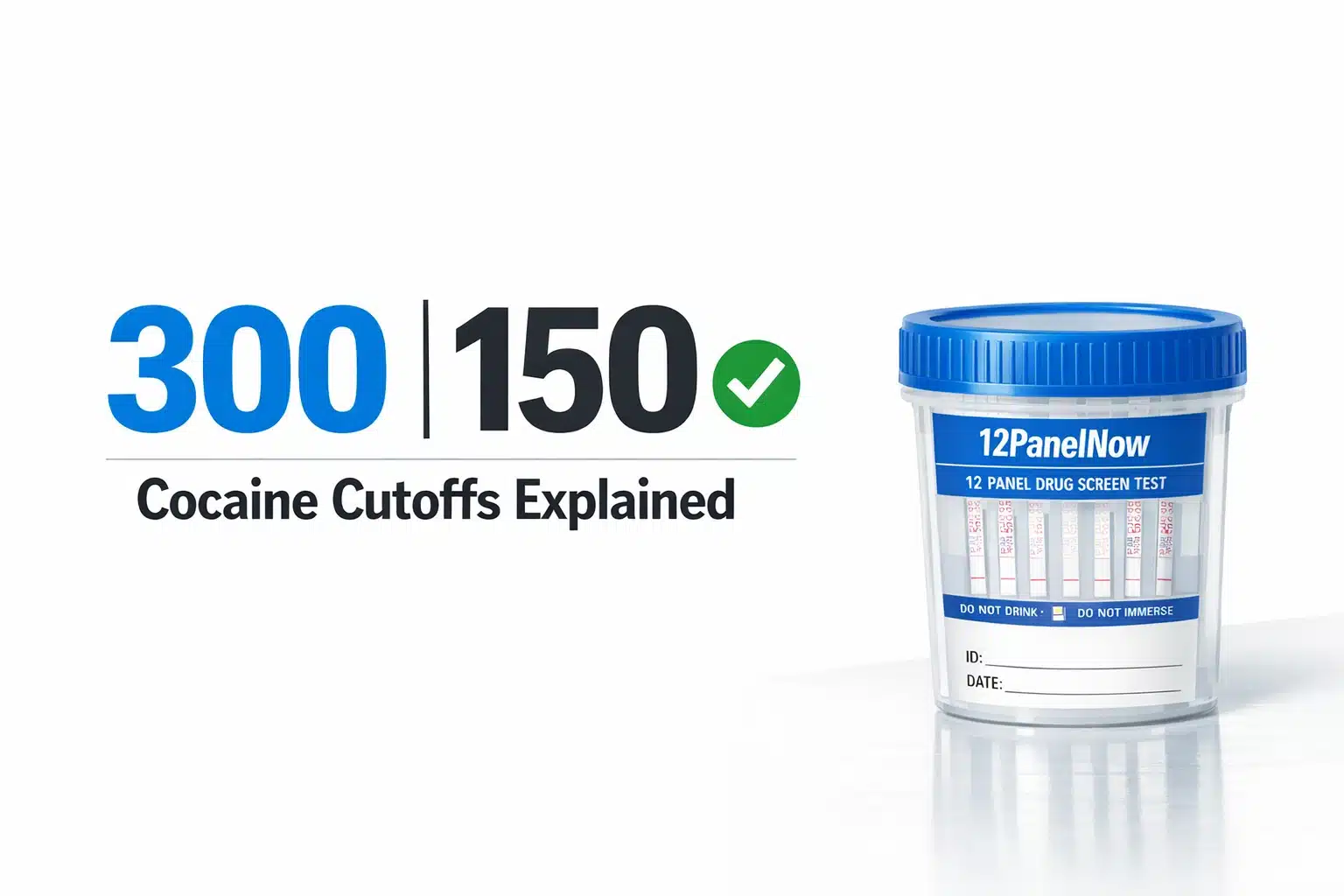
The difference between a 300 ng/mL and a 150 ng/mL drug test cutoff can feel like the difference between passing and failing, especially when a management position or career step is on the line. Understanding these numbers is crucial, but they don’t tell the whole story. The key isn’t just the cutoff level; it’s the science behind how your body processes cocaine and how different tests are designed to detect it.
To make an informed decision, you need to look beyond the numbers and understand the metabolic pathway from cocaine to its primary metabolite, benzoylecgonine (BZE). This is what drug tests actually look for.
How Cocaine Drug Testing Works
Most cocaine drug testing programs follow a standardized workflow designed to balance efficiency with scientific accuracy. Rather than relying on a single laboratory result, specimens move through several quality-controlled stages before a confirmed positive is reported.
The process begins with specimen collection under documented chain-of-custody procedures to preserve specimen integrity and maintain accountability throughout transportation and laboratory analysis. Urine remains the most common specimen type for workplace drug testing, although oral fluid, blood, and hair testing may be appropriate depending on the testing objective.
After collection, specimens undergo an initial immunoassay screening to determine whether benzoylecgonine concentrations exceed established cut-off levels. Samples producing non-negative screening results are then analyzed using highly specific confirmatory methods such as Gas Chromatography/Mass Spectrometry (GC/MS) or Liquid Chromatography Tandem Mass Spectrometry (LC-MS/MS). Only after confirmation does the laboratory report a verified positive result.
From cocaine to benzoylecgonine: The metabolic clock
When cocaine enters the body, it’s metabolized very quickly. Its half-life is only about one hour, meaning half of the substance is eliminated from the bloodstream in that time. This makes active cocaine itself a poor target for most drug testing.
Instead, tests focus on benzoylecgonine (BZE), its main inactive metabolite. BZE has a much longer half-life of 6 to 12 hours and can be detected in urine for days. This metabolic process is why a test can be positive long after the drug’s effects have worn off. The efficiency of this process is also influenced by complex factors, including P-glycoprotein (PGP) efflux transporters which affect how substances cross the blood-brain barrier.
Understanding Cocaine Metabolites
While benzoylecgonine receives the most attention in workplace drug testing, cocaine metabolism produces several compounds that help toxicologists understand how the body processes the drug. Each metabolite serves a different scientific purpose depending on the specimen collected and the analytical method used.
Cocaine itself is considered the parent drug and is detectable only for a relatively short period after use. As metabolism begins, the liver rapidly converts cocaine into benzoylecgonine (BZE) and ecgonine methyl ester (EME), both of which are inactive metabolites. In some circumstances, additional metabolites such as norcocaine may also be detected, particularly during advanced toxicological investigations.
Because benzoylecgonine persists significantly longer than cocaine, it serves as the primary biomarker for workplace urine drug testing. Understanding the distinction between the parent drug and its metabolites explains why laboratory testing identifies prior cocaine use rather than current impairment.
The “150 vs 300” decoder: Screening vs. confirmation explained
Most workplace drug testing programs, including those following Department of Transportation (DOT) guidelines, use a two-step process. This is where the 300 ng/mL and 150 ng/mL levels become critical.
1. The Initial Screen (300 ng/mL Cutoff)
The first test is an immunoassay screen. It’s fast, cost-effective, and designed to cast a wide net. According to DOT regulation 49 CFR Part 40, the standard initial test cutoff for benzoylecgonine is 300 ng/mL. If your sample falls below this level, you are considered negative, and the process stops there. If the result is at or above 300 ng/mL, it’s considered a “presumptive positive” and moves to the second step.
2. The Confirmatory Test (150 ng/mL Cutoff)
A presumptive positive screen doesn’t automatically mean a failure. To ensure accuracy and rule out potential cross-reactivity, the sample is sent for a completely different type of test: gas chromatography-mass spectrometry (GC/MS). This method is highly specific and considered the gold standard in toxicology. The DOT sets the GC/MS confirmatory cutoff for BZE at 150 ng/mL. This lower, more sensitive threshold provides definitive proof of the metabolite’s presence.

A clear view of how cocaine testing typically works: an initial screen around “300 ng/mL” followed by confirmation near “150 ng/mL” when a result needs validation.
The two-tiered system is designed to be both efficient and fair, preventing false positives from impacting employment while ensuring that true positives are accurately identified.
Choosing the Right Cocaine Drug Test
Selecting the appropriate cocaine drug test depends on the purpose of testing, the desired detection window, and applicable workplace or regulatory requirements. Different specimen types identify cocaine exposure over different timeframes, making each method suitable for specific situations.
Urine testing remains the industry standard for workplace drug testing because it provides a practical balance between detection window, laboratory availability, cost-effectiveness, and regulatory acceptance. It is commonly used for pre-employment, random, return-to-duty, and follow-up testing programs.
Oral fluid testing detects the parent drug more effectively than long-term metabolites, making it valuable when identifying recent cocaine use is the primary objective. Hair testing provides the longest historical detection window, while blood testing is generally reserved for clinical or forensic investigations involving recent impairment.
Understanding the strengths and limitations of each specimen type allows employers and testing providers to build programs that align with safety objectives while maintaining defensible testing practices.
How long does BZE stay detectable?
The detection window for BZE depends heavily on the frequency and amount of use. Because benzoylecgonine is fat-soluble, it can accumulate in fatty tissues with chronic use, leading to a much longer detection window.
- Acute or Infrequent Use: For a single use, BZE is typically detectable in urine for 2-4 days.
- Chronic or Heavy Use: For frequent users, BZE can remain detectable for 7-14 days, and in some extreme cases, even longer.
Lowering the cutoff level from 300 ng/mL to 150 ng/mL inherently extends the detection window, making it more likely to identify use that occurred further in the past.

Cocaine clears quickly, but its metabolite BZE can remain detectable longer—especially when use is frequent or cutoffs are lower.
Could something else cause a positive screen?
While rare, some substances can theoretically cross-react with the initial immunoassay screen. Certain local anesthetics or herbal remedies have been subjects of concern. However, this is precisely why the GC/MS confirmation test exists. It is highly specific and will not mistake another compound for benzoylecgonine. If a screen returns a surprising result, confirmation testing provides the definitive answer.

When a screen is surprising, the decision point is simple: treat it as presumptive and confirm with a specific method that targets BZE.
Understanding Cocaine Drug Test Results
Laboratory reports contain more information than simply “positive” or “negative.” Understanding the terminology used throughout the testing process helps employers, donors, and healthcare professionals interpret results appropriately.
A negative result indicates that benzoylecgonine concentrations fall below the established laboratory cut-off. A non-negative or presumptive positive result means the specimen exceeded the screening threshold and requires confirmatory laboratory analysis before a final result can be reported.
After confirmation, the laboratory may report a verified positive if benzoylecgonine exceeds the confirmation cutoff. Other possible findings include dilute specimens, substituted specimens, adulterated specimens, and invalid results. Each classification follows established laboratory quality procedures and may require recollection depending on workplace policy.
Medical Review Officers (MROs) may also become involved in regulated testing programs to evaluate laboratory findings, review donor information, and ensure reported results accurately reflect laboratory evidence before they are released to employers.
From street slang to test results: A practical glossary
Understanding toxicology also means decoding the language used outside the lab. Online forums often mix up terms, creating confusion.
- “Panda Drug”: This term is frequently misused. It typically refers to Opana (oxymorphone), a powerful opioid, not cocaine. The name is a slang abbreviation of “Opana.”
- “The Nod”: This describes the state of drowsiness and semi-consciousness associated with opioid or heroin use, not the stimulant effects of cocaine.
- “Norton”: This is often a result of brand confusion or online search misdirection, sometimes linked to pharmacy searches, and is not a recognized slang for cocaine.
Knowing the correct terminology helps separate substances and understand what a specific multi-panel drug test is actually screening for.
Global context: Brazil’s “Oxi” and its impact on toxicology
Not all cocaine-based products are the same. In Brazil, a substance known as “Oxi” has emerged, presenting unique public health challenges. Oxi is a cocaine base mixed with chemicals like gasoline or kerosene. Research from the European Union Drugs Agency (EUDA) in 2025 estimated its lifetime prevalence in Brazil at 1.4%. The substance is considered significantly more toxic and potentially twice as addictive as traditional crack cocaine. This highlights how regional drug formulations can alter health risks and complicate toxicological analysis.

Not all cocaine-base products are chemically similar. This comparison highlights why regional formulations like “Oxi” can change risk and complicate testing conversations.
Employment corner: The manager drug test scenario
Concerns about specific employers, like Panda Express, are common. Based on employee reviews, while entry-level positions may not always require pre-employment screening, management roles are often subject to a higher level of scrutiny. This can include pre-employment, random, and “reasonable suspicion” testing. Companies with zero-tolerance policies typically use the standard DOT-aligned two-step screening process to ensure fairness and accuracy. The goal for any employer is to maintain a safe workplace, and that starts with reliable, legally defensible testing protocols.
Laboratory Quality Standards for Cocaine Drug Testing
Reliable cocaine drug testing depends on more than sophisticated analytical instruments. Accredited laboratories operate under comprehensive quality management systems that validate every stage of specimen handling, analysis, and result reporting.
Many workplace testing laboratories comply with recognized standards such as SAMHSA guidelines, CLIA requirements, and CAP accreditation while maintaining strict chain-of-custody procedures. Routine instrument calibration, internal quality controls, proficiency testing, and documented validation studies all contribute to accurate laboratory reporting.
Specimen integrity is monitored from collection through final reporting. Secure transportation, barcode tracking, controlled laboratory environments, and standardized operating procedures reduce opportunities for specimen mix-ups while ensuring every reported result can be scientifically defended.
Common Cocaine Drug Testing Myths
Misinformation surrounding cocaine drug testing remains widespread. Separating scientific evidence from internet myths allows individuals and organizations to make better-informed decisions.
Myth: Drinking excessive amounts of water immediately eliminates cocaine metabolites.
Reality: Hydration may dilute urine temporarily but does not eliminate benzoylecgonine from the body. Laboratories also evaluate specimen validity, making excessive dilution easier to identify.
Myth: Detox drinks permanently remove cocaine from your system.
Reality: Most commercial detox products lack strong scientific evidence demonstrating that they accelerate cocaine metabolism or eliminate benzoylecgonine before normal physiological processes.
Myth: Exercise immediately before testing guarantees a negative result.
Reality: Physical activity does not rapidly eliminate cocaine metabolites. Detection depends primarily on metabolism, time since use, and laboratory cut-off levels rather than short-term behavioral changes.
Myth: Home remedies can reliably beat laboratory drug testing.
Reality: Modern laboratory testing combines specimen validity testing, confirmatory analysis, and strict quality assurance measures specifically designed to detect inaccurate or manipulated specimens.
Taking control with accurate information
Navigating the complexities of drug testing requires clarity. Whether for workplace compliance, clinical monitoring, or personal knowledge, understanding the difference between an initial screen and a confirmation test is the first step. The process is designed to provide accurate, reliable results you can trust.
For organizations and individuals who need dependable screening solutions, using CLIA-waived and supplies is non-negotiable. Our comprehensive multi-panel urine cups are designed for this exact two-step process, providing the clear, preliminary results needed to make informed decisions confidently.