Can You Drink Decaf Coffee Two Hours Before a UTI Urine Test?


If you have a urine test scheduled because you think you may have a urinary tract infection (UTI), you may wonder whether drinking decaffeinated coffee two hours beforehand could affect the results. The good news is that a routine urinalysis generally does not require fasting, and drinking before the test is usually allowed. However, preparation can vary depending on whether you are having a routine urinalysis, urine culture, or another specialized urine test, so your healthcare provider’s instructions should always take priority.
For a typical UTI evaluation, the main concern is not whether you had one cup of decaf coffee. What matters more is providing a properly collected urine sample and avoiding excessive fluid intake that could make the sample unusually diluted. A urine culture may also have specific collection instructions, such as waiting before urinating or collecting a first-morning sample.
Does Decaf Coffee Affect a UTI Urine Test?
There is no strong evidence from the sources reviewed that one cup of decaffeinated coffee two hours before a routine UTI urine test will invalidate the test or prevent bacteria from being detected. A routine urinalysis examines characteristics of urine such as its appearance, concentration and chemical content, while a urine culture is used to grow microorganisms from the sample and identify bacteria or fungi associated with infection.
Decaffeinated coffee is also different from regular coffee because it contains much less caffeine. However, “decaf” does not necessarily mean completely caffeine-free. The more important distinction is the type of urine test being performed. Instructions for specialized urine collections can be very different from those for a routine UTI urinalysis or urine culture.
If your healthcare provider specifically told you not to consume coffee, caffeine, or certain foods before your test, follow those instructions even if the drink is decaffeinated.
What Does a UTI Urine Test Look For?

A urinalysis can examine urine physically, chemically and microscopically. Depending on the test, healthcare professionals may look for things such as white blood cells, red blood cells, bacteria and chemical markers including nitrites.
A urine culture works differently. The laboratory places part of the urine sample in conditions that allow microorganisms to grow. If bacteria or fungi grow, the laboratory can identify them and may perform susceptibility testing to help determine which antimicrobial treatment is likely to work.
This is why drinking decaf coffee should not be thought of as something that can simply “hide” a UTI. The test is looking for biological and chemical evidence in the urine rather than testing whether you consumed coffee.
Can You Drink Decaf Coffee Two Hours Before a Urine Test?
For a routine urinalysis, fasting is generally not required. Mayo Clinic states that people having only a urinalysis can eat and drink before the test, although different instructions may apply when additional tests are being performed.
A urine culture can have its own collection requirements. For example, Cleveland Clinic notes that a healthcare provider may ask someone not to urinate for at least an hour before collecting the sample, while other instructions may include drinking water or obtaining a first-morning specimen.
So if you drank decaf coffee two hours before your scheduled UTI urine test, there is generally no reason to assume that the test has automatically been ruined. The best approach is to tell the healthcare professional what you consumed if you are concerned and follow the specific instructions they provided.
Decaf Coffee vs. Regular Coffee Before a UTI Test
The amount of caffeine is one obvious difference between regular and decaffeinated coffee, but the question of coffee before a urine test is not as simple as “caffeine equals inaccurate results.”
Regular coffee contains caffeine, while decaffeinated coffee contains substantially less. Caffeine can affect urinary habits in some people, including frequency and urgency. Research included in the competitor material also examined coffee and other potentially irritating beverages in relation to lower urinary tract symptoms, but that research did not establish that a particular cup of decaf coffee makes a UTI urine test inaccurate.
This distinction matters because bladder symptoms and test accuracy are not the same thing. A beverage may make someone feel that they need to urinate more frequently without causing the laboratory to miss bacteria in a properly collected urine culture.
Can Decaf Coffee Irritate the Bladder?
Coffee can be relevant to bladder symptoms even when the question is not about test accuracy. Some people notice increased urgency, frequency or bladder discomfort after consuming coffee or other beverages they personally find irritating.
The study provided in the competitor material investigated reducing potentially irritating beverages in women with lower urinary tract symptoms. The researchers observed improvements in symptoms when consumption of these beverages was reduced, but they also emphasized that the study could not determine which individual beverage or ingredient was responsible for the changes.
That means it would be inaccurate to conclude that decaf coffee automatically irritates everyone’s bladder. Individual responses can vary.
If coffee normally makes you feel more urgency or discomfort, choosing water before your appointment may simply be more comfortable. That is different from saying that decaf coffee will invalidate your UTI test.
Can Decaf Coffee Dilute Your Urine?
The amount of fluid you consume is more relevant to urine concentration than the simple fact that the drink is coffee.
Drinking a normal amount of fluid before a urine test is generally different from deliberately consuming a very large amount of water or other beverages. Cleveland Clinic warns that drinking too much extra water before a urinalysis can produce inaccurate results.
For this reason, you should not try to “flush” your bladder before a UTI urine test by drinking huge amounts of water. Excessive fluid intake can make your urine more diluted.
At the same time, you should not intentionally become dehydrated just to make the urine more concentrated. The goal is normal hydration and proper sample collection, unless your healthcare provider has given you different instructions.
What Should You Drink Before a UTI Urine Test?
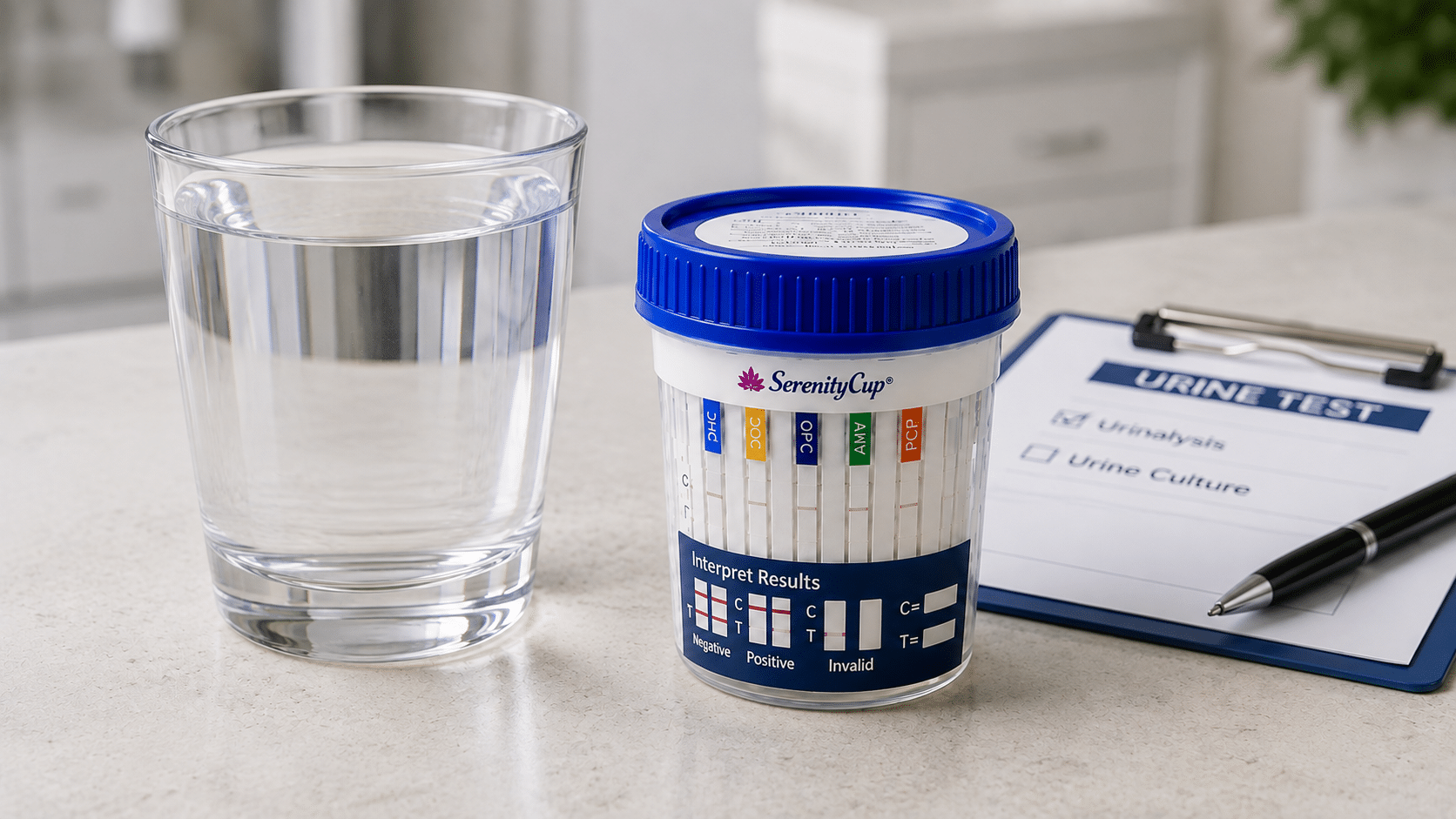
Water is often the simplest choice if you are thirsty. You do not need to consume excessive amounts of it.
If you already had a cup of decaf coffee two hours before your appointment, don’t panic and don’t try to compensate by drinking large quantities of water. Simply follow the collection instructions provided by the clinic or laboratory.
Why Proper Urine Collection Matters More
For a UTI evaluation, the quality of the urine specimen is extremely important. A contaminated sample can introduce bacteria or other material from the skin or genital area and potentially make interpretation more difficult.
A clean-catch urine sample is designed to reduce this problem. MedlinePlus recommends collecting the sample after cleaning the genital area, allowing some urine to pass into the toilet first, and then collecting the midstream urine in the provided container without touching the inside of the cup.
For some clean-catch collections, MedlinePlus says that, if possible, the sample should be collected when urine has been in the bladder for two to three hours.
This is an important point for someone searching for “decaffeinated coffee two hours before UTI urine test.” The two-hour period can relate to urine collection timing, but that does not necessarily mean you must avoid every beverage for two hours. Your laboratory’s instructions determine what applies to your particular test.
How to Give a Clean-Catch Urine Sample
When your provider asks for a clean-catch sample, follow the instructions supplied with the collection kit. In general, the process involves cleaning your hands and genital area, beginning urination in the toilet, and then collecting the midstream portion in the sterile specimen cup.
Avoid touching the inside of the cup or its lid. After collecting the requested amount, close the container securely and return it according to the laboratory’s instructions.
Proper collection helps reduce contamination and gives the laboratory a better specimen to analyze.
What Can Actually Affect a UTI Urine Test?
Several factors may be more important than whether you drank decaf coffee.
Excessive fluid intake can dilute urine and may affect certain measurements.
Poor collection technique can introduce bacteria or other material into the specimen and make interpretation more difficult.
Medications and supplements can affect some urinalysis results, which is why Mayo Clinic recommends telling your healthcare provider about medications, vitamins and supplements you take.
Menstrual blood or vaginal discharge can also interfere with certain urine test results, so tell your provider if this applies to you.
Antibiotic treatment is also important to discuss with your healthcare professional because a urine culture is intended to detect microorganisms that may be causing infection, and treatment can affect how infections are evaluated.
What If You Already Drank Decaf Coffee Two Hours Before the Test?
If you have already had decaf coffee two hours before your UTI urine test, there is generally no reason to assume the test is automatically invalid.
Do not try to correct the situation by drinking excessive water or intentionally holding urine longer than your healthcare provider instructed. Instead, follow the collection directions given to you.
If the test is a specialized urine test rather than a routine UTI urinalysis or urine culture, preparation requirements may be different. In that situation, tell the laboratory or healthcare provider exactly what you drank and when.
What Should You Avoid Before a UTI Urine Test?
For a routine urinalysis or urine culture, you usually do not need to completely avoid food and drinks unless your healthcare provider or laboratory gives you specific preparation instructions. The most important thing is to avoid excessive fluid intake, because drinking unusually large amounts immediately before providing a sample can make the urine more diluted.
You also should not stop prescription medicines on your own simply because you are having a urine test. Some medications, vitamins, and supplements can influence certain urinalysis measurements, so tell your healthcare provider what you are taking. If your provider gives you specific instructions about coffee, caffeine, medications, or food, follow those instructions rather than relying on general advice.
Can Coffee Cause a False-Positive UTI Test?
A cup of decaf coffee should not be considered a cause of a false-positive UTI diagnosis. A urine test for a suspected UTI looks for findings associated with infection, while a urine culture attempts to identify microorganisms that can cause the infection.
Coffee can be relevant to bladder symptoms, however. Some people experience more urinary urgency or frequency after drinking coffee or other beverages they find irritating. That is different from causing bacteria to appear in a urine culture. Therefore, it is important not to confuse bladder irritation with laboratory evidence of infection.
If your urine test produces an unexpected result, your healthcare provider may consider the entire clinical picture, including your symptoms, collection technique, medications, and the laboratory findings.
Does Decaf Coffee Contain Caffeine?
Decaffeinated coffee is processed to remove most of its caffeine, but decaf does not necessarily mean that the beverage contains absolutely zero caffeine.
For the specific question of a routine UTI urine test, the distinction matters because some specialized urine tests have very different preparation requirements. The Cleveland Clinic Abu Dhabi instructions supplied in your SERP research, for example, specifically mention avoiding caffeine for certain specialized 24-hour urine collections. Those instructions should not automatically be applied to a routine UTI urine culture.
This is why knowing exactly what type of urine test you are having is more useful than simply asking whether coffee is allowed.
Urinalysis vs. Urine Culture: What’s the Difference?
A urinalysis examines urine for physical, chemical, and microscopic characteristics. Depending on the test, it may evaluate things such as white blood cells, red blood cells, bacteria, protein, glucose, and other markers.
A urine culture is designed to determine whether microorganisms grow from the specimen. If bacteria or another microorganism is identified, the laboratory may perform additional testing to determine which antimicrobial medicines are likely to be effective.
This distinction is important for anyone searching whether decaffeinated coffee two hours before a UTI urine test can affect the result. Advice for one type of urine test may not apply to another.
Can I Drink Water Before a UTI Urine Test?
In many situations, normal hydration is acceptable before a urine test. However, drinking an unusually large amount of water immediately beforehand is not recommended simply to make it easier to urinate.
Too much fluid can dilute the urine. Cleveland Clinic specifically advises against drinking excessive amounts of water before a urinalysis because dilution can affect certain measurements.
A practical approach is to drink normally and avoid deliberately trying to “flush” your bladder. If your laboratory has given you a specific amount of fluid to drink or avoid, follow those instructions instead.
Does Drinking Coffee Make You Urinate More?
Coffee can influence urinary habits, particularly because of its caffeine content and the volume of liquid consumed. Some people may notice increased frequency or urgency after coffee.
However, the fact that a beverage makes you urinate does not mean it removes bacteria from the urinary tract or makes a UTI disappear. Increased urination should not be confused with treatment or prevention of a urinary infection.
Decaf coffee contains much less caffeine than ordinary coffee, so its effects can be different. Individual responses also vary.
Can Coffee Affect Bladder Symptoms?
Yes, coffee can be relevant to bladder symptoms even when it does not directly determine whether a urine culture detects bacteria.
The research included in the competitor material examined potentially irritating beverages such as coffee, tea, alcohol, carbonated beverages, and artificially sweetened beverages in relation to lower urinary tract symptoms. Participants experienced improvements in symptoms when these beverages were reduced, but the researchers emphasized that the study could not determine whether a particular beverage or individual ingredient was responsible.
That means coffee may make some people feel more urgency or frequency, but this should not be interpreted as evidence that drinking one cup of decaf coffee will make a UTI urine test inaccurate.
What Happens If Your Urine Sample Is Too Diluted?
A highly diluted urine sample can make some substances or measurements less concentrated. This is one reason laboratories and healthcare providers generally prefer a normal, appropriately collected specimen rather than a sample produced after excessive fluid intake.
If you drank a normal amount of fluid before your test, that does not automatically mean your sample is unusable. The concern is mainly with unusually excessive fluid consumption.
If the laboratory considers the specimen unsuitable, your healthcare provider can tell you whether another sample is necessary.
Can a Contaminated Sample Affect UTI Results?
Yes. Contamination is an important consideration when collecting urine for a suspected UTI.
Bacteria from the skin or surrounding area can enter the specimen if the collection process is not performed correctly. A clean-catch technique is intended to reduce this possibility. Cleveland Clinic describes clean-catch collection as cleaning the area, beginning urination, and then collecting the sample without touching the inside of the sterile container.
This is one reason how you collect the urine may matter more than whether you drank a cup of decaf coffee.
How Long Should You Hold Your Urine Before a UTI Test?
There is no single waiting period that applies to every urine test.
Collection instructions can vary depending on the test and the laboratory. Cleveland Clinic notes that some urine culture instructions may ask patients not to urinate for at least an hour before collection.
For clean-catch collection, MedlinePlus notes that, when possible, the sample may be collected after urine has been held in the bladder for two to three hours.
Therefore, don’t assume that “two hours” means you must stop drinking all beverages two hours beforehand. Urine-holding instructions and food or drink restrictions are separate issues.
Does a UTI Test Require First-Morning Urine?
Not every UTI urine test requires first-morning urine.
Some collection instructions may recommend a first-morning specimen because urine has generally remained in the bladder for several hours, while other tests can use a sample collected at another time.
The correct approach depends on the specific test ordered. If your provider or laboratory specifically asks for first-morning urine, follow that instruction rather than substituting another sample.
What If You’re Taking Antibiotics Before the Test?
Tell your healthcare provider if you have already started antibiotics before providing a urine sample.
A urine culture is intended to detect microorganisms growing from the specimen, so information about current or recent treatment can be important when interpreting the result. Do not stop an antibiotic prescribed to you simply because you want a urine test to be more accurate.
If you suspect a UTI and have not yet been evaluated, ask your healthcare professional whether the urine sample should be collected before starting treatment.
Can You Drink Decaf Coffee Before a Urine Culture?
For a routine urine culture, one cup of decaf coffee two hours beforehand does not by itself mean that the culture will be invalid. The available sources do not support telling every patient to cancel or repeat a routine urine culture simply because they consumed decaf coffee.
What matters more is following the collection instructions, providing a properly collected specimen, and avoiding excessive fluid intake.
Specialized urine tests can have completely different restrictions. If your appointment involves a 24-hour urine collection or testing for a specific chemical or hormone, use the instructions supplied for that test.
What If You Drank Regular Coffee Instead of Decaf?
If you accidentally drank regular coffee before a routine UTI urine test, don’t automatically assume that your sample will be unusable.
Regular coffee contains more caffeine than decaf, and caffeine can influence urinary symptoms in some people. However, that does not mean a normal cup of coffee automatically prevents a urine culture from detecting bacteria.
If your provider gave you caffeine restrictions, mention what you drank and when you drank it. The laboratory can determine whether the test should proceed or whether another collection is necessary.
What If You Already Drank Decaf Coffee Two Hours Before the Test?
If this is exactly what happened, there is generally no need to panic.
For a routine UTI urine test:
- Don’t drink excessive water to compensate.
- Don’t intentionally dehydrate yourself.
- Follow the laboratory’s collection instructions.
- Provide the requested clean-catch or midstream sample.
- Tell the healthcare professional about anything they specifically asked you to report.
- If this is a specialized urine test, check its individual preparation requirements.
A single cup of decaf coffee should not automatically be treated as a reason to assume that your UTI test will fail.
When Should You Contact a Healthcare Professional?
A urine test can help evaluate a suspected UTI, but symptoms also matter. Contact a healthcare professional if you have symptoms such as painful urination, unusually frequent urination, urgency, blood in the urine, or persistent urinary discomfort.
More urgent medical evaluation may be appropriate if urinary symptoms occur with fever, chills, significant back or side pain, vomiting, or feeling seriously unwell, because these symptoms can indicate a more significant infection.
FAQs
Can I drink decaf coffee before a UTI urine test?
For a routine urinalysis or urine culture, one cup of decaf coffee does not automatically make the test invalid. Follow your healthcare provider’s specific preparation instructions.
Can I drink coffee two hours before a urine test?
It depends on the type of urine test. Routine urinalysis generally does not require fasting, while some specialized urine tests have specific caffeine restrictions.
Does decaf coffee affect urine test results?
There is no strong evidence that one cup of decaf coffee automatically invalidates a routine UTI urine test. Excessive fluid intake, improper collection, contamination, medications, and test-specific preparation requirements can be more important.
Can coffee cause a false-positive UTI test?
Coffee should not be considered a direct cause of a false-positive UTI diagnosis. It may affect bladder symptoms in some people, but that is different from creating laboratory evidence of infection.
Can I drink water before a UTI urine test?
Usually, normal hydration is acceptable, but avoid drinking excessive amounts of water immediately before collecting the sample because excessive fluid can dilute urine.
Does decaf coffee contain caffeine?
Yes. Decaffeinated coffee normally contains a small amount of caffeine rather than being completely caffeine-free.
Should I avoid coffee before a urine culture?
A routine urine culture does not necessarily require avoiding coffee, but you should follow the specific instructions provided by your healthcare provider or laboratory.
How long should you avoid drinking before a urine test?
There is no universal period for avoiding drinks before every urine test. Preparation depends on the type of test. Do not confuse instructions about holding urine with instructions about avoiding beverages.
Can coffee dilute urine?
The amount of liquid you consume can affect urine concentration. The main concern is excessive fluid intake rather than simply drinking one ordinary cup of coffee.
What is the best way to prepare for a UTI urine test?
Follow your laboratory’s instructions, maintain normal hydration unless told otherwise, avoid excessive fluids, and collect the sample using the requested clean-catch or midstream technique.
Can antibiotics affect a urine culture?
Antibiotic treatment can be relevant when interpreting a urine culture, so tell your healthcare provider if you are currently taking or recently took antibiotics. Do not stop prescribed medication without medical advice.
Do I need first-morning urine for a UTI test?
Not necessarily. Some tests or collection instructions may request first-morning urine, while others do not. Follow the instructions for your particular test.
What if I already drank decaf coffee before my UTI test?
You generally do not need to assume the test is ruined. Continue following the collection instructions and avoid trying to compensate by drinking excessive water. If your test has special preparation requirements, tell the healthcare professional what you drank and when.