Do Muscle Relaxers Show Up on a Drug Test?


If you take a prescription muscle relaxer and have an upcoming drug test, you may be wondering: do muscle relaxers show up on a drug test?
The short answer is usually not on a standard workplace drug panel, but it depends on the specific medication and the type of test being used.
Common muscle relaxers such as cyclobenzaprine (Flexeril), methocarbamol (Robaxin), baclofen, and tizanidine are generally not among the substances included in the standard federal workplace testing panel. Federal workplace testing focuses on specific drug categories, including marijuana, cocaine, amphetamines, opioids, and PCP.
However, a laboratory can perform targeted or expanded testing for particular medications. Carisoprodol (Soma) is especially important because it is a Schedule IV controlled substance and is metabolized into meprobamate, another controlled substance.
There is also another issue to understand: some muscle relaxers can interfere with certain screening assays and produce a presumptive false-positive result for another drug class. Cyclobenzaprine, for example, has been documented to cross-react with some tricyclic antidepressant (TCA) immunoassays.
So, the answer isn’t simply yes or no. The important questions are which muscle relaxer you take, what panel is being ordered, what specimen is collected, and whether the laboratory performs screening or definitive confirmation.
Do Muscle Relaxers Show Up on a Drug Test?
Most commonly prescribed muscle relaxers do not automatically appear on a routine drug test.
The reason is simple: a drug test does not normally search for every medication present in your body. Instead, the laboratory tests for particular drugs, metabolites, or drug classes that are included in the ordered panel.
For example, the current federal workplace testing program includes specific categories such as:
- Amphetamines
- Cocaine
- Marijuana metabolites
- Opioids
- Phencyclidine (PCP)
Federal agencies may also perform additional testing in certain circumstances according to applicable testing rules.
Most muscle relaxers are outside those routine categories.
That means taking a muscle relaxer does not automatically mean you will receive a positive result on a standard workplace drug screen.
However, this does not mean muscle relaxers can never be detected.
A healthcare provider, treatment program, pain-management program, forensic laboratory, or other testing authority can order a test designed to identify a particular medication or metabolite.
The three factors that matter most are:
- The muscle relaxer you are taking
- The drug panel being used
- The testing method and laboratory
This is why two people taking different muscle relaxers could receive different testing results even if they provide the same type of urine sample.
Which Muscle Relaxers Are Usually Not Included in Standard Drug Tests?
Muscle relaxers are a broad group of medications, and they do not all behave the same way in toxicology testing.
Some commonly prescribed examples include:
- Cyclobenzaprine (Flexeril)
- Methocarbamol (Robaxin)
- Baclofen
- Tizanidine (Zanaflex)
- Carisoprodol (Soma)
- Orphenadrine
- Dantrolene
A standard drug panel generally isn’t designed to identify every medication in this list.
For example, methocarbamol is a prescription muscle relaxant and central nervous system depressant, but it is not a controlled substance under the federal scheduling system.
The important distinction is that being a prescription medication and being included in a drug-testing panel are two different things.
A medication can be:
- prescribed by a doctor,
- active in your body,
- detectable by a specialized laboratory,
and still not be included in the particular drug panel ordered for a workplace screening.
Do Muscle Relaxers Show Up on a 5-Panel Drug Test?
Generally, common muscle relaxers are not included in a standard 5-panel workplace drug test.
The exact contents can vary depending on the testing program, but federal workplace testing covers five major drug categories: marijuana metabolites, cocaine metabolites, amphetamines, opioids, and PCP.
Muscle relaxers such as methocarbamol or cyclobenzaprine are not automatically added simply because they are prescription medications.
What this means
If you are taking a commonly prescribed muscle relaxer and your employer orders a routine five-category workplace test, the laboratory generally isn’t looking for that medication unless the testing program has a specific reason or authorization to test for additional substances.
This is an important distinction:
A negative standard drug test does not prove that no prescription medication is present in your body.
It means the substances targeted by that particular test were not reported as positive according to the test’s procedures and cutoffs.
Do Muscle Relaxers Show Up on a 10-Panel Drug Test?
A 10-panel drug test tests for more substances than a basic five-category panel, but the term “10-panel” does not mean that every prescription medication is automatically included.
Different laboratories and testing providers can configure panels differently.
Therefore, you should not assume:
“10-panel means every muscle relaxer will be detected.”
Instead, look at the actual analytes included in the test.
For someone taking cyclobenzaprine, methocarbamol, baclofen, or tizanidine, the key question is whether that particular medication is one of the substances being tested.
If it isn’t an analyte on the panel, the test isn’t simply going to identify it because it happens to be present in the urine.
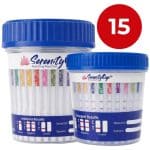
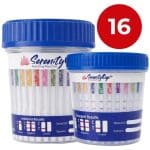
What About 12-Panel and 15-Panel Drug Tests?
The same principle applies to 12-panel, 15-panel, and other expanded drug tests.
A larger panel contains more target substances, but the number alone does not tell you exactly what medications are being tested.
For example:
5-panel → limited set of drug categories
10-panel → broader set of targets
12-panel → potentially broader still
15-panel → potentially broader again
But none of these labels should be interpreted as:
“This test checks for every prescription medication.”
The actual laboratory order or test specification is what matters.
If you need to know whether your specific muscle relaxer is included, ask the testing provider for the panel’s analyte list.
Muscle Relaxers and Drug Testing: Medication-by-Medication Guide
One of the biggest problems with general information about muscle relaxers and drug tests is that the term “muscle relaxer” covers several different medications.
The following medications deserve separate consideration.
1. Cyclobenzaprine (Flexeril)
Cyclobenzaprine is one of the most commonly discussed muscle relaxers in relation to drug screening.
It is not a tricyclic antidepressant, but its chemical structure is similar enough to some tricyclic antidepressants that certain immunoassay screens can cross-react with it.
Research has documented false-positive TCA screening results associated with cyclobenzaprine.
This creates an important distinction:
Cyclobenzaprine appearing on a TCA screen does not necessarily mean the person took a tricyclic antidepressant.
An initial immunoassay is a screening test. Some screening methods have limited specificity and can react with structurally similar compounds.
More specific laboratory methods can distinguish cyclobenzaprine from actual tricyclic antidepressants.
Therefore, if you take Flexeril and receive an unexpected TCA-related screening result, it is important to tell the medical or testing professional about the medication.
2. Methocarbamol (Robaxin)
Methocarbamol is another commonly prescribed muscle relaxer.
The current DailyMed labeling describes methocarbamol as a central nervous system depressant with sedative and musculoskeletal-relaxant properties. It is listed as not scheduled by the DEA in the referenced labeling.
Methocarbamol is not a routine target in the standard federal workplace drug panel.
That means a person taking prescribed methocarbamol should not automatically expect it to produce a positive result on a standard workplace drug test.
However, specialized testing can be designed to identify medications outside the routine panel.
This is why questions such as:
“Will methocarbamol show up on a drug test?”
cannot be answered accurately without knowing what test is being used.
3. Carisoprodol (Soma)
Carisoprodol deserves special attention.
Unlike several other commonly prescribed muscle relaxers, carisoprodol is a Schedule IV controlled substance under the federal Controlled Substances Act. The DEA lists Soma among Schedule IV substances.
Carisoprodol is also metabolized in the liver into meprobamate.
According to the drug labeling, carisoprodol has a terminal half-life of approximately two hours, while meprobamate has a half-life of approximately ten hours.
This matters because a test designed to identify carisoprodol, meprobamate, or related analytes may produce a result that differs from what you would expect from a routine workplace panel.
In other words:
Carisoprodol is not simply interchangeable with methocarbamol or cyclobenzaprine when discussing drug testing.
The specific medication matters.
4. Baclofen
Baclofen is another muscle relaxant used for conditions involving muscle spasticity.
It is not part of the standard federal five-category workplace drug panel.
If a laboratory needs to determine whether baclofen is present, it would generally require a testing method or panel that specifically includes the medication.
This is why the phrase “muscle relaxers show up on a drug test” can be misleading.
The test isn’t searching for the entire medication category unless the laboratory specifically designs it that way.
5. Tizanidine (Zanaflex)
Tizanidine is a centrally acting muscle relaxant commonly used to treat muscle spasticity.
Like several other prescription muscle relaxants, it is not ordinarily part of the standard federal workplace drug categories.
A specialized toxicology test can be configured differently from a routine workplace screen, however.
Therefore, if tizanidine is a concern before testing, the safest approach is to determine what the actual laboratory panel includes rather than relying on the generic term “drug test.”
Can Muscle Relaxers Cause a False Positive on a Drug Test?
Yes, some muscle relaxers can interfere with certain screening assays, but this does not mean every muscle relaxer causes false positives.
The best-known example is cyclobenzaprine.
Certain urine immunoassays for tricyclic antidepressants can cross-react with cyclobenzaprine. Research has found that false-positive TCA results can occur because of this cross-reactivity.
Why does this happen?
Many initial drug screens use immunoassay technology.
Immunoassays use antibodies designed to recognize particular chemical structures.
The problem is that an antibody may sometimes react with a compound that is chemically similar to the target substance.
This is called cross-reactivity.
As a result, an initial screening result can sometimes suggest the presence of a drug even though the person did not actually take that drug.
Screening Test vs. Confirmatory Test
This distinction is extremely important.
A screening test is generally designed to rapidly determine whether a specimen may contain a particular drug class or substance above a defined cutoff.
A confirmatory test uses a more specific analytical method to identify and quantify particular substances.
Methods such as mass spectrometry can provide much greater specificity than an initial immunoassay.
For example, research on cyclobenzaprine has shown that more specific analytical techniques can distinguish it from tricyclic antidepressants when an immunoassay produces an unexpected result.
So if a screening result is unexpectedly positive, it should not automatically be interpreted as proof that you took the drug class associated with that screening result.
The testing program may have procedures for confirmation and medical review.
What Does a Muscle Relaxer Show Up As on a Drug Test?
This depends on the medication and the test.
A muscle relaxer may:
- Not be tested at all
- Be specifically detected by a targeted test
- Produce a presumptive cross-reactive result on a particular immunoassay
- Be identified through its metabolite
- Be differentiated from another drug through confirmatory testing
These possibilities are very different.
For example, cyclobenzaprine can interfere with certain TCA immunoassays, while carisoprodol is metabolized to meprobamate.
That is why saying simply “muscle relaxers show up as benzodiazepines” or another specific drug category would be misleading without knowing the exact medication and assay.
How Drug Tests Detect Medications
Drug tests can look for a parent drug, a metabolite, or a group of related compounds, depending on the test.
After you take a medication, your body may metabolize it into other chemical compounds.
A laboratory may be able to detect:
- The original medication
- One or more metabolites
- A specific drug class
- A combination of analytes
- A compound that cross-reacts with an immunoassay
This is why the half-life of a medication should not be treated as an exact detection window.
Half-life describes how quickly the concentration of a drug decreases. It does not automatically tell you exactly how long a particular laboratory test will remain positive.
Detection depends on additional factors, including:
- The medication
- Dose
- Frequency of use
- Time since the last dose
- Metabolism
- Kidney and liver function
- Testing method
- Laboratory cutoff
- Whether the test measures the parent drug or metabolite
How Long Do Muscle Relaxers Stay in Your System?
There is no single detection window for all muscle relaxers.
That is because muscle relaxers are chemically different medications with different pharmacokinetic properties.
For example, carisoprodol itself has a terminal half-life of about two hours, while its metabolite meprobamate has a longer half-life of about ten hours.
This does not mean that every person will test negative at a particular number of hours.
A laboratory’s detection capability, cutoff, specimen type, dosage, frequency of use, and individual metabolism can all affect the result.
Therefore, broad statements such as “all muscle relaxers stay detectable for 1–7 days” should be treated cautiously.
A more accurate approach is to discuss each medication separately.
Muscle Relaxer Urine Tests
Urine is one of the most commonly used specimen types in workplace drug testing.
SAMHSA’s federal workplace testing resources describe urine and oral fluid as authorized specimen types under the applicable federal testing guidelines.
A urine test may identify:
- A drug
- A drug metabolite
- A drug class
- A specifically requested medication
But a routine urine drug screen does not automatically test for every medication a person has taken.
This is the key point:
Urine testing and “testing for muscle relaxers” are not the same thing.
The laboratory must have the appropriate analyte included in the testing order or panel.
Muscle Relaxers in Blood Tests
Blood testing can be used when recent drug exposure or current concentration is important.
However, blood and urine testing answer somewhat different questions.
Blood testing generally focuses on substances circulating in the bloodstream, while urine testing commonly reflects the body’s elimination of drugs and metabolites.
A person could therefore have different results depending on:
- when the medication was taken,
- which specimen was collected,
- what analyte was measured,
- and what cutoff the laboratory used.
For ordinary workplace screening, urine or oral fluid may be used depending on the applicable program. Federal workplace programs currently authorize urine and oral fluid specimens under their respective guidelines.
Muscle Relaxers and Saliva Testing
Oral-fluid testing can also be used for drug screening.
The result depends on the drug, collection timing, assay, and laboratory method.
Federal workplace drug-testing rules recognize oral fluid as an authorized specimen type, alongside urine.
However, the fact that oral fluid testing is available does not mean that every muscle relaxer is routinely included.
Again, the specific analyte panel is what matters.
Muscle Relaxers and Hair Testing
Hair testing is different from urine and oral-fluid testing because it can provide information about a longer period of exposure.
However, hair testing is not simply a universal test for every medication.
Whether a muscle relaxer can be identified depends on:
- the laboratory,
- the analytical method,
- the drug being investigated,
- the testing order,
- and the laboratory’s validated capability.
Therefore, it would be inaccurate to tell readers that every muscle relaxer will automatically appear on a hair drug test.
Does Having a Prescription Change the Drug Test Result?
Having a legitimate prescription does not necessarily change what an analytical test detects.
Instead, the prescription can be important when a result needs to be interpreted or medically reviewed.
Federal workplace testing programs use Medical Review Officers (MROs), and SAMHSA provides specific guidance concerning the review of drug-test results.
If you are taking a prescribed muscle relaxer, keep accurate information about your medication available.
Depending on the testing program, you may be asked to provide information such as:
- Medication name
- Prescription information
- Prescribing clinician
- Pharmacy information
- Date of prescription
- Current dosage
Do not stop taking a prescribed medication simply because you are worried about a drug test unless your healthcare professional tells you to do so.
What Should You Do Before a Drug Test if You Take a Muscle Relaxer?
If you have a legitimate prescription, the best approach is transparency rather than trying to alter the test result.
1. Know the medication name
Know the generic and brand name of your muscle relaxer.
For example:
- Cyclobenzaprine — Flexeril
- Methocarbamol — Robaxin
- Carisoprodol — Soma
- Tizanidine — Zanaflex
2. Keep prescription documentation available
A pharmacy label, prescription information, or other appropriate documentation may help if the testing provider needs to verify legitimate medication use.
3. Ask what type of test is being performed
If you are permitted to ask, determine whether the test is:
- Standard workplace screening
- Expanded panel
- Targeted medication testing
- Clinical toxicology testing
- Court/probation testing
- Another specialized testing program
4. Tell the appropriate testing professional about prescribed medications
Do not assume the laboratory knows every medication you take.
Follow the testing program’s instructions for medication disclosure.
5. Ask about confirmation if an unexpected result occurs
If an initial screen produces an unexpected result, ask the appropriate medical or testing professional whether confirmatory testing is required.
This is particularly relevant when a medication such as cyclobenzaprine may interfere with a particular immunoassay.
Do Muscle Relaxers Show Up on a Drug Test?
Most common muscle relaxers do not automatically show up on a standard workplace drug test because routine panels test for specific drug categories rather than every prescription medication.
However, there are important exceptions and complications.
A targeted or expanded test can identify a specific muscle relaxer. Carisoprodol is especially important because it is a Schedule IV controlled substance and is metabolized into meprobamate.
Cyclobenzaprine also deserves special attention because it can cause cross-reactivity with some TCA immunoassays and produce a presumptive false-positive screening result.
The most accurate answer therefore depends on the medication, the drug panel, the specimen, and the laboratory method.
If you take a prescribed muscle relaxer, don’t stop or change your medication solely to influence a drug test. Instead, follow the testing program’s medication-disclosure procedures and speak with your healthcare professional if you have concerns.
Do Muscle Relaxers Show Up on a 5-Panel Drug Test?
For most people, the answer is no. Common muscle relaxers are not normally included among the five drug categories tested by a standard federal workplace drug panel.
A typical five-category panel is designed around specific drug classes rather than every prescription medication a person may be taking. This is why someone can legally take a prescribed muscle relaxer and still receive a negative result on a routine drug screen.
However, it is important not to confuse a standard 5-panel test with every possible five-drug test sold or ordered by a laboratory. Commercial testing providers can configure their panels differently.
If your result matters for employment, probation, medical treatment, or another formal program, the actual test order is more important than the label “5-panel.”
Do Muscle Relaxers Show Up on a 10-Panel Drug Test?
A 10-panel drug test generally covers more substances than a five-panel test, but it still does not mean that every prescription medication is automatically tested.
This distinction is important because people often assume that a larger panel must include muscle relaxants.
It doesn’t necessarily.
A 10-panel test may include additional drug categories such as benzodiazepines, barbiturates, methaqualone, methadone, or other substances depending on the particular test configuration. The exact contents can vary among laboratories and testing programs.
Therefore:
A 10-panel test can be broader than a 5-panel test without being a general test for all muscle relaxers.
If you’re taking cyclobenzaprine, methocarbamol, baclofen, or tizanidine, the important question is whether the particular test includes that medication or its relevant analyte.
Do Muscle Relaxers Show Up on a 12-Panel Drug Test?
A 12-panel drug test may include additional substances beyond a standard five- or ten-panel test, but the same rule applies:
The number of panels does not automatically tell you whether a particular muscle relaxer is included.
Testing companies can offer different combinations of analytes under similar panel names.
For example, one provider’s 12-panel test may contain a different group of substances than another provider’s 12-panel test.
If you are concerned about a specific medication, ask for the actual list of substances being tested.
This is much more reliable than trying to determine the answer from the panel number alone.
Do Muscle Relaxers Show Up on a 15-Panel Drug Test?
The same principle applies to a 15-panel drug test.
An expanded panel can contain substantially more analytes than a routine workplace screen, but it still does not automatically mean that every prescription muscle relaxer will be detected.
A targeted toxicology test can be specifically ordered for a medication that isn’t part of the routine panel.
Therefore, if you take a muscle relaxer and are facing a 15-panel test, don’t assume that the medication will either definitely be detected or definitely be ignored.
The specific laboratory panel and analytes determine what the test can identify.
Which Muscle Relaxers Are Most Important When Discussing Drug Tests?
Not every muscle relaxer has the same relationship with drug testing.
The following medications are especially relevant when researching this topic.
| Muscle Relaxer | Brand Name | Routine Panel Detection | Important Testing Consideration |
|---|---|---|---|
| Cyclobenzaprine | Flexeril | Usually not a routine target | Can cross-react with some TCA immunoassays |
| Methocarbamol | Robaxin | Usually not a routine target | Specialized testing may be required |
| Carisoprodol | Soma | Depends on panel | Controlled substance; metabolizes to meprobamate |
| Baclofen | Lioresal | Usually not a routine target | Specific testing may be required |
| Tizanidine | Zanaflex | Usually not a routine target | Targeted testing may identify it |
| Orphenadrine | Norflex | Usually not a routine target | Testing depends on the assay |
| Dantrolene | Dantrium | Usually not a routine target | Specialized testing may be needed |
This table should not be interpreted as a guarantee about an individual laboratory’s test.
The exact analytes, cutoff concentrations, specimen type, and testing methodology can change the result.
Does Flexeril Show Up on a Drug Test?
Flexeril is the brand name for cyclobenzaprine.
Cyclobenzaprine is not normally one of the drugs targeted by a routine five-category workplace panel.
However, it has an important relationship with tricyclic antidepressant (TCA) immunoassays.
Cyclobenzaprine has structural similarities to tricyclic antidepressants. Because some initial immunoassays recognize chemical structures rather than perfectly identifying one specific medication, cyclobenzaprine can sometimes produce a presumptive TCA-positive result.
This does not mean Flexeril is a TCA.
It means the screening assay may react to the medication.
If a person receives an unexpected result, a more specific confirmatory method can help determine what substance is actually present.
Does Flexeril show up as a benzodiazepine?
There is no general rule that Flexeril will appear as a benzodiazepine.
Drug-test results depend on the particular assay. You should not assume that a positive result for one drug class is caused by cyclobenzaprine without appropriate laboratory confirmation.
Does Methocarbamol Show Up on a Drug Test?
Methocarbamol, commonly sold under the brand name Robaxin, is generally not included in routine workplace drug panels.
A standard test is not designed to detect every prescription medication.
However, a specialized laboratory can use targeted analytical testing when methocarbamol is specifically being investigated.
This means:
Taking methocarbamol does not automatically equal a positive standard drug test.
If a drug-testing program specifically orders methocarbamol testing, however, the result can be different.
Another important point is that the presence of methocarbamol in the body and the ability of a particular test to detect it are two separate issues.
Does Carisoprodol Show Up on a Drug Test?
Carisoprodol, sold under the brand name Soma, requires more careful consideration than several other commonly prescribed muscle relaxers.
Carisoprodol is federally classified as a Schedule IV controlled substance.
It is also metabolized into meprobamate.
This matters because a laboratory can specifically test for carisoprodol and/or its metabolite.
A routine panel still does not automatically mean that carisoprodol is being tested, so you need to know what the specific test includes.
Why is Soma different?
The distinction comes down to pharmacology and testing.
Carisoprodol:
Carisoprodol → metabolism → meprobamate
The metabolite can remain relevant to laboratory analysis after the parent drug concentration has declined.
This is one reason a simple statement such as “muscle relaxers don’t show up on drug tests” is incomplete.
Does Baclofen Show Up on a Drug Test?
Baclofen is primarily used to treat muscle spasticity.
It is not ordinarily included in common standard workplace drug categories.
A routine urine drug screen therefore generally isn’t designed to identify baclofen.
However, specialized toxicology laboratories can use targeted analytical methods when there is a specific clinical, forensic, or monitoring reason to investigate a medication.
If you’re taking baclofen under a prescription, the appropriate response to an upcoming drug test is not to stop the medication on your own.
Instead, follow the testing program’s instructions and discuss medication concerns with your healthcare professional.
Does Tizanidine Show Up on a Drug Test?
Tizanidine, commonly known by the brand name Zanaflex, is another prescription muscle relaxant.
Like several other muscle relaxers, it is generally outside the substances targeted by routine workplace drug panels.
A targeted test can be different.
If the laboratory has specifically been asked to identify tizanidine, it may use analytical techniques capable of detecting the medication.
This illustrates the central principle of muscle relaxer drug testing:
A medication can be detectable without being part of a routine drug screen.
Can Muscle Relaxers Cause a False Positive?
Some medications can interfere with screening assays, but the phrase “muscle relaxers cause false positives” is too broad.
The risk depends on:
- The specific medication
- The specific assay
- The drug class being screened
- The specimen type
- The laboratory methodology
- Whether confirmatory testing is performed
Cyclobenzaprine is the most important example because it has been associated with false-positive TCA immunoassay results.
Other medications can also interfere with immunoassays, which is why an unexpected screening result should not automatically be treated as definitive proof of drug use.
What Happens If a Drug Test Is Initially Positive?
An initial positive screening result can be stressful, especially if you know you haven’t taken the substance the test appears to identify.
The first thing to understand is that screening and confirmation are different stages.
A screening test can identify a specimen as potentially positive.
A confirmatory laboratory test can use a more specific analytical method to identify the actual compound.
Depending on the testing program, an unexpected result may therefore lead to additional review or confirmation.
If you’re taking a prescription muscle relaxer, make sure the appropriate testing professional knows about your medication according to the program’s disclosure procedures.
What Is the Difference Between a False Positive and a True Positive?
These terms are often confused.
False-positive screening result
The initial test reacts as though a target drug or drug class may be present, but further testing shows that the target substance was not actually present.
True positive
The testing process confirms the presence of the substance being tested for.
Prescription-positive result
A substance may genuinely be present because the person is taking a medication legitimately under a prescription.
The way that result is handled depends on the testing program and applicable rules.
This is why “positive” doesn’t automatically mean “illegal drug use.”
Can a Prescription Muscle Relaxer Make You Fail a Drug Test?
Not necessarily.
A prescribed medication can be detected if the test specifically targets it, but what happens after detection depends on the type of testing program.
For regulated workplace testing, there may be a medical review process through a Medical Review Officer.
For a clinical toxicology test, the result may be interpreted by the treating medical team.
For probation, court, military, or other monitoring programs, the applicable rules may be different.
Therefore, don’t assume that a prescription automatically guarantees a negative result or automatically prevents a testing issue.
The better approach is to understand the specific testing program.
Do Muscle Relaxers Show Up on a Drug Test for Work?
For ordinary workplace screening, most common muscle relaxers are not routine targets.
Employers may use standard testing panels, but some industries or positions can involve additional testing requirements.
This is particularly important for:
- Transportation
- Safety-sensitive jobs
- Healthcare
- Manufacturing
- Heavy equipment operation
- Certain government positions
- Other regulated workplaces
If a position involves operating machinery, driving, or other safety-sensitive responsibilities, the employer may also have separate policies regarding medications that can cause drowsiness or impaired reaction time.
That is different from whether the medication is analytically detected on a drug test.
Do Muscle Relaxers Show Up on a DOT Drug Test?
DOT-regulated drug testing follows specific federal requirements.
The key point is that a DOT test is not simply a generic test for every medication a worker takes.
The substances covered by the federally regulated testing panel are specified by the applicable rules.
Common muscle relaxers are not automatically included merely because someone is taking them.
However, there is a separate issue involving fitness for duty and medication effects.
Some muscle relaxers can cause:
- Drowsiness
- Dizziness
- Slowed reaction
- Reduced alertness
- Impaired coordination
Someone performing a safety-sensitive job should discuss medication effects with their healthcare professional and follow applicable workplace and regulatory requirements.
Do Muscle Relaxers Show Up on a Military Drug Test?
Military drug testing can involve specific testing programs and controlled-substance policies.
Therefore, you should not assume that military testing is identical to a routine civilian workplace drug test.
A muscle relaxer may not be included in a standard panel, but specialized or additional testing can be possible depending on the circumstances.
If you’re subject to military testing, use the specific testing program’s requirements rather than relying on a generic internet list of drugs.
This is especially important for controlled medications such as carisoprodol.
Do Muscle Relaxers Show Up on a Probation or Court Drug Test?
Probation and court-ordered testing can involve different requirements from ordinary employment testing.
The supervising authority may order:
- Standard urine screening
- Expanded drug panels
- Targeted medication testing
- Confirmatory laboratory analysis
- Other forms of toxicology testing
If you’re taking a prescribed muscle relaxer while participating in a monitoring program, document the medication and follow the program’s disclosure requirements.
Do not assume that a standard employment panel and a court-ordered panel are identical.
How Long Do Muscle Relaxers Stay in Urine?
There is no single number of days that applies to all muscle relaxers.
A detection window can be influenced by:
- The medication
- Dose
- Frequency of use
- Time since the last dose
- Metabolism
- Kidney function
- Liver function
- Age
- Other medications
- Test sensitivity
- Cutoff concentration
- Whether the test detects the parent drug or a metabolite
The half-life of a drug can provide useful pharmacological information, but it should not be treated as an exact prediction of when a urine test will become negative.
Why?
A drug can decline substantially in the bloodstream while its metabolites remain detectable.
The opposite can also occur depending on the medication and analytical method.
Therefore, online “guaranteed detection windows” should be treated cautiously.
Muscle Relaxer Detection: Half-Life vs. Detection Window
These terms are related but not interchangeable.
Half-life
The time required for the amount or concentration of a drug in the body to decrease by approximately half under the relevant pharmacokinetic conditions.
Detection window
The period during which a particular test can detect a drug or metabolite above its analytical cutoff.
For example:
Drug half-life ≠ guaranteed urine detection time
A person’s test result depends on both the drug’s pharmacology and the capabilities of the testing method.
This is why two people taking the same medication can have different detection experiences.
Can Drinking Water Remove Muscle Relaxers Before a Drug Test?
Drinking excessive amounts of water is not a reliable way to remove a medication from your body.
Your body eliminates medications through normal metabolic and excretory processes.
Large amounts of fluid can also produce an unusually dilute urine specimen, which can create a separate testing issue.
Trying to manipulate a drug test can therefore create more problems rather than solving the underlying concern.
If you are legitimately taking a prescription medication, the appropriate approach is to follow the testing program’s procedures and disclose medication information when required.
Should You Stop Taking a Muscle Relaxer Before a Drug Test?
Do not stop a prescribed medication solely because you’re worried about a drug test unless your healthcare professional tells you to do so.
Stopping or changing medication without medical guidance can cause symptoms to return and, depending on the drug and circumstances, may create other health risks.
Instead:
- Ask your prescriber about the upcoming test.
- Tell the appropriate testing professional about prescribed medications.
- Keep prescription information available.
- Ask whether the medication is included in the testing panel.
- Request appropriate confirmation if an unexpected result occurs.
A drug test should not be treated as a reason to make unsupervised changes to a prescribed treatment plan.
What Should You Do If Your Muscle Relaxer Appears on a Drug Test?
If a test specifically detects your prescribed muscle relaxer, don’t panic.
First, determine what was actually detected.
Ask whether the result came from:
- An initial screening assay
- A confirmatory test
- A targeted medication test
- A metabolite test
Then provide the appropriate prescription information according to the testing program.
If the result is unexpected or appears to identify the wrong drug, ask the testing provider or medical professional whether confirmatory testing is appropriate.
For formal workplace programs, the Medical Review Officer may have a role in evaluating the result and relevant prescription information.
Can Muscle Relaxers Show Up as Benzodiazepines?
There is no universal rule that muscle relaxers will show up as benzodiazepines.
This claim is often repeated online without sufficient qualification.
A drug test’s result depends on the specific immunoassay and the substances it is designed to recognize.
Cyclobenzaprine is better known for possible interference with some tricyclic antidepressant immunoassays, not for universally producing a benzodiazepine result.
If a screening result unexpectedly reports benzodiazepines, it should be interpreted according to the specific test and, when appropriate, confirmed with a more specific laboratory method.
Can Muscle Relaxers Show Up as Opioids?
Most commonly prescribed muscle relaxers are not opioids.
A standard opioid assay is designed to detect specific opioid compounds or metabolites, depending on the assay.
A muscle relaxer should therefore not simply be assumed to produce an opioid-positive result.
If an unexpected opioid screening result occurs, the testing professional should evaluate the result using the laboratory’s procedures and any applicable confirmatory testing.
This is another reason not to treat a generic internet list of “medications that cause false positives” as definitive.
Can Muscle Relaxers Show Up as Marijuana?
Common muscle relaxers are not marijuana or THC products.
A routine cannabis assay is designed to identify cannabinoids or their metabolites.
Taking a typical prescription muscle relaxer does not mean that you have used cannabis.
If a screening result is unexpectedly positive for cannabinoids, the appropriate testing process should be followed to determine the reason for the result.
Can Muscle Relaxers Show Up as PCP?
Muscle relaxers are not PCP.
However, certain medications can interfere with some immunoassays, which is why individual drug-test results should be interpreted according to the specific assay.
A screening result is not necessarily definitive identification of the substance.
If a result is unexpected, appropriate confirmation can help distinguish actual drug exposure from assay interference.
FAQS
Do muscle relaxers show up on a drug test?
Most common muscle relaxers do not appear on routine workplace drug panels. However, specialized or expanded testing can identify particular medications, and some drugs can interfere with certain screening assays.
Will Flexeril show up on a drug test?
Cyclobenzaprine (Flexeril) is not normally a target of a standard workplace drug panel. However, it can cross-react with some tricyclic antidepressant immunoassays and potentially produce a presumptive TCA-positive result.
Will methocarbamol show up on a drug test?
Methocarbamol (Robaxin) is generally not included in standard workplace drug panels. A specialized test can be ordered when there is a specific reason to test for the medication.
Will Soma show up on a drug test?
Soma is the brand name for carisoprodol. Carisoprodol is a Schedule IV controlled substance and is metabolized to meprobamate. Whether it is detected depends on the specific panel and testing method.
Do muscle relaxers show up on a 5-panel drug test?
Usually not. Common muscle relaxers are generally outside the five major categories targeted by standard workplace testing.
Do muscle relaxers show up on a 10-panel drug test?
Not automatically. A 10-panel test covers more substances than a five-panel test, but the exact analytes vary by testing provider.
Do muscle relaxers show up on a 12-panel drug test?
Not necessarily. The actual list of analytes included in the test determines whether a particular muscle relaxer can be detected.
Do muscle relaxers show up on a 15-panel drug test?
A 15-panel test may cover additional substances, but the panel number alone does not establish that every muscle relaxer is included.
Can Flexeril cause a false positive?
Yes. Cyclobenzaprine has been reported to cause cross-reactivity with some TCA immunoassays. A confirmatory test can help determine the actual substance present.
Is carisoprodol a controlled substance?
Yes. Carisoprodol is federally classified as a Schedule IV controlled substance in the United States.
Is methocarbamol a controlled substance?
Methocarbamol is not federally scheduled as a controlled substance in the United States, although it remains a prescription medication with potential adverse effects and misuse concerns.
How long do muscle relaxers stay in your system?
There is no universal detection period for all muscle relaxers. Detection depends on the medication, dose, frequency, metabolism, specimen type, laboratory method, and whether the test measures the drug or a metabolite.
Can drinking lots of water make a muscle relaxer disappear from urine?
No. Excessive water consumption is not a reliable method for eliminating medication from the body and can produce a dilute urine specimen.
Should I stop taking my prescription before a drug test?
No, not unless your healthcare professional instructs you to change or stop the medication. A drug test should not be a reason to alter prescribed treatment without medical guidance.
What should I do if I receive an unexpected positive result?
Tell the appropriate testing professional about all medications you take and ask about the testing program’s confirmation and review procedures. An initial screening result may require more specific laboratory confirmation.