The Best At-Home Drug Test Kits for Parents (Ranked, With What Actually Matters)


If you’re a parent searching for this, you probably don’t want a wholesale catalogue of 88 products aimed at resellers — you want one kit you can trust and a clear sense of how to use it without blowing up your relationship with your kid.
This ranking is for that. Every option below comes from our home and family drug testing range, chosen and ordered for a parent buying a single kit, not a case.
A note before the picks, because it changes which kit is “best” for you: a home test is a conversation tool, not a verdict. Our parent’s guide to at-home testing for teens walks through the harder part — how to raise it, when testing helps and when it damages trust. The kit is the easy half. Read that guide alongside this one.
What Is the Best At-Home Drug Test Kit for Parents to Use?
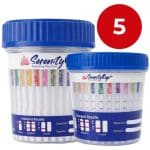
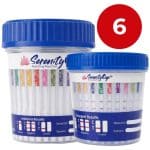
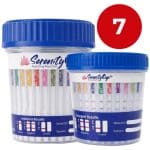
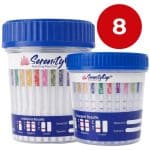
For most parents, the best at-home drug test kit is a 5-panel home urine cup with a temperature strip. It screens the five most common substances, reads in about five minutes with clear lines, and the temperature strip flags a substituted sample, which is the thing most likely to go wrong at home.
From there, match it to your concern: a 10-panel cup if prescription medications are a worry, an oral swab kit for very recent use, a single-substance strip such as THC-only for one specific worry, and fentanyl test strips as pure harm reduction given how often fentanyl shows up in counterfeit pills. Just as important as the kit itself: a home test is a conversation tool, not a verdict.
Tell your teen rather than testing secretly, treat a positive as the start of a conversation, confirm it at a lab, and involve a pediatrician or counselor if you are genuinely worried about their safety.
What makes a kit “best” for a parent
Three things, in this order. Ease of reading a result correctly, because a misread at the kitchen table is worse than no test. The right substances for your actual concern — a 5-panel covers the most common ones; a wider panel adds coverage you may not need.
And a temperature indicator, because unsupervised home collection is where a worried teen is most likely to try to substitute a sample. Price barely matters at single-kit quantities; a few dollars is not where this decision should turn.
1. Best overall for parents: 5-Panel Home Urine Cup with Temperature Strip
The kit to buy if you buy one. It screens the five most common substances — THC, cocaine, opiates, amphetamines/meth, PCP — reads in about five minutes with clear lines, and the temperature strip flags a substituted sample, which is the one thing that most often goes wrong at home. It’s simple enough to use correctly without medical training. For most parents, this is the answer.
2. Best for broader coverage: 10-Panel Home Cup
If your concern includes prescription medications — benzodiazepines, barbiturates, methadone — step up to a 10-panel. More lines to read, so take the extra minute, but it covers the substances a 5-panel doesn’t. Choose this when you have a specific reason to look wider, not by default; more panels aren’t automatically “safer,” just broader.
3. Best for recent-use questions: Oral Swab Home Kit
If the question is “did they use in the last day or two,” a saliva swab is the better tool — it catches very recent use and the collection is naturally observed, so substitution isn’t a worry. It reads in about 10 minutes.
The trade-off is a shorter detection window than urine, so it won’t catch use from last week. Match it to the question you’re actually asking.
4. Best for a specific worry: Single-Substance Strips (e.g. THC-only)
Sometimes you’re not screening broadly — you’re worried about one thing. A single-substance strip, like a THC-only test, is cheaper, simpler to read, and answers exactly one question. It’s the least intimidating option to have on hand and a reasonable starting point for a first conversation.
5. Best for peace of mind on fentanyl: Fentanyl Test Strips
This is a different kind of test and, for many parents, the most important one on this list. Fentanyl strips check a substance for contamination rather than testing a person, and given how much fentanyl now shows up in counterfeit pills, some parents keep them on hand as pure harm reduction. It’s not about catching anyone — it’s about reducing the risk of the worst outcome.
How to use a home test without breaking trust
The kit is reliable; the situation is delicate. A few things that matter more than which cup you buy: tell your teen what you’re doing rather than testing secretly, because a test they find out about later usually costs more trust than it’s worth.
Treat a positive as the start of a conversation and a reason to involve a professional, not as proof to punish. And remember an instant result is presumptive — before anything serious rides on it, a lab confirmation is warranted, and a false positive from an over-the-counter medication is a real possibility.
The parent guide covers all of this; if you’re testing because you’re genuinely worried about your child’s safety, please loop in your pediatrician or a counselor too.
FAQ
Which home test is most accurate?
For general recent-history screening, a urine cup with a temperature strip is the reliable default. For very recent use, a saliva swab. Accuracy at home depends as much on correct collection and reading as on the device.
Can my teen fake a home urine test?
Substitution and dilution are the common attempts — a temperature strip catches an out-of-range sample, which is why it’s worth having. Observed collection removes the risk but has obvious downsides for trust.
Should I confirm a positive result?
Yes. Home tests are presumptive. Some medications and foods can cause false positives, so confirm at a lab before drawing conclusions.
Is it a good idea to test my teen at all?
It depends on your situation, and it’s genuinely worth thinking through — the parent guide covers when testing helps and when it harms. If you’re worried about safety, involving a professional is often more effective than testing alone.