The Best CLIA-Waived Drug Test Cups for a Clinic (Ranked Picks)


For a clinic, “CLIA-waived” isn’t a feature — it’s the entire permission slip. A CLIA-waived cup is one the FDA has cleared as simple enough to run outside a certified laboratory, which is what lets your practice test patients on-site under a Certificate of Waiver instead of shipping every specimen out. Use a non-waived cup and you’ve stepped into moderate-complexity testing and the certification and proficiency requirements that come with it. So the first filter is non-negotiable: every cup below is CLIA-waived. The ranking is about which one fits your clinic’s workflow. All picks come from our CLIA-waived drug test cups range of 40 products.
Most CLIA content explains the framework — what waived means, how to get a certificate — and then leaves you to pick a cup yourself. Our CLIA-waived cups overview does that job well. This article is the part it skips: the actual ranked picks.
What Are the Best CLIA-Waived Drug Test Cups for a Clinic?
For most clinics, the best CLIA-waived drug test cup is a 12-panel cup with a temperature strip. It covers the substances a medical setting most often needs to see, including oxycodone, buprenorphine, and methadone, reads in about five minutes, and generates the fewest re-collections. CLIA-waived status is the non-negotiable filter, because it lets you test patients on-site under a Certificate of Waiver instead of stepping into moderate-complexity lab requirements. From there, match the cup to your patients: a buprenorphine, methadone, and oxycodone configuration for pain and MAT clinics, a 10-panel for high-throughput general use, an adulteration-strip cup for tamper-sensitive testing, and configuration-matched cups for long-term care and specialized settings. Start from your patient population rather than the panel count, confirm CLIA-waived status and the analyte list on each product page, and send consequential non-negatives to a lab for confirmation.
What makes a CLIA-waived cup right for a clinic
Beyond the waiver itself, three things: panel configuration matched to your patient population, read clarity (a busy clinic can’t afford ambiguous lines and re-collections), and built-in checks like temperature and adulteration strips that keep results defensible in a medical record. Price matters at clinic volume but comes after those.
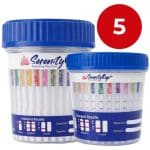
1. Best overall for a clinic: CLIA-Waived 12-Panel Cup with Temperature Strip
The best default for a general clinic. Twelve analytes cover the substances a medical setting most often needs to see — including oxycodone, buprenorphine, and methadone — the temperature strip flags a compromised specimen, and the five-minute read keeps patient flow moving. It’s the cup that generates the fewest re-collections, which is what actually saves a clinic money.
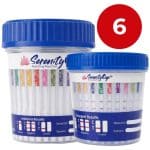
2. Best for pain management and MAT clinics: CLIA-Waived Cup with Buprenorphine + Methadone + Oxycodone
If your clinic manages pain or medication-assisted treatment, buy the configuration that explicitly lists buprenorphine, methadone, and oxycodone. You need to see the medications you’re managing, both for compliance monitoring and for patient safety. This is the cup where the extra analytes earn their cost on every visit.
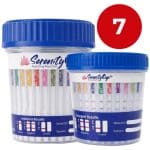
3. Best for high-throughput clinics: CLIA-Waived 10-Panel Cup
A clinic running high daily volume that doesn’t need the full 12-panel can standardize on a CLIA-waived 10-panel — comprehensive coverage, fewer lines to read, faster interpretation, lower per-cup cost. The efficient reorder SKU for busy primary-care and urgent-care settings.
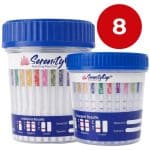
4. Best for tamper-sensitive testing: CLIA-Waived Cup with Adulteration Strip
For clinics doing court-ordered, monitoring, or compliance testing where patients have a motive to cheat, the adulteration-strip version checks creatinine, pH, specific gravity, oxidants, nitrites, and glutaraldehyde on the same cup. It catches dilution and substitution before a false negative lands in the chart.
5. Best for specialized and long-term care settings: configuration-matched CLIA-Waived cups
Long-term care, behavioral health, and specialized programs often need a specific analyte mix rather than a standard panel. Our CLIA-waived cups for long-term care page shows concrete picks for those settings — a good model for matching cup configuration to a specialized population rather than defaulting to a generic panel.
How to choose for your clinic
Start from your patient population, not the panel count. A primary-care clinic doing occasional screening is well served by the 12-panel default at #1. A MAT or pain clinic needs the medication-specific configuration at #2. High-volume urgent care leans to the efficient 10-panel at #3. And any clinic doing monitoring or compliance testing should add the adulteration strip at #4. Confirm CLIA-waived status and the exact analyte list on each product page before standardizing — and remember that even a waived instant cup produces a presumptive result, so non-negatives that drive a clinical or legal decision should go to a lab for confirmation.
FAQ
What does CLIA-waived mean for my clinic?
It means the cup is cleared for on-site use under a Certificate of Waiver, so you can test patients without a moderate-complexity lab certification. Using a non-waived cup changes your compliance obligations.
Do I still need any CLIA certificate to use waived cups?
Yes — a Certificate of Waiver. Waived means simplified requirements, not zero requirements. The framework overview covers how to obtain one.
Which panel count is best for a clinic?
A 12-panel is the versatile default; 10-panel for high-throughput general use; medication-specific configurations for pain and MAT clinics.
Are CLIA-waived results legally defensible?
They’re presumptive. For any decision with legal or clinical weight, confirm non-negative results at a certified lab.