How to Pass a Drug Test With Baking Soda:

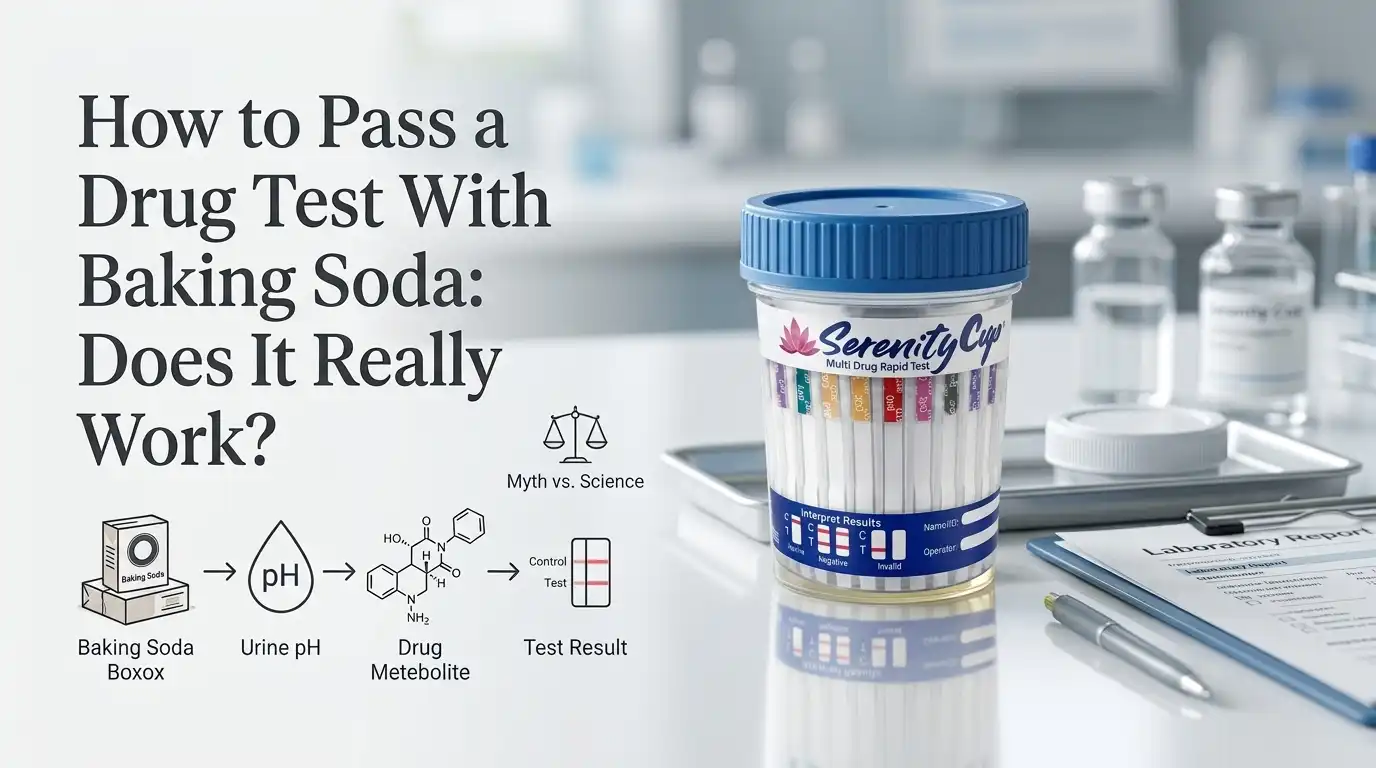
If you are searching for how to pass a drug test with baking soda, you may have seen claims that drinking baking soda mixed with water can change urine chemistry and help produce a negative drug test. This idea is sometimes called a “baking soda flush.”
However, there is no reliable evidence that consuming baking soda can safely or consistently make a drug test negative. Baking soda, or sodium bicarbonate, can affect acid-base chemistry, but changing urine or body chemistry is not the same thing as removing drug metabolites from the body.
More importantly, taking excessive amounts of baking soda can cause serious health problems, including sodium toxicity, electrolyte abnormalities, metabolic alkalosis, dehydration, seizures, and other complications. A published review of California Poison Control cases found that misuse of baking soda sometimes occurred specifically in attempts to “beat” urine drug tests, and some patients developed significant electrolyte or acid-base disturbances requiring hospitalization.
So, does baking soda help you pass a drug test? Generally, no. It is not a dependable drug-test solution, and deliberately consuming large amounts can be dangerous.
Can Baking Soda Help You Pass a Drug Test?
Baking soda is not a reliable or safe way to pass a drug test.
Baking soda contains sodium bicarbonate, an alkaline compound. Because it can affect pH, an internet theory has developed that changing urine acidity or alkalinity could somehow interfere with drug testing.
But a drug test is not simply asking whether urine is acidic or alkaline.
Depending on the test, laboratories may look for specific drugs or drug metabolites and may also evaluate whether a urine specimen has characteristics consistent with a valid sample. Federal workplace drug-testing guidance, for example, includes specimen-validity testing involving measurements such as creatinine and pH, with additional testing for certain specimens.
Changing one characteristic of urine does not reliably eliminate the substance being tested.
The important distinction
Changing urine chemistry ≠ removing drug metabolites.
That distinction is central to understanding why the baking-soda method is unreliable.
What Is Baking Soda?
Baking soda is the common name for sodium bicarbonate (NaHCO₃).
It is widely used for:
- Baking
- Household cleaning
- Odor control
- Some medical applications under appropriate guidance
- Certain antacid products
Sodium bicarbonate is an alkaline substance that can neutralize acids. When used in the digestive system, it can temporarily reduce stomach acidity.
That legitimate chemical property is one reason people may assume that baking soda can manipulate a drug test.
However, the fact that sodium bicarbonate affects acidity does not mean that it can safely remove drugs or their metabolites from the body.
Why Do People Think Baking Soda Works for Drug Tests?
The baking-soda drug-test claim appears to be based largely on the idea that urine pH can influence how certain compounds are eliminated from the body.
Online discussions have turned that concept into a much broader claim:
If baking soda changes urine pH, perhaps it can prevent a drug or metabolite from being detected.
That conclusion does not follow automatically.
Drug metabolism is complicated. The body processes substances through different pathways, and the resulting metabolites may remain detectable for different periods depending on the substance, pattern of use, specimen type, metabolism, and testing method.
A urine test also does not simply determine whether urine is acidic or alkaline and then declare the result negative.
How Does a Urine Drug Test Work?
A urine drug test generally looks for specific substances or their metabolites.
A metabolite is a substance produced when the body processes another substance.
For example, depending on the drug and test being used, a laboratory may analyze urine for particular drug classes or metabolites rather than simply looking at general urine chemistry.
Drug testing can involve several stages.
1. Initial screening
An initial test may screen a specimen for particular drug classes.
2. Laboratory analysis
If additional analysis is necessary, laboratories can use more specific analytical techniques to identify or confirm compounds.
3. Specimen validity testing
For applicable testing programs, laboratories can also evaluate whether the specimen has characteristics consistent with a valid sample.
SAMHSA materials describe urine specimen-validity testing involving measurements such as pH, creatinine, specific gravity, and tests for adulterants.
This is important because a drug test is not necessarily just:
Drug present → positive
There can also be questions about whether the specimen itself is valid for interpretation.
Does Baking Soda Remove Drug Metabolites?
No established evidence shows that consuming baking soda reliably removes drug metabolites from the body.
This is one of the biggest misconceptions surrounding the baking-soda method.
Drug metabolites are produced and eliminated through biological processes involving organs such as the liver and kidneys. The amount of time a substance remains detectable can vary considerably.
Factors can include:
- The specific drug
- Dose and pattern of use
- Frequency of use
- Individual metabolism
- Kidney and liver function
- Type of specimen
- Testing method
- Laboratory cutoff
- Time since last use
Simply changing the pH of a urine sample does not mean that the underlying substance has disappeared from the body.
Can Baking Soda Change Urine pH?
Sodium bicarbonate is alkaline and can influence acid-base chemistry.
That is a real chemical property.
But there is an important difference between:
“Baking soda can affect pH”
and
“Baking soda can reliably make a drug test negative.”
The first statement describes a chemical effect.
The second is a much larger claim that is not established as a reliable method for passing a drug test.
Furthermore, deliberately trying to alter a urine specimen can create additional questions about specimen validity.
Can Drug Testing Laboratories Detect Abnormal Urine?
In some drug-testing programs, laboratories perform specimen validity testing to evaluate characteristics of the urine sample.
SAMHSA guidance identifies measurements including:
- Creatinine
- pH
- Specific gravity
- Adulterants
as part of urine specimen-validity testing in federal agency testing.
SAMHSA’s clinical drug-testing guidance likewise describes laboratory methods for measuring urine pH, creatinine, specific gravity, and adulterants.
This means that changing the chemical characteristics of a specimen does not necessarily make the specimen more likely to be accepted as a normal negative sample.
Depending on the testing program and findings, a specimen may receive a result such as dilute, adulterated, substituted, or invalid, rather than simply being reported as a routine negative.
What Is Specimen Validity Testing?
Specimen validity testing (SVT) is the process of evaluating characteristics of a specimen to determine whether it is suitable for testing.
For urine, relevant measurements can include:
Urine pH
pH describes how acidic or alkaline a solution is.
Creatinine
Creatinine is a naturally occurring waste product that is routinely measured in urine in certain testing contexts.
Specific gravity
Specific gravity provides information about the concentration of dissolved substances in urine.
Adulterant testing
Some laboratory procedures look for substances or characteristics that can interfere with drug analysis.
SAMHSA describes specimen-validity testing as an important component of federal urine drug testing and specifies minimum validity measurements for federal agency specimens.
Does Drinking Water With Baking Soda Help?
Another version of the claim combines baking soda with large amounts of water.
The theory is usually that drinking substantial amounts of fluid will dilute urine while baking soda changes its chemistry.
However, excessive fluid consumption can produce a dilute urine specimen, and specimen validity testing can evaluate characteristics such as creatinine and specific gravity.
More importantly, drinking excessive amounts of water can itself be dangerous.
Therefore, using large quantities of water or baking soda as a strategy for manipulating a drug test is not a medically reliable approach.
Does Baking Soda Work for THC Drug Tests?
There is no reliable basis for assuming that baking soda will make a THC drug test negative.
THC-related testing can involve detecting specific cannabis-related analytes, depending on the specimen and testing method.
The relevant detection period can vary based on factors such as:
- Pattern of cannabis use
- Frequency of use
- Time since last use
- Individual metabolism
- Specimen type
- Laboratory method
Changing urine pH does not guarantee that cannabis-related analytes will no longer be detectable.
Therefore, baking soda should not be considered a dependable method for passing a THC drug test.
Does Baking Soda Work for Other Drugs?
The same basic principle applies to other drug classes.
A drug test can be designed to detect different substances or metabolites, including categories such as:
- Amphetamines
- Methamphetamine
- Cocaine
- Opioids
- Marijuana/cannabis
- PCP
Federal workplace testing programs currently include these broad categories, with required specimen-validity testing for urine specimens.
Because different substances have different pharmacokinetic and metabolic properties, there is no scientifically established reason to assume that one household substance such as baking soda can reliably produce a negative result across different drug tests.
Is Baking Soda a Detox?
No.
Baking soda should not be confused with a medically established detoxification treatment for recreational or illicit drugs.
The body naturally metabolizes and eliminates substances through biological processes. The rate of elimination depends on the substance and the individual.
Baking soda does not function as a universal substance that removes drugs from the bloodstream, tissues, or urine.
The phrase “baking soda detox” is therefore misleading when it is used to imply that sodium bicarbonate can rapidly eliminate drugs from the body.
What Are the Risks of Taking Too Much Baking Soda?
This is one of the most important parts of the topic.
Baking soda may look harmless because it is a common kitchen ingredient. But large amounts of sodium bicarbonate can be toxic.
Poison Control explains that both the sodium and bicarbonate components can contribute to serious toxicity when excessive amounts are swallowed.
Potential complications include:
- Nausea
- Vomiting
- Diarrhea
- Dehydration
- Muscle weakness
- Muscle spasms
- Electrolyte disturbances
- Abnormally high sodium levels
- Metabolic alkalosis
- Seizures
- Kidney complications
- Abnormal heart rhythms
- Serious gastrointestinal injury
MedlinePlus also lists vomiting, diarrhea, muscle weakness, muscle spasms and convulsions among possible symptoms of baking-soda overdose.
What Is Metabolic Alkalosis?
Metabolic alkalosis occurs when the body’s acid-base balance becomes excessively alkaline.
Sodium bicarbonate contributes bicarbonate to the body, so taking excessive quantities can disturb normal acid-base regulation.
This is not simply a harmless change in urine chemistry.
The body tightly regulates blood pH because enzymes, muscles, nerves, the heart and other organs depend on a narrow physiological range.
The California Poison Control case review found that some people who misused baking soda developed electrolyte abnormalities, metabolic alkalosis, or respiratory depression, and some required hospital admission.
Can Baking Soda Cause Stomach Problems?
Yes.
When sodium bicarbonate reacts with stomach acid, it produces carbon dioxide gas.
Large amounts can therefore result in substantial gas formation inside the stomach.
Poison Control describes cases of serious gastrointestinal injury following excessive sodium bicarbonate ingestion, including a documented case involving stomach rupture.
This is another reason that deliberately consuming large amounts of baking soda is not a safe drug-testing strategy.
What Happens If Someone Takes Too Much Baking Soda?
Symptoms can vary depending on the amount consumed and the person’s health.
Possible symptoms include:
- Vomiting
- Diarrhea
- Abdominal discomfort
- Weakness
- Muscle spasms
- Confusion or neurological symptoms
- Dehydration
- Seizures
- Abnormal heart rhythms
MedlinePlus recommends seeking medical help after a significant baking-soda overdose rather than attempting to manage a serious ingestion independently.
If someone has swallowed a large amount of baking soda, particularly if they have symptoms such as repeated vomiting, severe abdominal pain, weakness, confusion, seizures, difficulty breathing, or loss of consciousness, seek urgent medical care or contact a local poison-control service/emergency service.
Baking Soda Drug Test Myths vs. Facts
| Myth | What the evidence indicates |
|---|---|
| Baking soda removes drugs from the body | It is not an established method for eliminating drug metabolites. |
| Baking soda guarantees a negative urine test | There is no reliable guarantee. |
| Changing urine pH makes drug metabolites disappear | Changing pH does not mean the metabolites have been eliminated. |
| More baking soda will work better | Increasing exposure increases the potential for toxicity. |
| Baking soda is a safe detox | Excessive sodium bicarbonate can cause serious poisoning. |
| Drinking lots of water makes a drug test negative | Excessive hydration can produce a dilute specimen and can itself be unsafe. |
| Drug tests only look for drugs | Some testing programs also evaluate specimen validity. |
| An abnormal specimen is automatically a normal negative | Specimen-validity findings can affect how a sample is reported or handled. |
What Actually Determines a Drug Test Result?
There is no universal “pass a drug test” formula because drug testing depends on the substance, specimen and testing method.
Important factors include:
1. Substance being tested
Different drugs have different metabolic pathways.
2. Frequency of use
Repeated exposure can affect how long some substances or metabolites remain detectable.
3. Time since use
Detection depends partly on the interval between exposure and specimen collection.
4. Specimen type
Urine, oral fluid, blood and hair testing do not have identical detection characteristics.
5. Laboratory method
Different analytical methods have different capabilities and cutoff criteria.
6. Individual biology
Metabolism, kidney function, liver function and other factors can influence elimination.
7. Test requirements
Workplace, clinical, legal and other testing programs may use different procedures.
For these reasons, an internet “flush” or household remedy cannot reliably override the underlying biology and testing methodology.
What If You Have an Upcoming Drug Test?
If you have an upcoming drug test, the safest approach is not to experiment with baking soda, excessive water, detox mixtures, or other substances intended to manipulate the result.
If you are concerned about the test, useful steps may include:
- Find out what type of test you are scheduled to take.
- Follow the testing provider’s instructions.
- Tell the appropriate medical professional about legitimate prescription medications when relevant.
- Ask the testing provider about the testing process if you have questions.
- Avoid taking substances specifically to alter a specimen.
- If you are concerned about substance use itself, consider speaking with a healthcare professional.
There is no safe household ingredient that can guarantee a negative drug-test result.
Frequently Asked Questions
Can baking soda really help you pass a drug test?
There is no reliable evidence that consuming baking soda can safely and consistently produce a negative drug-test result. It can affect acid-base chemistry, but that does not mean it removes drug metabolites from the body.
How does baking soda supposedly work for a drug test?
The claim is generally based on the idea that sodium bicarbonate can change urine pH. However, changing urine pH is not equivalent to eliminating the drug or metabolite being tested.
Does baking soda remove drugs from urine?
No established evidence supports baking soda as a reliable method for removing drug metabolites from urine.
Can baking soda change urine pH?
Sodium bicarbonate is alkaline and can affect acid-base chemistry. However, deliberately trying to manipulate urine chemistry does not guarantee a negative test and may create specimen-validity concerns.
Can laboratories detect abnormal urine?
Some drug-testing programs perform specimen-validity testing. Depending on the program, laboratories may evaluate pH, creatinine, specific gravity and adulterants.
Does baking soda work for a THC drug test?
Baking soda is not a reliable method for making a THC-related drug test negative. Detection depends on the substance, use pattern, specimen type and testing method.
Does drinking water with baking soda help pass a drug test?
There is no reliable basis for using large amounts of water and baking soda to produce a negative drug test. Excessive fluid intake can also produce dilute urine, while excessive baking soda can cause toxicity.
Is baking soda safe to drink in large amounts?
No. Large amounts can cause sodium toxicity, electrolyte disturbances, acid-base abnormalities, dehydration, seizures and other serious complications.
Can baking soda cause metabolic alkalosis?
Yes. Excessive sodium bicarbonate intake can contribute to metabolic alkalosis. This has been documented among cases of baking-soda misuse.
What is sodium bicarbonate?
Sodium bicarbonate is the chemical name for baking soda. It is an alkaline compound used in cooking and in certain medical products.
Is there a safe amount of baking soda that guarantees a negative drug test?
No. There is no established amount of baking soda that can guarantee a negative drug-test result, and taking excessive amounts can be dangerous.
How long do drugs stay detectable?
There is no single detection period for every drug. Detection depends on the substance, frequency and pattern of use, time since use, specimen type, individual factors and the analytical method used.
Does Baking Soda Help You Pass a Drug Test?
If you searched for how to pass a drug test with baking soda, the most important thing to know is that baking soda is not a reliable or safe way to make a drug test negative.
The theory is based largely on the ability of sodium bicarbonate to affect acid-base chemistry. But changing urine chemistry does not mean that drugs or their metabolites have been eliminated from the body.
Modern drug-testing programs can also include specimen-validity testing, with measurements such as pH, creatinine and specific gravity used in applicable testing programs.
More importantly, deliberately consuming excessive baking soda can cause serious toxicity. Poison Control and medical literature document complications including electrolyte abnormalities, metabolic alkalosis, seizures, kidney problems and serious gastrointestinal injury.