How to Pass a Nail Drug Test

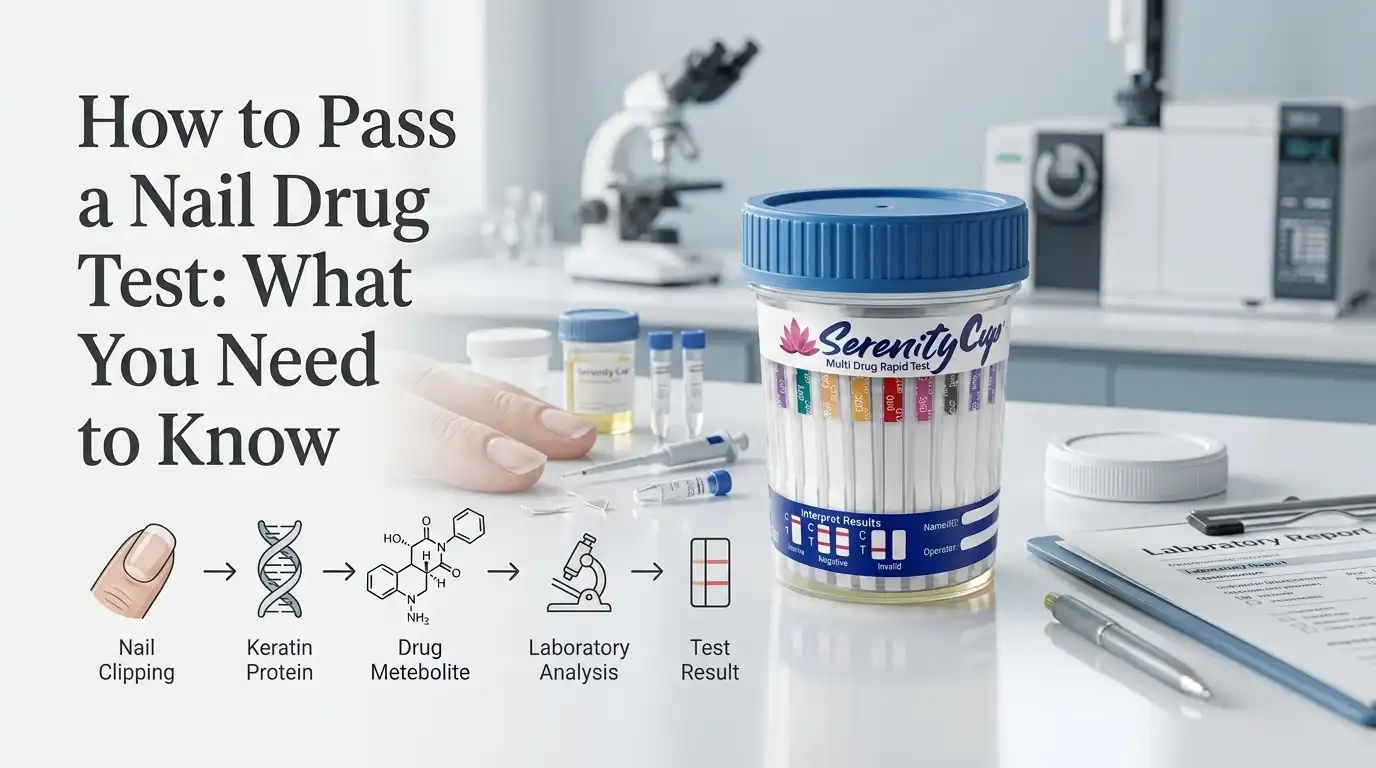
If you are searching for how to pass a nail drug test, the first thing to understand is that fingernail and toenail testing is different from urine, blood, and oral-fluid testing.
A nail drug test analyzes a small nail sample for drugs or their metabolites that may have become incorporated into the keratinized nail structure. Because nails grow gradually, testing can provide information about substance exposure over a longer period than some commonly used fluid-based tests. Research has demonstrated that nail clippings can be used to detect substances including cannabinoids, opioids, alcohol-related biomarkers, and other drugs, although interpretation and standardization remain important limitations.
There is no scientifically established method that can guarantee a negative nail drug test after drug exposure. Many online claims involve detox products, household chemicals, aggressive nail treatments, or other attempts to alter a sample, but these approaches are not established ways to reliably remove incorporated drug analytes.
Instead, understanding how nail drug testing works, how long drugs may be detectable, what substances can be tested, and what factors affect interpretation can give you a much clearer picture of the process.
What Is a Nail Drug Test?
A nail drug test, also called a fingernail drug test or nail drug screening, is a laboratory test that analyzes fingernail or toenail clippings for particular drugs, medications, or their metabolites.
Nails are primarily composed of keratin, a structural protein also found in hair. During nail formation and growth, substances circulating in the body can become incorporated into the developing nail tissue. Researchers have identified multiple possible incorporation pathways, including deposition associated with blood supply to the nail matrix and incorporation through the nail bed.
This makes nail clippings an interesting biological matrix for toxicology testing.
Unlike a urine test, which generally provides information about a more recent period of exposure, a nail sample can preserve evidence of exposure over a substantially longer retrospective period.
However, nail testing should not be treated as a perfect timeline of someone’s drug use. Scientific reviews continue to identify limitations involving nail type, sample availability, contamination, analytical methods, cutoffs, and interpretation.
Can You Pass a Nail Drug Test?
There is no guaranteed way to make a nail drug test negative after drug exposure has already been incorporated into the tested nail tissue.
This is because a nail test is fundamentally different from attempts to change the concentration of a substance in a fluid sample.
The nail clipping being tested is already-grown keratinized tissue. Drinking water, exercising, or using a so-called detox product does not provide an established mechanism for rapidly removing analytes that have already been incorporated into that nail material.
Research on nail toxicology shows that nails can accumulate substances over periods of weeks to months.
Therefore, claims that a particular drink, supplement, household chemical, or “detox” routine can guarantee a negative nail drug test should be treated cautiously.
How Does a Fingernail Drug Test Work?
The process can be understood in several stages.
1. Nail sample collection
A testing provider collects nail material, usually from fingernails and, when appropriate, toenails.
2. Sample preparation
The laboratory prepares the nail material for analysis. Preparation can include procedures designed to address surface contamination and prepare the keratinized tissue for extraction.
3. Extraction
Potentially relevant compounds are extracted from the nail sample using laboratory procedures.
4. Analytical testing
The laboratory can use analytical technologies capable of identifying and/or quantifying specific substances.
Published nail-testing research has used methods including gas chromatography-mass spectrometry (GC-MS) and liquid chromatography-mass spectrometry techniques, including LC-MS/MS.
5. Interpretation
The laboratory interprets the findings according to its analytical procedures, testing panel, cutoff criteria, and reporting requirements.
This is why a nail drug test is much more complicated than simply looking at the appearance of the nail.
How Do Drugs Get Into Fingernails?
Scientists have identified several possible mechanisms for the incorporation of drugs and metabolites into nails.
One pathway involves the blood supply to the nail matrix, where new nail tissue forms.
Another involves the nail bed, which interacts with the growing nail.
Research has also investigated possible contribution from sweat and external contamination. The exact contribution of these pathways can vary by substance and remains an area of scientific investigation.
As the nail grows, the keratinized tissue moves outward.
This creates the possibility of detecting evidence of exposure that occurred during the period in which the relevant nail tissue was forming.
What Is the Nail Drug Test Detection Window?
One of the biggest questions about fingernail drug testing is:
How far back does a nail drug test go?
There is no single detection window that applies to every person, drug, nail sample, and laboratory method.
Published research has commonly described fingernails as providing a retrospective window of several months. One large study of nail samples reported detection approximately 3–6 months after use, while broader reviews emphasize that nail growth and sample characteristics affect interpretation.
Fingernails and toenails also grow at different rates.
A systematic review reported average growth estimates of approximately 3 mm per month for fingernails and approximately 1.1 mm per month for toenails, with substantial biological variation.
Therefore, a statement such as “a nail test always detects exactly six months” would be too simplistic.
Factors that influence the detection period include:
- Type of nail sample
- Fingernail versus toenail
- Nail growth rate
- Amount of nail collected
- Substance being analyzed
- Frequency and pattern of exposure
- Laboratory methodology
- Analytical cutoff
- Sample quality
- Testing panel
How Long Does It Take for Drugs to Show Up in Nail Testing?
This question is more complicated than it may appear.
A drug does not necessarily become detectable in a newly grown section of nail immediately after exposure.
The timing depends on:
- Drug incorporation into nail tissue
- Nail growth
- The portion of nail collected
- Analytical sensitivity
- The specific substance
- Individual biological variation
Research examining drug incorporation into fingernails has followed samples over periods of several months and has demonstrated that incorporation and detectability are not simply determined by a fixed number of days.
For that reason, nail testing should not be interpreted as an exact timestamp of drug use.
Can a Nail Drug Test Tell the Exact Date of Drug Use?
Generally, a nail drug test should not be interpreted as an exact date-and-time record of drug use.
A nail sample represents a period of tissue formation and exposure rather than a simple timestamp.
The scientific literature also notes that more work is needed to fully understand the relationship between concentrations in nail tissue and the precise timing or amount of exposure.
This is an important distinction:
Detection of a substance does not automatically tell a laboratory the exact day it was used.
What Drugs Can a Nail Drug Test Detect?
The exact substances tested depend on the laboratory and the test panel.
Research has demonstrated the analysis of nail samples for several categories, including:
- Cannabis-related analytes
- Cocaine
- Opioids
- Amphetamines
- Methamphetamine
- Alcohol-related biomarkers
- Nicotine-related biomarkers
- Certain prescription medications
- Other drugs included in specialized testing panels
A systematic review found substantial research involving alcohol, nicotine, opioids, and cannabinoids in fingernail and toenail samples.
A large laboratory study also demonstrated the feasibility of analyzing multiple drug classes in nail samples using validated analytical methods.
However, the presence of a drug on this list does not mean every nail drug test screens for it.
The testing panel matters.
Always check which substances the specific test has been designed to analyze.
Can a Nail Drug Test Detect THC?
Yes, research has investigated cannabis-related analytes in fingernail and toenail samples.
Studies have examined substances including THC and THC-related metabolites in nail clippings.
However, the presence, concentration, and interpretation of cannabis-related analytes can vary according to:
- Testing method
- Nail sample
- Exposure history
- Laboratory cutoff
- Potential contamination
- Analytical procedures
Therefore, a nail test should not be interpreted using the same detection assumptions as a urine THC test.
Can a Nail Drug Test Detect Cocaine?
Cocaine and related analytes have been studied in nail samples.
Research into nail contamination and decontamination has specifically examined substances including cocaine, methamphetamine, and morphine. Laboratory washing procedures can be used as part of efforts to distinguish surface contamination from material incorporated into the nail.
This is one reason why simply finding a chemical on the surface of a nail is not necessarily equivalent to establishing biological exposure.
Can Prescription Medications Show Up on a Nail Drug Test?
Potentially, yes.
Some prescription drugs can be detected in keratinized biological matrices, depending on the laboratory’s testing panel.
If you are taking a prescription medication, it is important to provide accurate medication information when requested by the testing provider.
A positive analytical finding should be interpreted according to the substance identified, testing method, cutoff, and relevant clinical or testing context.
How Accurate Are Nail Drug Tests?
It would be inaccurate to describe every nail drug test as 100% accurate.
The reliability of a nail test depends on multiple factors, including:
- Laboratory methodology
- Sample quality
- Substance tested
- Analytical cutoff
- Sample preparation
- Potential contamination
- Testing panel
- Interpretation criteria
- Validation of the analytical method
A recent systematic review concluded that nail assays have demonstrated potential for assessing several substance exposures, but also identified limitations including sample insufficiency and the need for further validation, particularly for some applications.
A broader toxicology review similarly concluded that more standardized studies are needed to improve understanding of nail results and interpretation.
So the more accurate statement is:
Nail drug testing can provide useful evidence of substance exposure, but results need to be interpreted in the context of the specific laboratory method and test.
What Are Nail Drug Test Cutoff Levels?
A cutoff level is a predefined analytical threshold used by a testing program or laboratory to help determine how a measured result is reported.
Cutoffs can differ depending on:
- Substance
- Laboratory
- Testing program
- Analytical method
- Regulatory or organizational requirements
There is not one universal cutoff that applies to every nail drug test.
This is another reason why online “pass/fail” claims should not be generalized across laboratories.
Can External Contamination Affect Nail Drug Testing?
External contamination is an important consideration in nail toxicology.
Because nails are exposed to the surrounding environment, researchers have investigated whether contact with drugs can place substances onto the nail surface.
One study specifically evaluated cocaine, methamphetamine, and morphine contamination of nails and found that laboratory washing procedures could help remove externally deposited drug material under the experimental conditions studied.
Researchers therefore distinguish between:
surface contamination
and
drug incorporated into nail tissue.
The distinction is important when interpreting a laboratory result.
Can Secondhand Smoke Cause a Positive Nail Drug Test?
This question cannot be answered with a universal yes or no for every substance and every testing method.
The possibility of environmental exposure has been investigated in nail toxicology, and scientific reviews identify contamination and incorporation pathways as important considerations.
However, a laboratory result must be interpreted according to the specific analyte, concentration, cutoff, testing method, and relevant exposure circumstances.
If you are concerned that an environmental exposure could affect a test result, discuss the circumstances with the testing provider or an appropriate healthcare professional.
Can Nail Polish Affect a Nail Drug Test?
Nail polish, gel products, acrylic nails, and other cosmetic treatments can complicate sample collection or preparation.
The important point is that cosmetic appearance does not necessarily determine whether the underlying nail material can be tested.
A collection facility may provide specific instructions regarding nail polish or artificial nails before collection.
Follow the testing provider’s instructions rather than attempting to alter the nail sample yourself.
Can Artificial Nails Affect a Nail Drug Test?
Artificial nails do not transform the underlying nail tissue into a different biological sample.
However, artificial nails can affect the collection process because the laboratory needs actual nail material for analysis.
If you have acrylic, gel, extensions, or another artificial nail treatment, ask the collection facility what preparation they require before your appointment.
Can Cutting Your Nails Very Short Make a Drug Test Negative?
Cutting nails does not guarantee a negative result.
A nail drug test is designed around the biological material available for laboratory analysis, not simply the visible length of the nail.
If there is insufficient sample material, the testing provider may have its own procedures for handling the situation.
For that reason, intentionally changing the nail before collection should not be considered a reliable way to alter a drug-test result.
Can Detox Products Remove Drugs From Fingernails?
There is no established detox product that can guarantee removal of drug analytes from already-grown nail tissue.
This is an important distinction between detoxification of the body and analysis of a biological sample.
Once a substance has been incorporated into keratinized nail tissue, drinking a particular beverage or taking a supplement does not provide an established mechanism for instantly removing that material.
Scientific reviews continue to describe nail testing as a developing toxicology field, with ongoing questions about incorporation, cutoffs, and interpretation.
Do Water, Exercise, or Diet Change a Nail Drug Test?
General hydration, diet, and physical activity are not established methods for rapidly removing drug analytes from already-grown nail tissue.
This is because the test analyzes the physical nail sample itself.
That makes nail testing fundamentally different from tests that analyze a fluid such as urine.
Maintaining normal hydration and a healthy lifestyle can be important for general health, but those behaviors should not be presented as guaranteed methods for changing a nail drug-test result.
Why Is a Nail Drug Test Different From a Urine Test?
One of the easiest ways to understand nail testing is to compare it with other specimen types.
| Feature | Urine Drug Test | Nail Drug Test |
|---|---|---|
| Specimen | Urine | Fingernail/toenail clipping |
| Biological matrix | Fluid | Keratinized tissue |
| Typical information | More recent exposure | Longer retrospective exposure |
| Collection | Urine specimen | Nail clipping |
| Sample stability | Requires specimen handling | Nail tissue is relatively stable |
| Laboratory analysis | Depends on test | Specialized laboratory analysis |
| Detection period | Varies by substance | Often extends over weeks/months |
| Interpretation | Depends on substance and cutoff | Depends on substance, nail sample, method and cutoff |
The two tests should not be treated as interchangeable.
Nail vs. Hair Drug Testing
Nails and hair are both keratinized matrices, but they are not identical.
Scientific reviews have compared fingernail, toenail, and hair testing and found differences in concentrations and interpretation depending on the drug and matrix. Researchers also emphasize that nail toxicology still requires additional standardization.
Nail testing may offer:
- Non-invasive sample collection
- Long retrospective exposure information
- Relative sample stability
- An alternative when hair is unavailable
But limitations include:
- Sample insufficiency
- Differences between fingernails and toenails
- Potential environmental contamination
- Variation in incorporation mechanisms
- Differences in laboratory methods
- Limited standardization for some applications
Therefore, no specimen type should automatically be considered perfect for every testing situation.
What Happens During a Nail Drug Test?
A typical laboratory workflow can be summarized as:
Collection → Preparation → Washing/Decontamination → Extraction → Instrumental Analysis → Interpretation → Report
The exact procedure varies by laboratory.
Published studies have described laboratory procedures involving preparation and extraction followed by analytical methods such as GC-MS and LC-MS/MS.
This scientific process is considerably more complex than simply examining the nail visually.
Common Myths About Passing a Nail Drug Test
Myth 1: A detox drink can clear nail metabolites
There is no established evidence that a detox drink can rapidly remove drug analytes from already-grown nail tissue.
Myth 2: Drinking lots of water clears a nail test
Water primarily affects hydration and fluid balance. It does not provide an established method for removing incorporated nail analytes.
Myth 3: Nail polish hides drug metabolites
Cosmetic products do not provide a scientifically established way to make a nail sample negative.
Myth 4: Household chemicals can erase a nail drug test
Chemical exposure can damage nails and may complicate collection or interpretation, but it should not be considered a reliable method for removing incorporated drug analytes.
Myth 5: There is one exact detection window for every nail test
Detection varies with the substance, sample, growth rate, laboratory method and other factors.
Myth 6: A nail drug test can tell the exact day someone used a drug
A nail result generally provides evidence of exposure over a period rather than a precise date and time.
Factors That Can Influence Nail Drug Test Results
Several variables can affect the interpretation of a nail drug test.
Substance
Different drugs have different chemical and biological properties.
Exposure pattern
Frequency and level of exposure can influence analyte concentrations.
Nail growth
People have different nail growth rates.
Fingernail vs. toenail
These tissues grow at different rates and may provide different retrospective information.
Sample availability
Insufficient material can limit testing.
Environmental contamination
External exposure can complicate interpretation.
Laboratory methodology
Extraction and analytical methods influence what can be detected.
Cutoff levels
The analytical threshold used by the laboratory matters.
Testing panel
A test only reports the substances it is designed to analyze.
What If You Recently Stopped Using Drugs?
If you recently stopped using a substance and have an upcoming nail drug test, there is no reliable household method that can guarantee a negative result.
Because nail testing examines keratinized tissue and can provide a longer retrospective window, simply stopping immediately before collection does not automatically erase previously formed nail tissue.
If you have concerns about the accuracy or interpretation of a test, the appropriate route is to discuss those concerns with the testing provider, healthcare professional, or other qualified professional involved in the testing process.
What Happens If a Nail Drug Test Is Positive?
The consequences depend on why the test was ordered and the rules governing that testing program.
For example, a test may be associated with:
- Employment screening
- Workplace monitoring
- Court-related proceedings
- Child custody matters
- Substance-use treatment
- Rehabilitation monitoring
- Other forensic or clinical circumstances
A positive analytical result does not have identical consequences in every setting.
If a result appears inconsistent with your medical history or circumstances, ask the relevant testing organization about its procedures for review, confirmation, or dispute.
Can You Challenge a Nail Drug Test Result?
The options depend on the testing program and applicable rules.
If you believe a result may be inaccurate, useful questions include:
- What substance was detected?
- What analytical method was used?
- What cutoff was applied?
- Was confirmatory testing performed?
- Was the sample adequate?
- Was the specimen handled according to the laboratory’s procedures?
- Is there a formal review or retesting process?
For employment, legal, custody, or probation testing, the appropriate process may depend on the governing organization or jurisdiction.
How Much Does a Nail Drug Test Cost?
There is no universal price for nail drug testing.
Cost can vary based on:
- Laboratory
- Number of substances tested
- Testing panel
- Collection fees
- Turnaround time
- Geographic location
- Whether the test is clinical, workplace, legal, or private
Rather than relying on a generic online price, check the current fee directly with the laboratory or testing provider.
How Long Do Nail Drug Test Results Take?
Turnaround time varies by laboratory.
Factors can include:
- Testing panel
- Sample preparation
- Laboratory workload
- Analytical method
- Confirmation requirements
- Shipping or collection arrangements
A laboratory that performs specialized toxicology testing may have a different turnaround time from a rapid testing facility.
Are Nail Drug Tests Admissible in Court?
Whether a particular nail drug-test result is admissible in a legal proceeding depends on the jurisdiction, purpose of the test, laboratory procedures, chain of custody, expert testimony, and applicable evidentiary rules.
It is therefore better to avoid a blanket statement that all nail drug tests are automatically admissible in court.
If a result is being used in a legal case, a qualified attorney or appropriate legal professional can explain the rules applicable to that jurisdiction.
Frequently Asked Questions About Nail Drug Testing
How far back does a fingernail drug test go?
Fingernail testing can provide a retrospective window of several months. Published research commonly reports approximately 3–6 months in some testing contexts, but the actual window varies according to nail growth, sample characteristics, substance, laboratory method and other factors.
How long does it take for drugs to show up in nail testing?
There is no universal number of days. Drug incorporation and detectability depend on the substance, nail growth, sample collection and laboratory method.
Can a nail drug test detect one-time drug use?
A single exposure may or may not be detected. Detection depends on the substance, amount of exposure, individual biology, sample, analytical sensitivity and cutoff. Research has demonstrated incorporation after individual exposures for some substances, but this should not be generalized to every drug or test.
Can nail drug tests detect prescription medications?
Some prescription medications can be detected when they are included in the laboratory’s testing panel.
Can secondhand smoke cause a positive nail drug test?
Environmental exposure is one factor researchers consider when interpreting nail toxicology, but whether it could affect a particular result depends on the substance, exposure, analytical concentration and cutoff.
Can nail polish affect a nail drug test?
Nail polish and artificial nail products may affect collection or sample preparation. Follow the specific instructions provided by the testing facility.
Can artificial nails affect testing?
They can complicate sample collection because the laboratory needs actual nail tissue. Ask the collection facility about its requirements before testing.
Can shampoo affect a nail drug test?
Shampoo is primarily relevant to hair testing rather than a nail specimen. Nail testing analyzes nail tissue, so hair products are not automatically relevant to a nail result.
Can a nail drug test tell when a drug was used?
Not precisely. Nail testing can provide evidence of exposure over a period, but it generally cannot establish an exact date and time of use.
Are nail drug tests accurate?
They can provide useful toxicology information, but accuracy and interpretation depend on the laboratory, substance, analytical method, cutoff, sample quality and other factors. Research continues to evaluate the validity and standardization of nail testing.
What drugs can be detected in fingernails?
Depending on the test panel, nail testing can analyze substances including cannabinoids, cocaine, opioids, amphetamines, methamphetamine, alcohol-related biomarkers and certain medications.
How are nail samples collected?
A collection provider obtains nail material and sends it for laboratory analysis. The laboratory then prepares and analyzes the sample using its validated procedures.
Can toenails be used instead of fingernails?
Toenail testing is possible in some testing contexts. Toenails grow more slowly than fingernails, which can affect the retrospective information available from the sample.
Can cutting your nails before a test guarantee a negative result?
No. Cutting nails does not provide a scientifically established guarantee of a negative result.
Do detox products remove drugs from nails?
There is no established detox product that can guarantee removal of drug analytes from already-grown nail tissue.
What happens if there isn’t enough nail for testing?
The testing provider’s procedures determine how an insufficient sample is handled. Depending on the program, another sample or collection approach may be considered.
Final Takeaway
If you searched for how to pass a nail drug test, the most important point is that there is no scientifically proven shortcut that guarantees a negative result after drug exposure has already been incorporated into nail tissue.
Nail drug testing works differently from urine or blood testing because nails are keratinized tissue that can preserve evidence of exposure over a longer period. Research has demonstrated the usefulness of nail clippings for detecting several classes of substances, while also identifying limitations involving sample sufficiency, contamination, nail type, analytical methods, cutoffs and interpretation.
The most useful way to understand a nail drug test is to focus on:
Nail growth → drug incorporation → sample collection → laboratory analysis → cutoff → result interpretation
Rather than relying on unverified detox products, household chemicals, or other attempts to alter the sample, readers with concerns about a particular test should follow the testing provider’s instructions and ask the appropriate professional about the testing process or any legitimate medical information that may affect interpretation.