Does 7-OH Show Up on a Drug Test?

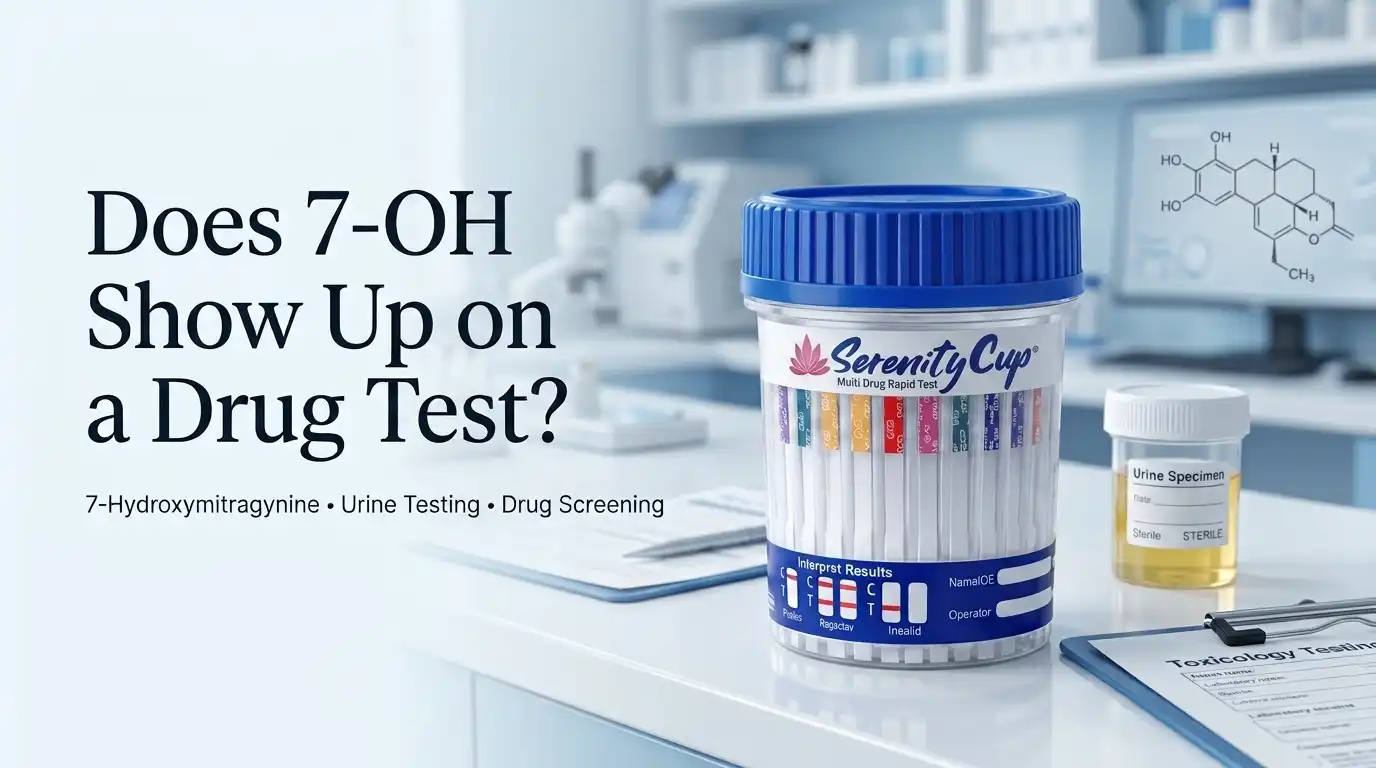
Yes, 7-OH can be detected on a drug test—but whether it shows up depends on what the test is specifically designed to detect. Most routine workplace drug panels are not designed to specifically identify 7-hydroxymitragynine (7-OH). However, specialized kratom testing can test for 7-OH and mitragynine, including through urine testing followed by laboratory confirmation with LC-MS/MS.
This distinction is important because 7-OH, mitragynine, kratom, and standard opioid testing are not interchangeable terms. A drug test does not automatically detect every substance that has opioid activity simply because it affects opioid receptors.
If you’re trying to understand whether 7-OH could appear on a particular drug test, the most important questions are what substances the panel includes, what analytes the laboratory is targeting, what specimen is being tested, and what testing methodology is being used.
Key Takeaways
- 7-OH is short for 7-hydroxymitragynine, an alkaloid associated with kratom.
- A routine drug panel does not automatically include 7-OH.
- A standard 5-panel, 10-panel, or 12-panel should not be assumed to test for 7-OH unless the specific panel says it does.
- Specialized kratom testing can target mitragynine and 7-hydroxymitragynine.
- Some 7-OH products may also contain mitragynine, which can be detected by a kratom-specific screen. Labcorp says its kratom immunoassay does not directly detect 7-OH but that commercially available 7-OH products commonly contain mitragynine.
- Laboratory methods such as LC-MS/MS can identify specific targeted compounds.
- There is no single detection window that applies to every person, product, specimen, and laboratory method.
- A standard opioid result should not automatically be interpreted as a 7-OH result. The actual analytes included in the test matter.
What Is 7-OH?
7-OH, or 7-hydroxymitragynine, is an alkaloid associated with the kratom plant, Mitragyna speciosa.
Kratom contains several naturally occurring alkaloids, with mitragynine being one of the major compounds. 7-hydroxymitragynine occurs naturally in kratom in much smaller amounts, although concentrated products marketed specifically as 7-OH can contain substantially higher levels.
The FDA distinguishes naturally occurring trace amounts of 7-OH in kratom from concentrated 7-OH products marketed to consumers. The agency has issued warnings concerning concentrated 7-OH products and says 7-OH has not been approved for medical use.
For drug-testing purposes, the important point is that 7-OH is a specific chemical analyte. A laboratory must use an assay capable of recognizing that analyte if the goal is to specifically identify 7-OH.
Does 7-OH Show Up on a Drug Test?
It can, but not necessarily on a routine drug test.
Most standard drug-testing-panels are designed around a defined list of drugs or metabolites. If 7-hydroxymitragynine is not included in the panel or assay, the test is not specifically looking for it.
Specialized testing is different. Laboratory testing is available that includes 7-hydroxymitragynine and mitragynine. For example, Labcorp currently lists a urine kratom test that includes both analytes, with initial immunoassay screening followed by LC/MS-MS confirmation of presumptive positives.
Therefore, the answer depends on the test:
| Type of test | Is 7-OH automatically included? |
|---|---|
| Routine drug panel | No, do not assume it is included |
| Standard 5-panel | Not specifically designed to detect 7-OH |
| Standard 10-panel | Depends on the exact panel |
| Standard 12-panel | Depends on the exact panel |
| Kratom-specific test | May specifically test for 7-OH and/or mitragynine |
| Targeted laboratory test | Can identify specific analytes |
| LC-MS/MS confirmation | Can specifically identify targeted compounds |
The name of a panel alone is not enough. Panel configurations vary by laboratory and test provider.
Does 7-OH Show Up on a Standard Drug Test?
Generally, a standard drug test should not be assumed to detect 7-OH.
Routine drug screening is based on the analytes selected for that particular test. An immunoassay uses antibodies designed to recognize particular drug compounds or related targets. If 7-OH is not a validated target of that assay, the test is not equivalent to a dedicated 7-OH test.
This is why the statement:
“7-OH is an opioid, so an opioid drug test will automatically detect it”
is too broad.
A test’s ability to detect a substance depends on the specific analyte and assay, not simply on the substance’s pharmacological effects.
Does 7-OH Show Up on a 5-Panel Drug Test?
A standard 5-panel drug test is not specifically a 7-OH test.
The federal DOT testing framework, for example, specifies particular drug classes and analytes. Its current urine testing requirements include marijuana metabolites, cocaine metabolite, specified opioids, phencyclidine, and amphetamine/methamphetamine-related analytes, with defined initial and confirmatory cutoffs. 7-hydroxymitragynine is not listed as a routine DOT analyte in that table.
That means someone should not interpret a routine 5-panel test as automatically testing for 7-OH.
However, employers, laboratories, treatment programs, courts, and other organizations can use additional testing outside a standard panel when their testing program calls for it.
Does 7-OH Show Up on a 10-Panel or 12-Panel Drug Test?
Not necessarily.
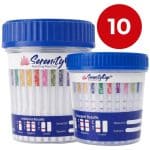
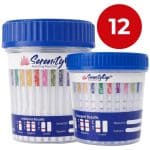
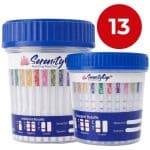
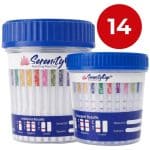
The terms “10-panel” and “12-panel” describe a configuration of drug-testing targets rather than one universal test used by every laboratory.
One 12-panel test can have a different analyte list from another 12-panel test.
For that reason, you should look at the actual test panel and analyte list rather than assuming that a particular panel number includes 7-OH.
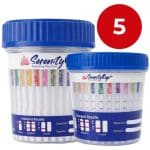
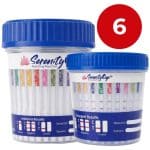
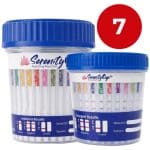
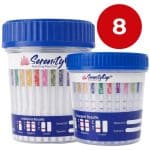
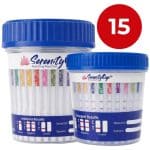
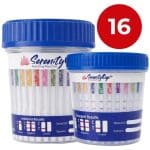
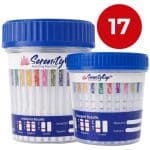
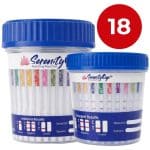
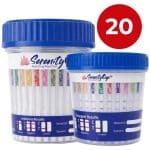
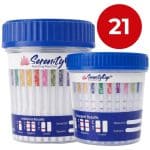
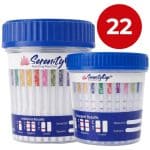
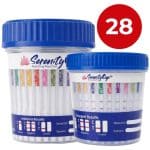
For example, a multi-panel urine cup may contain tests for substances such as:
- Amphetamines
- Cocaine
- Opiates
- Benzodiazepines
- Methadone
- Oxycodone
- THC
- Buprenorphine
- Barbiturates
- MDMA
- Tricyclic antidepressants
But a panel containing an opiates or opioids line does not automatically mean it contains a specific assay for 7-hydroxymitragynine.
Important distinction
12-panel drug test ≠ universal list of 12 substances.
Always check the manufacturer’s or laboratory’s stated analytes.
Does 7-OH Show Up as an Opioid?
Not automatically.
7-OH has activity at opioid receptors, but pharmacological classification and laboratory detection are different concepts.
A routine opioid immunoassay is designed around particular target compounds. The U.S. DOT’s regulated opioid testing, for example, identifies specific analytes such as codeine, morphine, hydrocodone, hydromorphone, oxycodone, oxymorphone, and 6-acetylmorphine.
7-hydroxymitragynine is not simply interchangeable with those compounds.
So a person should not assume:
opioid activity → automatic positive opioid screen.
Instead:
specific assay → specific analytes → specific result.
Can a Urine Test Detect 7-OH?
Yes.
Specialized urine testing can detect 7-hydroxymitragynine.
Labcorp currently lists a urine kratom test that includes:
- Mitragynine
- 7-Hydroxymitragynine
The test uses an initial immunoassay and confirmation by liquid chromatography/tandem mass spectrometry (LC/MS-MS) when appropriate.
Laboratory research has also described chromatography-mass-spectrometry methods for analyzing kratom alkaloids in biological samples.
Therefore, saying “7-OH cannot be detected in urine” would be incorrect.
The more accurate statement is:
7-OH can be detected in urine when a laboratory uses a test designed to target it.
What Drug Test Detects 7-Hydroxymitragynine?
A test specifically designed to detect kratom alkaloids can include 7-hydroxymitragynine.
Testing can involve two general stages.
1. Initial screening
An immunoassay can be used as a presumptive screen.
For example, Labcorp’s listed kratom urine test uses immunoassay at an initial threshold and then performs definitive LC/MS-MS confirmation for presumptive positives.
2. Laboratory confirmation
LC-MS/MS, or liquid chromatography-tandem mass spectrometry, can provide more specific identification of targeted compounds.
Mass spectrometry-based confirmation is widely used in laboratory drug testing because it can identify molecules using their chromatographic behavior and mass-spectral characteristics. Labcorp describes LC/MS/MS and GC/MS as methods used for confirmation of presumptive drug-screen results.
This is why a specialized laboratory test can answer a different question from a routine multi-panel cup.
7-OH vs. Mitragynine: What’s the Difference?
This distinction is particularly important when interpreting a kratom drug test.
Mitragynine
Mitragynine is one of the principal alkaloids found in kratom.
It is commonly used as a target in available kratom testing. Labcorp states that its presumptive kratom testing primarily targets mitragynine.
7-Hydroxymitragynine
7-hydroxymitragynine, or 7-OH, is another kratom-associated alkaloid.
It occurs naturally in trace amounts in kratom but is also found in concentrated products marketed specifically as 7-OH.
Why does this matter?
A test that detects mitragynine is not automatically identical to a test that specifically measures 7-OH.
Labcorp’s current information makes this especially important: its kratom immunoassay does not directly detect 7-OH, but its evaluation found that commercially available 7-OH products commonly contain mitragynine, which can produce a positive kratom screen.
So a product labeled “7-OH” does not necessarily mean that a laboratory will find only 7-OH.
Can a 7-OH Product Test Positive for Kratom?
It can.
The contents of commercially available products can vary, and a product marketed as a 7-OH product may contain other kratom-related alkaloids.
Labcorp reports that commercially available 7-OH products evaluated by its laboratory commonly contained mitragynine. Because the available kratom immunoassay targets mitragynine rather than directly detecting 7-OH, the presence of mitragynine can result in a positive kratom screen.
This is an important reason not to interpret a drug-test result solely from a product’s marketing label.
How Long Does 7-OH Stay in Your System?
There is no single detection window that applies to everyone.
The amount of time a substance remains detectable depends on several variables, including:
- Amount used
- Frequency of use
- Product composition
- Concentration of 7-OH or other alkaloids
- Individual metabolism
- Time since the last use
- Specimen type
- Laboratory methodology
- Test sensitivity
- Cutoff concentration
A detection window is also different from the time a person can feel the effects of a substance.
A person may no longer notice effects while a specific compound or metabolite remains detectable by a sufficiently sensitive laboratory test.
Because of these variables, a fixed statement such as “7-OH always stays in urine for X days” is not scientifically appropriate.
What Factors Affect 7-OH Detection?
1. Amount used
Higher exposure can result in greater concentrations of an analyte available for detection.
2. Frequency of use
Repeated use can produce a different testing pattern from a single exposure.
3. Product composition
Products marketed as kratom or 7-OH may contain different amounts and combinations of alkaloids.
4. Metabolism
Individual differences in metabolism can influence how compounds are processed and eliminated.
5. Time since use
Concentrations generally change over time as substances are metabolized and eliminated.
6. Testing method
A routine immunoassay and a targeted LC-MS/MS test do not have the same analytical capabilities.
7. Laboratory cutoff
A laboratory result depends partly on the concentration threshold used for the particular test.
These factors mean that a detection window should always be treated as an estimate rather than a guarantee.
Can 7-OH Cause a False Positive on a Drug Test?
This question requires some nuance.
A screening test can produce a presumptive positive, which is not necessarily the same as definitive identification of a particular compound.
Immunoassays use antibodies and can have limitations, including cross-reactivity with substances that resemble their target analytes. For that reason, unexpected or important positive screening results may be followed by more specific laboratory testing. Labcorp explains that immunoassays provide presumptive results, while LC/MS/MS and GC/MS can be used for confirmation.
For kratom testing specifically, Labcorp states that false positives can occur with immunoassay screening and that definitive mass-spectrometry testing is available when appropriate.
What does that mean?
A positive result should be interpreted according to:
- What test was performed?
- What analyte does it target?
- Was it a screening or confirmatory test?
- What cutoff was used?
- Was laboratory confirmation performed?
This is more useful than simply labeling every unexpected result a “false positive.”
Does Kratom Show Up on a Drug Test?
Kratom can be detected if the test specifically looks for kratom alkaloids.
Routine drug panels do not necessarily include kratom.
However, specialized laboratory testing can target mitragynine and 7-hydroxymitragynine. Labcorp currently lists both compounds in its specialized urine testing.
This creates an important distinction:
A negative standard drug panel does not necessarily mean that a specialized kratom test would also be negative.
The two tests may simply be looking for different substances.
Does 7-OH Show Up on a DOT Drug Test?
For a standard DOT-regulated urine drug test, 7-OH is not one of the specific analytes listed in the DOT’s current federal testing table.
The DOT testing framework specifies marijuana metabolite, cocaine metabolite, specified opioids, PCP, and amphetamine-related analytes, with defined cutoff concentrations.
That means a standard DOT panel should not be described as a dedicated 7-OH test.
However, a workplace or organization can have testing requirements beyond the standard DOT panel in circumstances where additional testing is legally and operationally appropriate. The exact testing program and applicable rules matter.
For a specific employment situation, the safest way to determine what is being tested is to review the actual panel or ask the testing provider.
Does 7-OH Show Up on a Probation or Court Drug Test?
It depends on the testing program.
Probation, court, treatment, and correctional testing programs may use different panels and laboratory services.
A routine panel may not include 7-OH, while a program can separately order testing for kratom alkaloids.
Therefore, the answer is not simply “yes” or “no.”
If a court or probation program specifically requires testing for kratom or 7-OH, a laboratory can use a targeted assay capable of identifying those compounds.
The relevant question is:
What analytes does the testing program’s laboratory actually include?
What About Blood, Saliva, or Hair Testing?
The specimen type can affect how testing is performed.
7-OH or other kratom-related compounds may be investigated using different biological specimens, but the availability and validation of a specific test vary by laboratory.
Urine
Urine is commonly used for drug testing and specialized kratom testing is available.
Blood
Blood testing can be used in some analytical or clinical situations, but it is not equivalent to a routine workplace urine panel.
Oral fluid
Oral-fluid testing uses a different specimen and different analytical considerations.
Hair
Hair testing has a different detection framework and is not interchangeable with urine testing.
The key point is that the specimen does not determine the answer by itself. The laboratory must have a validated method for the compound being investigated.
What Happens If a Specialized Test Detects 7-OH?
The meaning of a positive result depends on the context.
For example, testing may be used for:
- Clinical care
- Substance-use assessment
- Workplace testing
- Research
- Court or probation programs
- Forensic investigations
A laboratory result should be interpreted alongside the test methodology, analyte, cutoff, and circumstances in which the sample was collected.
A positive screening result and a confirmed laboratory result are not necessarily equivalent.
Why Does the Exact Drug-Test Panel Matter?
One of the biggest misconceptions about drug testing is that a “5-panel,” “10-panel,” or “12-panel” test is a universal product with exactly the same targets everywhere.
It isn’t.
Different manufacturers and laboratories can configure panels differently.
For example, one panel may include:
- Opiates
- Oxycodone
- Benzodiazepines
- THC
- Cocaine
- Amphetamines
- Methadone
- Buprenorphine
- Barbiturates
- MDMA
- PCP
- TCA
Another test with the same panel number may use a different combination.
Therefore, when asking “Does 7-OH show up on my drug test?”, the most useful information is the actual analyte list—not simply the number of panels.
7-OH Drug Testing: Screening vs. Confirmation
Understanding the difference between screening and confirmation can make drug-test results much easier to interpret.
Screening test
A screening test is generally designed to quickly identify whether a target may be present at or above a particular threshold.
Immunoassay is commonly used for initial screening.
The result may be reported as:
- Negative
- Presumptive positive
Confirmatory test
A confirmatory test uses a more specific analytical method to identify a particular compound.
Methods can include:
- LC-MS/MS
- GC/MS
- Other validated mass-spectrometry-based methods
Labcorp describes immunoassay as an initial screening methodology and LC/MS/MS or GC/MS as confirmation methodologies.
For its kratom test, Labcorp specifically lists immunoassay screening followed by LC/MS-MS confirmation.
Is There a 7-OH Drug Test?
Yes.
Specialized laboratory testing is available for 7-hydroxymitragynine.
For example, Labcorp’s current kratom urine test includes:
- 7-hydroxymitragynine
- Mitragynine
and uses immunoassay screening with LC/MS-MS confirmation.
Labcorp also lists a broader synthetic-opioid test that includes both mitragynine and 7-OH-mitragynine among its analytes.
This demonstrates why the statement “no drug test can detect 7-OH” is incorrect.
The more accurate statement is that routine panels may not specifically include it, while specialized laboratory tests can.
What Is the Difference Between a 7-OH Test and a Standard Drug Test?
A standard drug test usually contains a predefined set of targets.
A specialized 7-OH test is designed around the specific compound or related kratom analytes.
Standard panel
Designed around commonly tested drug classes.
Kratom-specific test
Designed to identify kratom-associated alkaloids such as mitragynine and/or 7-OH.
Targeted LC-MS/MS
Can provide highly specific identification and measurement of targeted compounds.
This is why two people can take different tests on urine collected at similar times and receive different results: the tests may be looking for different analytes.
Current 7-OH Regulatory Considerations
The regulatory environment surrounding concentrated 7-OH products is changing.
The FDA has warned consumers about concentrated 7-OH products and has taken enforcement action concerning products containing concentrated 7-OH.
In July 2026, the FDA reported that the DEA had initiated a temporary scheduling process concerning 7-OH above a proposed threshold, along with certain synthetic 7-OH derivatives. The federal regulatory process is therefore an area where current information matters.
Because regulations can change, do not rely on an old article to determine the current legal status of 7-OH in a particular state or jurisdiction.
Drug-testing requirements can also differ from general legal status.
Frequently Asked Questions About 7-OH Drug Testing
Does 7-OH show up on a standard drug test?
Usually, a standard drug test does not specifically target 7-OH. However, specialized testing can identify 7-hydroxymitragynine.
Does 7-OH show up on a 5-panel drug test?
A standard 5-panel test is not designed as a dedicated 7-OH test. The exact panel and testing program should be checked for additional analytes.
Does 7-OH show up on a 10-panel drug test?
Not automatically. A 10-panel test can vary in its exact analytes, so check the manufacturer’s or laboratory’s test list.
Does 7-OH show up on a 12-panel drug test?
Not necessarily. The number “12-panel” does not represent one universal drug-testing configuration.
Does 7-OH show up as an opioid?
Not automatically. 7-OH has opioid-receptor activity, but a routine opioid assay is designed around particular analytes. Pharmacological activity does not mean every opioid-related compound will trigger every opioid screen.
Can a urine test detect 7-OH?
Yes. Specialized urine testing can detect 7-hydroxymitragynine. Labcorp currently lists a urine test that includes both 7-OH and mitragynine.
Does kratom show up on a drug test?
Kratom can be detected with a test specifically designed to identify kratom alkaloids. Routine panels may not include them.
Does 7-OH show up on a DOT drug test?
7-OH is not one of the specific analytes listed in the standard DOT drug-testing table.
Can 7-OH cause a false positive?
Screening tests can have limitations, including potential cross-reactivity. An unexpected presumptive positive can require more specific laboratory confirmation.
Is mitragynine the same as 7-OH?
No. They are different kratom-associated alkaloids. Specialized testing can target one or both.
How long does 7-OH stay in your system?
There is no single detection window that applies to every person and every test. Detection depends on factors such as exposure, frequency of use, product composition, metabolism, specimen, analytical method, and cutoff.
Can a specialized test detect 7-OH after the effects have worn off?
Detection and noticeable effects are different concepts. A laboratory may detect a compound after its noticeable effects have ended, depending on the specimen and testing method.
Can a drug test tell whether someone used 7-OH specifically?
A test specifically validated to measure 7-hydroxymitragynine can identify that analyte. A routine drug panel generally cannot be interpreted as a specific 7-OH test.
Does 7-OH Show Up on a Drug Test?
Yes, 7-OH can show up on a drug test—but only when the testing method and panel are capable of detecting it.
A routine workplace drug panel is not automatically a 7-OH test. Standard 5-, 10-, and 12-panel tests should be evaluated by their actual analyte lists rather than their panel numbers.
At the same time, it would be incorrect to say that 7-OH is undetectable. Specialized laboratory testing can specifically include 7-hydroxymitragynine and mitragynine, with urine testing and LC/MS-MS confirmation available.
There is also an important distinction between 7-OH and mitragynine. Current Labcorp guidance says its kratom immunoassay does not directly detect 7-OH, but commercially available products marketed as 7-OH commonly contain mitragynine, which can produce a positive kratom screen.
So the most accurate answer is:
A standard drug test may not specifically detect 7-OH, but specialized kratom and laboratory testing can detect 7-hydroxymitragynine. Whether it appears on a particular test depends on the test panel, target analytes, specimen, methodology, and laboratory cutoff.
If an unexpected drug-test result occurs, the actual test panel and whether the result was a screening or confirmatory result are important to understanding what was detected.