Choosing a Multi-Panel Drug Test Cup for DOT Compliance

If you are buying a multi-panel drug test cup, start with one question: do you need DOT compliance, or are you screening under your own workplace policy? That answer affects the panel, the collection process, and the paperwork. This guide breaks down the difference, shows what to verify before you buy, and helps you avoid a common mistake: using the wrong cup for the wrong program.
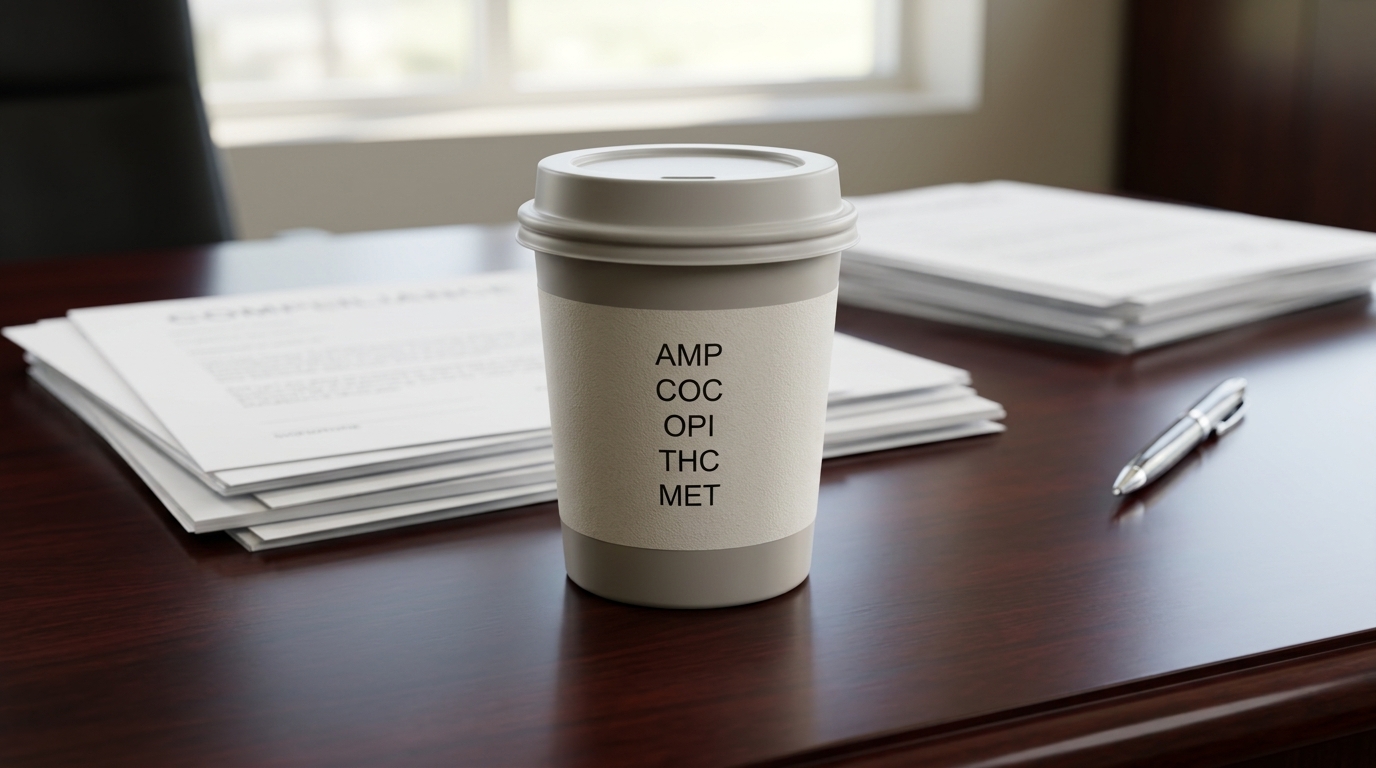
Start with the biggest question: DOT or non-DOT?
Many buyers assume more panels means a better test. For DOT testing, that is not true. A DOT drug test follows federal rules that define the drug panel, collection procedure, and chain of custody. You cannot just pick the cup with the highest panel count and assume it is compliant.
For general workplace screening, you have more flexibility. You can choose a broader panel, include drugs relevant to your workforce, and use instant cups for fast on-site screening. The right choice starts with your testing program, not the number of analytes on the label.
What makes a drug test cup DOT compliant?
A DOT-compliant screen must align with the federal workplace testing program. In practice, that means focusing on three things: the approved drug menu, the correct collection process, and lab confirmation when required. A cup by itself does not make the full testing process DOT compliant if the rest of the workflow does not meet the rules.
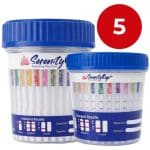
For many employers, the safest option is a 5-panel cup that matches the standard DOT urine drug screen. That is why a product like the 5 Panel Drug Test Cup with THC, COC, AMP, OPI and PCP is a better fit for DOT-focused screening than a 12-panel or 16-panel cup packed with extra analytes.
Key signs you are shopping for a DOT-aligned option
- You need screening for a federally regulated position.
- You must follow a fixed drug panel rather than a custom one.
- You need a formal collection process and documented chain of custody.
- You expect lab confirmation for non-negative results.
Why a larger panel is not better for DOT testing
This is where many buyers get tripped up. A 12-panel, 15-panel, or 21-panel cup gives you more information, but that does not help if your program has to match DOT rules. Extra panels can actually complicate things. You may get results for drugs outside the federal panel, and those results do not fit cleanly into a regulated DOT workflow.
That is why DOT buyers should think in terms of fit, not quantity. The goal is to screen for the required substances and move any non-negative result through the proper confirmation process. In a DOT setting, consistency matters more than panel size.
When a multi-panel cup makes sense for general workplace screening
For non-DOT employers, a multi-panel cup gives you room to match your policy to real-world risk. A warehouse, clinic, school, rehab program, or staffing agency may need more than the standard 5-panel screen. That is where 8-panel, 10-panel, 12-panel, 13-panel, 15-panel, and 16-panel cups make sense.
Your choice should reflect what you actually need to detect. If your policy only covers the most common drug classes, a basic cup keeps costs under control. If you are concerned about fentanyl, EtG alcohol monitoring, kratom, or specimen tampering, a broader cup offers more useful screening value.
Good reasons to choose a broader workplace cup
- Your policy includes drugs outside the federal 5-panel set.
- Your industry has higher misuse risk for prescription medications.
- You want on-site screening with immediate triage.
- You want built-in specimen checks like temperature or adulteration strips.
How to choose the right panel for your workplace
Start with your written policy. Your test cup should match it exactly. If your handbook says you test for specific drugs, your device should cover those drugs and not add random extras you do not plan to manage. If your policy is vague, tighten that up before you buy inventory.
Then look at the realities of your workforce. A construction company, treatment center, and office employer do not face the same screening needs. Some employers need fentanyl. Some need EtG. Some need kratom. Others just need a basic pre-employment screen with a straightforward, low-cost process.
A practical way to match cup type to need
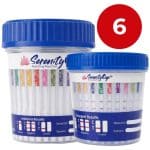
- Basic workplace screening: 6-panel to 10-panel cups.
- Broader employer policy: 12-panel or 13-panel cups.
- High-risk or treatment monitoring: 15-panel or 16-panel cups with fentanyl, EtG, or kratom.
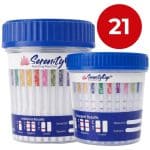
- Modern substance concerns: 21-panel or higher cups when your program truly requires those analytes.
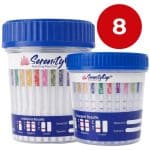
For example, the 8 Panel Drug Test Clia Waived & FDA Approved works for many standard workplace programs. A broader option like the CLIA Waived 13 Panel Drug Screen Test Cup fits employers who need more coverage, including fentanyl. A cup like the 15 Panel Drug Test with Kratom, Alcohol, (ETG) Fentanyl And Adulterations is a strong fit for programs that need better specimen checks and visibility into newer risks.
What role do CLIA-waived and FDA-cleared claims play?
Buyers pay attention to these terms for good reason. A CLIA-waived device supports use in settings that need a simple testing process. FDA clearance or approval shows the test went through a regulatory review path. For workplace buyers, those claims help narrow the field to products with stronger documentation.
Still, those labels do not override program fit. A CLIA-waived 15-panel cup is still the wrong tool for a DOT program if what you need is a DOT-aligned 5-panel workflow. Certification matters, but fit comes first.

Should you choose a cup with temperature and adulteration checks?
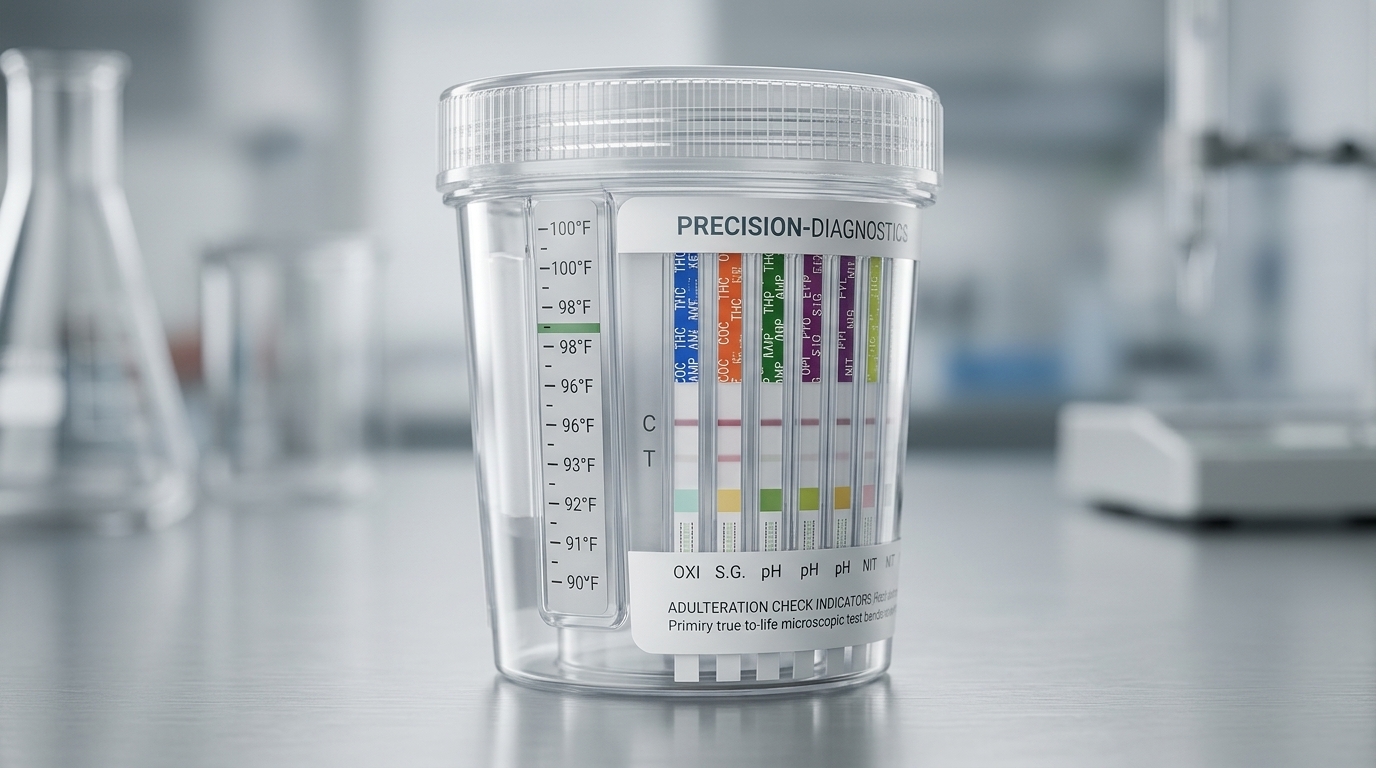
For many employers, yes. Temperature strips help confirm the specimen appears fresh at collection. Adulteration checks can flag tampering issues such as abnormal pH, creatinine, or specific gravity. Those tools matter even more in high-volume or higher-risk screening programs.
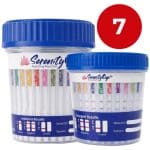
That is one reason test cups remain popular. They combine collection and screening in one device, and some models add specimen-validity tools in the same unit. Products such as the 12 Panel Drug Test Cup with PCP, CLIA Waived 15 Panel Urine Drug Test Cup, and 21 Panel Drug Test Cup, Psilocybin, KRA, Xylazine, K2, TRA, KET, FEN, ETG & ADLTX show how workplace cups can do more than deliver a basic positive-or-negative result.
What if you need both instant results and lab follow-up?
That is a common setup. Many employers use instant cups for the initial screen and send non-negative samples to the lab for confirmation. This saves time on negative results while preserving a stronger review process for results that affect hiring or discipline. It also gives managers faster visibility instead of waiting days on every test.
If that is your workflow, think through specimen handling before you buy. Some cups and containers make follow-up transfer easier and cleaner. Vacuum-style collection options can reduce spills and handling issues, which is especially useful in busy clinics and mobile collection settings.
How price should influence your decision
Price matters, but only after you identify the right use case. A cheap cup that does not match your policy can lead to re-testing, confusion, and wasted staff time. That costs more than spending a little extra for the correct device.
For non-DOT screening, bulk pricing can make broader testing programs more practical. Products in the catalog range from low-cost basic cups to higher-panel options with specialty analytes. The better question is not, “What is the cheapest cup?” It is, “What is the lowest-cost cup that still fits my program?”
Common buying mistakes to avoid
Buying a high-panel cup for a DOT program
This is the biggest mistake. A 12-panel or 16-panel cup does not improve a regulated federal screen. It creates a mismatch.
Ignoring the written policy
If the test panel and the policy do not match, the screening program gets messy fast. Review both before placing an order.
Forgetting specimen validity checks
A low-cost cup without temperature or adulteration tools may seem fine until tampering becomes a real issue.
Choosing based on price alone
The wrong cup creates hidden costs in staff time, recollections, disputes, and confirmatory testing.
A simple decision framework
- Determine whether the test is DOT-regulated or general workplace screening.
- Match the panel to your written testing policy.
- Choose a cup with the right level of specimen-validity checks.
- Confirm whether you need CLIA-waived or FDA-cleared options.
- Plan for confirmation testing on non-negative results.
Follow those five steps and the buying decision gets much easier. You stop shopping by panel count and start buying for program fit.
FAQ
Can I use a 12-panel cup for DOT testing?
You can use many products for internal screening, but a larger instant cup does not automatically make the process DOT compliant. A DOT program should follow the required federal panel and collection rules.
Is a 5-panel cup enough for most employers?
For some employers, yes. For others, no. A 5-panel cup works for basic screening, but many workplace policies now include fentanyl, oxycodone, buprenorphine, EtG, or kratom.
Do I need adulteration checks in every cup?
No, but they are helpful in programs where tampering is a concern. High-volume hiring, court-related testing, treatment monitoring, and return-to-duty programs often benefit from added validity checks.
Conclusion
The right multi-panel drug test cup depends on the rules you must follow and the risks you need to screen for. DOT programs need strict panel alignment and proper procedure. General workplace programs need a cup that matches policy, budget, and specimen-validity needs. For a wide range of compliant workplace screening options and specialty panels, start with 12 Panel Now.
This guide was written by the team at 12 Panel Now, supplier of rapid drug testing products for workplace, clinical, and monitoring use.