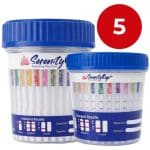
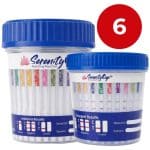
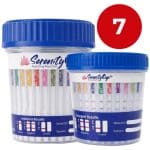
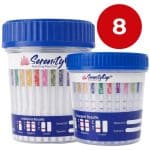
Does Delta-8 Test Positive for THC?


Yes, Delta-8 THC can cause a positive result on a standard THC drug test. Most routine urine drug tests are designed to detect cannabinoid metabolites rather than distinguish every specific type of THC. Because Delta-8 THC can produce metabolites that cross-react with cannabinoid immunoassays, using Delta-8 may result in a positive THC or marijuana screening result.
This is important if you are facing an employment, clinical, probation, sports, or other drug test. A product being labeled Delta-8, hemp-derived, or legal in a particular location does not necessarily mean it will be invisible on a drug test.
In this guide, we’ll explain how Delta-8 interacts with drug tests, how long it may remain detectable, whether urine and other tests behave differently, and why laboratory confirmation can sometimes distinguish Delta-8 from Delta-9 THC.
Quick Answer: Does Delta-8 Test Positive for THC?
Yes, Delta-8 THC can test positive for THC on a drug test.
Most standard urine drug screens use an immunoassay designed to detect cannabinoid-related metabolites. These screening tests generally are not intended to determine whether the THC exposure came specifically from Delta-8 THC or Delta-9 THC.
As a result:
- Delta-8 THC can trigger a positive cannabinoid screen.
- A standard urine test may report the result as THC, marijuana, or cannabinoids.
- The screening test may not identify which THC isomer was consumed.
- More specialized laboratory testing can distinguish Delta-8-related metabolites from Delta-9-related metabolites.
- The likelihood of detection depends on the product, amount used, frequency of use, individual metabolism, and the test method.
A positive screening result does not automatically mean that a routine test specifically identified Delta-8 THC.
Why Does Delta-8 Show Up on a Drug Test?
The main reason is the way drug tests detect cannabinoids.
Delta-8 THC and Delta-9 THC are closely related cannabinoids. After consumption, the body metabolizes these compounds into different chemical substances that can eventually be detected in biological samples.
Many routine drug screens are designed around cannabinoid metabolites rather than identifying the exact source of THC exposure.
Delta-8 and Delta-9 Have Similar Chemical Structures
Delta-8 THC and Delta-9 THC are structural isomers. They have very similar molecular structures, although the location of a double bond differs.
That similarity matters for drug testing because an immunoassay may recognize metabolites associated with Delta-8 THC strongly enough to produce a positive cannabinoid response.
Therefore, a test designed primarily as a THC screening test may not be able to distinguish Delta-8 from Delta-9 at the initial screening stage.
What Does a Standard THC Drug Test Actually Detect?
A common misconception is that a urine drug test simply looks for the original THC molecule.
In reality, many urine tests are primarily looking for THC metabolites that are produced after the body processes cannabinoids.
For example, conventional cannabis screening commonly targets a carboxylated THC metabolite associated with cannabis exposure.
This is why someone may continue to have a detectable result after the noticeable effects of Delta-8 have disappeared.
Screening vs. Confirmation
Drug testing generally involves two different concepts:
Screening test:
A preliminary test, often an immunoassay, that looks for a drug class or metabolite above a defined cutoff.
Confirmatory test:
A more specific laboratory method, such as mass spectrometry, that can identify particular compounds or metabolites.
This distinction is particularly important with Delta-8.
A routine screening test can indicate cannabinoids/THC detected, while a specialized laboratory method may be capable of determining whether Delta-8 or Delta-9 metabolites are present.
Can a Urine Drug Test Detect Delta-8?
Yes. Delta-8 THC can produce a positive urine drug screen for cannabinoids.
Urine testing is one of the most common forms of workplace and other drug testing because urine can contain drug metabolites after the parent compound has been processed by the body.
Research has demonstrated that Delta-8 exposure can result in cannabinoid-positive urine screening results.
In a published case series, individuals exposed to Delta-8 THC had positive cannabinoid immunoassay results, while subsequent specialized testing identified a Delta-8 metabolite. The findings demonstrate why a positive cannabinoid screen does not necessarily prove that Delta-9 THC was consumed.
What Might the Result Say?
Depending on the testing system, the result may be reported using terminology such as:
- THC
- Marijuana
- Cannabinoids
- Cannabinoid positive
- THC metabolite detected
The exact wording depends on the laboratory or testing device.
A routine test usually isn’t reporting:
“Delta-8 THC detected.”
Instead, it may simply indicate that the specimen produced a response consistent with the cannabinoid target of the screening assay.
Can Delta-8 Cause a False Positive for Delta-9 THC?
This requires an important distinction.
Delta-8 can cross-react with some screening and testing methods, but that does not necessarily mean the person consumed Delta-9 THC.
A screening immunoassay may react with Delta-8-related metabolites because of similarities between the compounds.
Some more specific laboratory procedures can distinguish Delta-8 metabolites from Delta-9 metabolites.
Research has documented situations in which Delta-8 exposure produced positive cannabinoid screening results even when specialized testing did not find Delta-9 THC or its metabolites.
Therefore, a positive preliminary THC screen should not automatically be interpreted as proof that the person used Delta-9 cannabis.
How Long Does Delta-8 Stay Detectable?
There isn’t one exact detection window that applies to everyone.
How long Delta-8 remains detectable can vary according to:
- Frequency of use
- Amount consumed
- Product concentration
- Route of administration
- Individual metabolism
- Body composition
- Hydration
- Type of drug test
- Test sensitivity and cutoff
- Time since last use
Some sources report that occasional exposure may be detectable for several days, while repeated or heavy cannabinoid use can result in a substantially longer detection period.
Approximate Detection Ranges
| Testing method | Possible detection period |
|---|---|
| Urine | Several days to potentially weeks |
| Saliva/oral fluid | Generally shorter than urine |
| Blood | Usually a relatively short detection period |
| Hair | Potentially around 90 days or longer for historical exposure |
These are general estimates, not guarantees. A person’s actual result can fall outside these ranges.
How Long Does Delta-8 Stay in Urine?
Urine is particularly important because it is commonly used for workplace and other drug screening.
For occasional users, cannabinoids may become undetectable after several days, but repeated use can extend the detection period considerably.
Some published and clinical sources describe detection lasting:
- Several days after occasional use
- Around one to two weeks with more frequent exposure
- Several weeks in some heavy or repeated-use situations
It is not possible to determine an individual’s exact negative-test date simply from the number of days since their last Delta-8 use.
Why Does Frequent Use Matter?
Cannabinoids are lipophilic, meaning they can distribute into fatty tissues in the body.
With repeated exposure, metabolites can remain in the body longer and may be released gradually.
Consequently, someone who uses Delta-8 regularly may have a longer detection period than someone who consumes it once.
Does Delta-8 Show Up on a 5-Panel Drug Test?
It can.
A traditional 5-panel urine drug test commonly includes a cannabinoid/THC category along with other drug classes.
If the test includes a THC or marijuana/cannabinoid panel, Delta-8 exposure may cause that portion of the test to screen positive.
The important point is that the panel does not necessarily have to be specifically labeled “Delta-8.”
A test that screens for cannabinoids may react to Delta-8 metabolites.
Does Delta-8 Show Up on a 10-Panel Drug Test?
Yes, if the 10-panel test includes THC/cannabinoids.
The number of panels doesn’t determine whether Delta-8 can be detected.
Instead, you need to look at the substances included in the specific test.
For example, if a multi-panel urine test contains:
- THC
- Cocaine
- Opiates
- Amphetamines
- Benzodiazepines
- PCP
- Barbiturates
- Methadone
- Oxycodone
- Other drug classes
then the THC portion may react to Delta-8 exposure.
Adding more drug panels does not necessarily make a THC test better at distinguishing Delta-8 from Delta-9.
Does Delta-8 Show Up on a Mouth Swab Drug Test?
Delta-8 may also be detectable with oral-fluid testing, depending on the test’s target, sensitivity, cutoff, and the timing of exposure.
Oral-fluid testing generally has a shorter detection window than hair testing and often differs from urine testing because it measures substances or metabolites present in saliva/oral fluid rather than primarily urinary metabolites.
The exact detection period is difficult to predict.
Factors such as:
- Dose
- Frequency of use
- Time since consumption
- Oral-fluid test design
- Cutoff concentration
- Individual metabolism
can all affect the result.
Does Delta-8 Show Up on a Hair Drug Test?
Hair testing works differently from urine and oral-fluid testing.
Hair analysis can provide a much longer historical detection window. Drug testing laboratories may examine approximately 90 days of hair growth, although the actual reporting window depends on the specimen and laboratory procedure.
However, hair testing isn’t simply a longer version of a urine test. The biological processes involved are different, and the ability to identify specific cannabinoids depends on the laboratory method being used.
Can Drug Tests Tell Delta-8 and Delta-9 Apart?
Some specialized laboratory tests can; routine screening tests generally are not designed to make that distinction.
This is one of the most important points in understanding Delta-8 drug testing.
Standard Immunoassay
A standard immunoassay is generally designed to answer a question such as:
“Is there evidence of cannabinoids above the test’s cutoff?”
It is not necessarily designed to answer:
“Was the cannabinoid specifically Delta-8 or Delta-9?”
Confirmatory Laboratory Testing
More advanced analytical methods, including mass spectrometry-based techniques, can provide substantially greater specificity.
Depending on the laboratory method, confirmatory testing can distinguish:
- Delta-8 THC
- Delta-9 THC
- Specific THC metabolites
- Other cannabinoids
This is why a preliminary positive result and a definitive laboratory identification should not always be treated as the same thing.
Why a Positive Delta-8 Drug Test Can Be Confusing
Delta-8 creates a particular testing issue because consumers may assume that a hemp-derived or legally sold product will not affect a THC drug test.
That assumption isn’t reliable.
A product’s:
- Legal classification
- Retail availability
- Hemp labeling
- Brand name
- Packaging
doesn’t determine whether its cannabinoids can trigger a drug screen.
Drug tests measure biological targets—not whether a product was legally purchased.
What About Delta-8 Products Labeled “THC-Free”?
Extra caution is appropriate with cannabinoid products that make claims such as “THC-free.”
Product labels do not always provide a complete picture of the compounds actually present.
Some cannabinoid products may contain trace amounts of THC or other cannabinoids, depending on how they are manufactured and tested.
If avoiding THC exposure is important because of an upcoming drug test, relying solely on marketing language such as “hemp,” “THC-free,” or “legal” may not eliminate the possibility of a positive result.
Does CBD Also Cause a Positive THC Test?
Pure CBD itself is different from Delta-8 THC and is not generally the primary target of a conventional THC drug screen.
However, CBD products can vary considerably.
Some products labeled as CBD may contain:
- Trace Delta-9 THC
- Other cannabinoids
- Full-spectrum hemp extracts
- Delta-8 THC
- Ingredients not clearly represented on the label
For someone subject to drug testing, the distinction between CBD isolate, broad-spectrum products, full-spectrum products, and THC-containing cannabinoid products can therefore matter.
What Factors Increase the Chance of a Positive Result?
There is no single factor that determines the outcome.
The probability of detection may increase with:
1. Frequent Use
Repeated Delta-8 exposure can extend the period during which metabolites remain detectable.
2. Higher Doses
Larger amounts can result in greater exposure and potentially more metabolites available for detection.
3. Product Potency
Different Delta-8 products can contain very different concentrations.
4. Test Type
Urine, oral fluid, blood, and hair tests have different detection characteristics.
5. Test Cutoff
A test with a particular cutoff may produce a different result from another test with a different analytical sensitivity.
6. Individual Differences
Metabolism, body composition, and other biological factors can influence how quickly compounds and metabolites are eliminated.
Does Drinking Water Remove Delta-8 From a Drug Test?
There is no reliable method that guarantees a negative drug test by rapidly removing Delta-8 or its metabolites from the body.
Urine dilution can also affect specimen characteristics and may result in a specimen being reported as diluted or otherwise requiring additional evaluation.
The safest interpretation is that time and natural elimination, rather than quick detox methods, determine when a substance becomes undetectable.
Can You Get a Positive Result From Delta-8 Even If You Didn’t Use Marijuana?
Yes.
Someone can potentially receive a positive cannabinoid screening result after using Delta-8 THC without consuming traditional Delta-9 marijuana.
This is one reason it is important to distinguish:
“positive for cannabinoids”
from
“confirmed use of Delta-9 THC.”
The first may describe the result of a screening assay, while the second requires much more specific evidence.
What Should You Do If a THC Screen Is Positive After Delta-8 Use?
If you believe Delta-8 caused a positive result, the appropriate response depends on the testing situation.
You can:
- Ask what type of test was performed.
- Find out whether the result was a preliminary screen or confirmed laboratory result.
- Tell the appropriate medical or testing professional about Delta-8 exposure when relevant.
- Ask whether confirmatory testing is available or required.
- Keep product packaging or laboratory certificates of analysis if you have them.
Do not assume that a screening result automatically establishes which specific THC compound was consumed.
Delta-8 THC Drug Test: Key Takeaways
If you’re searching for “does Delta 8 test positive for THC,“ the short answer is yes, it can.
The most important points are:
- Delta-8 THC can trigger a positive THC/cannabinoid drug screen.
- Standard urine immunoassays may not distinguish Delta-8 from Delta-9 exposure.
- Delta-8 metabolites can cross-react with cannabinoid screening assays.
- Detection time varies significantly from person to person.
- Occasional exposure may be detectable for several days, while repeated use can extend detection for weeks.
- Urine, saliva, blood, and hair tests have different detection characteristics.
- Specialized laboratory testing can provide greater specificity than an initial immunoassay.
- A positive cannabinoid screen does not necessarily prove that Delta-9 THC was consumed.
- “Hemp-derived” or legally purchased does not mean “undetectable.”
- There is no guaranteed quick method for making a Delta-8 drug test negative.
Final Answer
Does Delta-8 test positive for THC? Yes, Delta-8 THC can cause a positive result on a standard THC drug test. Routine cannabinoid immunoassays may cross-react with Delta-8 metabolites, meaning the test can report a positive THC or cannabinoid result even when the person did not consume conventional Delta-9 marijuana.
If the distinction between Delta-8 and Delta-9 matters, more specific laboratory confirmation may be necessary because specialized analytical testing can distinguish individual cannabinoids and their metabolites more effectively than a standard screening test.
FAQs
1. Will Delta-8 make me fail a drug test?
It can. Delta-8 THC may trigger a positive cannabinoid/THC screening result, particularly on urine immunoassays.
2. How long does Delta-8 stay in your system for a drug test?
There is no universal timeframe. Detection may last several days after occasional use and substantially longer with repeated use.
3. Does Delta-8 show up as THC on a urine test?
It can. A routine urine immunoassay may report a cannabinoid or THC-positive result rather than specifically identifying Delta-8.
4. Can a drug test distinguish Delta-8 from Delta-9?
Some specialized confirmatory laboratory methods can distinguish them. Routine screening tests generally aren’t designed to make that distinction.
5. Does Delta-8 show up on a 5-panel drug test?
If the 5-panel test includes THC/cannabinoids, Delta-8 may cause that portion of the test to screen positive.
6. Does Delta-8 show up on a 10-panel drug test?
If the particular 10-panel test contains a THC/cannabinoid panel, Delta-8 may trigger a positive result.
7. Can Delta-8 cause a false positive for THC?
Delta-8 can cross-react with cannabinoid immunoassays, so a positive THC screen may occur after Delta-8 exposure.
8. Does Delta-8 show up on a mouth swab?
It may, depending on the oral-fluid test, cutoff, timing, and other testing factors.
9. Does Delta-8 show up in hair testing?
Cannabinoid exposure can potentially be detected through hair testing, which generally provides a substantially longer historical window than urine or oral-fluid testing.
10. Does legal Delta-8 still show up on a drug test?
Yes. Legal status and drug-test detection are separate issues. A legally purchased Delta-8 product can still produce a positive THC/cannabinoid screen.
11. Does Delta-8 show up the same as marijuana?
A routine cannabinoid screen may treat the exposure similarly because the test may detect cannabinoid-related metabolites rather than identifying the exact source.
12. Can CBD and Delta-8 affect a drug test differently?
Yes. CBD itself is not the primary target of conventional THC tests, while Delta-8 THC can trigger cannabinoid screening. CBD products may also contain trace THC or other cannabinoids.
13. Can one-time Delta-8 use show up on a drug test?
Yes, it can. Even occasional exposure may be detectable for a period of time, although the duration varies considerably.
14. Does Delta-8 stay longer in urine than blood?
Urine generally provides a longer detection window for many drug metabolites than blood, but the exact timeframe depends on the substance and testing method.
15. Is a positive THC screen proof that someone used Delta-9 marijuana?
Not necessarily. Delta-8 and other cannabinoid exposures can produce positive cannabinoid screening results, so specific confirmatory testing may be needed to determine the compound involved.