Does Kanna Show Up on a Drug Test?


If you are wondering “does kanna show up on a drug test?”, the short answer is: generally, no—not on a standard drug test. Kanna, also known as Sceletium tortuosum, is not a routine target on common 5-panel, 10-panel, or 12-panel drug screens.
Kanna contains naturally occurring alkaloids such as mesembrine, mesembrenone, mesembrenol, and tortuosamine. These compounds are different from the substances typically targeted by standard drug tests, such as THC, cocaine, amphetamines, opioids, and PCP.
However, “not routinely tested” does not mean that every testing situation is identical. The specific drug panel, testing method, product purity, possible contamination, and whether a specialized laboratory test is being used can all matter.
This guide explains what standard drug tests look for, whether kanna can cause a false positive, how urine testing works, what 5-, 10-, and 12-panel tests cover, and what to consider if you are subject to workplace, probation, or sports testing.
Does Kanna Show Up on a Drug Test?
Kanna generally does not show up on a standard drug test because common drug panels are not designed to detect kanna or its primary alkaloids.
Standard drug tests look for specific drugs or drug metabolites. Kanna’s main alkaloids, including mesembrine and mesembrenone, are not routine targets on common workplace drug panels.
For example, a typical panel may look for substances associated with:
- THC or cannabis
- Cocaine
- Amphetamines
- Methamphetamine
- Opioids or opiates
- PCP
- Benzodiazepines
- Barbiturates
- Methadone
- Other specifically selected substances
Kanna is not normally included in these target lists.
The important qualification is that drug-testing panels vary. A specialized laboratory could theoretically use an analytical method designed to identify kanna alkaloids, while a contaminated or mislabeled kanna product could contain another substance that is included in a drug test.
What Is Kanna?
Kanna is a botanical commonly identified by its scientific name, Sceletium tortuosum. It is a succulent plant traditionally associated with South Africa.
Its naturally occurring compounds include several alkaloids, particularly:
- Mesembrine
- Mesembrenone
- Mesembrenol
- Tortuosamine
These compounds are chemically distinct from the drug classes commonly included in workplace drug screening.
Kanna products may be sold in several forms, including:
- Dried plant material
- Powder
- Capsules
- Tablets
- Extracts
- Gummies
- Teas
- Sublingual preparations
The form of kanna does not automatically determine whether it will appear on a drug test. What matters for routine drug screening is primarily what compounds the test is designed to detect.
What Does a Standard Drug Test Actually Look For?
One of the biggest misconceptions about drug testing is that a drug test scans the body for every substance a person has consumed.
It doesn’t work that way.
A drug test is generally designed around a defined list of target drugs, drug classes, or metabolites. The test uses a particular analytical technology to look for those targets.
For example, a cannabinoid assay is designed to identify markers associated with cannabis exposure. An amphetamine assay is designed around amphetamine-type targets. An opioid assay targets specified opioid-related compounds or metabolites.
Because kanna is not normally one of those targets, a standard test isn’t ordinarily looking for it.
This distinction explains why taking a substance does not automatically mean that the substance will appear on a routine drug screen.
Does Kanna Show Up on a 5-Panel Drug Test?
Generally, no.
A traditional 5-panel drug test commonly screens for major drug categories such as:
- Cannabis/THC
- Cocaine
- Amphetamines
- Opioids or opiates
- PCP
Kanna and its naturally occurring alkaloids are not normally part of this standard target group.
Therefore, taking kanna by itself would not ordinarily be expected to produce a positive result for one of these categories.
However, panel composition can vary between testing programs and laboratories, so the exact test being administered is more important than simply knowing that it is called a “5-panel.”
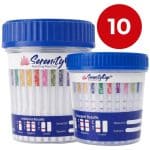
Does Kanna Show Up on a 10-Panel Drug Test?
Kanna is generally not included in a standard 10-panel drug screen either.
A 10-panel test typically expands upon the substances included in smaller panels. Depending on the particular test, additional categories can include substances such as:
- Benzodiazepines
- Barbiturates
- Methadone
- Additional prescription or controlled drug classes
The exact composition is not universal.
Even when a panel contains more drug categories, that does not mean it automatically detects every supplement, botanical, medication, or psychoactive compound.
Kanna’s mesembrine-type alkaloids are still not routine targets on these standard panels.
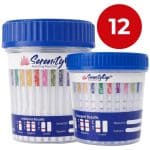
Does Kanna Show Up on a 12-Panel Drug Test?
A 12-panel drug test generally does not specifically test for kanna unless the particular laboratory or test manufacturer has added a specialized target.
The number “12” describes the number of testing categories included in that particular panel. It does not mean that the test can identify every substance in the body.
This is an important point:
A larger drug panel does not automatically mean a kanna test.
To determine whether kanna could be specifically identified, you would need to know the actual substances included in the panel and the analytical method being used.
Why Doesn’t Kanna Usually Trigger a Standard Drug Test?
The main reason is simple: the test is looking for different substances.
Kanna contains mesembrine-type alkaloids. Standard workplace drug screens are generally designed around other drug classes.
Think of a drug test as a set of targeted detection systems rather than a universal scanner.
If the test is designed to identify THC metabolites, it is looking for THC-related targets.
If it is designed to identify cocaine metabolites, it is looking for cocaine-related targets.
If it is designed to identify amphetamines, it is looking for amphetamine-related targets.
Kanna’s primary alkaloids are not the normal targets of those assays.
Therefore, kanna itself generally isn’t expected to produce a positive result on a routine panel.
Can Kanna Cause a False Positive?
There is an important distinction between possible cross-reactivity and a documented false positive.
Drug-screening immunoassays use antibodies or other recognition mechanisms designed to react with particular target compounds or related structures. Some substances can occasionally interfere with an immunoassay and produce a presumptive result for a drug that was not actually taken.
With kanna, there is no established routine pattern showing that ordinary kanna use causes standard drug-test positives.
However, it is more accurate to say that kanna is not known to routinely cause false positives than to claim that an unexpected result is physically impossible under every testing condition.
The exact assay, product composition, and testing method matter.
What Is Cross-Reactivity?
Cross-reactivity occurs when a compound other than the intended target interacts with an assay strongly enough to produce a response.
For example, an immunoassay is designed around particular chemical characteristics. If another compound happens to interact with the test’s antibodies, the initial screening result can potentially be affected.
This is one reason a screening result is not always the final word.
A presumptive positive may be followed by a more specific laboratory confirmation method.
What Is the Difference Between a Presumptive Positive and a Confirmed Positive?
This distinction is especially important when discussing drug tests.
Initial screening
Many drug screens begin with an immunoassay.
It is relatively fast and practical for screening large numbers of samples. However, screening assays are not necessarily as chemically specific as advanced laboratory confirmation methods.
A positive screening result can therefore be described as a presumptive positive.
Confirmation testing
If confirmation is required, a laboratory may use a more specific analytical technique such as:
- Gas chromatography-mass spectrometry (GC-MS)
- Liquid chromatography-tandem mass spectrometry (LC-MS/MS)
The exact method depends on the laboratory, test, target compound, and testing program.
A confirmation test is designed to provide greater analytical specificity than a basic screening immunoassay.
This is why an unexpected screening result should not automatically be interpreted as proof that a person intentionally consumed the drug reported by the initial screen.
Could Contaminated Kanna Cause a Positive Drug Test?
This is one of the more realistic concerns surrounding kanna products.
The question isn’t always:
“Can kanna cause a positive drug test?”
A better question can sometimes be:
“What is actually in the kanna product?”
Supplements and botanical products can vary in quality. A product that is mislabeled, contaminated, adulterated, or manufactured poorly could potentially contain compounds that are relevant to a drug screen.
Potential concerns may include unexpected:
- THC or cannabis-derived compounds
- Synthetic cannabinoids
- Kratom-related compounds
- Prescription drug contaminants
- Other undeclared ingredients
- Manufacturing cross-contamination
This does not mean that ordinary kanna products routinely contain these substances. It means that product quality can matter when the consequences of a drug test are significant.
What Is a COA for Kanna?
A Certificate of Analysis (COA) is a laboratory report showing the results of testing performed on a particular product or batch.
When evaluating a kanna product, a useful COA may provide information about:
- Product identity
- Alkaloid content
- Potency
- Heavy metals
- Microbial contamination
- Pesticides
- Other contaminants
- Selected drug-screening results
A good practice is to check whether the COA actually corresponds to the specific product and lot or batch being purchased.
A generic laboratory report that cannot be connected to the product is less useful than batch-specific documentation.
Does Kanna Show Up as THC?
Kanna itself is not THC.
Kanna contains its own group of plant alkaloids, including mesembrine and related compounds. THC is a cannabinoid associated with cannabis.
Therefore, standard THC testing is not designed simply to detect “anything that changes mood.” It is designed around specific cannabis-related targets.
However, product contamination is a separate issue.
If a product marketed as kanna contains undeclared THC or another cannabinoid, that could create a completely different testing situation.
This is another reason product identity and laboratory testing can matter.
Can Kanna Cause a Positive THC Test?
Kanna itself is not generally expected to produce a positive THC result on a standard cannabinoid test.
A THC-focused test is designed around cannabis-related analytes.
If someone using a product labeled as kanna receives a cannabinoid-positive result, several possibilities may need to be considered, including:
- Actual exposure to cannabis or THC from another source.
- THC or cannabinoid contamination in the product.
- A mislabeled or adulterated product.
- An initial screening result requiring confirmation.
- Testing or specimen-related issues.
The correct interpretation depends on the testing method and the circumstances surrounding the result.
Does Kanna Show Up on a Urine Drug Test?
For the ordinary urine drug panels used for workplace and other routine screening, kanna is generally not a specific target.
Urine testing is popular because it can provide a practical way to screen for numerous drug classes.
But urine testing does not mean that every chemical present in urine is automatically identified.
The laboratory or test kit has to be designed to look for a particular target.
Therefore, a routine urine panel can test for common drug classes without testing specifically for kanna.
Does Kanna Show Up on a Saliva Drug Test?
Standard oral-fluid or saliva drug tests are also designed around specific drug targets.
Kanna is not normally included as a routine target in common drug-screening panels.
However, specialized analytical testing can theoretically be designed to identify particular compounds if there is a specific reason to test for them.
The same principle applies:
The specimen type does not automatically determine what substances can be detected. The testing method and target analytes matter.
Does Kanna Show Up on a Blood Test?
Blood testing can be used for drug analysis, but it is generally a different type of testing from routine workplace screening.
A specialized laboratory method could potentially analyze a blood sample for specific kanna alkaloids if the method were designed and validated for that purpose.
That is different from saying that a routine blood drug screen automatically detects kanna.
There is no reason to assume that every blood-based drug test searches for every botanical compound.
Does Kanna Show Up on a Hair Test?
Hair testing is another specialized form of drug testing.
Hair tests are generally designed to identify particular drugs or metabolites that have been incorporated into the hair matrix.
A standard hair drug panel is not automatically a comprehensive analysis of every substance a person has consumed.
If a laboratory specifically wanted to investigate kanna alkaloids, it would require an appropriate analytical method.
Therefore, the important question is not simply “hair or urine?” but:
What analytes is the laboratory actually testing for?
How Long Does Kanna Stay in Your System?
There is no universally established standard kanna drug-test detection window comparable to the commonly discussed detection windows for substances routinely included in workplace testing.
That is partly because kanna is not a routine target of standard drug panels.
The time that individual kanna alkaloids or their metabolites remain in the body can depend on factors such as:
- Amount consumed
- Frequency of use
- Duration of use
- Individual metabolism
- Product composition
- Specific alkaloid
- Route of administration
- Specimen type
- Laboratory method
- Analytical cutoff
For that reason, claims such as “kanna is detectable for exactly three days” or “kanna leaves your system after seven days” should be treated cautiously unless they are supported by a specific validated testing method.
Is There a Specific Drug Test for Kanna?
A specialized laboratory could potentially develop or use an analytical method designed to identify kanna alkaloids.
That is very different from a standard workplace drug panel.
Routine drug screens are designed around commonly requested drug targets. A specialized research or forensic analysis could use more advanced instrumentation to look for individual compounds.
Methods such as LC-MS/MS can be highly specific when the laboratory has an appropriate validated method for the compound being investigated.
So the answer is:
Standard drug testing generally does not target kanna, but specialized testing can be designed around specific kanna compounds.
Kanna and Workplace Drug Testing
If you are subject to workplace drug testing, the safest approach is to understand the exact testing program rather than relying solely on the name of the test.
A workplace program may have specific rules concerning:
- Standard drug panels
- Expanded panels
- Testing frequency
- Prescription medications
- Supplements
- Botanicals
- Disclosure requirements
- Confirmation procedures
Even if kanna is not a routine drug-test target, an employer may have separate workplace policies concerning supplements or psychoactive substances.
A negative drug test and compliance with an employer’s internal policy are not necessarily the same thing.
Kanna and Probation Drug Testing
Probation or court-related testing can involve specific procedures and requirements.
The important point is that the testing authority determines what is being tested and how results are interpreted.
If you are subject to probation testing, don’t assume that a general internet statement about kanna applies to your specific program.
Find out:
- Which substances are included
- What specimen is collected
- Whether testing is laboratory-based
- Whether confirmatory testing is performed
- Whether additional or specialized testing is possible
- What disclosure rules apply
If the consequences of a test result are serious, follow the instructions of the relevant authority rather than relying on a generic drug-testing article.
Kanna and Sports Drug Testing
Athletes have an additional consideration: anti-doping rules can differ from ordinary workplace drug testing.
A substance does not necessarily have to appear on a conventional 5-panel or 10-panel test to be relevant to an athlete.
Athletes should check the rules that apply to their particular:
- Sport
- Federation
- League
- School
- Competition
- Anti-doping organization
Athletes are generally responsible for understanding what they put into their bodies, including supplements and botanical products.
For competitive athletes, relying on the statement “kanna isn’t on a standard drug test” is therefore not enough by itself.
What Should You Do If You Test Positive After Taking Kanna?
If you believe a drug-test result is inconsistent with what you consumed, don’t immediately assume that the kanna itself caused the result.
Instead, consider the testing process.
1. Find out what was reported
Determine which drug or drug class produced the result.
A result for THC, amphetamines, opioids, or another category is different from a test specifically identifying a kanna alkaloid.
2. Ask whether it was a screening result
Find out whether the result came from an initial immunoassay or a confirmatory laboratory test.
3. Ask about confirmation
If appropriate under the testing program, determine whether a more specific confirmation method was performed.
4. Keep the product packaging
Save the original product label and packaging.
If available, keep:
- Product name
- Manufacturer information
- Lot number
- Batch number
- Purchase information
- Certificate of Analysis
5. Follow the testing program’s procedure
Workplace, probation, medical, and sports programs can have different procedures for disputed results.
If the consequences are significant, consider obtaining advice from an appropriately qualified professional.
Can You Flush Kanna Out Before a Drug Test?
There is no reliable method that can guarantee a negative drug-test result by rapidly “flushing” kanna from the body.
Drinking excessive amounts of water is not a reliable solution and can be dangerous.
Very high water intake can dilute urine and, in extreme circumstances, contribute to dangerous electrolyte disturbances.
Similarly, products marketed as detoxes or cleansing formulas should not be treated as guaranteed ways to change a laboratory result.
The better approach is to understand what the test actually measures rather than relying on claims about flushing or detoxification.
Does Drinking Water Help With Kanna Detection?
Drinking a normal amount of water is part of ordinary hydration, but deliberately consuming excessive water is not a dependable strategy for changing a drug-test outcome.
Laboratories can evaluate urine characteristics and may identify unusually dilute specimens.
More importantly, dilution does not change the underlying fact that a laboratory test is designed around particular analytes.
Water should not be viewed as a method for reliably defeating drug testing.
Can Exercise Remove Kanna Before a Drug Test?
Exercise should not be treated as a proven method for eliminating kanna or guaranteeing a negative test.
Drug detection depends on the compound, metabolism, specimen, analytical method, and cutoff—not on a simple “sweat it out” formula.
There is also no universal exercise schedule that can predict when a substance will become undetectable.
Does the Form of Kanna Matter for Drug Testing?
Kanna can be sold as:
- Powder
- Capsules
- Extract
- Tea
- Gummies
- Tablets
- Other preparations
The form itself does not make kanna suddenly become part of a standard drug panel.
However, different products can have different compositions and concentrations.
That makes product identity and purity important, especially when the product is an extract or multi-ingredient supplement.
What Can Cause Problems With a Kanna Product?
The main concern may not be the kanna alkaloids themselves but unexpected ingredients.
Potential issues include:
Contamination
An unwanted compound could enter a product during manufacturing.
Adulteration
A product may contain an undeclared substance intentionally added to alter its effects.
Mislabeling
The ingredients listed on the package may not accurately represent everything present.
Shared manufacturing equipment
Manufacturing facilities can potentially process multiple products, creating concerns about cross-contamination if appropriate controls are not used.
For people facing drug testing, these issues make third-party testing and transparent manufacturing information particularly useful.
How to Read a Kanna Certificate of Analysis
If a manufacturer provides a COA, don’t just look for a large “PASS” label.
Look at what the laboratory actually tested.
A useful report may identify:
- Product or sample name
- Batch or lot number
- Testing date
- Laboratory name
- Alkaloid results
- Potency
- Heavy metals
- Microbial testing
- Pesticides
- Other contaminants
- Relevant drug-screening results
Most importantly, check that the report corresponds to the product you actually have.
A COA for a different batch does not necessarily establish what is in your specific product.
Kanna vs. Common Drugs on a Drug Test
| Substance | Commonly targeted by standard panels? | Kanna expected to trigger it? |
|---|---|---|
| THC/cannabis | Yes | Generally no |
| Cocaine | Yes | Generally no |
| Amphetamines | Yes | Generally no |
| Methamphetamine | Often | Generally no |
| Opioids/opiates | Often | Generally no |
| PCP | Often | Generally no |
| Benzodiazepines | Some expanded panels | Generally no |
| Barbiturates | Some expanded panels | Generally no |
| Kanna alkaloids | Not routinely | Not normally tested |
The exact substances included in a panel vary by test and testing program.
What Is the Difference Between Kanna and THC?
Kanna and THC come from different plant groups and contain different classes of naturally occurring compounds.
Kanna is associated with mesembrine-type alkaloids, while THC is a cannabinoid associated with cannabis.
A THC drug test is designed around cannabis-related targets.
Therefore, the presence of kanna does not automatically mean that THC is present.
The exception would be a product containing undeclared cannabis-derived compounds or another source of THC exposure.
What Is the Difference Between Kanna and Kratom?
Kanna and kratom are different botanicals with different primary alkaloids.
Kanna is associated primarily with mesembrine-type alkaloids.
Kratom contains compounds such as mitragynine and related alkaloids.
Neither botanical is automatically included in every standard drug panel.
However, some expanded or specialized testing programs can specifically target substances that are not included in traditional panels.
Again, the actual test panel matters.
Does a Standard Drug Test Detect Every Supplement?
No.
A standard drug test is not a universal supplement detector.
Many vitamins, minerals, herbs, and botanical compounds are not targets of routine workplace drug testing.
Whether a substance is detected depends on whether the test has been designed to identify it or whether it can interfere with an assay.
This is why the phrase “not on the panel” is so important when discussing kanna.
What About Specialized Laboratory Testing?
Specialized laboratory testing is different from a routine rapid drug screen.
A laboratory can use highly specific analytical technologies to identify individual compounds when the appropriate method is available.
For example, LC-MS/MS can be used for targeted analysis of specific compounds and metabolites.
Likewise, GC-MS can provide highly specific chemical identification for compounds appropriate to that method.
But the existence of advanced technology does not mean every laboratory automatically searches every sample for kanna.
The laboratory must have a reason, method, target, and validated analytical approach for the compound being investigated.
Frequently Asked Questions
Will kanna make me fail a drug test?
Generally, kanna itself is not expected to make you fail a standard drug test. Common panels are not designed to target kanna’s primary alkaloids. However, product contamination, testing methodology, and specialized testing can change the circumstances.
Does kanna show up as THC?
Kanna itself is not THC and is not normally expected to produce a positive THC result on a standard cannabinoid test. A product containing undeclared THC would be a separate issue.
Does kanna show up on a 5-panel drug test?
Generally, no. A standard 5-panel test targets specified drug categories rather than kanna alkaloids.
Does kanna show up on a 10-panel drug test?
Generally, no. A 10-panel test expands the number of drug categories but does not automatically include kanna.
Does kanna show up on a 12-panel drug test?
Generally, no. The number of panels does not mean that every possible substance is being tested. Check the specific analytes included in the test.
Can kanna cause a false positive?
There is no established routine pattern showing that ordinary kanna use causes standard drug-test positives. However, screening assays can have cross-reactivity, and product contamination is a separate concern.
Is there a drug test specifically for kanna?
Specialized laboratory testing could potentially be designed to identify kanna alkaloids, but kanna is not a routine target on common workplace drug panels.
How long does kanna stay in your system?
There is no single universally applicable kanna detection window for routine drug testing. Detection depends on the specific compound, amount and frequency of use, metabolism, specimen type, analytical method, and whether the test is actually designed to detect kanna.
Does kanna show up on a urine test?
Kanna is generally not a target of standard urine drug panels. A specialized urine analysis could be designed to investigate specific kanna compounds.
Does smoking kanna show up on a drug test?
The route of administration does not make kanna a standard drug-test target. However, the exact product composition and testing method still matter.
Can contaminated kanna cause a positive drug test?
Yes, potentially. If a product contains an undeclared substance that is included in a drug panel, the unexpected ingredient—not necessarily the kanna alkaloids themselves—could be relevant to the result.
Should I keep my kanna COA?
If you are subject to testing and use botanical supplements, keeping the product packaging and available laboratory documentation can help establish what product you purchased and what testing was performed on it.
Can a lab test specifically for mesembrine?
A laboratory could potentially use a specialized analytical method to identify a particular compound such as mesembrine. That is different from routine workplace drug screening.
Does kanna show up on a hair drug test?
Standard hair testing is targeted toward specific drugs and metabolites. Kanna is not automatically detected simply because hair is being tested. Specialized analysis would require an appropriate method.
Does kanna show up on a saliva drug test?
Standard oral-fluid drug tests generally target specified drug classes. Kanna is not normally one of those routine targets.
Does kanna show up on a blood drug test?
Routine blood testing does not automatically search for kanna. Specialized laboratory analysis could potentially target specific kanna alkaloids.
Bottom Line: Does Kanna Show on a Drug Test?
Generally, no—kanna does not show up on a standard drug test.
Kanna (Sceletium tortuosum) contains compounds such as mesembrine and mesembrenone, which are not routine targets of common 5-panel, 10-panel, or 12-panel drug screens.
The most important distinction is between kanna itself and what a particular test is designed to detect.
A standard drug test looks for specific drugs or metabolites, not every substance that a person has consumed. Kanna is generally outside those routine target lists.
However, there are important caveats. A specialized laboratory test could be designed to identify kanna alkaloids, and a contaminated, adulterated, or mislabeled product could contain another substance that is relevant to drug testing. Screening immunoassays can also have limitations, which is why unexpected results may require more specific confirmation.
If a drug test has serious consequences for your employment, probation, sport, or another regulated situation, don’t rely on a generic assumption. Find out which panel is being used, what substances it targets, whether confirmation testing is performed, and what rules apply to your particular testing program.
The key takeaway is simple:
Kanna is generally not part of standard drug screening, but the exact test, testing method, and purity of the product determine the real-world testing situation.