How to Pass a Home Drug Test


If you’re searching for how to pass a home drug test, the first thing to understand is that there is no reliable drink, supplement, exercise routine, or overnight trick that can guarantee a negative result after recent drug use.
At-home drug tests are designed to detect specific drugs or their metabolites in a biological sample, most commonly urine. The result can depend on the substance being tested, how much and how often it was used, the time since last use, the individual’s metabolism, the test’s cutoff level, and whether the correct specimen was collected and tested.
The most dependable approach is to stop using the substance and allow the body enough time to metabolize and eliminate it naturally. It’s also important to follow the instructions supplied with the home testing kit and understand what a positive, negative, or invalid result actually means.
This guide explains how home drug tests work, how long different substances may remain detectable, what can affect results, why popular “detox” methods are unreliable, and what to do if you receive an unexpected result.
Can You Pass a Home Drug Test Quickly?
There is no dependable way to guarantee that a home drug test will become negative within a few hours or overnight.
After a substance enters the body, it goes through processes including absorption, metabolism, and elimination. Depending on the substance, the test may detect the original drug, a metabolite, or another marker associated with exposure.
Detection time can vary considerably between people.
Factors include:
- The specific drug
- The amount used
- Frequency of use
- Duration of use
- Time since last use
- Individual metabolism
- The type of specimen
- The sensitivity of the test
- The test’s cutoff concentration
- How the sample was collected and stored
The FDA specifically notes that drug-clearance estimates are only guidelines and can vary according to factors such as the amount used, how long someone has been using a drug, and individual metabolism.
Therefore, claims that a particular product can “flush” a drug out in a few hours should be treated cautiously.
How Do Home Drug Tests Work?
Most consumer drug tests look for specific drugs or drug metabolites in urine.
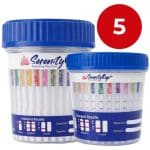
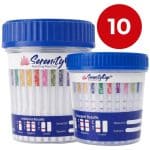
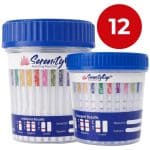
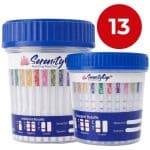
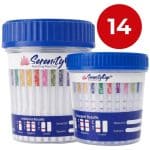
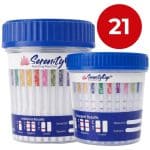
A typical home drug-testing kit may include:
- A urine collection cup
- Drug-testing strips or panels
- A test card or cassette
- Instructions
- Result indicators
- Sometimes a specimen container for laboratory confirmation
The exact design varies by product.
According to the FDA, at-home drugs-of-abuse tests can provide a preliminary result indicating whether certain drugs may be present in urine. A preliminary positive should generally be confirmed through laboratory testing rather than treated as definitive by itself.
Many home tests use an immunoassay-based approach. In simple terms, the test is designed to react when the target drug or metabolite is present at or above the test’s specified cutoff.
What does the control line mean?
Many urine test devices contain a control line.
The control line helps indicate that the test has functioned properly. If the required control indicator does not appear, the result may be considered invalid according to that particular test’s instructions.
Because designs differ, always interpret the lines according to the instructions included with your specific test.
What Drugs Can a Home Drug Test Detect?
Not every home drug test looks for the same substances.
Depending on the product, a test may screen for substances such as:
- THC or marijuana metabolites
- Cocaine metabolites
- Amphetamines
- Methamphetamine
- Opiates
- Opioids
- Benzodiazepines
- Methadone
- PCP
- Barbiturates
- Oxycodone
- Other specified substances
The FDA notes that different home-use tests are designed to detect different drug classes, so you should check the test’s labeling to determine exactly what it screens for.
This is important because a negative result does not necessarily mean that no drugs are present. It may simply mean that the specific substances tested for were not detected at or above the applicable cutoff.
How Long Do Drugs Stay Detectable in a Home Drug Test?
There is no universal detection window that applies to everyone.
A drug can become detectable at different times after use and may remain detectable for different lengths of time depending on the substance and individual circumstances.
For example, the FDA provides approximate urine-testing ranges for several commonly tested substances, while emphasizing that these are only guidelines.
| Substance | Approximate urine detection guidance* |
|---|---|
| Marijuana/THC | About 1–7 days in the FDA example; longer detection can occur with heavier or chronic use |
| Cocaine/crack | About 2–3 days |
| Heroin/opiates | About 1–3 days |
| Amphetamine/methamphetamine | About 2–3 days |
| PCP | About 7–14 days |
| Ecstasy/MDMA | About 2–4 days |
| Benzodiazepines | About 1–4 days |
| Methadone | About 1–3 days |
| Oxycodone | About 1–2 days |
*These are general estimates, not guarantees. Actual detection can differ based on the drug, dose, frequency of use, metabolism, test characteristics, and other factors.
For that reason, you should not treat a specific number of days as a guaranteed deadline for a negative test.
What Factors Affect a Drug-Test Detection Window?
1. The Substance
Different drugs have different pharmacokinetic properties.
Some substances and metabolites are eliminated relatively quickly, while others may remain detectable for considerably longer.
2. How Much Was Used
The amount of a substance can influence the concentration of the drug or its metabolites available for detection.
However, there is no simple formula that allows someone to calculate an exact negative-test date from the amount used.
3. Frequency of Use
Occasional use and repeated or chronic use can produce different detection patterns.
This is particularly important for substances whose metabolites can persist in the body for longer periods.
4. Time Since Last Use
A test performed shortly after exposure can produce a different result from a test performed later.
Drug testing is therefore highly dependent on timing.
5. Individual Metabolism
People process substances differently.
Metabolism, physiology, hydration status, kidney function, and other individual factors can influence how substances and their metabolites are eliminated.
6. The Type of Drug Test
A urine test doesn’t have the same detection characteristics as a blood, saliva, hair, or other test.
MedlinePlus identifies urine as the most common specimen for drug testing, while blood, saliva, hair, sweat, fingernails, and breath may also be used in certain circumstances.
7. Test Cutoff Levels
Drug tests generally use specified cutoff concentrations.
This means the question isn’t simply:
“Was this substance ever used?”
Instead, the test is determining whether the target substance or metabolite is detected at or above the applicable testing threshold.
How to Read a Home Drug Test Result
Understanding the result is just as important as taking the test.
Depending on the test design, you may receive a:
- Negative result
- Preliminary positive result
- Invalid result
Negative result
A negative result generally means the target substance was not detected at or above the test’s applicable cutoff at the time the specimen was tested.
It does not prove that a person has never used a drug.
A negative result can occur because:
- The substance was not present
- The concentration was below the cutoff
- The wrong substance was tested
- The sample was collected too early
- The sample was collected after the detection window
- The test was stored improperly
- The test was expired or otherwise compromised
The FDA specifically warns that a negative home result does not guarantee that drug use did not occur.
Preliminary positive result
A positive home test can indicate that the target drug or metabolite may be present.
However, a home screening result should not automatically be treated as definitive.
The FDA recommends laboratory confirmation of preliminary positive results because certain medications, foods, supplements, and other factors can affect screening results.
Invalid result
An invalid result generally means that the test did not produce a valid result according to the manufacturer’s criteria.
Possible causes can include:
- Incorrect procedure
- Improper specimen
- Test malfunction
- Incorrect storage
- Expired test
- Failure of the control indicator
Always follow the manufacturer’s instructions for handling an invalid result.
Can Drinking Water Help You Pass a Home Drug Test?
Normal hydration is important for general health, but drinking excessive amounts of water is not a reliable way to eliminate drugs from the body.
Large amounts of fluid can change urine concentration. In laboratory testing, specimen-validity procedures can identify unusually dilute urine.
Testing programs may evaluate characteristics such as:
- Creatinine
- Specific gravity
- pH
- Other specimen characteristics
SAMHSA describes specimen-validity testing as a way to identify specimens that may be diluted, adulterated, or substituted.
Excessive water consumption can also be dangerous because it can disrupt the body’s electrolyte balance.
What should you do?
Maintain normal hydration rather than deliberately trying to over-dilute your urine.
Do Detox Drinks Work for Home Drug Tests?
Detox drinks are heavily marketed online as rapid solutions for drug testing.
However, there is no universal detox beverage that can guarantee a negative result.
A beverage cannot reliably make a drug or its metabolites disappear from the body on demand.
Some products may primarily alter urine concentration or hydration rather than eliminate the underlying substance.
Be skeptical of claims such as:
- “Pass in one hour”
- “Guaranteed negative”
- “100% detox”
- “Flush THC overnight”
- “Works for every drug”
- “Permanent cleanse”
Marketing language is not the same as clinical evidence.
Does Exercise Help You Pass a Drug Test?
Regular physical activity is beneficial for overall health, but exercise should not be considered a guaranteed method for changing a drug-test result.
Drug elimination is a complex biological process.
Sweating more does not mean that a drug will predictably disappear from urine, saliva, blood, or hair.
If you exercise regularly, there is generally no reason to abandon normal healthy activity solely because of an upcoming test. However, don’t rely on an intense workout as a last-minute method for producing a negative result.
Can Vinegar or Lemon Juice Pass a Drug Test?
There is no reliable evidence that drinking vinegar or lemon juice can guarantee a negative drug-test result.
These substances do not provide a predictable mechanism for removing drug metabolites from the body before testing.
Using large quantities can also cause unwanted gastrointestinal or other health effects.
Can Household Chemicals Change a Drug-Test Result?
Adding chemicals or other substances to a urine specimen is specimen manipulation, not a reliable way to pass a drug test.
Modern testing programs may evaluate specimen characteristics and can identify signs of dilution or adulteration.
SAMHSA describes laboratory validity testing that can evaluate urine characteristics and identify certain adulterants.
Trying to alter a specimen can therefore result in:
- An invalid result
- An adulterated result
- A rejected specimen
- Additional testing
It can also create health risks if dangerous chemicals are ingested or otherwise improperly handled.
Can Synthetic Urine Pass a Home Drug Test?
Synthetic or substituted urine is not a dependable solution.
A home test may be less controlled than a laboratory collection, but attempting to substitute a specimen does not change the underlying detection issue.
For tests connected to employment, medical care, treatment, probation, or legal requirements, specimen substitution may also violate the testing procedure.
The safest approach is to provide the specimen requested according to the applicable instructions.
Can Detox Shampoo Pass a Hair Drug Test?
Hair testing works differently from urine testing.
Instead of analyzing urine, a hair test examines a hair specimen for evidence of drug exposure.
A shampoo cannot reliably guarantee that a hair test will be negative.
Likewise, aggressively bleaching or chemically treating hair is not a dependable way to eliminate evidence of previous exposure.
Hair testing has a different detection profile from urine testing and should be interpreted according to the testing method used.
Home Drug Test vs. Laboratory Drug Test
One of the most important distinctions is between screening and confirmation.
Home drug test
A home test can provide a convenient preliminary screen.
Advantages may include:
- Convenience
- Privacy
- Speed
- Easy access
- Lower cost than some laboratory services
However, results can be affected by:
- Test quality
- Storage
- Expiration
- Collection technique
- Timing
- Interfering substances
Laboratory testing
Laboratory testing can use more sophisticated analytical methods.
A home test that produces a preliminary positive may be followed by laboratory confirmation.
The FDA states that laboratory testing is the most reliable way to confirm drugs-of-abuse results from these home-use tests.
Are Home Drug Tests Accurate?
Home drug tests can be useful, but they are not infallible.
The FDA explains that several factors can influence home-test accuracy, including:
- How the test is performed
- How the test and specimen are stored
- What the person consumed
- Prescription medications
- Over-the-counter medications
- Timing of specimen collection
- The specific drugs included in the test
This is why an unexpected result shouldn’t automatically be treated as definitive.
What Can Cause a False Positive Drug Test?
A screening test can sometimes produce a result that requires further evaluation.
Potential factors include:
- Certain medications
- Some over-the-counter products
- Foods or supplements
- Cross-reactivity
- Incorrect test procedure
- Testing limitations
The FDA specifically notes that some foods, supplements, beverages, and medications can affect home drug-test results.
If you receive an unexpected positive result, check the manufacturer’s instructions and ask about laboratory confirmation rather than assuming the screening result is final.
Can a Drug Test Be False Negative?
Yes.
A negative result doesn’t necessarily prove that drug exposure never occurred.
A negative result can occur when:
- The wrong substance was tested
- Testing occurred too soon
- Testing occurred after the detection period
- The concentration was below the cutoff
- The specimen was not collected correctly
- The test was improperly stored
- The test had expired
- The test does not detect the specific drug involved
The FDA explicitly notes that home drug tests are not 100% accurate and that timing can affect whether drugs are detected.
What Should You Do Before a Home Drug Test?
If you have a legitimate upcoming test, focus on responsible preparation rather than trying to manipulate the specimen.
1. Stop using the relevant substance
Stopping use gives the body an opportunity to metabolize and eliminate the substance naturally.
The time required varies considerably.
2. Read the test instructions
Before collecting a sample, understand:
- Which drugs are being tested
- Which specimen is required
- How much specimen is needed
- How long the test must run
- When the result should be read
- What an invalid result looks like
- Whether laboratory confirmation is available
The FDA specifically advises users to read and understand the test instructions before collecting a specimen.
3. Check the expiration date
Don’t assume an old test is reliable.
4. Store the test correctly
Follow the manufacturer’s storage instructions.
5. Maintain normal hydration
Drink normally according to your body’s needs.
Don’t deliberately consume excessive amounts of water.
6. Keep medication information available
If you take prescription or over-the-counter medication, keep accurate information available in case the testing provider needs it.
Do not stop a prescribed medication simply because you’re worried about a drug test without speaking to your healthcare professional.
7. Follow the collection instructions
A properly collected specimen is essential for obtaining a meaningful result.
What If You’re Taking Prescription Medication?
Prescription medication deserves special consideration.
Some medications can produce results that require further evaluation.
A positive result for a prescription medication also does not automatically mean that someone is misusing that medication.
The FDA notes that a test cannot by itself determine whether a detected prescription drug was used appropriately or abused.
If you’re taking prescribed medication:
- Don’t stop treatment without medical advice.
- Keep your medication information available.
- Follow the testing provider’s documentation requirements.
- Ask whether confirmatory testing is available if a screening result is unexpected.
What If Your Home Drug Test Is Positive?
Don’t panic.
A home screening result may be preliminary.
The appropriate next step depends on the purpose of the test.
For personal health concerns, consider discussing the result with a healthcare professional.
If the test is connected to employment, legal proceedings, treatment, or another formal program, follow the organization’s procedures for confirmation or review.
A positive screening result should not automatically be interpreted as proof of misuse without considering the testing method and relevant circumstances.
What If Your Home Drug Test Is Negative?
A negative result generally means the tested substance was not detected above the test’s cutoff at the time of testing.
It doesn’t necessarily mean:
“No drug has ever been used.”
It also doesn’t mean that every possible drug was tested.
Always check which substances your particular home test is designed to detect.
Home Drug Test Myths vs. Reality
| Common claim | Reality |
|---|---|
| “Drink huge amounts of water.” | Excessive water can dilute urine and may create validity problems. |
| “Use a detox drink right before testing.” | No detox beverage can reliably guarantee a negative result. |
| “Exercise hard to sweat drugs out.” | Exercise does not provide a predictable last-minute way to change a drug-test result. |
| “Drink vinegar or lemon juice.” | These substances do not reliably eliminate drug metabolites. |
| “Add a chemical to the urine.” | Specimen manipulation can produce an invalid or adulterated result. |
| “Use synthetic urine.” | Substitution is unreliable and may violate testing procedures. |
| “Everyone clears drugs in the same number of days.” | Detection varies substantially between substances and individuals. |
| “A negative home test proves no drug use.” | A negative result only reflects what the particular test detected at that time. |
| “A positive home test is always final.” | Some home tests provide preliminary results that require laboratory confirmation. |
| “A more expensive detox product is more effective.” | Price does not establish that a product can eliminate a drug before testing. |
Urine vs. Saliva vs. Blood vs. Hair Drug Tests
Drug testing isn’t limited to urine.
| Test type | General characteristic |
|---|---|
| Urine | Most commonly used specimen for drug testing |
| Saliva/oral fluid | Can provide information about more recent exposure |
| Blood | Measures substances present in the bloodstream |
| Hair | Can provide information about exposure over a longer historical period |
| Sweat | Used in certain specialized testing situations |
| Fingernails | Used in some testing contexts |
MedlinePlus notes that urine is the most common specimen, while blood, saliva, hair, sweat, fingernails, and breath may be used depending on the testing situation.
The appropriate specimen depends on the purpose of the test.
How Long Does a Home Urine Drug Test Detect Drugs?
A urine test generally looks for drugs or metabolites that are being eliminated through urine.
The detection window can vary based on:
- Drug type
- Dose
- Frequency of use
- Duration of use
- Metabolism
- Test sensitivity
- Cutoff concentration
- Time since last use
The FDA’s published examples demonstrate why there is no universal detection period. Some substances may be detectable for a few days, while others can remain detectable longer, particularly with repeated or heavy use.
For that reason, statements such as “every drug leaves your urine in exactly seven days” are misleading.
Can You Pass a Home Drug Test in 24 Hours?
There is no reliable method that guarantees a negative result within 24 hours.
The answer depends on:
- What substance was used
- How much was used
- How often it was used
- How long the person has been using it
- Individual metabolism
- The type and sensitivity of the test
Trying to force a negative result through excessive hydration, chemicals, synthetic urine, or other manipulation can create additional problems rather than solving the underlying issue.
Can You Pass a Home Drug Test in 7 Days?
Seven days is not a universal cutoff.
Some drugs may become undetectable within a shorter period, while other substances—particularly with repeated or chronic use—can remain detectable longer.
The FDA specifically cautions that published clearance times are only guidelines and can vary significantly.
Therefore, nobody can responsibly guarantee that a person will test negative after exactly seven days.
What Actually Works?
The honest answer is much simpler than many online advertisements suggest:
Stop using the substance + allow enough time + follow the testing instructions.
There is no universal beverage, food, supplement, workout, shampoo, or household ingredient that can guarantee a negative drug-test result.
If you know a test is coming, the safest approach is to stop using the relevant substance and allow natural metabolism and elimination to occur.
If you’re concerned about substance use itself, a healthcare professional can also help you understand your options without judgment.
Frequently Asked Questions
How can I pass a home drug test?
There is no guaranteed quick method for turning a positive home drug test negative. The most reliable approach is to stop using the relevant substance, allow adequate time for natural elimination, and follow the test instructions carefully.
How can I pass a drug test fast?
There is no dependable way to guarantee a negative result within hours or overnight. Detection depends on the substance, amount and frequency of use, metabolism, specimen type, and test cutoff.
Can drinking water help pass a home drug test?
Normal hydration is appropriate, but excessive water does not reliably remove drugs from the body. It can instead dilute urine and potentially create a specimen-validity issue.
Do detox drinks work for home drug tests?
Detox drinks cannot reliably guarantee a negative result. Be skeptical of products claiming to eliminate drugs within a specific number of hours.
Does exercise help you pass a drug test?
Exercise supports general health but does not provide a predictable method for producing a negative drug test shortly before testing.
Can vinegar help pass a drug test?
There is no reliable evidence that vinegar can remove drug metabolites sufficiently to guarantee a negative result.
Can lemon juice pass a drug test?
Lemon juice cannot reliably eliminate drug metabolites or guarantee a negative drug-test result.
Can synthetic urine pass a home drug test?
Synthetic or substituted urine is not a dependable approach and may violate formal testing procedures.
How accurate are home drug tests?
Home drug tests can be useful screening tools, but they are not perfect. Test performance can be affected by the test itself, storage, collection procedure, timing, medications, and other factors.
What does a negative home drug test mean?
It generally means the tested substance was not detected at or above the applicable cutoff at the time the sample was tested. It doesn’t prove that no drug use ever occurred.
What does a positive home drug test mean?
It may indicate that the target drug or metabolite is present, but some home tests provide only preliminary results. Laboratory confirmation may be appropriate.
What does an invalid drug test mean?
An invalid result means the test did not produce a valid result according to the manufacturer’s criteria. Follow the product’s instructions for repeating the test or obtaining professional testing.
How long do drugs stay in urine?
Detection varies considerably by substance, dose, frequency of use, metabolism, and test characteristics. There is no single detection window that applies to everyone.
Can a home drug test be wrong?
Yes. Home tests can produce unexpected results, which is one reason preliminary positive results may need laboratory confirmation.
What should I do if I get an unexpected positive result?
Don’t immediately assume the result is definitive. Review the test instructions and, when appropriate, ask a healthcare professional or testing provider about laboratory confirmation.
Should I stop taking my prescription medication before a drug test?
No—not solely because you’re concerned about the test. Do not stop prescribed treatment without discussing it with the healthcare professional who prescribed it.
Final Takeaway
If you’re searching for how to pass a home drug test, be cautious of websites promising instant or guaranteed solutions.
At-home drug tests are designed to detect specific substances or metabolites, and their results depend on factors including the substance, use pattern, timing, metabolism, specimen, and test characteristics.
The most reliable approach is:
Stop using the relevant substance, allow your body time to eliminate it naturally, maintain normal hydration, follow the testing instructions, and seek confirmation when an unexpected screening result occurs.
Trying to dilute, adulterate, substitute, or otherwise manipulate a specimen is unreliable and can turn a straightforward test into an invalid or otherwise problematic result.
For formal workplace, medical, treatment, or legal testing, follow the applicable testing procedure and ask the testing provider about confirmation or review if you believe a result is inaccurate.