Shop Professional 12 Panel Drug Tests by Format
Different testing environments require different collection devices. Although every 12 panel drug test is designed to screen for multiple commonly abused drug classes, the collection method, turnaround time, convenience, and monitoring process can vary significantly.
Choosing the appropriate format improves workflow efficiency while helping maintain specimen integrity throughout the testing process.
Urine Drug Test Cups
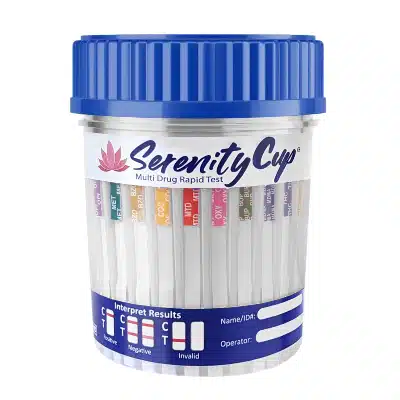
The 12 panel urine drug test cup combines specimen collection and instant drug screening in one device. After the urine sample is collected, the integrated immunoassay test strips begin detecting targeted drug metabolites while the built-in temperature strip verifies that the specimen was freshly provided.
Professional urine cups are commonly selected by:
- Employers
- Occupational health clinics
- Hospitals
- Pain management physicians
- Substance abuse treatment centers
- Probation departments
- Correctional facilities
- Government agencies
- Industrial workplaces
- Staffing companies
Many urine cups also include specimen validity checks such as:
These indicators help identify attempts to dilute, substitute, or adulterate the specimen before interpreting the screening results.
12 Panel Drug Test Dip Cards
Dip cards offer a compact and economical solution for organizations performing high-volume urine drug screening. Instead of collecting and testing within the same container, the dip card is immersed into the urine specimen for a specified period before results develop.
Dip cards are frequently used for:
- Employee screening
- School testing programs
- Rehabilitation facilities
- Community health programs
- High-volume occupational screening
- Mobile collection services
Their lower cost makes them ideal when separate specimen cups are already being used during collection.
12 Panel Oral Fluid Drug Tests
Oral fluid testing provides a convenient alternative when urine collection is impractical or directly observed collection is preferred. The collection swab gathers saliva from inside the donor's mouth before transferring the sample into the testing device.
Oral fluid drug tests are often selected for:
- Roadside testing
- Post-accident investigations
- Reasonable suspicion testing
- Workplace screening
- Random employee testing
- Remote job sites
- Safety-sensitive industries
Because oral fluid primarily detects recent drug use, it offers advantages for situations where current impairment or recent consumption is the primary concern.
What Does a 12 Panel Drug Test Detect?
A 12 panel drug test screens urine or oral fluid for twelve separate drug classes during one collection. Although panel configurations vary by manufacturer, most professional tests include a combination of the following substances.
| Drug Class |
Common Examples |
Typical Purpose |
| AMP |
Amphetamine |
ADHD medications, stimulants |
| BAR |
Barbiturates |
Sedatives |
| BZO |
Benzodiazepines |
Anxiety medications |
| BUP |
Buprenorphine |
Opioid treatment medication |
| COC |
Cocaine |
Cocaine metabolite screening |
| MET |
Methamphetamine |
Illicit stimulant detection |
| MDMA |
Ecstasy |
Club drug screening |
| MTD |
Methadone |
Opioid therapy monitoring |
| OPI |
Opiates |
Morphine, Codeine, Heroin metabolites |
| OXY |
Oxycodone |
Prescription opioid screening |
| PCP |
Phencyclidine |
Hallucinogen detection |
| THC |
Marijuana metabolite |
Cannabis screening |
Depending on the specific product, cutoff concentrations, included analytes, and optional drugs may differ. Some professional models substitute or add drugs such as fentanyl, ETG, tramadol, ketamine, kratom, xylazine, or synthetic cannabinoids for specialized workplace or forensic testing programs.
Every screening result is considered presumptive. Any non-negative result requiring legal, employment, or medical action should be confirmed by an accredited laboratory using GC-MS or LC-MS/MS confirmation testing.
Compare 12 Panel Drug Test Formats
| Feature |
Urine Cup |
Dip Card |
Oral Fluid Test |
| Specimen Type |
Urine |
Urine |
Saliva |
| Collection Device |
Built-in |
Separate cup required |
Swab |
| Instant Results |
✔ |
✔ |
✔ |
| Temperature Verification |
✔ |
Optional |
Not Required |
| Specimen Validity Testing |
Available |
Limited |
Not Applicable |
| Tamper Resistance |
Excellent |
Moderate |
Excellent |
| Detection Window |
Longer |
Longer |
Shorter |
| Best For |
Professional collections |
High-volume screening |
Recent drug use detection |
All three testing methods use rapid immunoassay technology to detect targeted drug metabolites, but each serves a different purpose depending on collection procedures, compliance requirements, and operational workflow.
Which 12 Panel Drug Test Is Right for You?
Selecting the right 12 panel drug test depends on who is being tested, how specimens are collected, and whether the testing program requires additional compliance features.
Employers
Urine cups remain the preferred option for most workplace drug testing because they simplify specimen collection, reduce handling, and provide immediate screening results. Models with temperature strips and specimen validity testing add another layer of confidence during pre-employment, random, and post-accident testing.
Occupational Health Clinics
Healthcare providers often choose CLIA Waived urine cups that deliver fast preliminary screening while supporting clinical workflows. Devices with integrated specimen validity checks help identify compromised samples before results are interpreted.
Rehabilitation Centers
Drug treatment programs frequently require repeated monitoring over extended periods. Reliable multi-panel urine drug tests allow clinicians to monitor compliance while screening for commonly misused prescription medications and illicit substances.
Pain Management Practices
Pain management physicians may require configurations that include prescription opioids, buprenorphine, methadone, oxycodone, and additional analytes relevant to patient monitoring. Selecting the correct panel helps support treatment decisions while reducing unnecessary laboratory testing.
Government and Correctional Facilities
Probation offices, drug courts, correctional institutions, and law enforcement agencies often prioritize tamper-resistant collection devices with strong chain-of-custody procedures. Depending on program requirements, Forensic Use Only configurations may be selected when specialized analytes or non-FDA-cleared panels are needed.
CLIA Waived vs Forensic Use Only (FUO): Which 12 Panel Drug Test Should You Choose?
Not every 12 panel drug test is intended for the same testing environment. Professional drug screening products are generally available as CLIA Waived or Forensic Use Only (FUO) devices, and selecting the correct option depends on your testing program, regulatory requirements, and the drugs included on the panel.
CLIA Waived 12 Panel Drug Tests
CLIA Waived drug tests are designed for point-of-care screening in healthcare and workplace settings where rapid, easy-to-perform testing is required. These products are FDA-cleared for specific panel configurations and can be used by trained personnel without complex laboratory procedures.
CLIA Waived tests are commonly used by:
- Occupational health clinics
- Physician offices
- Hospitals
- Urgent care centers
- Employers
- Drug rehabilitation facilities
- Pain management clinics
- Mobile collection providers
Benefits include:
- Fast results in minutes
- Simple collection procedure
- Easy interpretation
- Point-of-care screening
- Reduced laboratory turnaround time
- Consistent quality control
Forensic Use Only (FUO) Drug Tests
Forensic Use Only devices are intended for professional forensic applications and specialized testing programs. These configurations often include additional analytes or specialized drug panels that are not covered under FDA clearance.
FUO products are frequently selected by:
- Drug courts
- Probation departments
- Correctional facilities
- Law enforcement agencies
- Government contractors
- Forensic laboratories
- Specialized workplace programs
Because every rapid drug screen is considered a presumptive screening test, any non-negative result that may affect employment, legal proceedings, or medical decisions should be confirmed by an accredited laboratory using Gas Chromatography-Mass Spectrometry (GC-MS) or Liquid Chromatography-Tandem Mass Spectrometry (LC-MS/MS).
How Does a 12 Panel Drug Test Work?
Modern 12 panel drug tests use rapid lateral flow immunoassay technology to detect specific drug metabolites in urine or oral fluid. Rather than identifying the original drug itself, the test looks for metabolites produced after the body processes the substance.
The testing process is simple:
Step 1 – Specimen Collection
The donor provides a urine sample in a collection cup or oral fluid sample using a swab.
For urine collections, the collector may verify:
- Specimen temperature
- Collection time
- Sample volume
- Chain of custody documentation
Step 2 – Specimen Validity Check
Many professional urine cups include integrated specimen validity testing to help identify tampering before the drug screen is interpreted.
Common validity indicators include:
- Temperature
- Creatinine
- Specific Gravity
- pH
- Oxidants
- Nitrites
These checks help detect diluted, substituted, or adulterated urine specimens.
Step 3 – Drug Screening
Once the specimen contacts the test strips, antibodies within the immunoassay react with specific drug metabolites.
The test compares the detected concentration against predetermined screening cutoff levels.
Step 4 – Reading Results
Most rapid drug tests display:
- Negative – Drug metabolite below cutoff concentration.
- Preliminary Positive – Drug metabolite detected at or above the screening cutoff.
- Invalid – Control line failed or testing error occurred.
Preliminary positive results should always be confirmed by a certified laboratory before any employment, disciplinary, or legal action is taken.
Drug Detection Windows
One of the most common questions buyers ask is how long drugs remain detectable on a 12 panel drug test. The answer depends on the drug, frequency of use, metabolism, hydration, body composition, specimen type, and the screening cutoff used.
The following table provides general detection ranges for urine drug testing:
| Drug Class |
Typical Detection Window* |
| THC (Cannabis) |
1–30+ days |
| Cocaine |
2–4 days |
| Amphetamine |
1–3 days |
| Methamphetamine |
2–5 days |
| Opiates |
1–3 days |
| Oxycodone |
2–4 days |
| Methadone |
2–7 days |
| Benzodiazepines |
2–30 days |
| Barbiturates |
2–21 days |
| Buprenorphine |
3–10 days |
| PCP |
7–14 days |
| MDMA |
2–4 days |
*Detection times are approximate and may vary based on individual physiology, dosage, frequency of use, and laboratory cutoff concentrations.
Specimen Validity Testing Helps Protect Drug Test Accuracy
A drug test is only as reliable as the specimen being tested. That's why many professional 12 panel urine drug test cups include Specimen Validity Testing (SVT) features that help identify attempts to alter or replace the sample before the screening result is interpreted.
Common specimen validity parameters include:
Temperature Strip
Fresh urine should fall within the expected temperature range shortly after collection. A temperature strip provides an immediate indication that the specimen was recently provided.
Creatinine
Creatinine levels help identify excessive dilution that may occur through overhydration or deliberate attempts to reduce detectable drug concentrations.
Specific Gravity
Specific gravity measures urine concentration and helps determine whether the sample has been diluted or substituted.
pH
Urine with abnormal pH levels may indicate adulteration or contamination.
Oxidants
Certain oxidizing chemicals can interfere with immunoassay drug testing. Oxidant testing helps detect these adulterants.
Nitrites
Elevated nitrite levels may indicate attempts to chemically alter the urine specimen.
By evaluating specimen integrity before interpreting results, professional drug testing programs can reduce the likelihood of invalid or compromised screenings.
Industries That Use 12 Panel Drug Tests
Professional 12 panel drug tests are widely used across industries that require dependable drug screening for safety, compliance, patient care, or rehabilitation monitoring.
Common users include:
- Employers
- Occupational health providers
- Hospitals
- Medical clinics
- Pain management practices
- Drug rehabilitation centers
- Behavioral health programs
- Government agencies
- Correctional institutions
- Probation and parole offices
- Drug courts
- Schools and universities
- Staffing agencies
- Transportation companies
- Manufacturing facilities
- Construction companies
- Oil and gas operations
- Warehousing and logistics providers
- Public safety organizations
Whether testing is performed before employment, during random screening, after workplace accidents, or throughout treatment programs, selecting the appropriate drug testing format helps maintain consistent screening protocols.
Why Buy Your 12 Panel Drug Tests from 12 Panel Now?
Choosing the right supplier is just as important as selecting the right drug test. At 12 Panel Now, we provide professional drug testing solutions designed for organizations that require dependable performance, competitive pricing, and reliable product availability.
When you purchase from us, you benefit from:
- Professional-grade 12 panel drug tests
- Urine cups, dip cards, and oral fluid testing options
- CLIA Waived and Forensic Use Only configurations
- Multiple panel combinations to meet different program requirements
- Bulk and wholesale pricing
- Private label and OEM manufacturing solutions
- Fast nationwide shipping
- High-volume inventory
- Responsive customer support
- Products designed for workplace, clinical, rehabilitation, and forensic applications
Whether you're ordering for a single clinic or managing a nationwide testing program, our team can help you select the most appropriate testing solution for your organization.
Explore Other Drug Test Panel Options
If your testing program requires more or fewer analytes, we also offer a wide selection of professional multi-panel drug tests, including:
These options allow employers, healthcare providers, and government agencies to customize their drug screening programs based on workplace policies, state regulations, and testing objectives.
Frequently Asked Questions About 12 Panel Drug Tests
What is a 12 panel drug test?
A 12 panel drug test is a rapid screening test that checks a urine or oral fluid specimen for twelve commonly abused drug classes during a single collection.
How accurate are 12 panel drug tests?
Professional immunoassay drug tests provide highly reliable preliminary screening when used according to manufacturer instructions. Any preliminary positive result should be confirmed by GC-MS or LC-MS/MS.
What drugs are included in a 12 panel drug test?
Most panels screen for amphetamines, barbiturates, benzodiazepines, buprenorphine, cocaine, methamphetamine, MDMA, methadone, opiates, oxycodone, PCP, and THC, although configurations may vary.
Can a 12 panel drug test detect fentanyl?
Some specialized configurations include fentanyl, while standard 12 panel tests may not. Always verify the analytes listed for the specific product before ordering.
Does a 12 panel drug test detect alcohol?
Standard 12 panel drug tests generally do not detect alcohol unless an alcohol test is specifically included or performed separately.
How long does a 12 panel drug test take?
Most rapid drug tests provide preliminary results within approximately five minutes, though the exact read time depends on the product instructions.
What's the difference between urine cups and dip cards?
Urine cups combine collection and testing in one device, while dip cards require a separate specimen cup and are often preferred for cost-effective, high-volume screening.
Can medications cause false positive results?
Certain prescription or over-the-counter medications may cross-react with immunoassay screening tests. Laboratory confirmation helps distinguish true positives from potential cross-reactivity.
Are your 12 panel drug tests suitable for workplace testing?
Yes. Professional drug tests are commonly used for workplace screening, occupational health programs, rehabilitation monitoring, and clinical applications. Always ensure the selected product matches your organization's testing requirements.
Can I order 12 panel drug tests in bulk?
Yes. Wholesale quantities are available for employers, distributors, healthcare providers, rehabilitation facilities, government agencies, and other organizations requiring ongoing drug testing supplies.