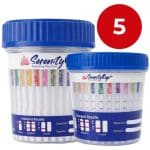
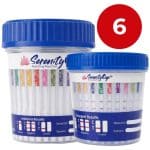
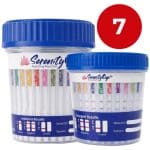
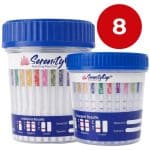
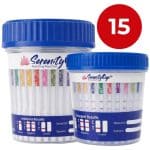
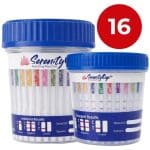
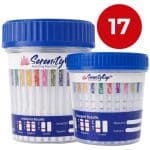
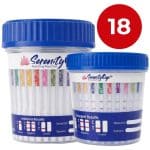
Will Zanaflex Show Up on a Drug Screen?


If you take Zanaflex (tizanidine) and have an upcoming drug test, it is understandable to wonder whether the medication could cause a positive result.
The good news is that Zanaflex usually does not show up on a standard drug screen. Routine drug tests are designed to look for specific drugs or drug classes included in the test panel. Tizanidine is not normally one of the substances targeted by standard workplace panels.
However, the answer can change if a laboratory orders specialized or targeted testing for tizanidine.
This guide explains whether Zanaflex can appear on urine drug tests, 5-panel and 10-panel screens, specialized testing, false positives, and how long tizanidine remains in the body.
Quick Answer: Will Zanaflex Show Up on a Drug Screen?
Usually, no. Zanaflex is the brand name for tizanidine, a prescription muscle relaxant. Standard workplace drug screens generally do not test specifically for tizanidine.
A drug screen does not automatically detect every prescription medication a person takes. Instead, it checks for particular substances or drug classes included in that test’s panel.
Federal workplace testing programs, for example, use an authorized testing panel that specifies the substances being tested rather than screening for every medication. Tizanidine is not included among those federally authorized drug categories.
A specialized laboratory test can be different. If a healthcare provider, pain-management program, laboratory, or other testing authority specifically orders testing for tizanidine, the medication or its metabolites may be identifiable.
What Is Zanaflex?
Zanaflex is the brand name for tizanidine, a prescription medication classified as a centrally acting skeletal muscle relaxant.
Tizanidine is used to help manage muscle spasticity and muscle spasms. It works primarily through alpha-2 adrenergic mechanisms in the central nervous system.
Because tizanidine is a muscle relaxant rather than an opioid, amphetamine, cocaine, cannabinoid, or benzodiazepine, it is not automatically included in routine drug-screening panels.
The distinction is important:
Taking a medication does not mean that every drug test will detect it.
The test must be designed to identify that particular substance or its relevant metabolites.
Why Doesn’t Zanaflex Usually Show Up on a Standard Drug Screen?
A common misconception is that a urine drug test checks for every drug in a person’s body.
That’s not how most screening panels work.
A standard drug screen contains specific assays designed to identify particular drugs or drug classes. Depending on the panel, these may include substances such as:
- Amphetamines
- Cocaine
- Cannabis/THC
- Opioids
- Phencyclidine (PCP)
- Benzodiazepines
- Other specified drugs
The exact substances vary by test, laboratory, employer, and testing program.
For example, federal workplace testing has an authorized panel that specifies the drugs and biomarkers that can be tested.
Since tizanidine is not one of the substances in a typical standard panel, simply taking Zanaflex does not normally produce a positive result for one of those drug categories.
Will Zanaflex Show Up on a 5-Panel Drug Test?
Normally, no.
A standard 5-panel drug test is designed to detect a defined group of commonly tested drugs. Tizanidine is not normally included in that panel.
Therefore, if your test is a conventional 5-panel screen, the test is generally not looking for Zanaflex.
However, always check the specific test panel and laboratory documentation because panel configurations can vary.
Will Zanaflex Show Up on a 10-Panel Drug Test?
Generally, no.
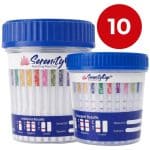
A 10-panel test screens for more substances than a basic 5-panel test, but the number of panels alone does not mean that every prescription medication is included.
A “10-panel” test is not necessarily identical across every manufacturer or laboratory.
If tizanidine is not one of the analytes being tested, the test is not a targeted tizanidine test.
Will Zanaflex Show Up on a 12-Panel Drug Test?
Usually, no.
This is another area where the exact panel matters.
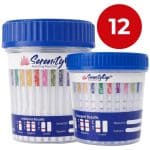
A 12-panel drug test can contain a variety of drug classes depending on the manufacturer and intended use. Tizanidine does not automatically become detectable simply because a test contains 12 panels.
For an exact answer, look at the test’s listed analytes or package insert.
If tizanidine is not listed, a routine 12-panel screen should not be interpreted as a test specifically designed to detect Zanaflex.
Can a Specialized Drug Test Detect Tizanidine?
Yes.
Although standard drug screens generally do not target tizanidine, a laboratory can use specialized analytical testing when there is a specific reason to look for the medication.
Examples can include:
- Targeted prescription-drug testing
- Expanded toxicology testing
- Specialized laboratory analysis
- Prescription-monitoring programs
- Certain clinical or forensic testing situations
More advanced laboratory methods can identify individual compounds with much greater specificity than a basic screening assay.
This is why the type and scope of the test matter more than simply knowing that someone is taking Zanaflex.
Will Zanaflex Show Up in a Urine Drug Test?
For a standard urine drug screen, Zanaflex generally will not show up because routine urine panels do not normally target tizanidine.
Urine testing is commonly used for workplace and other drug-screening programs, but the urine specimen is only analyzed for the substances included in the testing panel.
Federal workplace programs currently authorize both urine and oral-fluid specimens, depending on the program.
A specialized urine test could be designed to identify tizanidine or its metabolites.
Therefore:
Standard urine drug screen: Usually does not detect Zanaflex
Targeted tizanidine test: May detect tizanidine or its metabolites
What Does Zanaflex Show Up As on a Drug Test?
This is one of the most common concerns.
Zanaflex does not normally “show up as” an opioid, cocaine, amphetamine, THC, or benzodiazepine on a standard drug screen.
If a laboratory specifically tests for tizanidine, the purpose of the analysis is to identify tizanidine or relevant compounds associated with it.
An unexpected preliminary positive result should not automatically be assumed to mean that Zanaflex caused it.
Screening tests can have limitations, and unexpected results may require confirmation using a more specific laboratory method.
Can Zanaflex Cause a False Positive Drug Test?
There is a difference between being detected by a test and causing a false-positive screening result.
Tizanidine is not routinely expected to trigger positive results for the common drug classes included in standard screening panels. However, preliminary immunoassay screens are not perfectly specific, and unexpected screening results can occur with medications or other substances.
Research on immunoassay testing has demonstrated that false-positive results can occur and that confirmatory testing can help resolve questionable screening results.
There are also isolated clinical reports involving tizanidine in patients with unexpected toxicology-screen results, but these reports do not establish that Zanaflex routinely causes false positives on standard drug tests.
What should you do after an unexpected positive?
If a preliminary test is positive despite taking only prescribed medications:
- Tell the testing provider about all medications you take.
- Provide prescription information if requested.
- Ask whether confirmatory testing is appropriate.
- Do not assume a preliminary result identifies the exact substance.
- Do not stop prescribed medication simply because you are worried about a drug test.
More specific laboratory testing can distinguish individual compounds from preliminary screening reactions.
How Long Does Zanaflex Stay in Your System?
Tizanidine has a relatively short plasma half-life.
According to the official Zanaflex prescribing information, tizanidine has a plasma half-life of approximately 2.5 hours. About 95% of an administered dose is metabolized, primarily through CYP1A2. Its metabolites have reported half-lives ranging from approximately 20 to 40 hours.
However, there is an important distinction:
A drug’s half-life is not the same as its drug-test detection window.
A half-life describes how quickly the concentration of a drug decreases in the body. A drug-test detection window depends on the particular test, cutoff, specimen, analyte, dose, frequency of use, metabolism, and other factors.
So it would be misleading to guarantee that Zanaflex will or will not be detectable after a specific number of hours or days in every test.
Factors that can affect drug elimination include:
- Dose
- Frequency of use
- Age
- Liver function
- Kidney function
- Other medications
- Individual metabolism
- The testing method
- Laboratory cutoff and sensitivity
The official prescribing information also notes that tizanidine is extensively metabolized in the liver and that clearance can differ among individuals.
Is Tizanidine a Narcotic or Opioid?
No.
Tizanidine is a muscle relaxant, not an opioid narcotic.
It is therefore different from medications such as oxycodone, hydrocodone, morphine, or fentanyl.
This distinction is one reason Zanaflex is not automatically included in routine opioid-focused drug testing.
Is Tizanidine Similar to Xanax?
No.
Although both medications can have effects on the central nervous system, they belong to different medication classes.
- Tizanidine: centrally acting muscle relaxant
- Xanax (alprazolam): benzodiazepine
They are not the same medication and are not interchangeable.
This also means that taking tizanidine does not mean that a standard benzodiazepine test is automatically testing for Zanaflex.
Is Tizanidine a Controlled Substance?
Tizanidine is not federally scheduled as a controlled substance in the United States.
However, its prescription status and the rules surrounding medications can differ by jurisdiction and testing program.
More importantly for drug screening, controlled-substance status does not determine whether a drug appears on a test.
The actual test panel determines which substances the laboratory is looking for.
Should You Tell the Testing Provider You Take Zanaflex?
If you are taking Zanaflex under a valid prescription, it is generally sensible to provide accurate medication information when the testing process asks for it.
This can be particularly important when testing is connected to:
- Employment
- Medical treatment
- Pain management
- Probation
- Court requirements
- Professional licensing
- Other regulated programs
Federal workplace testing also uses a Medical Review Officer process for reviewing certain laboratory results and medical explanations.
Keep your prescription information available if the testing provider or reviewing physician requests documentation.
Can You Flush Zanaflex Out of Your System Before a Drug Test?
There is no reliable or guaranteed method for rapidly flushing tizanidine from your body or manipulating a drug test result.
Avoid relying on:
- Detox drinks
- Excessive water consumption
- Unverified supplements
- “Same-day cleansing” products
- Other methods claiming to guarantee a negative test
These approaches cannot guarantee a particular test result and may create health risks.
If you are taking Zanaflex as prescribed, the appropriate approach is to follow your prescription and communicate honestly with the testing provider.
Do not stop tizanidine suddenly without talking with your healthcare professional. The prescribing information warns that abrupt discontinuation, particularly after higher doses or prolonged use, can cause withdrawal-related effects.
Zanaflex Drug Test: Standard vs. Specialized Testing
| Test situation | Is Zanaflex normally targeted? |
|---|---|
| Standard workplace drug screen | No |
| Typical 5-panel screen | No |
| Typical 10-panel screen | Usually no |
| Typical 12-panel screen | Usually no |
| Targeted tizanidine test | Yes, if specifically ordered |
| Expanded toxicology testing | Depends on the panel |
| Prescription-monitoring testing | Depends on the test ordered |
Important: “5-panel,” “10-panel,” and “12-panel” are not universal test formulas. The exact substances included depend on the manufacturer, laboratory, employer, or testing program.
Frequently Asked Questions
Does Zanaflex show up on a drug screen?
Usually not. Zanaflex (tizanidine) is not normally included in standard workplace drug-screening panels.
Will Zanaflex show up on a urine drug test?
A standard urine drug test generally does not test for tizanidine. A specialized urine test can be designed to identify it.
Will tizanidine show up on a 10-panel drug test?
Usually not. The exact panel should be checked because commercial 10-panel tests can contain different combinations of analytes.
Will tizanidine show up on a 12-panel drug test?
Generally not on a routine 12-panel test unless tizanidine is specifically included in that particular panel.
What does tizanidine show up as on a drug test?
It normally does not show up as another common drug on a standard screen. If tizanidine is specifically tested, a targeted laboratory method can identify the medication or its metabolites.
Can Zanaflex cause a false positive?
Tizanidine is not generally expected to produce routine positives for common drug classes. However, preliminary screening tests can have limitations. An unexpected result should be evaluated with appropriate confirmatory testing.
How long does Zanaflex stay in your system?
Tizanidine has a plasma half-life of approximately 2.5 hours, but its metabolites can have longer half-lives. A half-life should not be treated as a guaranteed drug-test detection window.
Is Zanaflex an opioid?
No. Zanaflex contains tizanidine, a prescription muscle relaxant, not an opioid.
Is tizanidine the same as Xanax?
No. Tizanidine is a muscle relaxant, while Xanax (alprazolam) is a benzodiazepine.
Should I stop taking Zanaflex before a drug test?
Do not stop a prescribed medication solely because of an upcoming drug test without first discussing it with your healthcare professional.