How to Set Up a Workplace Drug Testing Program (A Step-by-Step Guide for Employers)

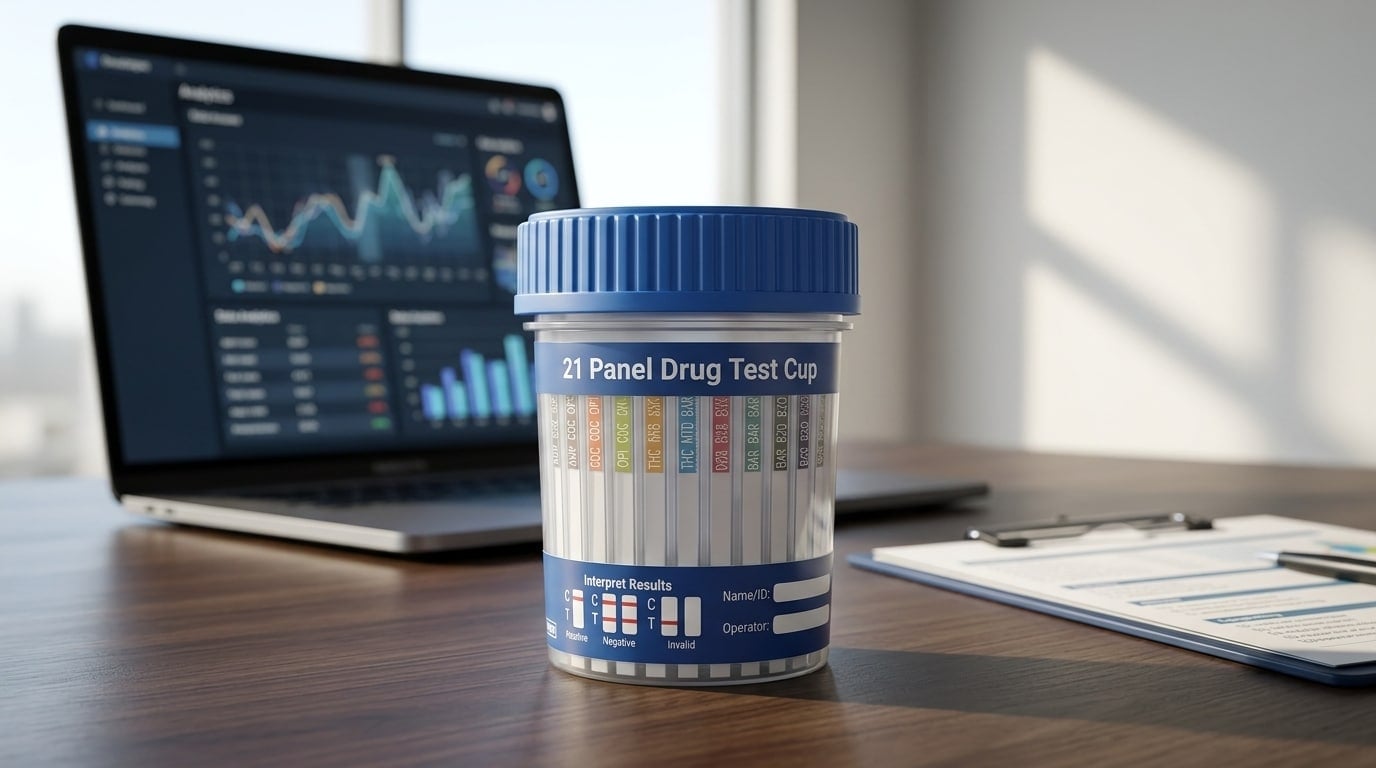
Buying cups is the last step of setting up workplace drug testing, not the first — and employers who start with the cup usually end up with a program that can’t survive a legal challenge. A defensible program is built on a written policy, consistent application, and a confirmation process. Here’s the order to do it in.
How Do You Set Up a Workplace Drug Testing Program?
Setting up a workplace drug testing program starts with policy, not cups. The order that produces a defensible program is: decide why you’re testing, write a clear written policy, check your state and federal law, choose your testing types (pre-employment, random, post-incident, reasonable suspicion), select your test method and panel, set up collection and lab confirmation, and handle results consistently and confidentially. The kit is the second-to-last step, not the first, because a program built on the wrong foundation can’t survive a legal challenge. This guide details each step and the common mistakes (inconsistent testing, no written policy, acting on unconfirmed results) that create legal exposure.
Step 1: Decide why you’re testing
Your reasons determine your program’s shape. Common drivers: safety (staff operating vehicles or machinery), compliance (industries with testing requirements), reducing liability, and workers’ compensation discounts some insurers offer for a testing program. Write down your actual reasons — they’ll justify the policy if it’s ever questioned, and they tell you which types of testing you need.
Step 2: Write a clear, written policy
This is the backbone. A workplace drug testing policy should state who is subject to testing, what situations trigger a test (pre-employment, random, post-incident, reasonable suspicion), which substances you screen for, what happens after a non-negative result, and how you protect employee privacy and confidentiality. Vague or unwritten policies are where discrimination and wrongful-termination claims start. Apply the policy uniformly — testing some employees and not others in the same category is the fastest route to a legal problem.
Step 3: Know your state and federal law
Drug testing law varies significantly by state — some restrict random testing, some require specific notice, some protect off-duty conduct, and marijuana laws add another layer where cannabis is legal. Federal rules (like DOT) override state law for regulated roles; our DOT drug testing overview covers that specific case. If you operate in multiple states, your policy may need state-specific provisions. This is the step worth running past an employment attorney.
Step 4: Choose your testing types
Most programs combine several. Pre-employment screening tests candidates after a conditional offer. Random testing deters ongoing use across current staff. Post-incident testing follows accidents. Reasonable-suspicion testing responds to specific, documented signs. Each type has different documentation needs — reasonable suspicion, especially, requires trained supervisors who can document observations. Decide which types fit your reasons from Step 1.
Step 5: Select your test method and panel
Now the kit decision. For most employers, on-site CLIA-waived instant cups are the practical choice — fast, in-house, cost-effective. Match the panel to your workforce: 5-panel for standard non-safety-sensitive roles, 10-panel for broader coverage, 12-panel for safety-sensitive or prescription-opioid concerns. Add temperature and adulteration strips where cheating risk is higher. Browse options in the workplace testing category, and see our employer kit ranking for specific picks.
Step 6: Set up your collection and confirmation process
Decide who collects, where, and how chain of custody is maintained. Train collectors on reading results correctly and handling specimens. Critically, establish a confirmation process: instant cups are presumptive, so non-negative results must go to a certified lab for GC/MS or LC/MS confirmation before any adverse action. Many employers also use a Medical Review Officer (MRO) to review results and rule out legitimate prescriptions — a step that prevents disciplining someone for a properly prescribed medication.
Step 7: Handle results consistently and confidentially
Define your response to a confirmed positive in advance and apply it the same way every time. Keep results confidential and stored separately from general personnel files. Consider whether your program includes support — an Employee Assistance Program (EAP) or a path to treatment — rather than only termination, which many employers find both more humane and better for retention.
Common mistakes to avoid
Testing inconsistently, skipping the written policy, acting on an instant result without lab confirmation, ignoring state law, and failing to train reasonable-suspicion supervisors. Each is a common source of legal exposure, and each is avoidable with the steps above.
FAQ
Do I need a written policy to drug test employees?
Practically, yes. A written, consistently applied policy is your main protection against discrimination and wrongful-termination claims.
Can I fire someone based on an instant test result?
Not safely. Confirm non-negative instant results at a certified lab, ideally with MRO review, before any action.
Is random drug testing legal?
It depends on your state and industry — some restrict it. Check your state law and, for regulated roles, federal requirements.
Should my program include treatment options?
Many employers include an EAP or treatment pathway. It’s optional but often more effective than a termination-only approach.