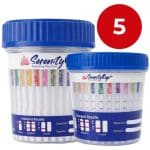
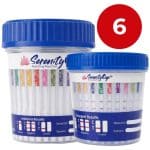
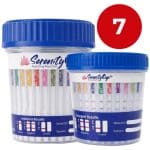
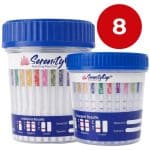
16 Panel Multi Dip Card
FREE SHIPPING ON ORDERS OVER 100 PIECES!*
12 Panel Now offers high-quality drug testing solutions designed to meet the demands
of professional environments. The 16 Panel Urine Dip Card is built specifically for forensic
applications, providing accurate and consistent results where precision matters most.
16 Panel Multi Dip Card
Reliable, lab-quality results with easy-to-use test kits.
350+ High-Demand SKUs
From everyday staples to specialty products:
- Multi-Dip Tests
- Drug Test Cups
- Oral Drug Test Swabs
- 60+ Drug Test Strips
- Cartridges COVID-19 Tests
- Gloves & PPE

Secure, Temperature-Controlled Warehouse

Same-Day Blind Drop Shipping

Lowest Wholesale Pricing. Highest Commissions. Period.

Private Label Available

Real-Time Partner Portal
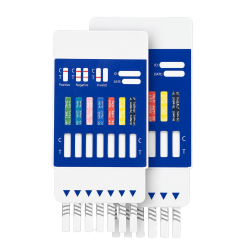

16 Panel Dip Drug Test Card with Kratom, Ketamine, EtG & Fentanyl, As low as $1.29
AMP, BAR, BUP, BZO, COC, EtG, FEN, KET, KRA, MDMA, MET, MTD, OPI/MOR, OXY, PCP, THCForensic UseAs low As$1.29 $1.29 - $1.89
16 Panel Dip Drug Test Card with K2, EtG, Fentanyl & Tramadol, Serenity Multi-Level Dip Card As low as $1.29
AMP, BAR, BUP, BZO, COC, EtG, FEN, K2, MDMA, MET, MTD, OPI/MOR, OXY, PCP, THC, TRAForensic UseAs low As$1.29 $1.29 - $1.89
16 Panel Dip Drug Test Card with TCA, Kratom, Fentanyl & EtG, As low as $0.99
AMP, BAR, BUP, BZO, COC, EtG, FEN, KRA, MDMA, MET, MTD, OPI/MOR, OXY, PCP, TCA, THCForensic UseAs low As$ 0.99 $0.99 - $1.23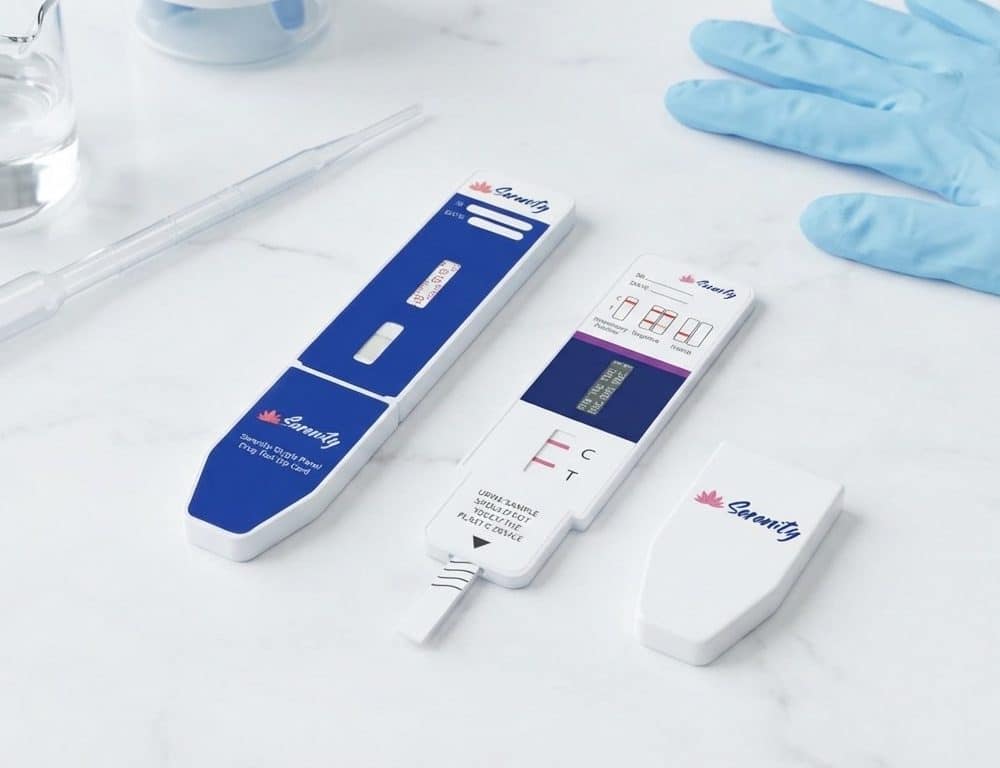
Dip Card ETG/500 Detecting Alcohol. Serenity Single Dip card. As low as $0.28
EtGForensic UseAs low As$0.28 $0.28 - $0.69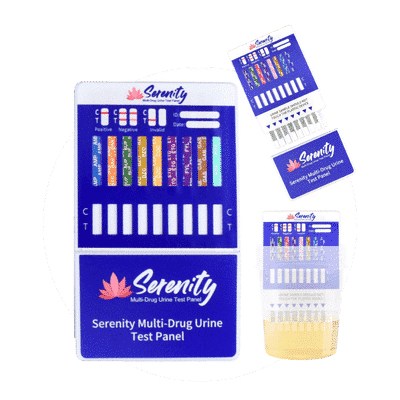
Dip card 6 Panel Detects OPI & OXY, Serenity Multi-Level Dip Card
BZO, COC, MET, OPI/MOR, OXY, THCCLIA WAIVEDAs low As$0.70 $0.70 - $1.03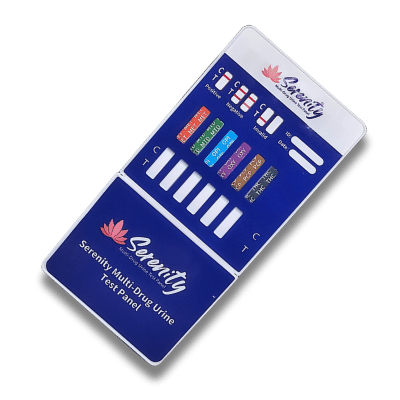
Dip card 7 Panel Detecting MET & OPI, CLIA Waived, Serenity Multi-Level Dip Card- Low Price $0.74
AMP, BZO, COC, MET, OPI/MOR, OXY, THCCLIA WAIVED, FDA ClearedAs low As$0.74 $0.74 - $1.13
Dip Card 8 Panel Detects ETG & FEN, Serenity Multi level Dip card, As Low as $0.84
AMP, BZO, COC, EtG, FEN, MET, OPI/MOR, THCForensic UseAs low As$0.84 $0.84 - $1.2916 Panel Drug Test Dip Cards
Sixteen-substance urine drug test dip cards available from $0.99 per test, making this the most cost-efficient panel count in the 12 Panel Now lineup that simultaneously integrates Ethyl Glucuronide (ETG) for 80-hour alcohol detection, Fentanyl (FEN) at 20 ng/mL, and Kratom (KRA) at 500 ng/mL as standard built-in strips.
Advanced configurations add K2 (Synthetic Cannabinoids) at 50 ng/mL, Gabapentin (GAB) at 1000 ng/mL, and three adulterant validity strips. K2 is the defining new analyte at this tier: synthetic cannabinoids do not trigger any standard THC drug test strip, making a dedicated K2 immunoassay the only point-of-care method for detection in forensic and compliance settings. Searching for a 16 panel drug test near me? 12 Panel Now ships same-day wholesale before 3:00 PM EST anywhere in the US, with free shipping on qualifying bulk orders.
As the manufacturer of the Serenity brand drug testing product line, 12 Panel Now produces all 16-panel dip cards to the same quality standards applied across the full product range.
The table below lists all 16 panel drug test substances for each configuration with cutoffs and detection windows.
| Substance | Abbr. | Cutoff | Detection Window | Configs |
|---|---|---|---|---|
| Amphetamines | AMP | 1000 ng/mL | 2 to 4 days | All |
| Barbiturates | BAR | 300 ng/mL | 2 days to 3 weeks | All |
| Buprenorphine | BUP | 10 ng/mL | 3 to 7 days | All |
| Benzodiazepines | BZO | 300 ng/mL | 3 days to weeks | All |
| Cocaine | COC | 300 ng/mL | 2 to 4 days | All |
| Ethyl Glucuronide (Alcohol) | ETG | 300 ng/mL | Up to 80 hours | All |
| Fentanyl | FEN | 20 ng/mL | 24 to 72 hours | All |
| Gabapentin | GAB | 1000 ng/mL | 2 to 3 days | K2+GAB+ADLTX config |
| K2 / Synthetic Cannabinoids | K2 | 50 ng/mL | 24 to 72 hours | K2+GAB+ADLTX config |
| Kratom | KRA | 500 ng/mL | 1 to 2 days | All |
| MDMA / Ecstasy | MDMA | 500 ng/mL | 2 to 4 days | All |
| Methamphetamine | MET | 1000 ng/mL | 2 to 4 days | All |
| Methadone | MTD | 300 ng/mL | 3 to 5 days | All |
| Opiates / Morphine | OPI | 300 ng/mL | Up to 3 days | All |
| Oxycodone | OXY | 100 ng/mL | 2 to 4 days | All |
| PCP / Phencyclidine | PCP | 25 ng/mL | 7 to 14 days | Standard config |
| TCA / Tricyclic Antidepressants | TCA | 1000 ng/mL | 2 to 7 days | Standard config |
| Marijuana / THC | THC | 50 ng/mL | 3 to 30+ days | All |
| Adulterants (ADLTX) | ADLTX | Sp. Gravity / pH / Creatinine | Immediate (specimen validity) | K2+GAB+ADLTX config |
16 Panel ETG + FEN + KRA (SM-DOA-6165FUO) from $0.99 |
16 Panel K2 + GAB + KRA + ETG + FEN + ADLTX from $2.09
What Does a 16 Panel Drug Test Test For?
A 16 panel drug test dip card screens for sixteen substances in a single dip, and the tier is defined by two clinical achievements: it is the most cost-efficient format that integrates ETG (alcohol), FEN (fentanyl), and KRA (kratom) as standard strips simultaneously, and it introduces the K2 (synthetic cannabinoid) immunoassay strip in advanced configurations for programs where synthetic marijuana detection is required.
At 12 Panel Now, the 16 Panel Drug Test Dip Card (SM-DOA-6165FUO) covers AMP, BAR, BUP, BZO, COC, ETG, FEN, KRA, MDMA, MET, MTD, OPI, OXY, PCP, TCA, and THC at $0.99 per test in its standard Forensic Use Only format. The advanced K2 configuration adds synthetic cannabinoid detection and Gabapentin alongside three adulterant validity strips for programs that need comprehensive emerging-substance coverage.
The SAMHSA Drug-Free Workplace Program confirms that synthetic cannabinoids require a dedicated immunoassay system separate from the standard THC strip, making the K2 configuration the minimum rapid dip card for programs needing a synthetic cannabinoid drug test within their supervised population. As the manufacturer of the Serenity brand drug testing product line, 12 Panel Now produces all 16-panel dip cards to the quality and antibody standards applied across the full product range.
How Does the 16 Panel Differ From the 15 Panel Drug Test?
The 16 panel vs 15 panel drug test difference is primarily a question of which specialty strips the program needs and at what price point. The 15-panel dip card (SM-DOA-6155FUO) integrates Gabapentin (GAB) as its defining new analyte alongside ETG, FEN, and KRA. The 16-panel standard format (SM-DOA-6165FUO) instead integrates TCA (tricyclic antidepressants) and PCP alongside ETG, FEN, and KRA, offering a different specialty analyte configuration at a lower per-test price of $0.99.
Programs that need gabapentin monitoring should select the 15-panel GAB configuration. Programs that need K2/synthetic cannabinoid detection, or that need the KRA+ETG+FEN triad at the lowest possible per-test cost, will find the 16-panel format is the more appropriate fit.
Contact the 12 Panel Now sales team at 561-897-9238 to compare configurations side by side.
Does K2 Show Up on a Drug Test?
K2 does not show up on a standard THC drug test strip, and a person actively using synthetic cannabinoids will test negative on the marijuana immunoassay of every standard 5-panel, 10-panel, 12-panel, 13-panel, 14-panel, and 15-panel drug test unless a dedicated K2 immunoassay strip at 50 ng/mL is specifically included in the panel.
This is one of the most consequential unanswered questions in compliance drug testing. The New York City Department of Health confirms that K2 “does not show up on standard toxicology tests used commonly in health care, criminal justice, probation, shelter, or correctional settings,” identifying synthetic cannabinoid invisibility on standard panels as a documented public health concern in supervised populations.
The reason is immunological: the standard THC drug test strip uses antibodies calibrated to delta-9-tetrahydrocannabinol and its primary metabolite 11-nor-9-carboxy-THC. Synthetic cannabinoids share no structural similarity with delta-9-THC at the molecular level. Their active compounds, including JWH-018, AB-PINACA, AMB-FUBINACA, and hundreds of related designer variants, are built around indole, pyrrole, or indazole scaffolds that produce no cross-reactivity with the THC antibody system. This is why “will K2 show on drug test” is a frequently searched question with a consistent answer.
It will not show up on any panel that lacks a dedicated K2 strip, including every standard format below the 16-panel tier. The K2 strip at 50 ng/mL in the 16-panel advanced configuration uses synthetic cannabinoid-specific antibodies designed to react to the metabolites of JWH-018 and related compounds at concentrations consistent with recent use, providing the first point-of-care detection signal for synthetic cannabinoid exposure. For probation offices, drug courts, correctional facilities, and sober living homes where K2 use has been documented, the 16-panel K2 configuration closes the detection gap that standard panels cannot address.
Why Do Standard THC Drug Test Strips Not Detect Synthetic Cannabinoids?
The THC immunoassay strip operates through competitive binding: THC metabolites in the urine sample compete with enzyme-labeled THC conjugates for binding sites on the antibody. When THC metabolite concentration exceeds the 50 ng/mL threshold, there is not enough antibody left for the enzyme conjugate to bind, which suppresses the test line and produces a positive result. Synthetic cannabinoids do not compete for the same binding sites because their molecular structures are fundamentally different.
They bind to CB1 and CB2 cannabinoid receptors in the brain and body with high potency, producing effects more intense than natural THC, but they do not produce the THC-COOH metabolite that the standard immunoassay antibody recognizes. The SAMHSA National Survey on Drug Use and Health documents synthetic cannabinoid use as a persistent pattern in justice-involved and homeless populations where conventional drug testing creates the false appearance of THC abstinence.
The dedicated K2 strip uses antibodies developed specifically against JWH-018 metabolites and cross-reacting synthetic cannabinoid families, providing a detection signal that the THC strip is structurally incapable of generating regardless of dose or frequency of synthetic cannabinoid use. This is why programs that have identified K2 use in their monitored population cannot address it by switching from a 10-panel to a 14-panel or 15-panel format. The K2 strip must be specifically added. The 16 panel drug test with K2 configuration from 12 Panel Now is the lowest panel count in this lineup where the K2 strip is available as an integrated card component.
What Is K2 on a Drug Test and How Is Synthetic Marijuana Detected?
K2 on a drug test refers to the synthetic cannabinoid immunoassay strip, which detects metabolites of JWH-018 and structurally related synthetic cannabinoid receptor agonists in urine at a 50 ng/mL cutoff, with a standard detection window of 24 to 72 hours after use in most individuals with normal renal function.
The term K2 encompasses hundreds of individual synthetic cannabinoid compounds that are chemically modified to evade scheduling laws while producing CB1 receptor agonism similar to THC, often at potencies 10 to 100 times greater than natural cannabis. Common street names include Spice, Bizarro, Green Giant, Smacked, AK-47, and dozens of regional variants.
The K2 Spice drug test strip detects metabolites across this full family of compounds. Products are typically sold as dried plant material sprayed with the active synthetic compound, or as liquids used in vaporizers, and are often packaged with misleading labels including “herbal incense” or “not for human consumption.”
The 50 ng/mL cutoff on the K2 strip is calibrated to detect JWH-018 metabolites and cross-reacting compounds at concentrations consistent with recent use. Because synthetic cannabinoid manufacturers continuously modify molecular structures to evade scheduling, the K2 immunoassay strip is calibrated to detect a broad family of synthetic cannabinoid metabolites rather than a single compound, providing coverage across multiple generations of designer cannabinoids.
The CDC overdose prevention documentation on polysubstance use identifies synthetic cannabinoids as a documented risk factor in populations that co-use fentanyl, making the combined K2+FEN detection capability of the 16-panel advanced configuration clinically relevant for programs managing fentanyl-exposed supervised individuals. All presumptive positive K2 results on the 16-panel dip card must be confirmed by GC-MS or LC-MS/MS laboratory analysis before any employment, clinical, or legal action is taken, per SAMHSA Drug-Free Workplace requirements.
How Long Does K2 Stay in Your System for a Drug Test?
The K2 drug test detection window in urine is 24 to 72 hours for most individuals taking moderate single or recent doses, which is significantly shorter than the detection window for natural cannabis THC metabolites. This short window exists because synthetic cannabinoids generally have faster metabolic clearance than delta-9-THC, with most active compounds hydroxylated and glucuronidated in the liver within hours of ingestion. The resulting urinary metabolites typically fall below the 50 ng/mL immunoassay threshold within 1 to 3 days for single exposures.
Heavy or chronic synthetic cannabinoid use can extend detectable metabolite concentrations beyond 72 hours, but the window is substantially shorter than the 7 to 30 day window for heavy cannabis users on a standard 50 ng/mL THC strip. This short detection window has a direct operational implication for programs monitoring K2 use: because metabolites clear quickly, programs that test on weekly or biweekly schedules may miss K2 exposures that occurred mid-cycle. Programs in correctional, probation, or residential settings with documented K2 use benefit most from frequent monitoring intervals rather than relying solely on the 16-panel K2 strip to capture all use at infrequent check-in appointments.
The NIH research on synthetic cannabinoid pharmacokinetics confirms that urinary clearance of JWH-018 metabolites in controlled studies is substantially faster than delta-9-THC, with detectable concentrations typically resolved within 72 hours of last exposure at moderate doses.
Is K2 Legal and Why Are Compliance Programs Testing for It?
The original synthetic cannabinoid compounds used in K2 and Spice products are federally scheduled under the Controlled Substances Act, but manufacturers continuously modify molecular structures to produce novel synthetic cannabinoids that temporarily evade scheduling, creating a persistent legal gray zone that makes K2 testing a practical necessity rather than an optional addition for programs serving populations with documented synthetic cannabinoid exposure.
The DEA and Congress have passed multiple legislative actions targeting synthetic cannabinoid scheduling, including the Synthetic Drug Abuse Prevention Act of 2012 and subsequent emergency scheduling actions. However, the pace of structural modification by manufacturers has consistently outrun scheduling timelines, meaning newly introduced compounds are technically unscheduled for months or years while enforcement and testing catch up.
For compliance monitoring programs, this legal complexity is less relevant than the clinical reality: regardless of a compound’s federal scheduling status, its detection at the point of care requires the same dedicated K2 immunoassay strip at 50 ng/mL. The CDC Morbidity and Mortality Weekly Report on synthetic cannabinoid outbreaks documents mass casualty events in correctional facilities and homeless shelters linked to synthetic cannabinoid use, with K2 being the substance most consistently identified in settings where standard drug panels showed all participants testing negative.
These events are a direct consequence of the THC strip’s inability to detect K2. Probation programs, drug courts, correctional health departments, and residential treatment facilities that have documented K2 incidents in their populations need the 16-panel K2 configuration as a systematic monitoring tool rather than a reactive measure deployed after an adverse event.
Which Correctional and Forensic Settings Use the 16 Panel Drug Test?
The 16-panel dip card is the standard configuration for correctional facilities, county jails, state prisons, probation departments, and drug courts that have identified K2 as an active concern in their supervised population. Prison and jail drug testing programs were among the first institutional buyers to adopt K2-capable panels because synthetic cannabinoids became the substance of choice in correctional settings precisely because they evaded standard panels.
Drug court programs in jurisdictions where K2 use has been documented in case files use the 16-panel to close the detection gap and prevent supervised individuals from substituting K2 for cannabis while appearing compliant on a standard THC strip. Sober living homes in urban markets where K2 availability has been documented use the 16-panel as their standard format because a K2-negative building policy cannot be enforced with a THC-only strip.
The standard 16-panel (SM-DOA-6165FUO) at $0.99 serves the high-volume segment of this market. The K2+GAB+ADLTX configuration at $2.09 serves programs that additionally need gabapentin monitoring and specimen validity checks alongside K2 and the standard baseline.
Does the 16 Panel Drug Test Detect Kratom, Fentanyl, and Alcohol in the Same Test?
Yes, the 16 panel drug test dip card integrates dedicated strips for all three in a single dip: KRA (Kratom) at 500 ng/mL, FEN (Fentanyl) at 20 ng/mL, and ETG (Ethyl Glucuronide for alcohol) at 300 ng/mL, making the 16-panel standard format the lowest-cost configuration in this lineup to include all three simultaneously at $0.99 per test.
Kratom at 500 ng/mL detects mitragynine metabolites from recent moderate-to-heavy kratom use, covering populations using kratom as a self-managed opioid substitute. The standard OPI strip does not detect kratom, so any panel that lacks a dedicated KRA strip provides no information about kratom use regardless of how many opioid analytes it carries. Fentanyl at 20 ng/mL addresses the post-July 2025 HHS federal mandate as documented in the HHS Federal Register of January 2025.
ETG at 300 ng/mL detects alcohol consumption up to 80 hours after the last drink, covering weekend drinking that a standard Monday morning monitoring appointment would otherwise miss. For rehabilitation programs, sober living homes, and probation programs that have substance monitoring conditions covering alcohol, fentanyl, and kratom simultaneously, the 16 panel drug test kratom, fentanyl, and alcohol combination provides all three in a single sub-dollar dip card.
Is the 16 Panel Drug Test Available Without K2?
Yes, the standard 16 Panel Drug Test Dip Card (SM-DOA-6165FUO) does not include a K2 strip and is the format appropriate for programs that need the ETG, FEN, and KRA triad at the lowest per-test cost without requiring synthetic cannabinoid detection.
Programs that have not identified K2 use as a documented concern in their population should select the standard SM-DOA-6165FUO rather than the advanced K2+GAB+ADLTX configuration, which carries a higher per-test cost of $2.09. The K2 strip adds meaningful value only when the monitored population has a documented history of synthetic cannabinoid use.
For programs upgrading from a 15-panel format primarily to access the KRA+ETG+FEN triad at a lower price point, the standard 16-panel at $0.99 is the appropriate selection. For programs with documented K2 exposure and a simultaneous need for gabapentin monitoring and specimen validity checking, the K2+GAB+ADLTX configuration provides all five additional analytes in a single card.
Contact the 12 Panel Now clinical team at 561-897-9238 or [email protected] to confirm which configuration matches the substance risk profile of your specific program.
Who Uses the 16 Panel Drug Test Dip Card?
The 16 panel drug test dip card is used by correctional facilities and county jails managing K2 exposure in housed populations, by probation and drug court programs that have documented K2 substitution in caseloads, by sober living homes enforcing synthetic cannabinoid abstinence policies, and by rehabilitation and outpatient programs needing the KRA, ETG, and FEN triad at the lowest available per-test price point for high-volume compliance monitoring.
Prison and jail drug testing programs using the K2 configuration report the ability to identify synthetic cannabinoid use that had previously been completely invisible on standard panels, which is the primary driver of the 16-panel K2 format’s adoption in correctional health departments. Probation programs and drug courts in urban areas where K2 is available use the K2 configuration as a condition-enforcement tool for supervised individuals whose abstinence orders cover synthetic cannabinoids.
Residential rehabilitation centers and sober living homes that have encountered K2 use as an attempt to circumvent standard THC testing add the 16-panel K2 format to their monitoring protocol. Programs using the standard 16-panel without K2 are primarily motivated by the $0.99 per-test price for the KRA+ETG+FEN triad, making it a natural fit for high-volume daily or every-other-day monitoring in residential recovery settings where cost per test is a primary operational constraint.
Is the 16 Panel Drug Test Right for Sober Living and Residential Treatment?
The 16-panel standard format (SM-DOA-6165FUO) at $0.99 is one of the most cost-efficient sub-dollar per-test options for the KRA+ETG+FEN triad in the entire 12 Panel Now dip card lineup. For sober living programs running 20 or more residents with twice-weekly monitoring, the difference between a $1.05 per-test 15-panel and a $0.99 per-test 16-panel represents meaningful cost savings at scale without sacrificing the ETG, FEN, or KRA coverage that the program’s policy requires.
The 16-panel standard also includes PCP and TCA as standard strips, providing coverage for phencyclidine and tricyclic antidepressant monitoring alongside the specialty analytes. Outpatient rehabilitation programs conducting urine monitoring at weekly treatment visits benefit from the ETG’s 80-hour window alongside fentanyl detection, covering the two most clinically significant gaps in standard 12-panel screening at a sub-dollar price point.
The OSHA Drug-Free Workplace guidelines confirm that panel configuration should reflect the actual substance risk profile of the population being monitored, and the 16-panel’s combination of standard coverage plus ETG, FEN, KRA, PCP, and TCA is well-matched to the substance profiles documented in residential recovery settings.
What Does the 16 Panel Drug Test NOT Detect?
The 16 panel drug test dip card does not detect xylazine, ketamine, tramadol (without a custom configuration), psilocybin, LSD, MDPV, tianeptine (ZAZA), delta-8 THC, or any substance beyond its sixteen dedicated strips and, where included, the three ADLTX adulterant markers.
Xylazine is a veterinary sedative increasingly used as a fentanyl supply adulterant and the subject of federal emergency health responses in 2023 and 2024. It requires a dedicated XYL strip not available until 17-panel and higher configurations at 12 Panel Now. Ketamine detection requires a dedicated KET strip available in 18-panel and higher formats.
Tramadol requires a dedicated TRA strip available in select 14-panel and higher configurations. Tianeptine (ZAZA) requires a TIA strip available in 17-panel and higher formats. Programs whose supervised populations use xylazine in combination with fentanyl should evaluate the 17-panel and 18-panel formats from 12 Panel Now, which add XYL and KET as integrated strips.
The full progression from 13-panel through 19-panel dip card configurations, including which new analyte is introduced at each tier, is documented in the dip card format guide at 12 Panel Now. The complete dip card category page lists all available panel counts from 1-panel single strips through 19-panel comprehensive formats.
How Does the 16 Panel Drug Test Dip Card Compare to the 16 Panel Drug Test Cup?
The 16 panel drug test dip card and the 16 panel drug test cup detect the same sixteen substances at equivalent immunoassay accuracy, with the dip card format at $0.99 to $2.09 offering substantially lower per-test cost than the cup format starting at $2.79, while the cup provides integrated specimen collection, a built-in temperature strip, a tamper-evident no-drip lid, and chain-of-custody-compatible design for settings that require those features.
The 16 Panel Drug Test Cup at 12 Panel Now is available with KRA+ETG+FEN as low as $2.79, and in K2+KRA+ETG+FEN+ADLTX cup configurations for programs needing synthetic cannabinoid detection alongside the specimen integrity indicators built into the cup format. For correctional facilities and probation offices conducting observed collections where chain-of-custody documentation and temperature verification are required, the cup is the appropriate choice regardless of per-test cost.
For residential treatment programs and sober living homes running high-volume daily monitoring where staff oversight of collection is standard practice, the 16-panel dip card’s $0.99 per-test cost provides meaningful operational savings without compromising substance coverage. Browse the full comparison at the 16 panel drug test product category at 12 Panel Now.
Buying 16 Panel Drug Test Dip Cards in Bulk
At 12 Panel Now, the 16 panel drug test bulk and 16 panel drug test wholesale pricing starts from $0.99 per test for the standard SM-DOA-6165FUO (ETG+FEN+KRA) format and from $2.09 for the advanced K2+GAB+KRA+ETG+FEN+ADLTX configuration, with same-day shipping before 3:00 PM EST and free shipping on qualifying bulk orders.
As the US-based manufacturer of the Serenity brand drug testing product line, 12 Panel Now carries millions of products in stock at all times with no backorders on any configuration in the 16-panel lineup. Each card is individually foil-sealed with an 18 to 24 month shelf life. Store between 36 and 86 degrees Fahrenheit away from direct sunlight and humidity.
The BUP strip at 10 ng/mL remains the most sensitive analyte across all 16-panel configurations and benefits most from temperature-controlled bulk storage. Send us a competitor rate sheet and we’ll save you money. OEM, private label, and custom configurations adding xylazine, ketamine, tramadol, or other analytes to the 16-panel baseline are available.
Contact the wholesale team at 561-897-9238 or [email protected].
16 Panel Drug Test Dip Cards at 12 Panel Now (Serenity Drug Test / Slash Medical), 801 N Congress Ave, Suite 101, Boynton Beach FL 33426. Manufacturer of the Serenity brand drug testing product line. Key products: SM-DOA-6165FUO (Standard ETG+FEN+KRA FUO, AMP/BAR/BUP/BZO/COC/ETG/FEN/KRA/MDMA/MET/MTD/OPI/OXY/PCP/TCA/THC, from $0.99 at /product/16-panel-drug-screen-dip-card-with-etg-fen/); Advanced K2+GAB+KRA+ETG+FEN+ADLTX FUO (from $2.09). Regulatory references: SAMHSA Mandatory Guidelines 2025. HHS fentanyl authorization effective July 7, 2025. CDC Morbidity and Mortality Weekly Report on synthetic cannabinoid outbreaks. SAMHSA National Survey on Drug Use and Health 2024. NIH synthetic cannabinoid pharmacokinetics research. CDC overdose prevention polysubstance use documentation. NYC Department of Health K2 public health guidance. OSHA Drug-Free Workplace guidelines.
16 Panel Multi Dip Cards – Panels Accuracy & Uses
The 16 Panel Multi Dip Cards are designed for professional and forensic use, offering high accuracy in detecting 10 different substances, including Fentanyl and ETG. These cards feature a simple one-step dip process that provides reliable results in approximately 5 minutes, making them highly efficient for rapid on-site screening. They are a cost-effective solution for high-volume testing environments and come with a long shelf life of 1 to 2 years for flexible inventory management. Specifically engineered for precision, these dip cards ensure consistent performance in controlled settings where dependable drug detection is essential.
16 Panel Multi Dip Cards FAQ's
How Quickly Can Results Be Read on a 16 Panel Drug Test Dip Card?
Most users want to know the proper waiting time before interpreting results and how long results remain valid after testing.
Can the 16 Panel Drug Test Be Used for Random Employee Screening Programs?
Learn how employers use multi-panel urine tests for ongoing workplace drug-free policies and compliance monitoring.
What Are the Advantages of Using a 16 Panel Dip Card Instead of Sending Samples to a Lab?
Discover the benefits of rapid screening, reduced turnaround times, and lower testing costs for routine monitoring.
Can Temperature or Storage Conditions Affect Test Performance?
Understand how heat, cold, humidity, and improper storage may impact the reliability of urine drug screening devices.
Can Temperature or Storage Conditions Affect Test Performance?
Understand how heat, cold, humidity, and improper storage may impact the reliability of urine drug screening devices.
How Often Should Drug Testing Programs Replace Expiring Test Kits?
Learn best practices for inventory management, stock rotation, and maintaining fresh testing supplies.
Can a 16 Panel Drug Test Be Used in Mobile or Remote Testing Environments?
A 10 panel drug test cup screens for fewer substances than a 12 panel test, making it more cost-effective for standard workplace screening, while 12 panel drug tests provide more comprehensive coverage. Explore whether dip cards are suitable for field testing, transportation companies, remote job sites, and community programs.
What Factors Should Organizations Consider When Choosing a 16 Panel Drug Test Configuration?
Compare different analyte combinations to determine which panel best matches your organization’s testing objectives.
How Can Organizations Reduce Drug Testing Costs Without Sacrificing Screening Coverage?
Learn strategies for selecting cost-effective panel configurations while maintaining broad substance detection capabilities.
What is the difference between 10 panel drug test cups and lab testing?
A 10 panel drug test cup provides rapid on-site screening results, while laboratory testing provides confirmatory analysis with higher specificity. Many employers use 10 panel drug screening cups from suppliers like 12panelnow.com for initial testing, followed by lab confirmation if needed.