The Full Breakdown of a 28 Panel Drug Test


Understanding the complexities of drug testing is crucial for organizations aiming to maintain a drug-free environment. Among the various options available, a 28 panel drug test offers one of the most comprehensive screenings for a wide range of substances. Here at 12 Panel Now, we’re committed to helping you navigate these testing solutions with confidence and clarity. In this text, we’ll dive deep into what a 28 panel drug test entails, its applications, and how it stands out from simpler tests.
Understanding Drug Testing Methods
What Is a 28 Panel Drug Test?
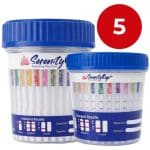
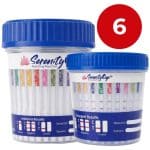
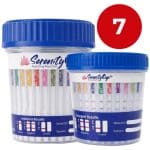
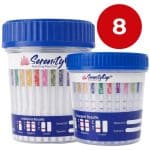
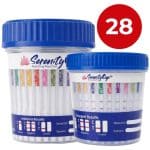
A 28 panel drug test is an extensive urine screening designed to detect up to 28 different drugs and their metabolites. This test expands far beyond standard 5 to 12-panel options, making it suitable for a variety of settings, whether clinical, legal, or rehabilitation-based. The 28 panel test allows for a more thorough detection of both traditional substances and emerging drugs that have been gaining prominence in recent years. The 28 panel cup consolidates testing for multiple substances into one device, saving time and streamlining the screening process for enhanced efficiency.
Common Drugs Detected in a 28 Panel Test
While the substances detected can vary between test manufacturers, commonly screened drugs in a 28 panel test include:
-
- AMP (Amphetamines), BAR (Barbiturates), BUP (Buprenorphine), BZO (Benzodiazepines) — covers the amp bar bup bzo panel
- BAR, BUP, BZO, COC (Cocaine) — covers bar bup bzo coc
- BUP, BZO, COC, MDMA (Ecstasy) — covers bup bzo coc mdma
- BZO, COC, MDMA, MET (Methamphetamine) — covers bzo coc mdma met
- COC, ETG (Alcohol Metabolite), FEN (Fentanyl) — covers coc etg fen
- MDMA, MET — covers mdma met
- OXY (Oxycodone), PCP (Phencyclidine), THC (Marijuana) — covers oxy pcp thc
- AMP (Amphetamines)
- MET (Methamphetamine)
- MDMA (Ecstasy)
- BAR (Barbiturates)
- BZO (Benzodiazepines)
- CLO (Clonazepam)
- COC (Cocaine)
- OPI (Opiates)
- OXY (Oxycodone)
- 6AM (Heroin Metabolite)
- FEN (Fentanyl)
- BUP (Buprenorphine)
- MTD (Methadone)
- THC (Marijuana)
- ETG (Alcohol Metabolite)
- COT (Cotinine/Nicotine)
- PCP (Phencyclidine)
- K2/K3 (Synthetic Cannabinoids)
- KRA (Kratom)
- KET (Ketamine)
- TML (Tramadol)
- GAB (Gabapentin)
- XYL (Xylazine)
- Additional substances like TCA, PPX, and lysergic acid diethylamide (LSD) may also be included, providing a broad spectrum for drug screening.
The 28 panel drug test can also detect prescription medication, which is important for distinguishing between legitimate and illicit drug use.
Why Choose a 28 Panel Test Over Other Tests?
Choosing a 28 panel test offers several advantages over simpler testing options. While a standard 5-panel test typically checks for a limited number of substances like THC, cocaine, and opiates, the 28 panel test goes further by including a wider array of both illegal and prescription drugs. This makes the 28 panel test ideal for several settings, including clinics, workplaces, and law enforcement, where comprehensive screening is essential. Here are a few reasons why opting for a 28 panel test can be an effective choice:
-
- Greater Coverage: With the ability to screen for a multitude of substances, this test captures a diverse range of illicit drugs and their metabolites, ensuring a more thorough assessment.
- Enhanced Monitoring: It is particularly useful in environments where individuals might have access to various substances, helping maintain compliance with strict drug-free policies or rehabilitation programs.
- Emerging Drug Detection: The test’s design allows it to detect new and often dangerous substances like synthetic cannabinoids and emerging opioids, which are not included in more basic tests. Detecting new substances and substances entering the market is crucial for staying ahead of evolving drug trends and the emergence of synthetic drugs.
Accuracy and Reliability of 28 Panel Tests
The Process of Administering a 28 Panel Test
The administration of a 28 panel drug test is relatively straightforward. Typically, a urine sample is collected using a test cup or dip card. Diagnostics drug test cups, such as those from Identify Diagnostics, are valued for their ease of use, accuracy, and reliability, making them suitable for a variety of settings. The sample wicks up through capillary action, allowing the test strips to analyze the sample in about five minutes. Some drug test cups feature a green dot that appears to confirm the correct temperature of the specimen, providing a quick visual indicator for temperature verification. Key features of this process include:
-
- Supervised Collection: To maintain the integrity of the sample and ensure accurate results, a supervised collection is often advisable.
- Adulteration Checks: Built-in checks for pH and creatinine levels help confirm the validity of the sample and minimize the chances of manipulation.
Specimen Collection and Validation
Ensuring the accuracy and reliability of a panel drug test begins with meticulous specimen collection and validation. Whether conducted in medical clinics, workplace testing environments, or law enforcement agencies, these steps are critical for obtaining trustworthy results and maintaining the integrity of the drug screening process.
The collection process starts by selecting a clean, private area to minimize the risk of contamination and ensure donor privacy. The donor is provided with a urine drug test cup—such as the Ultra 28 Panel Drug Test Cup—and clear instructions for sample collection. To prevent tampering or substitution, the collection is often observed or supervised, especially in settings where compliance is paramount.
Once the urine sample is collected, immediate validation is essential. The collector checks the corresponding temperature line on the test cup to confirm the sample’s authenticity; a valid urine sample should register between 90-100°F. This quick check helps ensure that only authentic samples are tested, reducing the risk of adulteration.
Further validation involves assessing the sample’s specific gravity, pH levels, and creatinine content. These parameters are crucial for confirming that the urine sample is genuine and has not been diluted or altered. The Ultra 28 Panel Drug Test Cup is designed to detect these adulterants, providing an added layer of security and reliability.
If the control band fails to appear on the test cup or if the sample shows signs of tampering—such as unusual color, odor, or consistency—the test is considered invalid. In such cases, the collection process should be repeated with a new test cup, and any issues should be thoroughly documented to maintain a clear record.
The Ultra 28 Panel Drug Test Cup offers a comprehensive solution for drug screening, capable of detecting up to 28 different substances, including prescription medications, illicit drugs, and synthetic drugs. Its FDA-approved design ensures it meets regulatory standards for professional use, and its rapid results—typically available within five minutes—make it a convenient, mess-free option for high-volume testing environments.
By following proper specimen collection and validation procedures, organizations can trust the results of their 28 panel drug tests. This not only supports accurate detection of substance abuse and evolving drug trends but also upholds the integrity of workplace testing, probation drug testing, and other critical screening programs. The Ultra 28 Panel Drug Test Cup stands out as a reliable, efficient, and comprehensive testing device for today’s demanding diagnostic needs.
Interpreting Test Results
Results from a 28 panel drug test are incredibly easy to interpret. The test will display lines on a control panel indicating whether substances are present based on predefined cutoff levels. A control line signifies that the test is valid, while the absence of a drug line indicates a positive result if it exceeds the cutoff. If a person has tested positive for an illicit substance, their sample will be flagged for further analysis. The test detects drug metabolites, which are the breakdown products of drugs present in the urine. It’s important to note that while these results are presumptive positives, further confirmation through GC/MS (Gas Chromatography Mass Spectrometry) is required for definitive accountability.
Implications of Positive Results
A positive result in a 28 panel drug test can lead to several repercussions, especially in workplace settings or rehabilitation programs. Typically, a positive finding will trigger a confirmation test to validate the initial result. In some cases, hair testing may be used to provide additional evidence of long-term substance use, as it can detect drug use patterns over several months. Depending on the context, this may lead to actions such as:
-
- Medical Review: A healthcare professional will assess the results in context, considering factors like prescription medications or medical history.
- Rehabilitation Options: Individuals might be referred to treatment programs if substance misuse is identified.
- Policy Enforcement: Employers may need to take disciplinary action in line with their company’s drug-free policies.
Conclusion
A 28 panel drug test provides comprehensive screening that is essential in today’s environment, where drug misuse poses significant risks. At 12 Panel Now, we prioritize offering reliable, high-quality drug testing solutions to ensure that your organization can maintain safety and compliance. Choosing a 28 panel test not only enhances detection accuracy but also supports a commitment to fostering a responsible workplace or environment. For more information on implementing our drug testing solutions, feel free to reach out to us.
Frequently Asked Questions
What is included in a 28 panel drug test?
A 28 panel drug test screens for a wide variety of substances, including amphetamines, methamphetamines, MDMA, cocaine, opiates, benzodiazepines, and emerging drugs like synthetic cannabinoids.
How does a 28 panel drug test differ from a standard test?
Unlike standard 5 to 12 panel tests, a 28 panel drug test offers comprehensive coverage, detecting a broader range of illicit and prescription drugs, making it more suitable for various settings. While a 12 panel drug test is a popular, affordable, and accurate option for screening multiple substances at once, the 28 panel drug test expands detection to include additional drug classes and emerging substances. Diagnostics drug test cups are available in both 12 and 28 panel formats, providing quick, reliable, and easy-to-use solutions for different testing needs.
What substances can a 28 panel drug test detect?
The test typically detects amphetamines, cocaine, opiates, THC, and more, including newer substances like fentanyl and kratom, ensuring thorough monitoring.
How is a 28 panel drug test administered?
A urine sample is collected via a test cup or dip card, with results available in about five minutes. Supervised collections are recommended for accuracy.
Can a positive result on a 28 panel drug test be disputed?
Yes, positive results can be confirmed through further testing, such as Gas Chromatography Mass Spectrometry (GC/MS), to ensure validity.
Are there advantages to using a 28 panel drug test in workplaces?
Yes, it enhances workplace safety by monitoring a wider array of substances, thus promoting a drug-free environment and supporting compliance with policies.