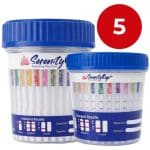
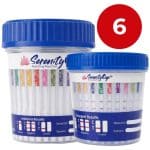
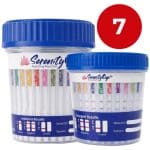
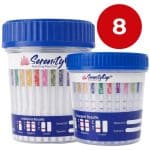
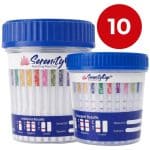
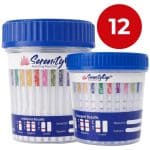
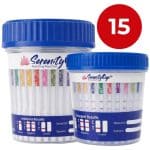
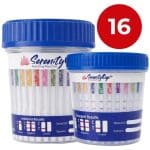
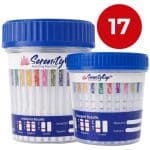
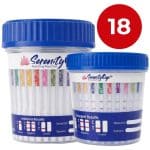
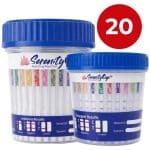
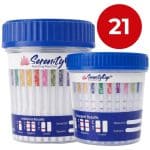
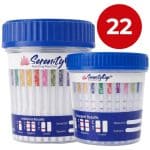
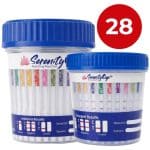
Choosing the Right Multi-Panel Drug Test Cup: A Guide to 7, 8, and 10 Panel Options for Diverse Needs

This shift is driven by data. Quest Diagnostics reported a staggering 600%+ increase in test tampering (substituted specimens) recently, and positivity rates for polysubstance use—particularly cocaine mixed with opioids—rose by 9.1% in 2023.
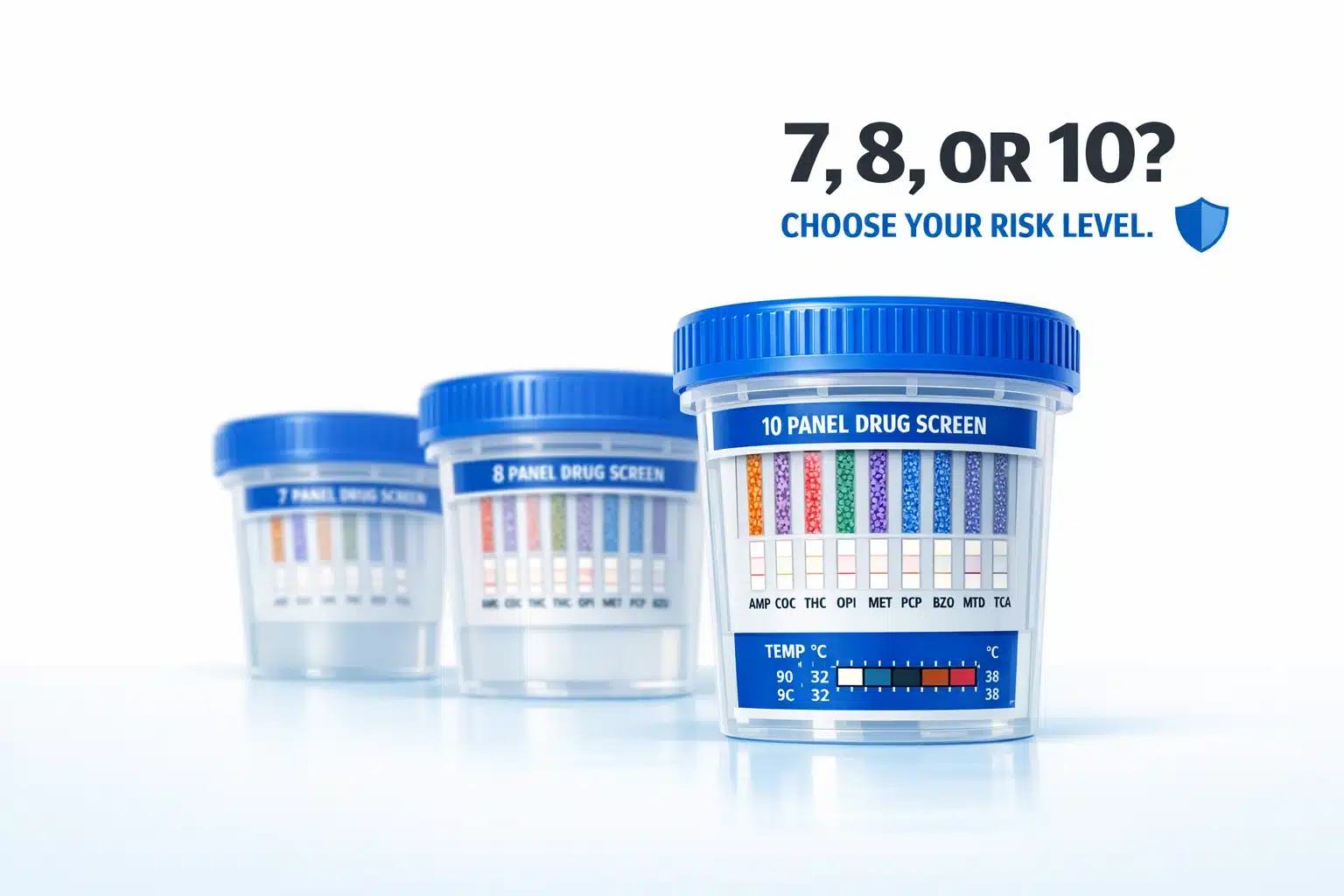
If you are evaluating mid-range testing solutions, you are likely deciding between 7, 8, or 10-panel cups. This decision isn’t just about counting analytes; it’s about balancing cost, liability, and the specific substance patterns relevant to your industry.
The “Gap” Analysis: 7 vs. 8 vs. 10 Panel Drug Test Cups
When comparing panel counts, it helps to view them as tiers of protection rather than just lists of chemicals. As you move up in panel count, you aren’t just detecting more drugs; you are closing specific liability gaps.
The 7-Panel: The Compliance Baseline
The 7-panel drug test is often viewed as the modernized “DOT Mirror.” It covers the SAMHSA-5 (Marijuana, Cocaine, Opiates, Amphetamines, PCP) and typically adds Benzodiazepines and Barbiturates or sometimes MDMA (Ecstasy).
Best for:
-
- Entry-level pre-employment screening.
- Situations where cost is the primary driver (units can start as low as $1.69).
- Industries with lower safety-sensitivity risks.
The 8-Panel: The Prescription Shield
The transition from 7 to 8 panel drug test cup is almost always about prescription medication monitoring. This tier solidifies coverage for Benzodiazepines (Xanax, Valium) and Barbiturates. With prescription misuse being a major cause of workplace accidents, the 8-panel cup offers a higher ROI for employers worried about impairment from legal medications.
The 10-Panel: The Commercial Gold Standard
This is currently the most common choice for law enforcement, probation, and comprehensive workplace safety programs. A standard 10-panel cup extends detection to include Methadone (often missed in lower panels), Propoxyphene, or Methaqualone.
The Critical Advantage: By covering a broader spectrum of opiates and synthetic painkillers, the 10-panel cup reduces the “plausible deniability” that often occurs when a donor claims a positive result is due to a minor prescription.
Industry Decision Matrix: Matching the Cup to the Risk
One size does not fit all. A construction company in Florida has different liability exposures than a staffing agency in Ohio.
1. Healthcare & Pain Clinics
Recommended: 10 to 12 Panel + EtG
Why: Healthcare professionals have access to a wide variety of pharmaceuticals. A 7-panel drug test cup will miss too many accessible substances, such as Oxycodone or Methadone.
2. Staffing & General Workplace
Recommended: 7 or 8 Panel (Customized)
Why: Speed and volume matter. You need FDA-approved reliability that fits a strict budget.
The “Clean Panel” Trend: According to recent reports, nearly 53% of providers have seen clients remove Marijuana (THC) from their screening panels in states where it is legal. 12 Panel Now offers customizable configurations that allow you to maintain an 8 or 10-panel breadth while excluding THC, keeping you compliant with local labor laws without sacrificing safety.
3. Probation & Law Enforcement
Recommended: 10 Panel + Fentanyl
Why: In these environments, the cost of a false negative is societal, not just financial. The standard 10-panel provides the necessary breadth, but adding a specific Fentanyl dip card or utilizing a cup with Fentanyl integration is becoming a mandatory standard due to the prevalence of synthetic opioids.
Modern Threats: Why “Standard” Panels May Fail
Here is the uncomfortable truth: You can buy a highly accurate, FDA-cleared 10-panel cup and still miss the most dangerous drug usage in your facility.
Many “standard” panel configurations were designed decades ago. They test for substances like Propoxyphene or Methaqualone, which are rarely abused today compared to modern threats. Meanwhile, Fentanyl—a synthetic opioid 50 times stronger than heroin—is often not included in standard 5, 7, or even 10-panel tests unless specified.
The Xylazine and Fentanyl Factor
Safety-sensitive roles require updated testing protocols. If your current supplier is sending you “legacy” 10-panel cups, you have a blind spot.
-
- Fentanyl: Needs a specialized cutoff level (usually 20 ng/mL) distinct from general Opiates (2000 ng/mL).
- Xylazine: The “zombie drug” increasingly found in opioid mixtures requires targeted detection.
12 Panel Now specializes in bridging this gap by offering cups that integrate these modern analytes, ensuring your “Negative” result actually means the environment is safe.
Technical Authority: Validating Your Choice
Once you have selected the right panel count (7, 8, or 10), you must validate the instrument itself. In the world of rapid testing, provenance is everything.
CLIA Waived & FDA Approved
Never compromise on these two acronyms.
-
- FDA 510(k) Cleared: This means the device has undergone rigorous review to demonstrate it is substantially equivalent to a legally marketed device. It validates the accuracy claims (99%).
- CLIA Waived: This designation allows the test to be performed in non-laboratory settings (like your office or a job site) because it is simple to use and has a low risk of error.
The Integrity Check
With tampering on the rise, the cup’s physical design is a counter-measure. High-quality cups from 12 Panel Now include built-in temperature strips (verifying the sample is fresh, usually between 90°F-100°F) and adulterant validity checks. If a donor attempts to dilute the sample or substitute it with synthetic urine, these built-in safeguards are your first line of defense.
Making the Decision
Choosing between a 7, 8, or 10-panel cup isn’t about passing a generic standard—it’s about defining the safety culture of your organization.
-
- Choose 7-Panel Drug Test Cup for cost-effective, baseline compliance.
- Choose 8-Panel Drug Test Cup to close the gap on prescription abuse.
- Choose 10-Panel Drug Test Cup (or higher) for maximum liability protection and comprehensive screening.
Whatever tier you choose, ensure your partner can verify the quality (CLIA/FDA) and deliver the inventory immediately. Your safety protocol is only as strong as the test you use today.
Buyer’s FAQ: Solving Common Uncertainties
Q: Can I customize a 10-panel drug test cup to exclude THC?
A: Yes. In fact, this is one of the fastest-growing requests we handle. Custom configurations allow you to keep the wide net for hard drugs (Cocaine, Opiates, Amphetamines) while removing THC to align with state laws or company culture.
Q: Is a 12-Panel Drug Test Cup significantly more expensive than a 10-Panel Drug Test Cup?
A: The price difference is often negligible compared to the risk coverage. With bulk pricing, the difference per cup can be pennies. When you consider the cost of a workplace accident caused by a substance missed on a smaller panel, the 12-panel often yields a better ROI.
Q: How fast can I get these specific configurations?
A: Supply chain reliability is part of the test. 12 Panel Now maintains a massive inventory in Florida, allowing for same-day shipping on almost all standard and many custom orders. You shouldn’t have to wait weeks for safety supplies.