Drug Test Process Guide for Accurate Screening Results

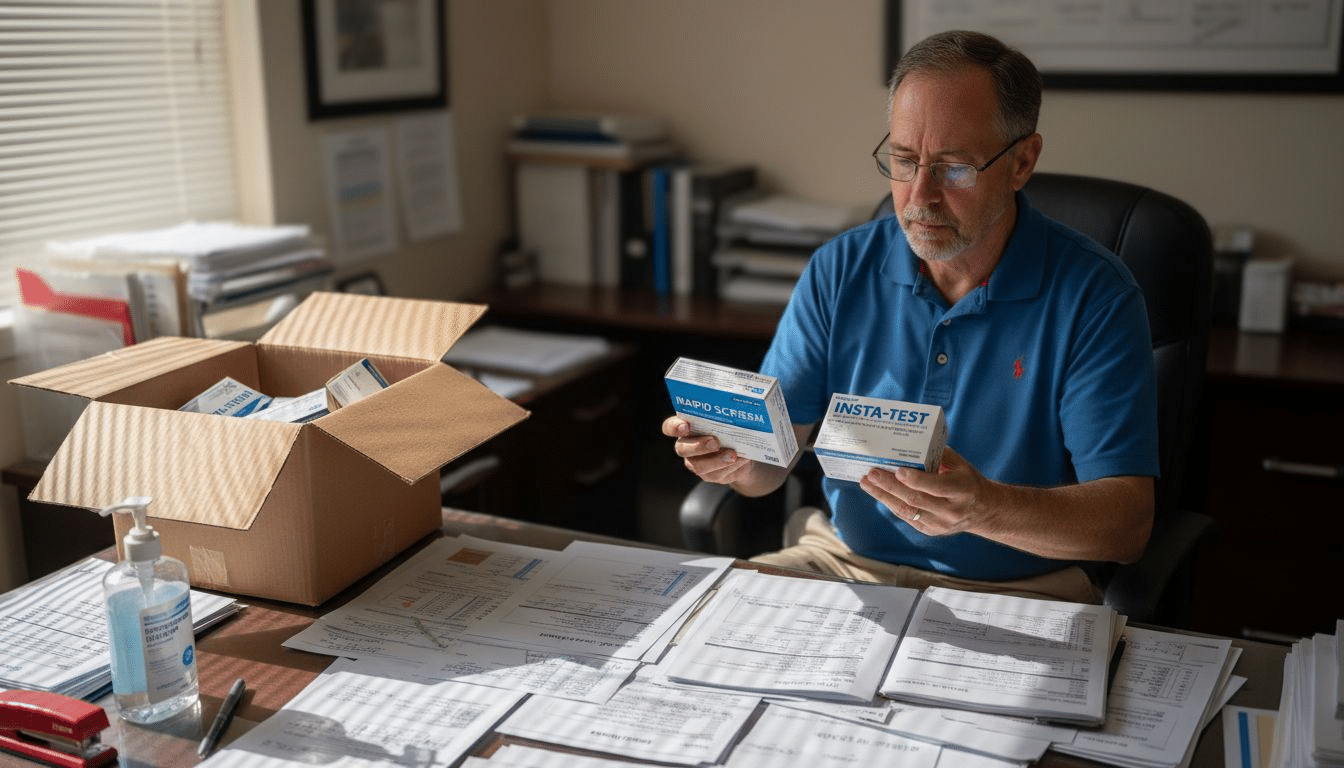
Choosing the right drug testing supplies is often the first hurdle for busy American rehabilitation centers struggling to maintain both accuracy and security. Reliable products form the backbone of consistent screening results, directly affecting patient care and regulatory compliance. With every decision shaping outcomes for your facility, this guide breaks down the critical steps to selecting and implementing supplies that deliver both precision and peace of mind, ensuring your process remains efficient from start to finish.
Step 1: Choose Appropriate Testing Supplies
Selecting the right testing supplies is the foundation of accurate screening results. Your choice directly impacts the reliability of tests, staff workflow, and patient outcomes in your rehabilitation center.
Start by identifying your facility’s specific testing needs. Consider the volume of tests you conduct monthly, the types of substances you screen for, and your current testing protocols.
Key factors to evaluate:
- Number of daily or weekly tests your facility conducts
- Types of drugs your patients are most likely to use
- Regulatory requirements specific to your state or accreditation body
- Budget constraints and cost per test
- Staff training level and experience with testing procedures
When researching suppliers, verify they provide quality-assured products that meet laboratory standards. Look for supplies with clear lot numbers, expiration dates, and proper storage instructions printed on packaging.
The quality of your testing supplies directly determines whether you catch substance use or miss critical signs during patient treatment.
Check that your chosen supplier offers detailed documentation with every order. This includes batch testing results, chain of custody forms, and product specifications that support your regulatory compliance.
Your rehabilitation center needs supplies that work reliably every single time. When evaluating 5 essential drug testing supplies for safe patient care, focus on consistency, accuracy ratings, and supplier reliability rather than simply choosing the cheapest option.
Consider whether your facility prefers single-panel tests for specific substances or multi-panel tests that screen for multiple drugs simultaneously. Multi-panel tests save time and reduce per-test costs when you’re screening patients for common substances like opioids, benzodiazepines, and stimulants.
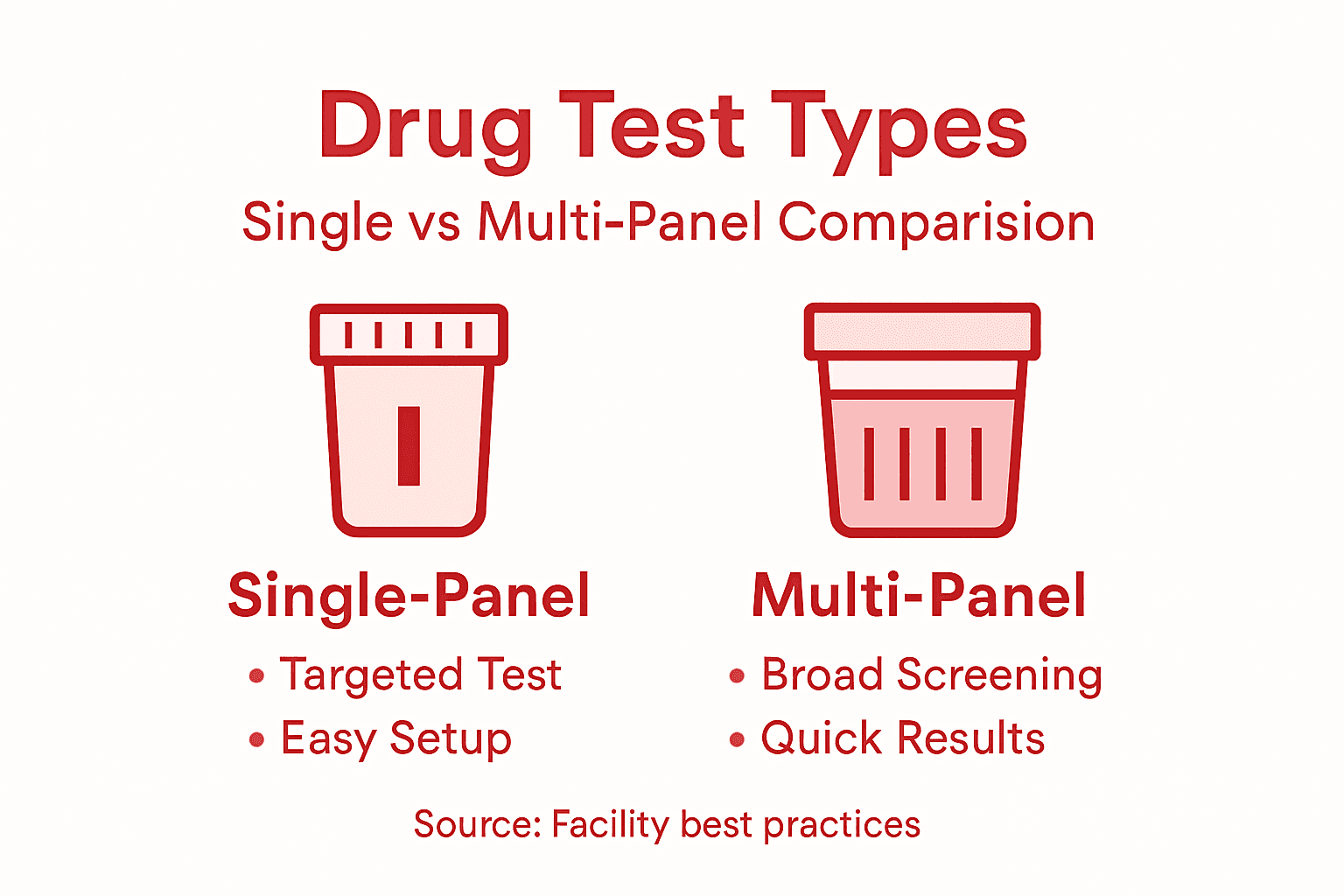
Here’s a comparison of single-panel versus multi-panel drug tests for rehabilitation centers:
| Test Type | Main Advantage | When to Use | Potential Drawback |
|---|---|---|---|
| Single-panel | High specificity | Targeting known substances | More labor-intensive for many drugs |
| Multi-panel | Greater efficiency | Screening for multiple substances | May include unnecessary drug tests |
Reach out to your chosen supplier with questions about product specifications and ordering processes. A responsive supplier demonstrates commitment to supporting your facility’s success.
Pro tip: Order a small trial batch from a new supplier before committing to large orders, allowing your staff to test the supplies’ reliability and ease of use within your actual workflow.
Step 2: Set Up Secure Collection Area
A secure collection area prevents tampering and ensures test validity. Your facility’s physical setup directly protects the integrity of every screening result your staff conducts.
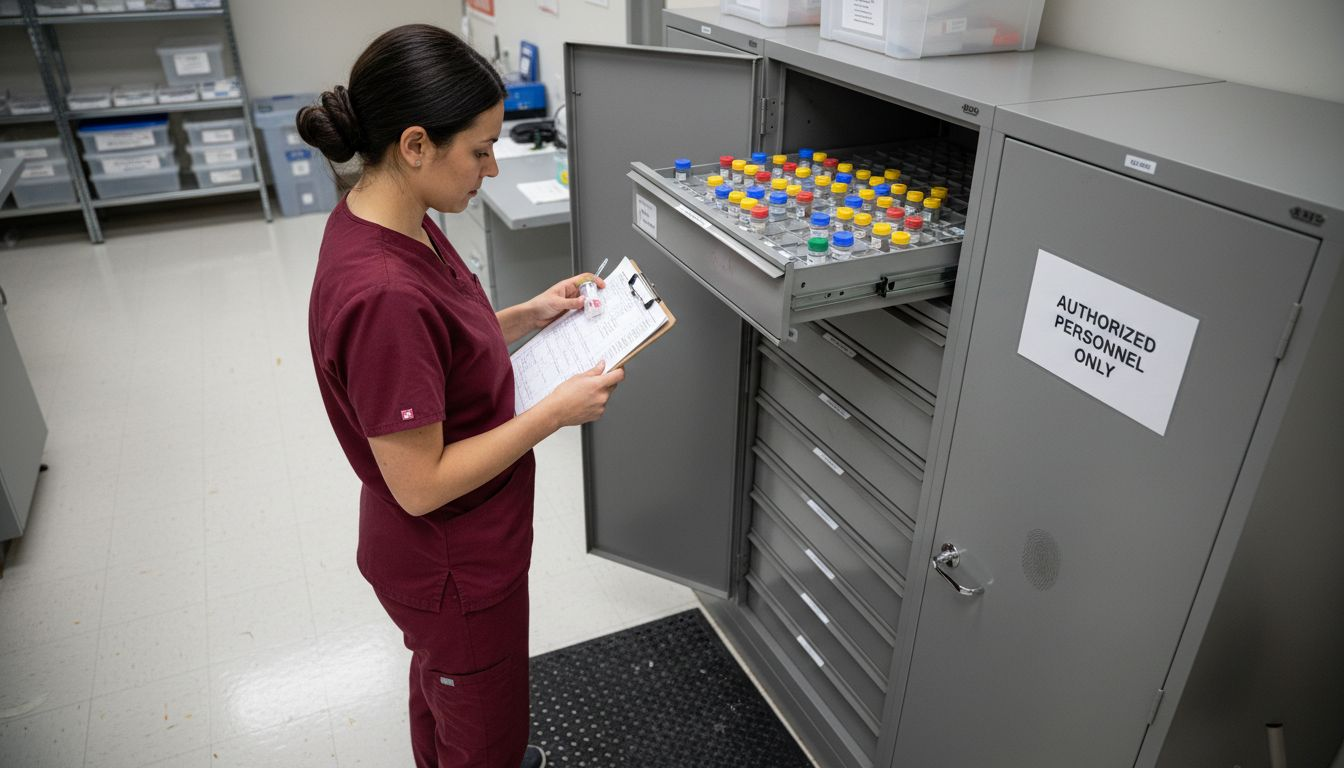
Start by designating a dedicated collection space that limits unauthorized access. This area should be separate from general patient areas and staff break rooms where distractions or interruptions could occur.
Control the physical environment by implementing these security measures:
- Install window coverings to prevent outside observation of the collection process
- Remove outer garments and personal items from the collection area before testing begins
- Secure all water sources to eliminate opportunities for sample dilution
- Eliminate potential adulterants and unauthorized substances from the space
- Keep the area clean and organized with only necessary testing supplies visible
During collection, maintain direct visual supervision of each patient at all times. This prevents sample substitution, dilution, or contamination before the specimen enters your secure storage.
Specimens must remain under your staff’s personal control from collection through storage to maintain chain of custody integrity.
Designate a secure storage area specifically for collected samples and testing supplies. Lock this area when unoccupied and maintain a log documenting who accessed it and when.
Implement a check in system for your testing supplies. Track inventory levels, expiration dates, and lot numbers to catch any unauthorized access or supply tampering immediately.
Train your entire collection team on these security protocols. When staff understand why each procedure matters, they enforce standards more consistently and catch potential security breaches before they compromise test results.
Pro tip: Install a simple monitoring camera or use a sign-in sheet in your collection area to create an additional deterrent against tampering and to document that proper procedures were followed during each collection event.
Step 3: Collect and Handle Samples Safely
Proper sample collection and handling protects test validity and ensures accurate results. Your staff’s technique during this phase directly determines whether your screening data is reliable or compromised.
Begin by verifying patient identity before collection starts. Confirm the patient’s name, date of birth, and medical record number match your documentation to prevent sample mix-ups.
Implement these critical collection procedures:
- Have the patient wash hands with soap and water before providing a sample
- Use aseptic techniques to avoid contamination during collection
- Collect the correct sample amount as specified by your testing protocol
- Label containers immediately with patient information, date, time, and your initials
- Document the collection in your chain of custody records before the patient leaves
During handling, limit sample exposure to trained personnel only. Staff should wear appropriate personal protective equipment including gloves and use secure containers that prevent spills or breakage.
Chain of custody documentation from collection through testing is your legal protection if results are ever questioned in patient care decisions.
Store samples at the proper temperature specified by your testing method. Most samples require refrigeration between 2 and 8 degrees Celsius to maintain integrity until laboratory analysis.
Minimize handling time and transfers between containers. Each time a sample changes hands, you increase contamination risk and create additional chain of custody documentation requirements.
Transport samples in secure, sealed packaging clearly labeled with biohazard symbols. Your transportation procedures should include documentation of who transported the samples, when, and the condition they arrived in at your laboratory.
Pro tip: When using test cups for accurate drug screening, follow the manufacturer’s specific instructions for sample volume and timing to avoid invalid results that require recollection.
Step 4: Interpret and Verify Test Results
Accurate result interpretation separates reliable screening from guesswork. Understanding what control lines and test lines actually mean determines whether your facility catches substance use or misses critical clinical information.
Start by confirming the test validity before reading results. The control line must always be visible, regardless of the result. If no control line appears, the test is invalid and requires retesting.
Recognize these key result patterns:
Use this reference to quickly identify test result meanings:
| Result Pattern | Interpretation | Action Required |
|---|---|---|
| Two lines (control + test) | Negative | No further testing needed |
| One line (control only) | Positive | Confirm and notify staff |
| Faint test line | Negative | Record and monitor |
| No control line | Invalid | Retest sample immediately |
- Two lines present (control line plus test line) indicates a negative result
- One line only (control line visible, no test line) indicates a positive result
- Faint test line is still considered negative, not a weak positive
- No control line means the test failed and is invalid
Read results within the specified timeframe printed on your test instructions. Most rapid tests should be read between 3 to 5 minutes after sample application. Results read too early or too late may be inaccurate.
Faint lines and ambiguous results are not judgment calls. When in doubt, retest or escalate to your laboratory for confirmation testing.
Document your findings clearly in the patient’s medical record. Record the specific result, the time and date read, which staff member conducted the test, and the test method used.
Handle any ambiguous or unclear results by retesting the sample immediately. This prevents delays in patient treatment decisions and eliminates confusion about what the original test actually showed.
When invalid drug test results occur, your documentation becomes critical evidence. Note what made the test invalid, preserve the test device itself, and follow your facility’s protocol for confirming results through laboratory analysis.
Communicate positive results to appropriate clinical staff and follow your facility’s procedures for notifying patients and adjusting treatment plans based on screening outcomes.
Pro tip: Keep a reference guide with photos of positive, negative, and invalid test results visible in your collection area so staff can compare their results accurately without guessing.
Enhance Your Drug Testing Process with Trusted Supplies
Accurate screening results start with the right tools and procedures. This article highlights the challenges rehabilitation centers face in selecting reliable drug testing supplies, securing collection areas, and interpreting test outcomes precisely. You want to avoid invalid results, maintain strict chain of custody, and confidently identify positive or negative outcomes every time. Your facility deserves testing supplies that deliver consistency, meet regulatory standards, and support your staff’s workflow seamlessly.
At 12 Panel Now, we understand the importance of dependable drug testing supplies in achieving these critical goals. Whether you need single-panel or multi-panel test kits, secure collection materials, or clear documentation to uphold compliance, our products are designed to empower your team. Don’t let inferior supplies compromise patient care or your facility’s reputation.
Take control over your drug screening process today by exploring our selection of high-quality drug testing supplies. Make your next step toward reliable results and safer patient care by visiting 12 Panel Now and ordering the dependable supplies your facility needs to succeed.
Frequently Asked Questions
What supplies do I need for accurate drug testing in my facility?
You need quality-assured testing supplies that meet laboratory standards. Evaluate your testing volume and the types of substances screened, and choose reliable suppliers that provide proper documentation and support.
How should I set up a secure collection area for drug testing?
Designate a space that restricts access and minimizes distractions. Implement security measures such as window coverings, controlled water sources, and ensuring direct supervision of patients during the collection process.
What are the best practices for collecting and handling drug test samples?
Verify patient identity and use aseptic techniques during sample collection. Limit exposure of samples to trained staff only and document chain of custody to ensure test validity and prevent contamination.
How do I interpret and verify drug test results?
Start by checking for the presence of a control line before reading results. Document findings clearly, and retest samples if results are ambiguous or invalid to maintain accuracy and support further patient care decisions.
What steps should I take if a drug test result is invalid?
When a test is invalid, you should retest the sample immediately following proper collection protocols. Document the invalid status and follow your facility’s procedures for confirmation testing to ensure accurate results.
How can I train my staff on drug testing protocols effectively?
Provide comprehensive training on testing procedures, security protocols, and result interpretation. Use practical demonstrations and reference guides to reinforce learning and ensure staff are familiar with each step of the drug testing process.