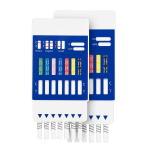
5 Panel Drug Test Cups

When a workplace incident occurs, a court-ordered test is due, or a new hire’s start date is fast approaching, the last thing anyone needs is uncertainty about which drug test to order. Choosing the right panel count is essential. Screening for too few substances risks missing critical data, while screening for too many creates unnecessary expenses. For many organizations and individuals, the 5 panel drug test provides the ideal balance of coverage and cost.

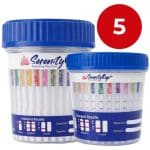
5 Panel Urine Drug Test Cup CLIA Waived 90ML Detecting AMP, COC, OPI, PCP & Adulterants, As low as $0.89
ADLTX, AMP, COC, OPI/MOR, PCP, THCCLIA WAIVEDAs low As0.89 $0.89 - $1.49
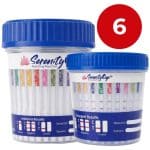
5 Panel Drug Test Cup CLIA Waived 90ML Detecting AMP, COC, MET, OPI and OXY, As low as $0.89
AMP, COC, MET, OPI/MOR, OXYCLIA WAIVEDAs low As0.89 $0.89 - $1.49
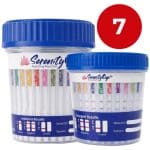
5 Panel Drug Test Cup CLIA Waived Detecting AMP, COC, THC, MOP, MAMP as low as $0.99 Each
ADLTX, AMP, COC, MET, OPI/MOR, THCCLIA WAIVEDAs low As$ 0.99 $0.99 - $1.59
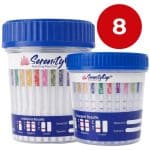
5 Panel Drug Test Cup CLIA Waived 120ml Click Top Detecting Adulterations, As low as $0.99
ADLTX, AMP, COC, OPI/MOR, PCP, THCCLIA WAIVEDAs low As$ 0.99 $0.99 - $1.59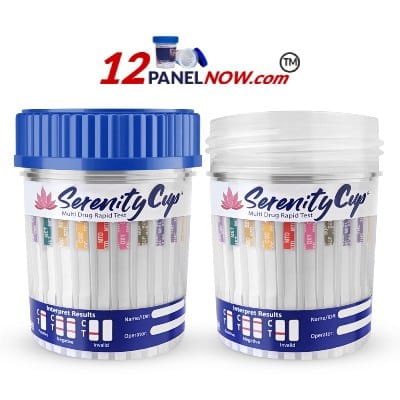
5 Panel Drug Test Cup CLIA Waived Detecting THC, COC, AMP, OPI and PCP, As low as $0.99
AMP, COC, OPI/MOR, PCP, THCCLIA WAIVED, FDA ApprovedAs low As$ 0.99 $0.99 - $1.59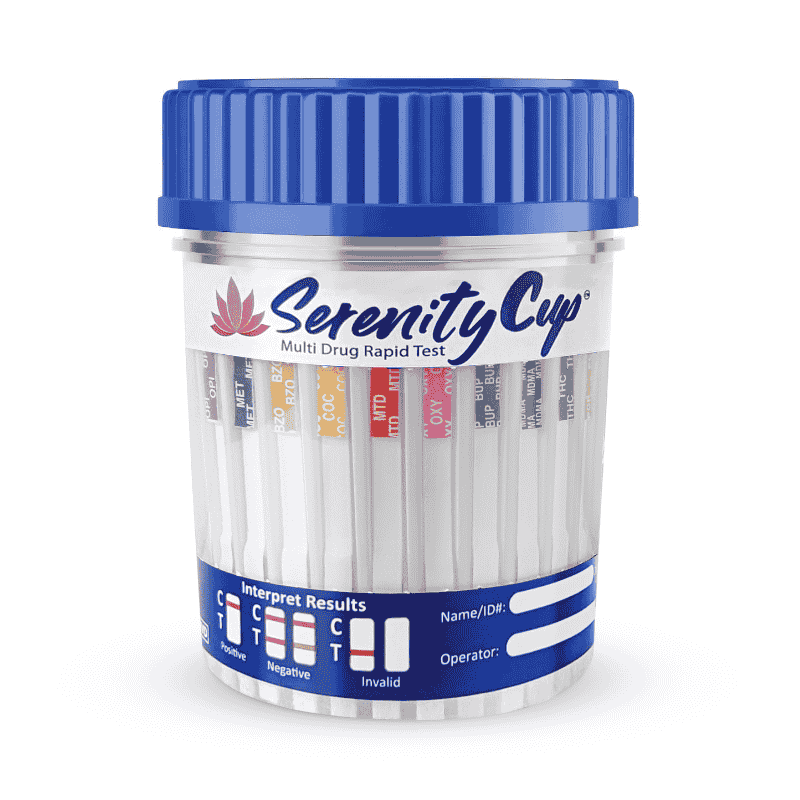
5 Panel Drug Test CLIA Waived 120ML Detecting BZO, COC, THC, METH, MOP & Adulterants, As Low as $0.99
ADLTX, BZO, COC, MET, OPI/MOR, THCCLIA WAIVEDAs low As$ 0.99 $0.99 - $1.59Check out our Blog

Troubleshooting Invalid Drug Test Results: A Step-by-Step Guide
Posted by 12 Panel Now Use this quick matrix to classify the result pattern first—then choose the correct…
Learn More
Presumptive vs. confirmed drug test positives: The path to definitive results
Posted by 12 Panel Now A presumptive positive is an early warning, not a final verdict. This process…
Learn More
How to read a drug test: Your guide to faint lines, ghost lines, and confident results
Posted by 12 Panel Now A faint line can still mean a negative result. Use this gallery to…
Learn MoreWhat Does A 5 Panel Drug Test Screen For?
A standard 5 panel drug test screens for five of the most commonly abused substances: marijuana (THC), cocaine (COC), amphetamines (AMP), opiates (OPI), and phencyclidine (PCP). This combination was originally established by the Substance Abuse and Mental Health Services Administration (SAMHSA) as the baseline for federally mandated workplace drug testing, which is why it remains the most widely recognized panel configuration in the industry.
Each panel targets a specific drug class by detecting its metabolites in urine, the byproducts the body produces as it processes a substance. Detection windows vary depending on the drug, the frequency of use, and individual metabolism, but urine-based testing is widely regarded as one of the most reliable and cost-effective screening methods available.
For many testing programs, these five substances cover the most likely areas of concern. That said, the right panel for any given situation depends on the specific needs of the organization or individual conducting the test. Anyone using results in a legal, clinical, or employment context should have presumptive positives confirmed by a licensed laboratory before taking action.
How 5 Panel Drug Test Cups Work
5-panel drug test cups are a self-contained urine testing device designed for fast, accurate results without the need for a laboratory. Understanding how these cups function helps buyers use them correctly and interpret results with confidence. Here is a breakdown of the three key stages of the testing process:
Specimen Collection
The test cup serves as both the collection vessel and the testing device, simplifying the process considerably. The donor provides the specimen directly into the cup, which is then sealed. Most cups feature a built-in temperature strip to verify the specimen falls within the normal body temperature range—a critical safeguard against adulterated or substituted samples.
The Immunoassay Reaction
Once the specimen is collected, an internal immunoassay reaction begins automatically. The urine travels through the cup’s testing strips, where it interacts with antibodies specific to each of the five target substances. If a substance is present above the designated cutoff level, it interrupts the reaction and produces a visible result on the corresponding panel.
Reading The Results
Results are typically visible within five minutes. Each panel displays either one or two lines. Two lines indicate a negative result, meaning no substances were detected above the cutoff threshold. A single line indicates a presumptive positive. Any result intended for legal, clinical, or employment action should be confirmed by a certified laboratory before final decisions are made.
Who Uses A Five Panel Drug Test And Why
The five panel drug test is one of the most widely used screening tools across both professional and personal settings. Its alignment with federal testing guidelines makes it a practical default for a broad range of programs and organizations. Here is a look at three of the most common groups that rely on it:
Employers And Workplace Programs
Federal law mandates a 5-panel drug screen for safety-sensitive roles regulated by agencies like the DOT, including transportation, aviation, and pipeline industries. Many private employers adopt this same panel as their baseline for pre-employment and random testing. Its established cutoff levels and broad recognition make it a defensible, practical choice for workplace drug testing programs.
Courts, Probation, And Criminal Justice
Probation officers, drug courts, and pretrial supervision programs frequently rely on the five panel drug test to monitor compliance with court-ordered sobriety conditions. The panel’s coverage of high-prevalence substances makes it a reliable tool in these settings. Results that factor into legal decisions should always be confirmed through a certified laboratory.
Rehab Centers And Individual Users
Treatment facilities use five panel testing to track patient progress and support accountability during recovery. Individual buyers, including parents monitoring a dependent or someone checking their own system before a scheduled test, also turn to this panel for its straightforward coverage and ease of use at home.
Reading and Interpreting Your 5 Panel Drug Screen Results
Correctly interpreting a 5-panel drug screen is as vital as the administration itself. Misreading results causes confusion and leads to incorrect conclusions about a donor’s status. Use these guidelines for accurate interpretation:
Negative Results
A negative result is shown by two visible lines: one in the control (C) region and one in the test (T) region. The test line does not need to be bold; even a faint line constitutes a negative result. This indicates the substance was not detected above the established cutoff level.
Presumptive Positive Results
A presumptive positive occurs when only the control line appears, with no line in the test region. This indicates the substance was detected at or above the cutoff threshold. Because an initial screen is not definitive, it is termed “presumptive.” A licensed laboratory must confirm any positive before taking consequential action.
Invalid Results
An invalid result occurs when no line appears in the control region, regardless of whether a line appears in the test region. This typically signals a problem with the specimen, the test, or the collection process. In these cases, the test should be voided and the donor should be asked to provide a new specimen using a fresh cup.
What To Look For When Buying A 5 Panel Urine Drug Test
Not all 5 panel urine drug test cups are built to the same standard, and the differences between products can have real implications for accuracy and compliance. Knowing what to look for before placing an order helps ensure the tests you receive will hold up in the settings where you need them most. Here is what to evaluate when comparing options:
Accuracy And Compliance Credentials
The most important factor when selecting a drug test cup is whether it carries the right compliance certifications for your use case. Look for products that are CLIA waived and FDA 510(k) approved, as these designations indicate the test has met federal standards for accuracy and performance. Tests intended for legal or clinical use should always carry these credentials to support defensible, reliable results.
Shelf Life And Storage
A product’s shelf life directly affects its value, especially for organizations that purchase in bulk. Look for cups with a 24-month shelf life, which allows for larger orders without the risk of products expiring before they can be used. Proper storage conditions, typically room temperature and away from direct sunlight, also play a role in maintaining test integrity over time.
Supplier Reliability And Pricing
Consistent availability matters as much as product quality, particularly for high-volume programs that cannot afford delays. Buying directly from a manufacturer or a large-scale supplier reduces costs and ensures stock is reliably on hand. Same-day shipping options and wholesale pricing are worth prioritizing, especially for facilities or agencies placing recurring bulk orders.
Frequently Asked Questions About 5 Panel Drug Test
How long does a 5 panel drug test take to produce results?
Most 5 panel drug test cups produce readable results within 5 minutes of specimen collection. Results should be read no later than 10 minutes after testing, as lines may change appearance beyond that window and the result would no longer be considered valid.
Can a 5 panel drug test detect synthetic drugs?
Standard 5 panel cups are not designed to detect synthetic substances such as K2, Spice, or fentanyl. If screening for synthetic drugs is a priority, a higher panel count or specialty test strips designed for those specific substances would be more appropriate.
What is the urine cutoff level for a 5 panel drug test?
Cutoff levels vary by substance but generally follow SAMHSA guidelines. For example, the THC cutoff is typically 50 ng/mL, while cocaine metabolites are screened at 300 ng/mL. These thresholds are set to minimize false positives from incidental exposure while accurately detecting meaningful use.
Is a 5 panel drug test observed or unobserved?
Collection can be either observed or unobserved depending on the program’s policies and applicable regulations. Federally mandated testing programs have specific protocols governing observation. Organizations should consult their legal counsel or program administrator to determine the appropriate collection procedure for their setting.
How should used drug test cups be disposed of?
Used drug test cups should be treated as biohazardous waste and disposed of in accordance with local regulations governing biological materials. Many facilities use designated sharps or biohazard containers for this purpose. Always follow your organization’s standard protocols for handling and disposing of specimen-containing materials.
Can medications cause a false positive on a 5 panel drug test?
Certain over-the-counter and prescription medications can trigger a presumptive positive on an initial screening. This is one of the key reasons why presumptive positives should always be confirmed by a certified laboratory, where more specific testing methods can distinguish between a true positive and a cross-reactive substance.
How many panels do I need if the 5 panel does not cover everything I need to screen for?
If the standard five substances do not align with your screening requirements, cup configurations are available ranging from 5 to 28 panels. Extended panels can include substances such as benzodiazepines, barbiturates, methadone, oxycodone, fentanyl, and more, allowing programs to tailor their testing to the specific substances of concern in their population.
Can a 5 panel drug test be used for random workplace testing programs?
Yes, 5 panel drug test cups are widely used in random workplace testing programs, including in federally regulated industries. Organizations should ensure their chosen product carries the appropriate CLIA waived and FDA approved credentials to support their program’s compliance requirements.
How should drug test cups be stored before use?
Unopened cups should be stored at room temperature, away from direct sunlight, humidity, and extreme temperatures. Improper storage can compromise internal reagents and affect accuracy. Always refer to the manufacturer’s storage guidelines on the packaging before use.