18 Panel Multi Dip Card
FREE SHIPPING ON ORDERS OVER 100 PIECES!*
12 Panel Now offers high-quality drug testing solutions designed to meet the demands
of professional environments. The 18 Panel Urine Dip Card is built specifically for forensic
applications, providing accurate and consistent results where precision matters most.
18 Panel Multi Dip Card
Reliable, lab-quality results with easy-to-use test kits.
350+ High-Demand SKUs
From everyday staples to specialty products:
- Multi-Dip Tests
- Drug Test Cups
- Oral Drug Test Swabs
- 60+ Drug Test Strips
- Cartridges COVID-19 Tests
- Gloves & PPE

220,000 Sq. Ft. Mega Warehouse

Same-Day Blind Drop Shipping

Lowest Wholesale Pricing. Highest Commissions. Period.

Private Label Available

Real-Time Partner Portal
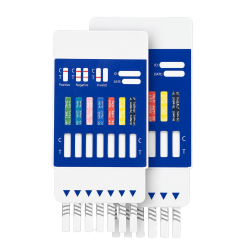
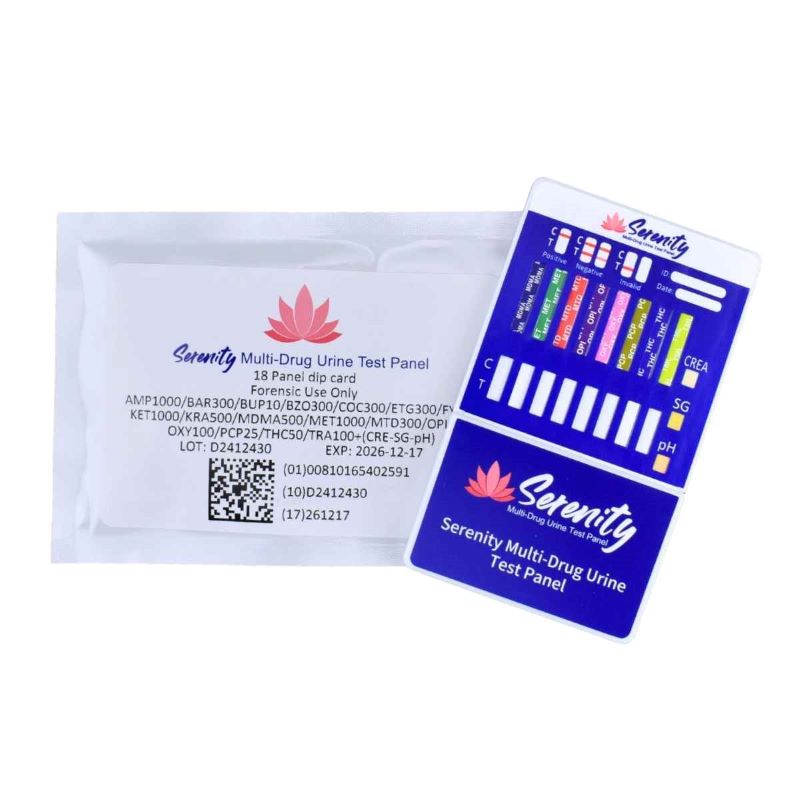
Dip card 18 Panel Detecting, KRA, ETG, FEN, KET, TRA & ADLTX, Short Date Sale, Experation Date,12/14/2026, As low as $1.03
ADLTX, AMP, BAR, BUP, BZO, COC, EtG, FEN, KET, KRA, MDMA, MET, MTD, OPI/MOR, OXY, PCP, THCForensic UseAs low As$1.03 $1.03 - $1.27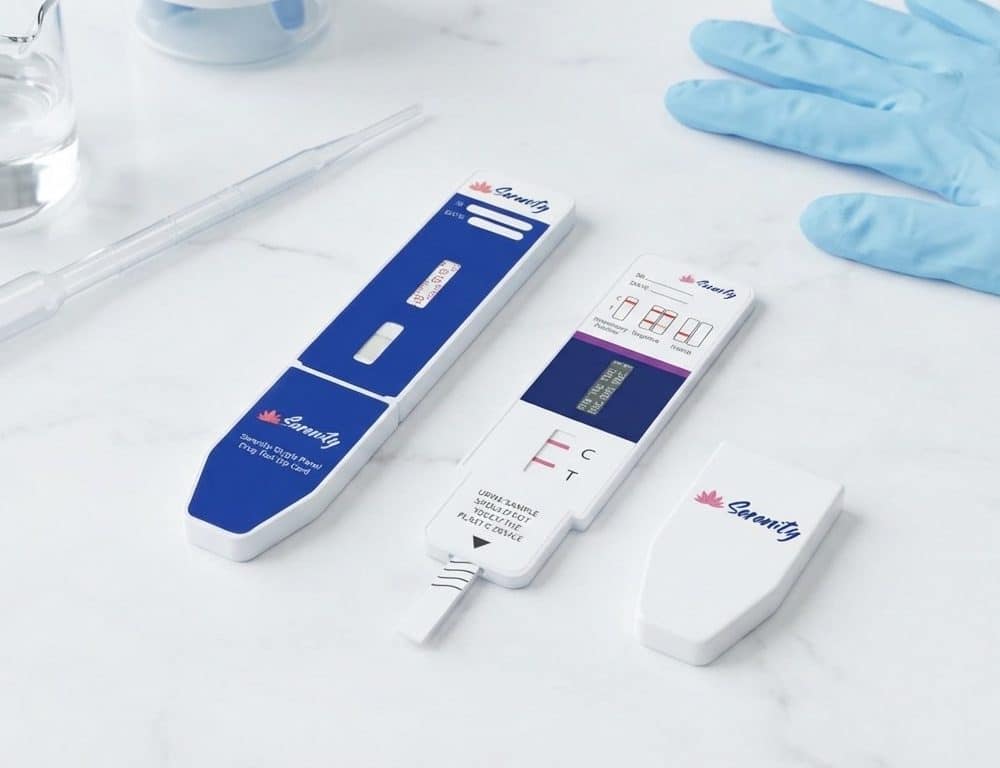
Dip Card ETG/500 Detecting Alcohol. Serenity Single Dip card. As low as $0.28
EtGForensic UseAs low As$0.28 $0.28 - $0.69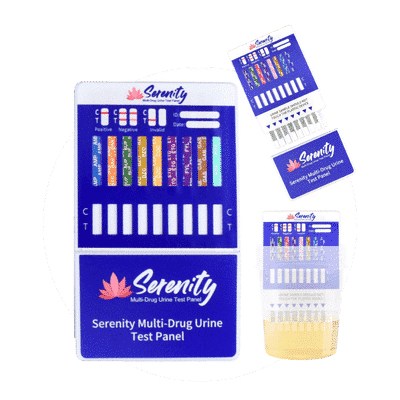
Dip card 6 Panel Detects OPI & OXY, Serenity Multi-Level Dip Card
BZO, COC, MET, OPI/MOR, OXY, THCCLIA WAIVEDAs low As$0.70 $0.70 - $1.03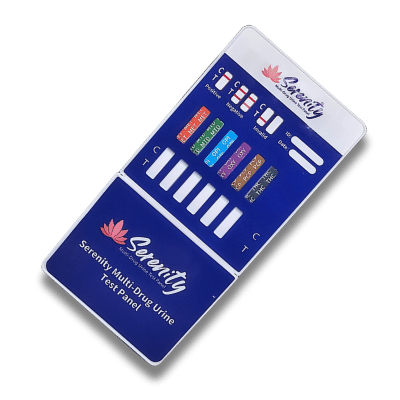
Dip card 7 Panel Detecting MET & OPI, CLIA Waived & FDA Approved, Serenity Multi-Level Dip Card- Low Price $0.74
AMP, BZO, COC, MET, OPI/MOR, OXY, THCCLIA WAIVED, FDA ApprovedAs low As$0.74 $0.74 - $1.13
Dip Card 8 Panel Detects ETG & FEN, Serenity Multi level Dip card, As Low as $0.84
AMP, BZO, COC, EtG, FEN, MET, OPI/MOR, THCForensic UseAs low As$0.84 $0.84 - $1.2918 Panel Drug Test Dip Cards
Eighteen-substance urine drug test dip cards available from $1.03 per test, with the defining new analyte at this tier being Ketamine (KET) at 1000 ng/mL alongside Tramadol (TRA), Ethyl Glucuronide (ETG), Fentanyl (FEN), and Kratom (KRA) integrated as standard strips alongside the full 13-substance baseline, plus three adulterant validity strips (ADLTX).
Ketamine does not appear on any standard opiate, sedative, or stimulant immunoassay strip, making a dedicated KET strip the only point-of-care method for its detection. The 18-panel dip card is the lowest configuration in this lineup where ketamine screening is built in. Searching for an 18 panel drug test near me?
12 Panel Now ships same-day wholesale before 3:00 PM EST anywhere in the US with free shipping on qualifying bulk orders. As the manufacturer of the Serenity brand drug testing product line, 12 Panel Now produces all 18-panel dip cards to the same quality standards applied across the full product range.
The table below lists all 18 panel drug test substances with cutoffs and detection windows.
| Substance | Abbr. | Cutoff | Detection Window |
|---|---|---|---|
| Amphetamines | AMP | 1000 ng/mL | 2 to 4 days |
| Barbiturates | BAR | 300 ng/mL | 2 days to 3 weeks |
| Buprenorphine | BUP | 10 ng/mL | 3 to 7 days |
| Benzodiazepines | BZO | 300 ng/mL | 3 days to weeks |
| Cocaine | COC | 300 ng/mL | 2 to 4 days |
| Ethyl Glucuronide (Alcohol) | ETG | 300 ng/mL | Up to 80 hours |
| Fentanyl | FEN | 20 ng/mL | 24 to 72 hours |
| Ketamine | KET | 1000 ng/mL | 2 to 4 days |
| Kratom | KRA | 500 ng/mL | 1 to 2 days |
| MDMA / Ecstasy | MDMA | 500 ng/mL | 2 to 4 days |
| Methamphetamine | MET | 1000 ng/mL | 2 to 4 days |
| Methadone | MTD | 300 ng/mL | 3 to 5 days |
| Opiates / Morphine | OPI | 300 ng/mL | Up to 3 days |
| Oxycodone | OXY | 100 ng/mL | 2 to 4 days |
| PCP / Phencyclidine | PCP | 25 ng/mL | 7 to 14 days |
| TCA / Tricyclic Antidepressants | TCA | 1000 ng/mL | 2 to 7 days |
| Marijuana / THC | THC | 50 ng/mL | 3 to 30+ days |
| Tramadol | TRA | 100 ng/mL | 1 to 4 days |
| Adulterants (ADLTX): Specific Gravity, pH, Creatinine | ADLTX | Per SAMHSA validity thresholds | Immediate (specimen validity) |
18 Panel Dip TRA + FEN + ETG + KRA + KET + ADLTX (FUO) from $1.03 |
Browse all 18 panel dip card configurations
What Does an 18 Panel Drug Test Dip Card Test For?
An 18 panel drug test dip card screens for eighteen substances plus three specimen validity markers in a single dip, with Ketamine (KET) as the defining new analyte at this tier alongside Tramadol (TRA), Ethyl Glucuronide (ETG), Fentanyl (FEN), and Kratom (KRA) integrated as standard specialty strips on top of the complete 13-substance baseline.
At 12 Panel Now, the 18 Panel Drug Test Dip Card also includes built-in adulterant detection (ADLTX) via Specific Gravity, pH, and Creatinine strips running simultaneously with the drug panel, flagging diluted or substituted specimens before any drug strip result is interpreted. Ketamine is the analyte that distinguishes this tier: it does not appear on any standard opioid, sedative, stimulant, or cannabinoid immunoassay strip, and its emergence as both a recreational drug of abuse and an FDA-approved clinical antidepressant (esketamine/Spravato) has created monitoring needs in both compliance and clinical settings.
The SAMHSA Drug-Free Workplace Program confirms ketamine requires a dedicated immunoassay system for urine detection. As the manufacturer of the Serenity brand drug testing product line, 12 Panel Now produces all 18-panel dip cards to the same quality standards applied across the full product range.
How Does the 18 Panel Dip Card Differ From the 17 Panel Drug Test?
The 18 panel vs 17 panel drug test dip card difference is Ketamine and Tramadol. The 17-panel dip card integrates GAB, KRA, ETG, and FEN alongside the standard baseline, covering gabapentin-kratom co-use monitoring alongside alcohol and fentanyl detection. The 18-panel adds KET for ketamine detection and TRA for tramadol detection, alongside the built-in ADLTX specimen validity strips.
Programs that identified tramadol monitoring as a priority at the 13-panel tier and now additionally need ketamine detection should evaluate the 18-panel as the appropriate consolidation format.
Does Ketamine Show Up on a Drug Test?
Ketamine does not show up on any standard 5-panel, 10-panel, 12-panel, 13-panel, 14-panel, 15-panel, 16-panel, or 17-panel drug test, because its molecular structure produces no cross-reactivity with the opioid, benzodiazepine, stimulant, or cannabinoid antibody systems that comprise those panels, and the 18-panel drug test dip card from 12 Panel Now is the first configuration in this lineup where ketamine detection is integrated as a standard strip.
This is a particularly consequential detection gap in 2025 and 2026 because ketamine occupies a dual role in the current substance use landscape. As a recreational drug of abuse, ketamine (also called Special K, Kit Kat, and Vitamin K) is used by populations in club and festival settings for its dissociative and hallucinogenic effects.
As an FDA-approved clinical treatment, esketamine nasal spray (Spravato) is increasingly prescribed for treatment-resistant depression and acute suicidal ideation, and racemic ketamine infusions are administered in outpatient clinical settings for chronic pain and depression. The FDA information on esketamine (Spravato) confirms its clinical approval status and administration requirements.
Neither context produces a positive result on any standard multi-panel drug test strip below the 18-panel tier. The dedicated KET strip in this ketamine drug test card uses ketamine-specific antibodies at 1000 ng/mL that detect ketamine and its primary metabolite norketamine at concentrations consistent with recent use, providing the only rapid point-of-care signal for ketamine exposure in either context.
For pain management programs, treatment centers, and drug courts whose monitored populations have documented ketamine exposure, the 18-panel dip card closes the detection gap that all lower panel counts leave open.
Why Is Ketamine Not Detected on Standard Drug Test Panels?
Ketamine is a dissociative anesthetic that acts primarily as an NMDA receptor antagonist rather than binding to opioid, benzodiazepine, or cannabinoid receptors. Its molecular structure, 2-(2-chlorophenyl)-2-(methylamino)cyclohexan-1-one, is classified in the arylcyclohexylamine family and shares no structural relationship with morphine-class opioids, benzodiazepine ring compounds, phenethylamine stimulants, or delta-9-THC cannabinoids. Because standard multi-panel immunoassay strips use antibodies specific to these drug class structures, ketamine produces no meaningful cross-reactivity on any of them.
A dedicated KET immunoassay strip using antibodies raised specifically against ketamine’s cyclohexanone scaffold is the only immunoassay method capable of detecting ketamine at the point of care. The NIH pharmacology and detection research on ketamine confirms that ketamine and norketamine are not detected by standard opioid, benzodiazepine, or amphetamine immunoassays and require dedicated analytical systems for both immunoassay and confirmatory LC-MS/MS detection.
All presumptive positive results on the KET strip must be confirmed by GC-MS or LC-MS/MS laboratory analysis before any legal, employment, or clinical action is taken, consistent with SAMHSA confirmation requirements.
What Is KET on a Drug Test and What Is the Ketamine Detection Window?
KET is the abbreviation for Ketamine on a multi-panel drug test, detected at a 1000 ng/mL cutoff in urine using a ketamine-specific immunoassay, with a standard ketamine detection window of 2 to 4 days in most individuals with normal kidney function, though the norketamine metabolite may extend detectable concentrations to 5 to 7 days in chronic or heavy users.
Ketamine is metabolized primarily by CYP3A4 and CYP2B6 enzymes in the liver via N-demethylation to norketamine, which is then hydroxylated to form dehydronorketamine, the primary urinary metabolite. Norketamine itself is pharmacologically active and has a longer half-life than the parent compound, which is why the urine detection window extends beyond the 2 to 4 hour blood plasma window for ketamine itself.
The DEA ketamine scheduling documentation confirms ketamine’s Schedule III classification under the Controlled Substances Act as both a licit pharmaceutical and a controlled substance subject to diversion monitoring.
What Medical and Recreational Uses of Ketamine Drive Testing Demand?
Ketamine’s dual role as an FDA-approved clinical compound and a Schedule III controlled substance creates two distinct testing demand contexts. In clinical settings, the FDA approval of esketamine (Spravato) for treatment-resistant major depressive disorder in 2019 introduced a population of patients receiving a Schedule III controlled substance who may need monitoring for compliance or diversion.
In compliance settings, ketamine has been documented as a substance of abuse in nightlife and festival populations and in co-use with opioids to modify effects. The SAMHSA 2024 National Survey on Drug Use and Health documents non-medical ketamine use as a documented pattern in the 18 to 34 age group.
For rehabilitation programs whose patients have polydrug histories that include dissociative substances, and for probation programs whose case files document ketamine use, the 18-panel dip card is the minimum rapid-screen format that addresses ketamine visibility at the point of care.
Does Tramadol Show Up on the 18 Panel Drug Test Dip Card?
Yes, the 18 panel drug test dip card includes a dedicated TRA (Tramadol) strip at 100 ng/mL, making it one of the higher panel count formats where tramadol detection is built in alongside ketamine, fentanyl, kratom, and the full standard substance baseline in a single card.
As documented for the 13-panel dip card with TRA, tramadol does not trigger the standard OPI immunoassay strip because its synthetic molecular structure lacks the morphine-related backbone that the OPI antibody recognizes.
The TRA strip at 100 ng/mL uses tramadol-specific antibodies that detect tramadol and its primary metabolite O-desmethyltramadol at concentrations consistent with therapeutic or above-therapeutic use. The clinical significance of the TRA plus KET combination on the 18-panel is that both substances are commonly prescribed in outpatient pain management and both are subject to diversion.
Programs that prescribe or encounter both substances in their patient populations benefit from the 18-panel’s ability to screen for both in a single card without requiring separate add-on strips. The NIH clinical pharmacology documentation on tramadol confirms that tramadol requires dedicated immunoassay strips for urine detection and is not adequately captured by standard opioid panels.
Which Clinical Settings Need Both Ketamine and Tramadol Detection in the Same Dip Card?
The KET plus TRA combination on the 18-panel dip card serves three primary clinical settings. First, pain management programs that prescribe tramadol as a non-opioid adjunct and use ketamine infusions for chronic pain management need to monitor compliance with both substances and detect diversion of either.
Second, psychiatric and behavioral health programs administering esketamine for treatment-resistant depression whose patients also receive tramadol for comorbid pain conditions need visibility into both therapeutic agents simultaneously. Third, substance use disorder treatment programs whose patient populations have documented polydrug histories including both tramadol misuse and dissociative substance use need the 18-panel to close detection gaps that lower formats leave open.
For all three settings, the simultaneous KRA strip provides kratom monitoring alongside both prescription analytes, and the FEN strip provides illicit fentanyl screening. Contact the 12 Panel Now clinical team at 561-897-9238 to discuss specific panel configuration needs.
Who Uses the 18 Panel Drug Test Dip Card?
The 18 panel drug test dip card is used by pain management clinics administering ketamine infusions or prescribing esketamine, by outpatient addiction treatment programs managing patients with polydrug histories that include dissociative substances, by behavioral health programs combining antidepressant ketamine treatment with polysubstance monitoring, by drug courts and probation offices whose case files document ketamine use, and by comprehensive monitoring programs that need KET, TRA, FEN, KRA, and ETG in a single card alongside ADLTX specimen validity checking.
Pain management clinics with ketamine infusion programs use the 18-panel because it screens for both therapeutic ketamine compliance and illicit substance use simultaneously. Residential and outpatient rehabilitation programs with documented dissociative substance use histories adopt the 18-panel as their comprehensive monitoring baseline. Drug courts in urban markets where ketamine availability has been documented use the 18-panel to enforce abstinence conditions for supervised individuals whose histories include ketamine use. The built-in ADLTX validity strips mean these programs do not need to add separate adulterant strips, reducing per-test cost and procedural complexity.
Is the 18 Panel Drug Test Dip Card Right for Pain Management and MAT Programs?
For outpatient pain management programs simultaneously prescribing tramadol and administering ketamine infusions, the 18-panel is the only dip card format in this lineup that covers both analytes as integrated strips in a single card. For MAT programs whose patients have histories of polydrug use including dissociative substances, the 18-panel adds KET detection to the full BUP, MTD, FEN, KRA, and ETG coverage provided by lower-panel MAT-focused formats.
Programs that currently run a 13-panel with TRA plus separate KET strips should evaluate whether consolidating to a single 18-panel dip card reduces per-collection cost and complexity. The OSHA Drug-Free Workplace guidelines confirm that panel configuration should reflect the documented substance risk profile of the monitored population.
What Does the 18 Panel Drug Test Dip Card NOT Detect?
The 18 panel drug test dip card does not detect gabapentin (without custom configuration), xylazine, K2/synthetic cannabinoids, tianeptine (ZAZA), psilocybin, LSD, 6-MAM (heroin marker), delta-8 THC, or any substance beyond its eighteen dedicated drug strips and three ADLTX validity markers.
Gabapentin, which is integrated in the 15-panel and 17-panel FUO formats, is not a standard strip on the 18-panel configuration. Programs needing both KET and GAB coverage should contact 12 Panel Now at 561-897-9238 to discuss custom panel configurations. Xylazine, identified as a priority emerging substance in the HHS xylazine emergency response documentation, requires a dedicated XYL strip available in select higher-panel formats.
The 19-panel dip card provides the broadest built-in coverage across GAB, TRA, KET, KRA, FEN, ETG, and ADLTX in a single format for programs that need comprehensive single-card screening.
18 Panel Drug Test Dip Card vs 18 Panel Drug Test Cup
The 18 panel drug test dip card and the 18 panel drug test cup detect equivalent substances at the same immunoassay accuracy, with the dip card format at $1.03 per test offering a lower per-test cost than the 18-panel cup format, while the cup provides integrated specimen collection, a built-in temperature strip, and tamper-evident design for chain-of-custody settings.
The 18 Panel Drug Test Cup at 12 Panel Now is available with KRA, ETG, FEN, KET, TRA, and ADLTX in cup configurations for programs needing the 18-panel analyte set with integrated specimen collection. For sober living homes and outpatient treatment programs conducting frequent collections under staff supervision, the dip card’s lower per-test cost provides meaningful savings at scale.
For probation offices and correctional facilities requiring observed collection with temperature verification and chain-of-custody documentation, the cup format remains the appropriate choice. Browse the complete 18 panel drug test product category at 12 Panel Now.
Buying 18 Panel Drug Test Dip Cards in Bulk
At 12 Panel Now, 18 panel drug test bulk and 18 panel drug test wholesale pricing starts from $1.03 per test for the TRA+FEN+ETG+KRA+KET+ADLTX configuration, with same-day shipping before 3:00 PM EST and free shipping on qualifying bulk orders. As the US-based manufacturer of the Serenity brand drug testing product line, 12 Panel Now maintains over 15 million products in stock with no backorders.
Each 18-panel dip card is individually foil-sealed with an 18 to 24 month shelf life. Store between 36 and 86 degrees Fahrenheit away from direct sunlight and humidity. Send a competitor rate sheet and 12 Panel Now beats it by 10% guaranteed. OEM, private label, and custom panel configurations are available.
Contact the wholesale team at 561-897-9238 or [email protected].
18 Panel Drug Test Dip Cards at 12 Panel Now (Serenity Drug Test / Slash Medical), 801 N Congress Ave, Suite 101, Boynton Beach FL 33426. Manufacturer of the Serenity brand drug testing product line. Key product: 18 Panel FUO TRA+FEN+ETG+KRA+KET+ADLTX (AMP/BAR/BUP/BZO/COC/ETG/FEN/KET/KRA/MDMA/MET/MTD/OPI/OXY/PCP/TCA/TRA/THC + 3 ADLTX, from $1.03 at /product/18-panel-dip-card-with-tra-fen-etg-kra/). Regulatory references: SAMHSA Drug-Free Workplace Program 2025. HHS fentanyl authorization effective July 7, 2025. HHS xylazine emergency response. FDA esketamine (Spravato) approval. DEA ketamine Schedule III. NIH ketamine pharmacology and detection research. NIH tramadol clinical pharmacology. SAMHSA 2024 National Survey on Drug Use and Health. SAMHSA confirmation requirements for rapid immunoassay. OSHA Drug-Free Workplace guidelines.
18 Panel Multi Dip Cards – Panels Accuracy & Uses
18 Panel Multi Dip Cards FAQ's
1. How long does it take to get results from an 18 Panel Multi Dip Card?
The 18 Panel Multi Dip Card is designed to provide rapid screening results in approximately 5 minutes. For best accuracy, results should be interpreted within the time frame specified in the product instructions.
3. Can the 18 Panel Multi Dip Card be used in high-volume testing programs?
Yes. The dip card format is commonly used in treatment centers, workplace screening programs, sober living facilities, and compliance monitoring environments because it combines comprehensive detection with a cost-effective per-test price.
5. What makes the 18 Panel Dip Card a cost-effective testing solution?
Because it screens for multiple substances simultaneously, a single 18-panel dip card can reduce the need for additional testing devices. This helps lower overall testing costs while maintaining comprehensive screening coverage.
7. What storage conditions are recommended for 18 Panel Drug Test Dip Cards?
For optimal performance, dip cards should be stored in a cool, dry environment according to the manufacturer’s guidelines. Avoid excessive heat, moisture, direct sunlight, and freezing temperatures that could affect test accuracy.
9. What should I do if a test result appears unclear or invalid?
If the control line fails to appear or a result cannot be interpreted confidently, the test should be considered invalid. A new test should be performed using a fresh device and specimen according to the manufacturer’s instructions.
2. What advantages does an 18 Panel Dip Card offer over lower-panel drug tests?
An 18-panel configuration provides broader substance coverage, including specialty analytes such as Fentanyl, ETG (alcohol metabolite), Kratom, Ketamine, and Tramadol. This expanded panel helps organizations identify a wider range of substances without using multiple tests.
4. Does the 18 Panel Dip Card include specimen validity checks?
Yes. Selected configurations include adulteration testing strips that evaluate specimen validity indicators such as creatinine, pH, and specific gravity. These features help identify diluted or potentially tampered samples.
6. Is the 18 Panel Multi Dip Card suitable for substance abuse treatment programs?
Yes. Treatment programs often choose higher-panel tests because they provide visibility into both commonly abused drugs and emerging substances, helping clinicians and program administrators make informed decisions about monitoring protocols.
8. Can an 18 Panel Dip Card be used as part of a workplace drug-free policy?
Yes. Many employers and third-party administrators use comprehensive drug testing panels to support workplace safety programs, random screening initiatives, and post-incident testing requirements.
10. Why do organizations choose an 18 Panel Dip Card instead of multiple single-drug tests?
Using one comprehensive screening device saves time, simplifies inventory management, reduces handling procedures, and allows for faster decision-making compared to performing multiple individual tests for different substances.