Fentanyl test strips: A technical guide to accuracy and use

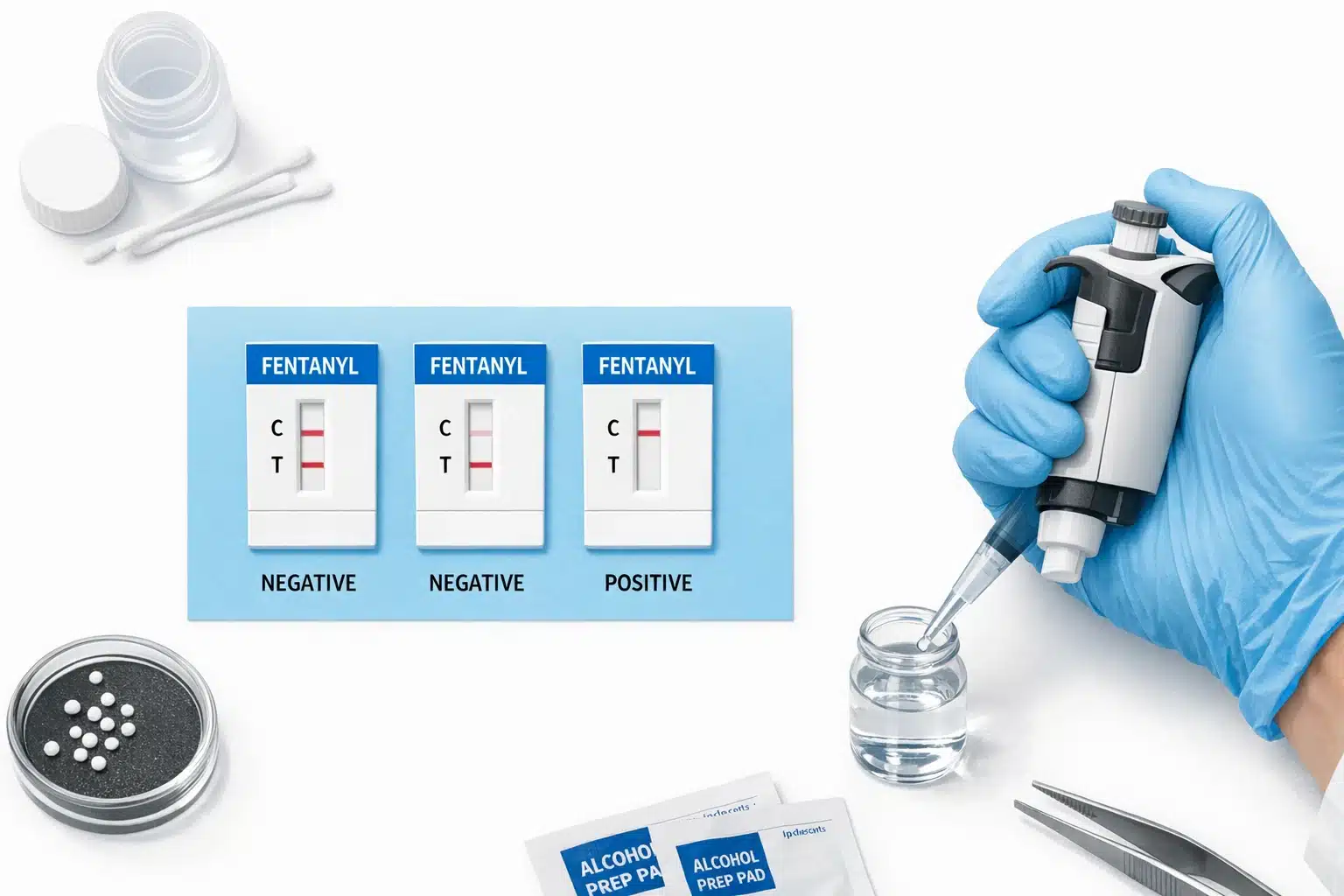
Not all fentanyl test strips are created equal, and choosing the right one can be a life-or-death decision. While most strips offer 96-100% accuracy in controlled settings, their real-world performance depends heavily on two factors: the specific brand you use and how you use it. When evaluating options, decision-makers often focus on availability, but the technical differences in sensitivity and analog detection are what truly matter.
For instance, one leading brand is 2.5 times more sensitive at low concentrations, while another is better at detecting a wider range of analogs at high concentrations. This guide provides the technical details you need to compare leading strips, use them correctly for different substances, and understand their critical limitations.
Choosing the right strip: a technical comparison
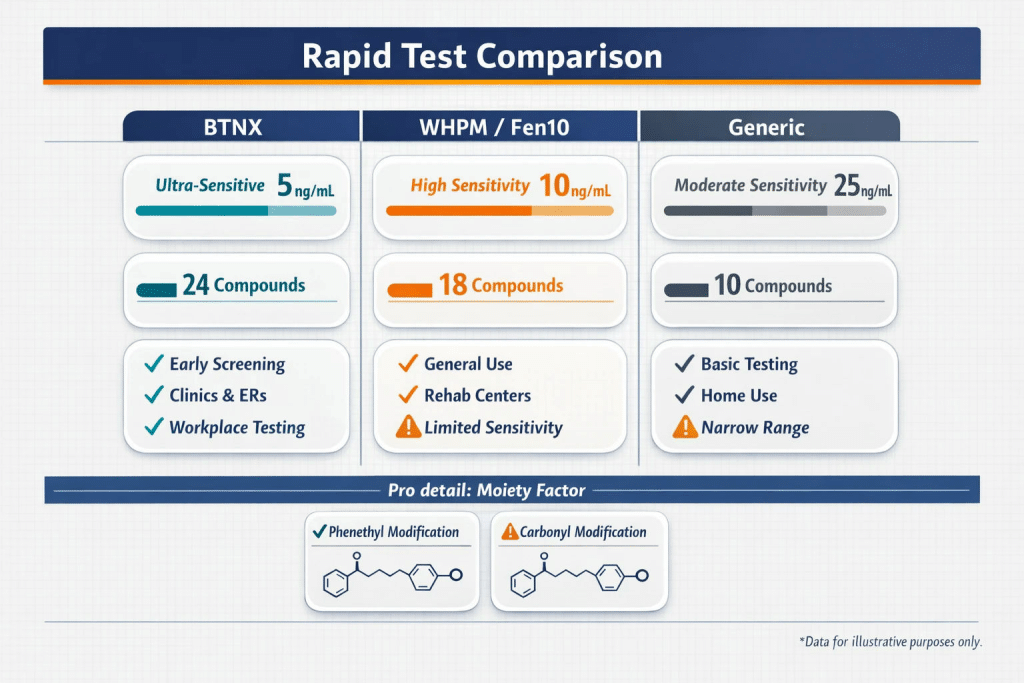
The two most prominent brands of fentanyl test strips (FTS) in harm reduction are BTNX and WHPM (often distributed by DanceSafe). They are not interchangeable. Their performance varies based on the concentration and chemical structure of the fentanyl analog present.
- For Low-Concentration Sensitivity: WHPM (Fen10) strips have a lower detection cutoff (10 ng/mL). A study in the Journal of Analytical Toxicology found they are significantly more sensitive at lower concentrations, detecting 69 different synthetic compounds at 200 ng/mL, compared to just 28 for BTNX strips at the same level. This makes them a strong choice when residue or trace amounts are the primary concern.
- For High-Concentration Breadth: BTNX strips excel at higher concentrations. At 20,000 ng/mL, BTNX detects 173 different compounds, surpassing WHPM’s 149. This wider net is valuable when testing substances where fentanyl may be a major, rather than a trace, adulterant.
The science behind this difference lies in the “moiety factor,” a detail often overlooked in generic guides. BTNX strips are more effective at detecting analogs with modifications on the phenethyl part of the molecule, while WHPM strips perform better with modifications to the carbonyl group. This level of detail is crucial for organizations creating comprehensive harm reduction protocols.
How to use fentanyl test strips for reliable results
Proper use goes far beyond the four-step instructions on the package. The single most common point of failure is improper dilution, which can lead to false positives or negatives. Another critical error is failing to account for the “chocolate chip cookie effect.”
This effect, described by the CDC, occurs when fentanyl isn’t evenly distributed throughout a substance. Testing a small corner of a pill or a bit of powder from one part of a bag can give you a negative result, while a lethal dose is hiding elsewhere. To get an accurate reading, you must test the entire supply intended for use by dissolving it completely.
The critical step: Substance-specific dilution ratios
Many guides offer a single dilution ratio, but this is a dangerous oversimplification. Different substances cross-react with the test strips, requiring specific amounts of water to prevent a false positive.
- MDMA and Methamphetamine: These substances are known to cause false positives. The recommended ratio is much higher: use at least 5 ml (one full teaspoon) of water for every 50mg of the substance.
- Heroin and Other Opioids: These require less dilution. A common starting point is 1-2 ml of water for a small amount of powder (around 10mg).
Always start with the recommended dilution for your specific substance to avoid misleading results. For a reliable source for your testing program, 12 Panel Now offers a full range of harm reduction fentanyl test strips designed for accuracy and ease of use.

Interpreting your results: the science of the faint line
One of the most frequent user questions is, “What does a faint line mean?” In the context of immunoassay strips like FTS, the answer is simple: any second line, no matter how faint, indicates a negative result.
The test works by competition. If fentanyl is not present, the control and test lines both appear clearly. If fentanyl is present above the detection threshold, it binds to the test reagents, preventing the second line from appearing. A faint line simply means the result is close to the cutoff level, but it is still negative.
- One line (Control line only): Positive for fentanyl.
- Two lines (Control and Test lines): Negative for fentanyl.
- No lines or only a Test line: Invalid result. The test failed and you need to repeat it with a new strip.
Understanding this is vital for any workplace drug testing program or harm reduction initiative where clear interpretation is essential. Our multi-panel drug test dip cards follow the same line-reading principles and include clear visual guides for each panel.

The new dangers: when fentanyl strips aren’t enough
While FTS are a powerful tool, they are not a complete solution. The drug supply has become increasingly complex, with new synthetic compounds that standard strips cannot detect. Relying solely on FTS creates dangerous blind spots.
Two of the most significant emerging threats are:
- Nitazenes: A class of synthetic opioids that can be even more potent than fentanyl. Standard immunoassay strips, including FTS, do not cross-react with nitazenes and will produce a false negative, according to research in Clinical Chemistry.
- Xylazine: A veterinary tranquilizer increasingly used as an adulterant. It is not an opioid, so naloxone does not reverse its effects, and fentanyl strips will not detect it.
For a truly effective harm reduction strategy in 2026, you must screen for these substances separately. Incorporating dedicated xylazine tests alongside your broader testing protocol helps build layered coverage.

Build a reliable testing protocol
Using fentanyl test strips effectively is a technical skill. It requires choosing the right brand for your needs, applying substance-specific dilution protocols, and understanding that FTS are just one part of a multi-substance screening strategy. By moving beyond generic instructions and embracing these technical details, you can significantly increase the accuracy and impact of your harm reduction efforts.
To ensure your program is equipped with reliable and accurate tools, explore our selection of CLIA-waived and FDA-approved drug testing supplies. 12 Panel Now is committed to providing high-quality, affordable supplies to help communities and organizations respond effectively to the evolving drug crisis. Have questions? Contact our team for guidance on building your protocol.