False Positive Drug Test Strip Causes: Can Drug Test Strips Be Wrong?

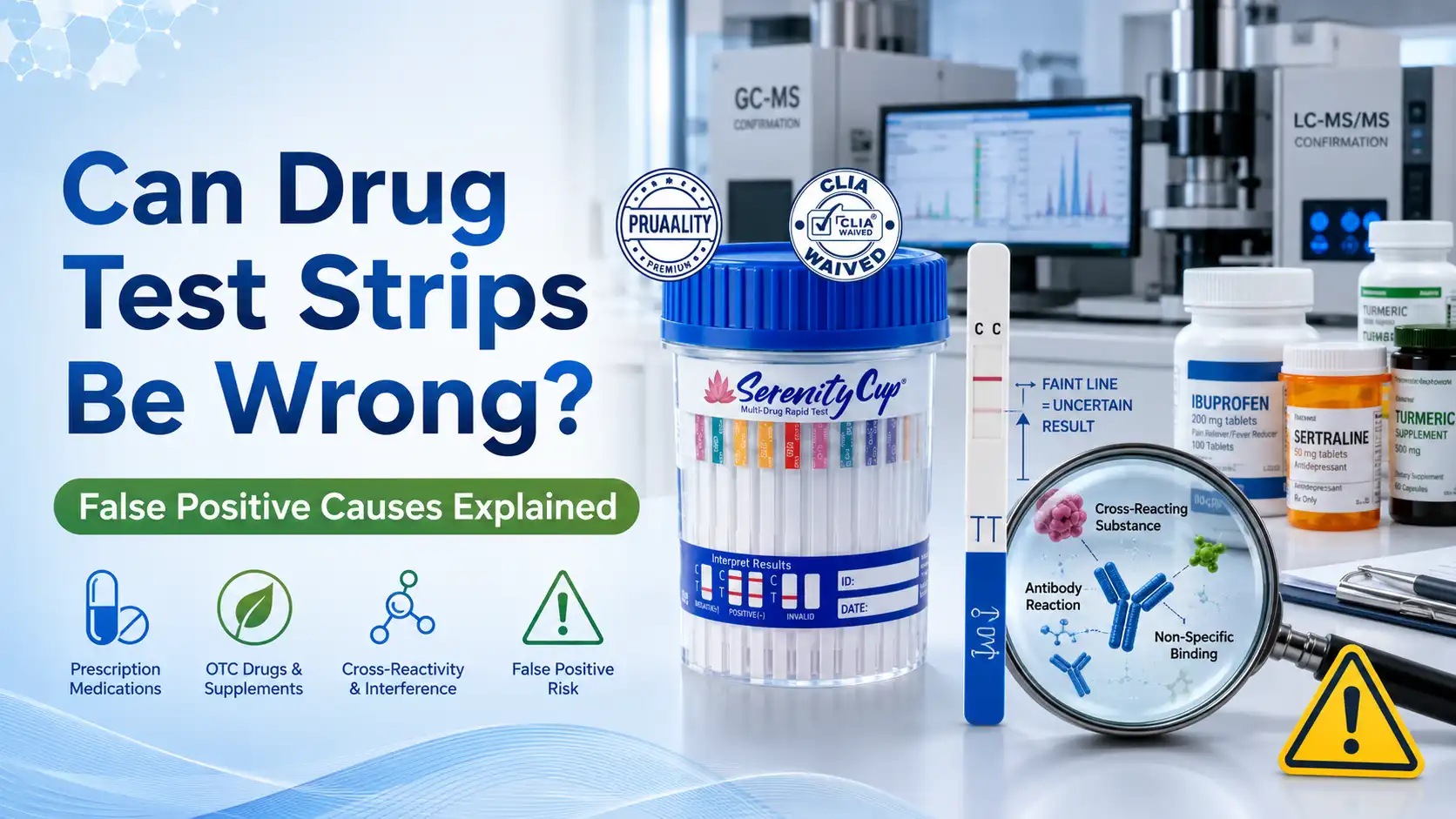
Drug test strips are one of the fastest and most affordable ways to screen for drugs in urine, saliva, or other specimens. They are widely used in workplaces, healthcare facilities, rehabilitation programs, schools, and at home because they deliver results within minutes. However, many people wonder whether these rapid screening tests are always accurate—especially after receiving an unexpected positive result.
The short answer is yes, drug test strips can be wrong, but not for the reasons many people assume. Most rapid drug test strips use immunoassay technology, which is designed to identify drug metabolites quickly rather than provide a definitive diagnosis. Although this technology is highly effective for initial screening, certain medications, foods, supplements, medical conditions, storage problems, and testing errors can occasionally produce a false positive.
Whether you’re preparing for an employment screening, using an at-home drug test, or simply trying to understand how rapid drug tests work, this guide will help you interpret results with confidence.
Key Takeaways
| Key Point | Why It Matters |
| Drug test strips are screening tools, not diagnostic tests. | Positive results may require laboratory confirmation. |
| Immunoassay technology can occasionally react with similar chemical compounds. | This may lead to false-positive screening results. |
| Certain prescription drugs, OTC medications, supplements, and foods can interfere with some drug panels. | Always disclose medications if requested during professional testing. |
| Expired tests, improper storage, incorrect timing, and user error can reduce accuracy. | Following manufacturer instructions helps improve reliability. |
| Confirmatory laboratory testing using GC-MS or LC-MS/MS is far more specific than rapid screening tests. | These methods help distinguish true positives from false positives. |
Can Drug Test Strips Be Wrong?
Yes—but it’s important to understand how they can be wrong.
Rapid drug test strips are designed to quickly identify the possible presence of drug metabolites above a predetermined cutoff concentration. They are intentionally built for screening, which means they prioritize identifying potential positives that may require further investigation rather than providing a final diagnosis.
This distinction explains why healthcare providers, employers, and certified laboratories generally refer to an initial positive result as a presumptive positive instead of a confirmed positive. Confirmation testing is performed when accuracy is critical because laboratory instruments can identify the exact chemical structure of a drug or its metabolite with much greater precision than a rapid screening strip.
Drug test strips can produce three types of unexpected results:
False Positive
A false positive occurs when the strip indicates the presence of a drug even though the person has not used that drug. Cross-reactivity with medications, supplements, or chemically similar compounds is one of the most common reasons.
False Negative
A false negative occurs when drug metabolites are present but remain below the strip’s detection threshold or are missed due to factors such as dilution, testing too soon after drug use, or improper sample collection.
Invalid Result
An invalid result usually indicates a problem with the testing procedure itself. Insufficient sample volume, damaged test strips, expired kits, manufacturing defects, or failure of the control line can all produce invalid results that require a new test.
Understanding these differences helps prevent unnecessary panic. An unexpected screening result should always be interpreted within the context of medication history, specimen quality, testing conditions, and, when appropriate, laboratory confirmation.
How Do Drug Test Strips Work?
Many people assume drug test strips directly detect illegal drugs. In reality, most rapid screening tests detect drug metabolites—the chemical byproducts created when the body breaks down a substance.
The technology behind most rapid drug tests is called an immunoassay. It relies on specially engineered antibodies that are designed to recognize particular molecular structures associated with drug metabolites.
The testing process typically follows these steps:
- A urine sample is applied to the test strip.
- The sample migrates through the strip by capillary action.
- Antibodies on the strip interact with molecules present in the sample.
- If the concentration of a target drug metabolite exceeds the test’s cutoff level, the strip produces a presumptive positive result.
- If the metabolite is absent or below the cutoff concentration, the strip shows a negative result.
Although immunoassays are fast and practical, antibodies are not perfect. Some medications and compounds have molecular structures that resemble the target drug closely enough to trigger antibody binding. This phenomenon, known as cross-reactivity, is one of the primary reasons false positive drug test strip results can occur. Peer-reviewed research consistently identifies cross-reactivity as a recognized limitation of immunoassay-based drug screening and supports confirmatory testing for unexpected positive results.
What Causes False Positive Drug Test Strip Results?
False positives rarely happen because a drug test strip is “broken.” In most cases, they result from a combination of biological, chemical, and procedural factors that affect how the immunoassay interprets the sample.
The most common causes include:
- Cross-reactivity between antibodies and chemically similar substances
- Certain prescription medications
- Over-the-counter cold and allergy medicines
- Pain relievers such as some NSAIDs
- Herbal supplements and CBD products
- Foods that naturally contain compounds similar to targeted drugs
- Expired or improperly stored drug test strips
- Reading results outside the manufacturer’s recommended time window
- Sample contamination or improper specimen collection
- Differences in cutoff concentrations between manufacturers
Each of these factors can influence how the strip responds, even when the person being tested has not used an illicit drug.
Why Cross-Reactivity Is the Most Common Cause
Cross-reactivity is the scientific explanation behind many false positive drug test strip results.
Drug test strip antibodies are designed to recognize a target molecule, but some medications or naturally occurring compounds have similar chemical features. Instead of perfectly distinguishing every molecule, the antibody may bind to a similar structure and trigger a positive screening result.
For example, certain decongestants, antidepressants, antihistamines, and prescription medications have been reported to interfere with specific immunoassay drug panels because of these structural similarities. The likelihood depends on the specific test manufacturer, the cutoff concentration, the medication involved, and the amount present in the sample.
Importantly, a false positive caused by cross-reactivity does not mean the person has used an illegal drug. It simply means the screening test detected a substance that resembles the target enough to warrant further evaluation with a more specific laboratory method.
Common Medications That Can Cause False Positive Drug Test Strip Results
One of the biggest misconceptions about drug testing is that a positive result always means someone has used an illegal drug. In reality, many prescription and over-the-counter medications share chemical characteristics with the substances that rapid immunoassay drug test strips are designed to detect. This phenomenon, known as cross-reactivity, is the leading cause of unexpected positive screening results. Healthcare providers often recommend confirmatory laboratory testing when a screening result conflicts with a person’s medication history.
The exact likelihood of a false positive varies depending on the manufacturer, antibody design, cutoff concentration, and the specific immunoassay used. While these medications have been reported to interfere with certain screening tests, they do not guarantee a false positive.
Prescription and OTC Medications Associated With False Positives
| Medication Category | Examples | Drug Panel That May Be Affected* | Why It May Interfere |
| Cold & sinus decongestants | Pseudoephedrine, Ephedrine | Amphetamines | Similar molecular structure |
| Antidepressants | Bupropion, Trazodone, Venlafaxine, Sertraline | Amphetamines, PCP, Benzodiazepines (varies) | Cross-reactivity |
| Antihistamines | Diphenhydramine, Doxylamine | PCP, Methadone, Opioids (reported in some assays) | Antibody interference |
| NSAID pain relievers | Ibuprofen, Naproxen, Oxaprozin | THC, Barbiturates, Benzodiazepines (depending on assay) | Non-specific antibody binding |
| Proton Pump Inhibitors | Pantoprazole | THC | Cross-reactivity in certain immunoassays |
| Antibiotics | Levofloxacin, Ofloxacin | Opiates, Amphetamines | Structural similarity |
| Antipsychotics | Quetiapine | Methadone | Immunoassay interference |
| Anti-nausea medications | Promethazine | Amphetamines | Chemical similarity |
| Weight-loss medications | Phentermine | Amphetamines | Similar pharmacologic structure |
Important: These medications do not mean you have drugs in your system. They may only interfere with certain rapid screening tests. Laboratory confirmation can distinguish true drug use from cross-reactivity.
Can Foods or Supplements Cause a False Positive?
Although medications are responsible for most reported false positives, foods, nutritional supplements, and herbal products may also influence some screening tests.
Poppy Seeds
Poppy seeds naturally contain trace amounts of morphine and codeine alkaloids. Although modern workplace drug testing uses higher cutoff levels than in the past, consuming large amounts of poppy seed products shortly before testing has occasionally contributed to unexpected opiate screening results.
CBD and Hemp Products
CBD itself is unlikely to cause a false positive because it differs chemically from THC. However, some CBD oils, gummies, tinctures, or hemp-derived products may contain measurable amounts of THC, especially if product quality or labeling is inconsistent. In these situations, a positive THC result is usually caused by actual THC exposure rather than a testing error.
Herbal Supplements
Some herbal supplements have been reported in isolated cases to interfere with rapid drug screening, although scientific evidence remains limited. Because supplement manufacturing standards vary, users should always disclose supplements before professional testing.
Coca Tea
Products prepared from coca leaves may contain compounds related to cocaine metabolites and can produce positive cocaine results.
Can Expired Drug Test Strips Give Incorrect Results?
Yes.
Drug test strips contain sensitive antibodies and chemical reagents that gradually lose stability over time.
Using an expired kit increases the likelihood of:
- False positives
- False negatives
- Weak control lines
- Invalid results
- Difficult-to-read test lines
Before using any drug test strip, always verify:
- Expiration date
- Packaging integrity
- Storage temperature
- Moisture protection
- Manufacturer recommendations
A damaged foil pouch or exposure to excessive humidity may compromise test performance even before the expiration date.
Does Storage Affect Drug Test Strip Accuracy?
Absolutely.
Rapid drug tests are designed to operate within specific environmental conditions. Improper storage may reduce antibody performance long before the kit expires.
Conditions that can reduce reliability include:
- Extreme heat
- Freezing temperatures
- High humidity
- Direct sunlight
- Water exposure
- Damaged packaging
If a test has been left in a hot vehicle, damp bathroom, or warehouse without climate control, the results may become less reliable.
Can User Error Cause a False Positive?
Yes. Even a high-quality drug test strip can produce misleading results if used incorrectly.
Common mistakes include:
Reading Results Too Early
A line that has not fully developed may be misinterpreted.
Reading Results Too Late
After the recommended reading window, evaporation can alter the appearance of test lines, making interpretation unreliable.
Using Too Little Urine
Insufficient sample volume may prevent proper migration across the strip.
Sample Contamination
Soap, cleaning products, or contaminants entering the specimen cup can interfere with the chemical reaction.
Ignoring Manufacturer Instructions
Different brands use different cutoff levels, timing windows, and interpretation guides. Following another brand’s instructions may lead to incorrect conclusions.
Can Drug Test Strips Give False Negatives Too?
Most people focus on false positives, but false negatives can be equally important.
A false negative occurs when drugs or drug metabolites are present but the screening test fails to detect them.
Common reasons include:
- Testing too soon after drug use
- Drug levels below the cutoff concentration
- Diluted urine from excessive fluid intake
- Individual metabolic differences
- Low-sensitivity test strips
- Improper specimen collection
- Expired or damaged testing kits
For example, someone may receive a negative result on a home drug test while still testing positive later at a certified laboratory because the laboratory uses more sensitive analytical methods or different testing protocols.
Immunoassay vs. GC-MS vs. LC-MS/MS: What’s the Difference?
Many people don’t realize that the test strip used at home or during an initial workplace screening is only the first step in the testing process.
Here’s how the different testing methods compare:
| Feature | Immunoassay Drug Strip | GC-MS | LC-MS/MS |
| Purpose | Rapid screening | Confirmatory testing | Confirmatory testing |
| Result Time | Minutes | Hours to days | Hours to days |
| Accuracy | High for screening | Very high | Very high |
| Detects Cross-Reactivity | Possible | No | No |
| Identifies Exact Drug | No | Yes | Yes |
| Best Used For | Initial screening | Confirming unexpected positives | Confirming unexpected positives |
Rapid immunoassays are designed to answer one question:
“Should this sample receive additional testing?”
GC-MS (Gas Chromatography-Mass Spectrometry) and LC-MS/MS (Liquid Chromatography-Tandem Mass Spectrometry) answer a different question:
“Which exact compound is present, and in what amount?”
Because these laboratory methods identify individual chemical compounds with much greater specificity, they are considered the gold standard for confirming disputed drug test results.
What Should You Do After a Positive Drug Test Strip?
Receiving an unexpected positive result can be stressful, but it doesn’t necessarily mean you’ve used an illegal drug. Following a structured approach can help prevent unnecessary worry and ensure that any decisions are based on accurate information.
1. Stay Calm
A rapid drug test strip provides a presumptive screening result, not a final diagnosis. Many unexpected positives are resolved after additional evaluation.
2. Review Your Medications and Supplements
Make a list of:
- Prescription medications
- Over-the-counter medicines
- Vitamins
- Herbal supplements
- CBD or hemp products
Several common medications have been associated with false-positive immunoassay results.
3. Check the Test Kit
Ask yourself:
- Was the test expired?
- Was it stored correctly?
- Did you follow every instruction?
- Did you read the results within the recommended time?
Even small procedural mistakes can affect interpretation.
4. Request Confirmatory Testing
If the result could affect your employment, legal status, athletic eligibility, or medical care, ask for confirmation using GC-MS or LC-MS/MS. These laboratory techniques can distinguish true drug exposure from cross-reactivity.
5. Don’t Stop Prescribed Medications Without Medical Advice
If you suspect a prescription medication contributed to the result, speak with your healthcare provider before making any changes. Stopping treatment on your own may create unnecessary health risks.
How to Reduce the Risk of False Positive Drug Test Strip Results
Although no screening test is perfect, following good testing practices can significantly improve reliability.
Buy High-Quality Test Kits
Choose test strips from established manufacturers that provide clear instructions, quality control information, and appropriate regulatory labeling.
Check the Expiration Date
Expired antibodies and reagents may not function as intended, increasing the likelihood of inaccurate or invalid results.
Store Test Kits Correctly
Keep test strips in a cool, dry location away from direct sunlight, moisture, and extreme temperatures.
Follow Instructions Exactly
Pay close attention to:
- Sample volume
- Timing
- Storage requirements
- Reading window
- Interpretation guide
Inform the Testing Provider About Medications
If you’re undergoing workplace or clinical testing, disclose prescription medications when requested. This information can help explain unexpected screening results during the review process.
Confirm Unexpected Positives
Never assume that a screening result is final. Confirmatory testing provides a much higher level of analytical certainty before important decisions are made.
Frequently Asked Questions
1. Can drug test strips give a false positive result?
Yes. Drug test strips can sometimes produce false-positive results. Rapid drug tests use immunoassay technology, which detects drug metabolites but may occasionally react with chemically similar substances, such as certain medications, supplements, or other compounds. An unexpected positive result should be considered a presumptive result and may require confirmation with GC-MS or LC-MS/MS testing.
2. What is the most common cause of a false positive drug test strip result?
The most common cause of false-positive drug test strip results is cross-reactivity. This happens when antibodies in the test strip react with a substance that has a similar chemical structure to the targeted drug metabolite. Certain prescription medications, over-the-counter medicines, and supplements may interfere with specific drug panels.
3. Can prescription medications cause a false positive drug test?
Yes. Some prescription medications have been reported to interfere with certain immunoassay drug tests. Examples include bupropion, trazodone, venlafaxine, quetiapine, promethazine, and phentermine. However, interference depends on the specific test manufacturer, cutoff level, and drug panel being tested.
4. Can over-the-counter medicines cause a false positive drug test strip result?
Yes. Some over-the-counter medications may affect certain drug screening tests. Cold medicines containing pseudoephedrine, antihistamines such as diphenhydramine, and some pain relievers like ibuprofen have been associated with false-positive results in certain immunoassay tests.
5. Can food or supplements cause a false positive drug test?
Certain foods and supplements may contribute to unexpected drug test results. For example, large amounts of poppy seeds may affect opiate screening, and some hemp or CBD products may contain enough THC to trigger a positive THC result. Herbal supplements may also interfere with some tests, although evidence varies depending on the product and testing method.
6. Can an expired drug test strip cause a false positive?
Yes. Expired drug test strips may produce inaccurate results because the antibodies and chemical reagents can lose stability over time. Expired or improperly stored tests may result in false positives, false negatives, weak test lines, or invalid results.
7. Can improper storage affect drug test strip accuracy?
Yes. Drug test strips should be stored according to the manufacturer’s instructions. Exposure to excessive heat, humidity, freezing temperatures, sunlight, or moisture can damage the test components and reduce reliability, even before the expiration date.
8. Are home drug test strips accurate?
Home drug test strips are generally reliable when used correctly, but they are screening tools rather than definitive tests. They can detect possible drug metabolites quickly, but unexpected positive results should be confirmed with laboratory methods such as GC-MS or LC-MS/MS for accurate identification.
9. What should I do if my drug test strip shows a false positive?
If you believe a drug test strip result is incorrect, review any prescription medications, over-the-counter medicines, supplements, or CBD products you use. Check whether the test was expired, stored properly, and read within the correct timeframe. If the result has serious consequences, request confirmatory laboratory testing.
10. Can a drug test strip be wrong because of user error?
Yes. User mistakes can affect drug test results. Common errors include using too little sample, contaminating the specimen, reading results too early or too late, ignoring instructions, or using a damaged test kit. Following the manufacturer’s directions carefully helps reduce inaccurate results.