Oxidant Test Strip on a Drug Test: What It Detects, Why It Matters & How to Read Results

Quick Answer
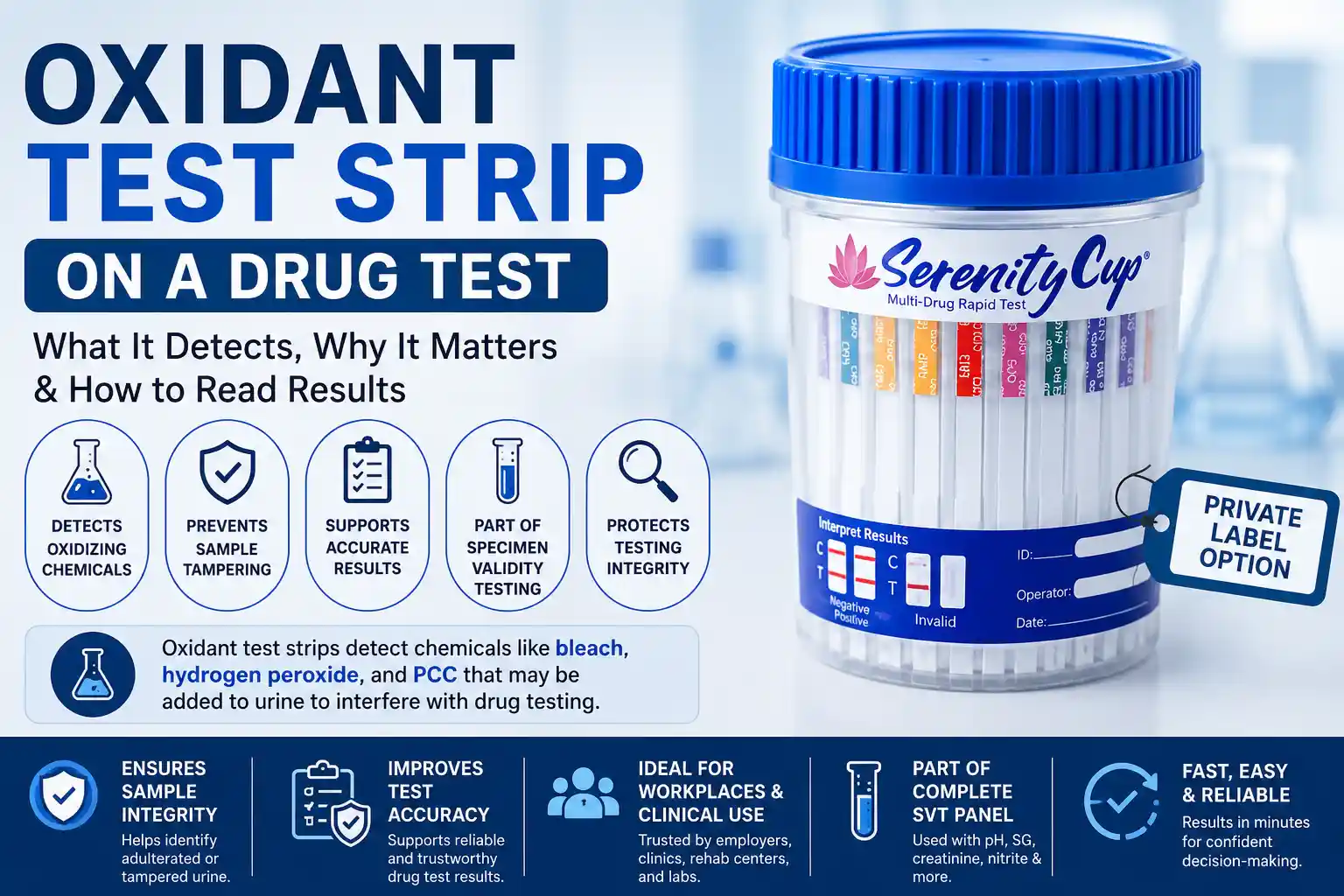
An oxidant test strip on a drug test is a specimen validity indicator that detects oxidizing adulterants—chemicals such as bleach, hydrogen peroxide, or pyridinium chlorochromate (PCC)—that may be added to urine to interfere with drug testing. Because normal human urine should not contain these oxidizing agents, a positive oxidant result usually suggests possible sample adulteration rather than drug use. Laboratories often evaluate oxidant results alongside pH, specific gravity, creatinine, temperature, and other validity markers before determining whether a specimen is acceptable for testing.
Understanding the Oxidant Test Strip on a Drug Test
Drug testing is designed to detect drug metabolites—not manipulated samples. That’s why many professional urine drug test cups include an oxidant test strip as part of Specimen Validity Testing (SVT). This small color-changing pad helps determine whether someone has added chemicals to a urine sample in an attempt to interfere with drug screening results.
An oxidant-positive specimen does not automatically mean a person used drugs or failed a drug test. Instead, it usually indicates the sample may have been tampered with and requires further review according to workplace, clinical, or laboratory testing protocols.
Whether you’re an employer, healthcare professional, collector, or simply trying to understand the markings on a drug test cup, this guide explains exactly how oxidant strips work, what they detect, and why they play an essential role in ensuring accurate drug testing.
What Is an Oxidant Test Strip on a Drug Test?
An oxidant test strip is a built-in chemical indicator found on many professional urine drug test cups and specimen validity panels. Its purpose is to detect oxidizing chemicals that should never be naturally present in human urine.
Instead of looking for drugs, the oxidant strip evaluates whether the urine sample itself appears authentic and untampered. This makes it an important component of Specimen Validity Testing (SVT)—the process laboratories and employers use to determine whether a urine specimen is suitable for drug analysis.
If someone intentionally adds an oxidizing substance to their urine, the chemical reaction can destroy or alter certain drug metabolites, potentially producing inaccurate screening results. The oxidant strip is specifically designed to identify these substances before the laboratory interprets the drug test.
Think of it as a quality-control checkpoint for the specimen. Before anyone trusts the drug test result, they first need confidence that the urine sample hasn’t been chemically manipulated.
Why Oxidant Testing Matters
Without specimen validity testing, adulterated samples could:
- Produce false-negative drug screening results
- Reduce confidence in workplace drug testing programs
- Compromise forensic investigations
- Delay clinical decision-making
- Require costly repeat collections
By identifying chemical tampering early, oxidant testing helps protect both the testing organization and the individual being tested.
Why Drug Tests Include an Oxidant Test Strip
Modern drug testing is no longer limited to identifying drugs—it also focuses on verifying that the urine specimen accurately represents the donor.
For this reason, many professional drug testing devices incorporate multiple validity indicators, with oxidant testing serving as one of the most important safeguards against chemical adulteration.
An oxidant strip helps testing programs:
- Detect attempts to chemically alter urine specimens
- Improve the reliability of immunoassay drug screening
- Reduce false-negative screening outcomes
- Support workplace and clinical testing integrity
- Identify specimens requiring recollection or laboratory review
Professional testing environments—including occupational health clinics, hospitals, rehabilitation centers, correctional facilities, pain management programs, and federally regulated workplaces—often rely on specimen validity testing before interpreting drug results.
Rather than assuming every urine sample is valid, today’s testing standards recognize that sample integrity is just as important as drug detection itself.
Clinical Note
A positive oxidant strip does not confirm drug use, identify a specific adulterant, or determine whether someone intentionally tampered with a sample. It simply indicates that oxidizing chemicals were detected at levels inconsistent with normal urine and that the specimen may require additional evaluation under established testing procedures.
How an Oxidant Test Strip Works
Oxidant test strips rely on colorimetric chemistry, meaning they produce a visible color change when they come into contact with oxidizing chemicals.
The strip contains specially formulated reagents that remain stable under normal conditions but react when oxidizing agents are present in urine.
During specimen collection:
- Urine contacts the oxidant pad.
- The reagent reacts with oxidizing chemicals if present.
- The pad changes color.
- The collector compares the color with the manufacturer’s reference chart.
- Results become part of the specimen validity assessment.
This process takes only a short time and requires no additional laboratory equipment when performed on integrated drug test cups.
What Are Oxidizing Agents?
Oxidizing agents are chemicals capable of altering or breaking down other substances through oxidation reactions.
In the context of drug testing, these chemicals may interfere with drug metabolites or disrupt the antibodies used in certain immunoassay screening methods.
Some oxidizing agents are common household chemicals, while others are commercial adulterants specifically marketed to manipulate urine drug tests.
Examples include:
- Bleach (sodium hypochlorite)
- Hydrogen peroxide
- Pyridinium chlorochromate (PCC)
- Certain chromium-containing oxidizers
- Some commercial urine adulteration products
Because these substances are not naturally found in normal urine, their detection raises concerns about specimen validity.
How Color-Changing Chemistry Detects Adulterants
The chemistry behind oxidant strips is intentionally sensitive.
When oxidizing chemicals interact with the reagent pad, oxidation reactions produce a measurable color shift that indicates abnormal chemical activity within the specimen.
Although each manufacturer uses proprietary chemistry, the principle remains the same:
- No oxidants → expected color
- Oxidants detected → abnormal color indicating possible adulteration
This immediate visual response allows collectors to identify potentially compromised specimens before reporting screening results.
Why Normal Urine Should Not Trigger an Oxidant Strip
Healthy human urine naturally contains:
- Water
- Urea
- Creatinine
- Electrolytes
- Naturally occurring metabolic waste products
It does not normally contain strong oxidizing chemicals such as bleach, hydrogen peroxide, or PCC.
Therefore, an abnormal oxidant result usually indicates that an external substance entered the specimen after urination rather than being produced naturally by the body.
This distinction is why oxidant testing focuses on specimen integrity, not medical diagnosis.
What Does an Oxidant-Positive Drug Test Mean?
An oxidant-positive result generally means the urine specimen contains oxidizing chemicals that are inconsistent with normal human urine.
Importantly, this does not mean the person tested positive for drugs.
Instead, it suggests the specimen may have been chemically altered, making the drug screening results potentially unreliable.
Depending on the testing program, an oxidant-positive specimen may be:
- Reported as adulterated
- Classified as invalid
- Rejected before drug analysis
- Sent for additional laboratory evaluation
- Require a new specimen collection
The exact outcome depends on workplace policy, laboratory protocols, applicable regulations, and confirmatory testing procedures.
Laboratory Perspective
Laboratories rarely rely on an oxidant result alone. Instead, they interpret oxidant findings together with other specimen validity indicators such as:
- Creatinine concentration
- Specific gravity
- Urine pH
- Temperature
- Nitrite levels
- Glutaraldehyde detection
Evaluating these markers together provides a more complete picture of whether the specimen appears authentic or has likely been manipulated.
Which Chemicals Can Trigger an Oxidant Test Strip?
Several oxidizing chemicals are known to produce abnormal oxidant strip results because they can interfere with urine drug screening.
The table below summarizes the most common examples.
| Oxidizing Chemical | Common Source | Why It Matters |
|---|---|---|
| Bleach (Sodium Hypochlorite) | Household cleaner | Can damage drug metabolites and interfere with screening chemistry |
| Hydrogen Peroxide | Household disinfectant | Acts as an oxidizer that may affect immunoassay performance |
| Pyridinium Chlorochromate (PCC) | Commercial adulteration products | Specifically associated with attempts to manipulate urine drug tests |
| Chromium-Based Oxidizers | Industrial or specialty chemicals | May trigger oxidant validity indicators |
| Commercial Urine Adulterants | Detox or adulteration products | Often formulated to interfere with screening methods |
Although these chemicals differ chemically, they share one characteristic—they should not be present in an authentic urine specimen.
Oxidants/PCC Explained
One of the most frequently referenced adulterants in drug testing literature is Pyridinium Chlorochromate (PCC).
PCC is a powerful oxidizing compound that gained attention because it was marketed in some commercial products intended to interfere with urine drug screening.
Its purpose was simple: chemically alter the urine sample before testing.
Because of its historical use as a specimen adulterant, many professional drug testing devices specifically refer to “Oxidants/PCC” on specimen validity panels.
Modern oxidant strips are designed to identify the presence of PCC and other oxidizing chemicals before the drug screening result is interpreted.
The presence of PCC does not identify which drugs may have been present originally. Instead, it indicates the specimen may no longer accurately represent the donor’s urine.
What Is Specimen Validity Testing (SVT)?
Specimen Validity Testing (SVT) is a series of laboratory and point-of-care checks used to determine whether a urine sample is suitable for drug testing.
Rather than detecting drugs directly, SVT evaluates whether the specimen appears normal, uncontaminated, and free from evidence of tampering.
An SVT panel may assess:
- Oxidants/PCC
- Creatinine
- Specific gravity
- pH
- Nitrite
- Glutaraldehyde
- Temperature
- Sample appearance
Together, these indicators help laboratories distinguish between a genuine urine specimen and one that may have been diluted, substituted, contaminated, or chemically adulterated.
For employers and healthcare providers, specimen validity testing provides confidence that any reported drug test result is based on a sample that accurately reflects the donor’s urine rather than one altered to influence the outcome.
Other Specimen Validity Tests Used Alongside Oxidant Strips
An oxidant test strip is only one part of specimen validity testing (SVT). To determine whether a urine sample is genuine, laboratories and many professional drug test cups evaluate several chemical and physical characteristics together.
This multi-parameter approach reduces the risk of false conclusions because no single validity marker can identify every type of specimen tampering.
Below are the most common specimen validity checks performed alongside oxidant testing.
Temperature: The First Indicator of a Fresh Urine Sample
Temperature is usually the first specimen validity check performed immediately after urine collection.
Freshly voided urine should fall within an expected temperature range shortly after collection. If the specimen is unusually cold or excessively hot, it may indicate that the sample was substituted, stored, or otherwise manipulated before submission.
Many professional urine drug test cups include a built-in temperature strip that allows collectors to verify specimen temperature within minutes.
Why Temperature Matters
- Helps detect substituted urine samples
- Confirms the specimen was freshly collected
- Supports chain-of-custody procedures
- Provides immediate specimen validity information before drug screening begins
Although an abnormal temperature alone does not prove tampering, it often prompts closer review of the remaining specimen validity indicators.
Creatinine: Detecting Excessive Dilution
Creatinine is a naturally occurring waste product produced by muscle metabolism and continuously excreted in urine.
Because healthy individuals generally excrete creatinine at predictable concentrations, laboratories measure creatinine levels to determine whether a urine specimen has been excessively diluted.
Low creatinine levels may occur when someone drinks unusually large amounts of water before testing or intentionally attempts to reduce drug metabolite concentrations.
Why Creatinine Is Important
Creatinine testing helps laboratories:
- Identify dilute urine samples
- Evaluate flushing attempts
- Support interpretation of drug concentrations
- Improve confidence in screening results
A low creatinine value alone does not prove intentional tampering, but when combined with other abnormal specimen validity markers, it may suggest the sample requires further evaluation.
Specific Gravity: Measuring Urine Concentration
Specific gravity (SG) measures how concentrated or diluted a urine sample is compared with pure water.
Instead of detecting drugs, specific gravity evaluates whether the urine contains an expected amount of dissolved substances.
Why Specific Gravity Matters
Abnormally low specific gravity may indicate:
- Excessive fluid intake
- Intentional dilution
- Certain medical conditions
Abnormally high values may result from:
- Dehydration
- High concentrations of dissolved substances
- Addition of foreign chemicals
When interpreted alongside creatinine, specific gravity provides a more complete picture of whether the specimen represents normal human urine.
pH: Checking for Chemical Manipulation
Urine naturally falls within a normal acidity or alkalinity range.
Specimen validity testing includes pH because some adulterants attempt to change the urine’s chemical environment enough to interfere with drug detection.
Extremely acidic or highly alkaline urine may indicate that chemicals were added after collection.
Why pH Testing Matters
Monitoring urine pH helps laboratories:
- Detect acidic or alkaline adulterants
- Identify abnormal specimen chemistry
- Protect immunoassay performance
- Determine whether additional laboratory evaluation is needed
It’s important to note that diet, hydration, medications, and certain medical conditions can also influence urine pH. For this reason, laboratories evaluate pH together with the other specimen validity markers rather than relying on it alone.
Nitrite: Identifying Certain Adulteration Products
Nitrite testing is another component of many specimen validity panels.
Although small amounts of nitrites may occur in urine under certain medical circumstances, unusually high concentrations can suggest the presence of commercial adulteration products or other chemical contaminants.
Some products marketed to defeat urine drug tests historically relied on nitrite-containing compounds because they can interfere with certain screening methods.
Why Nitrite Testing Is Performed
Nitrite testing helps identify:
- Commercial adulteration products
- Chemical contamination
- Specimens requiring additional laboratory review
An abnormal nitrite result is not interpreted in isolation but instead contributes to the overall specimen validity assessment.
Glutaraldehyde: Detecting Specialized Adulterants
Glutaraldehyde is not normally found in human urine.
However, it has been included in some commercial adulteration products designed to interfere with immunoassay drug testing.
Because of this, many professional specimen validity panels include a dedicated glutaraldehyde test.
Why Glutaraldehyde Is Tested
Detection of glutaraldehyde may indicate:
- Chemical adulteration
- Use of certain urine tampering products
- Potential interference with screening assays
Its presence often prompts additional laboratory evaluation before reporting drug screening results.
Why Laboratories Evaluate Multiple Validity Markers Together
Each specimen validity parameter tells only part of the story.
For example:
- A low creatinine level may simply reflect excellent hydration.
- A high urine pH may be influenced by diet or certain medical conditions.
- A borderline specific gravity value does not automatically indicate dilution.
- An oxidant-positive result identifies chemical activity but does not determine which adulterant was added.
By evaluating all validity markers together, laboratories can make more informed decisions regarding specimen integrity while reducing the likelihood of incorrectly classifying a legitimate sample as adulterated.
Oxidant Test Strip vs Other Drug Test Validity Checks
Although every specimen validity test serves the same overall purpose—ensuring the urine sample is authentic—each parameter looks for a different type of abnormality.
| Validity Test | What It Measures | What It Can Detect |
|---|---|---|
| Oxidant Strip | Oxidizing chemicals | Bleach, hydrogen peroxide, PCC, other oxidants |
| Temperature | Freshness of specimen | Possible substitution or delayed collection |
| Creatinine | Natural muscle waste product | Dilution or excessive water intake |
| Specific Gravity | Urine concentration | Dilution or unusually concentrated urine |
| pH | Acidity or alkalinity | Acidic or alkaline adulterants |
| Nitrite | Nitrite concentration | Certain commercial adulteration products |
| Glutaraldehyde | Aldehyde compounds | Specialized urine tampering agents |
No single test can identify every possible form of specimen manipulation, which is why comprehensive specimen validity testing remains the preferred approach in workplace, clinical, and forensic drug testing programs.
Can an Oxidant Strip Produce a False Positive?
One of the most common questions about oxidant testing is whether the strip can incorrectly indicate adulteration.
The answer is yes—but it is relatively uncommon when specimens are collected and handled properly.
Several factors may contribute to unexpected oxidant results, including:
- Accidental contamination of the collection container
- Exposure to cleaning chemicals before specimen collection
- Improper specimen handling
- Manufacturing defects (rare)
- Reading the test outside the recommended interpretation window
Certain medical conditions are not generally recognized as producing the strong oxidizing chemicals that oxidant strips are designed to detect. However, laboratories do not rely solely on one oxidant result. Instead, they consider the complete specimen validity profile and, when necessary, perform additional testing.
Important: An oxidant-positive screening result should not be interpreted as proof of intentional tampering without following the testing program’s established review procedures.
What Happens If the Oxidant Strip Is Positive?
A positive oxidant result usually initiates additional review rather than an immediate final decision.
Although procedures vary by employer, laboratory, and testing program, the process often follows these general steps:
Step 1: Urine Collection
The specimen is collected according to standard collection procedures, including temperature verification and chain-of-custody requirements when applicable.
Step 2: Specimen Validity Testing
The oxidant strip and other validity parameters are evaluated for signs of chemical adulteration or dilution.
Step 3: Laboratory Review
If specimen validity results appear abnormal, trained laboratory personnel review the findings alongside the remaining validity indicators.
Step 4: Additional Evaluation
Depending on laboratory protocols, the specimen may undergo further testing, be classified as invalid or adulterated, or require recollection.
Step 5: Final Reporting
Results are reported according to the testing organization’s policies, applicable regulations, and laboratory procedures.
This systematic approach helps ensure that specimen validity concerns are evaluated fairly and consistently.
Do At-Home Drug Tests Include Oxidant Test Strips?
Not all drug tests include oxidant testing.
Most basic over-the-counter home drug tests focus only on detecting drug metabolites and may not include specimen validity features.
Professional testing devices are more likely to incorporate:
- Oxidant strips
- Temperature indicators
- Creatinine testing
- Specific gravity testing
- pH testing
- Comprehensive specimen validity panels
These additional safeguards are especially important in workplace, clinical, rehabilitation, pain management, and forensic testing programs where specimen integrity is essential.
When selecting a drug test, it’s worth confirming whether the device includes specimen validity testing if protection against sample tampering is important.
Best Practices for Accurate Drug Test Collection
Proper specimen collection plays a major role in maintaining reliable drug test results.
Following established collection procedures helps reduce contamination, preserve specimen integrity, and improve confidence in the final interpretation.
Recommended best practices include:
- Use a clean, approved collection container.
- Verify specimen temperature immediately after collection.
- Avoid contaminating the sample with foreign substances.
- Follow chain-of-custody procedures when required.
- Read integrated validity strips within the manufacturer’s recommended timeframe.
- Store and transport specimens according to testing guidelines.
- When validity concerns arise, follow laboratory protocols for additional evaluation rather than relying on a single screening indicator.
Strong collection practices are just as important as accurate testing technology.
FAQ’s
1. What does an oxidant test strip on a drug test detect?
An oxidant test strip detects oxidizing chemicals—such as bleach, hydrogen peroxide, and pyridinium chlorochromate (PCC)—that may have been added to a urine sample. These substances are not naturally found in normal urine and may indicate possible specimen adulteration.
2. What does a positive oxidant result on a drug test mean?
A positive oxidant result usually means the urine specimen contains oxidizing chemicals that could interfere with drug testing. It does not confirm drug use. Instead, it suggests the sample may have been tampered with and may require additional laboratory review or recollection.
3. Can a positive oxidant test strip cause you to fail a drug test?
Not necessarily. A positive oxidant strip indicates a possible specimen validity issue rather than a positive drug result. Depending on the testing program, the specimen may be reported as adulterated, invalid, or sent for confirmatory evaluation before any final determination is made.
4. Can medications or medical conditions cause an oxidant-positive drug test?
Most prescription medications and common medical conditions do not produce the strong oxidizing chemicals that oxidant test strips are designed to detect. If an unexpected oxidant result occurs, laboratories typically review other specimen validity markers before reaching a conclusion.
5. Can bleach or hydrogen peroxide trigger an oxidant test strip?
Yes. Household bleach, hydrogen peroxide, and other strong oxidizing agents are among the most common chemicals that trigger an oxidant-positive result because they can interfere with urine drug screening chemistry.
6. What is PCC on an oxidant drug test?
PCC stands for Pyridinium Chlorochromate, a powerful oxidizing chemical historically used in some commercial urine adulteration products. Professional oxidant test strips are designed to detect PCC because it should not normally be present in human urine.
7. Can an oxidant test strip produce a false positive?
False-positive oxidant results are uncommon but can occur due to specimen contamination, improper collection, exposure to cleaning chemicals, or testing errors. Laboratories usually evaluate oxidant findings alongside other specimen validity tests before reporting final results.
8. What happens if the oxidant strip is positive during a workplace drug test?
The specimen may undergo additional validity testing, laboratory review, or confirmatory procedures. Depending on employer policy and applicable regulations, the donor may also be asked to provide a new urine sample if the original specimen is determined to be invalid or adulterated.
9. Do all urine drug tests include an oxidant test strip?
No. Many basic at-home drug tests only screen for drug metabolites and do not include specimen validity testing. Professional workplace, clinical, forensic, and DOT-related drug tests are more likely to include oxidant strips along with other validity indicators such as creatinine, pH, and specific gravity.
10. Why is an oxidant test strip important in drug testing?
An oxidant test strip helps ensure that urine drug test results are based on an authentic specimen. By detecting chemicals that may alter or destroy drug metabolites, it improves the accuracy, reliability, and integrity of workplace, clinical, and forensic drug testing programs.
11. Can normal urine contain oxidants?
No. Healthy human urine should not naturally contain strong oxidizing chemicals such as bleach, hydrogen peroxide, or pyridinium chlorochromate (PCC). Detecting these substances may indicate possible sample adulteration.
12. Is an oxidant test strip the same as a drug test strip?
No. An oxidant test strip does not detect drugs. It is part of Specimen Validity Testing (SVT) and is designed to identify chemicals that may have been added to a urine sample to interfere with drug test results.
13. How long does it take for an oxidant test strip to show results?
Most integrated oxidant test strips produce results within a few minutes, although the exact reading time depends on the manufacturer’s instructions. Reading the strip outside the recommended time window may affect interpretation.
14. What other specimen validity tests are performed with an oxidant strip?
Professional urine drug tests often evaluate temperature, creatinine, specific gravity, pH, nitrite, and glutaraldehyde in addition to oxidants. Together, these markers help determine whether a urine specimen is authentic or has been diluted, substituted, or chemically adulterated.
15. Does a laboratory always confirm an oxidant-positive specimen?
Not always. The next step depends on the testing program’s policies, laboratory procedures, and applicable regulations. An oxidant-positive specimen may be classified as adulterated or invalid, undergo further review, or require recollection before a final report is issued.