How to Store Drug Test Strips and Cups Properly

Drug test strips and drug test cups are designed to deliver fast, dependable screening results, but their performance depends on much more than proper sample collection. Storage conditions play a critical role in preserving the sensitive chemical components that detect drugs accurately. Even a high-quality drug testing device can produce unreliable or invalid results if it has been exposed to excessive heat, moisture, freezing temperatures, or damaged packaging.
Whether you’re an employer maintaining a workplace drug testing program, a healthcare provider managing inventory, or an individual using home drug testing kits, following proper storage practices helps protect product integrity and reduces the risk of wasted tests.
This guide explains how environmental conditions affect drug test performance, the ideal way to store drug test strips and cups, and practical steps to extend shelf life while maintaining reliable results.
Why Proper Storage Matters
Many people assume an unopened drug test will remain accurate regardless of where it is stored. In reality, every rapid drug test contains carefully engineered chemical reagents that gradually lose stability when exposed to unfavorable environmental conditions.
Modern urine drug test strips and cups use lateral flow immunoassay technology, which relies on antibodies that recognize specific drug metabolites. These antibodies are highly sensitive biological materials. Excessive heat, prolonged humidity, direct sunlight, or repeated temperature fluctuations can weaken their ability to react correctly.
When storage conditions are poor, the consequences may include:
- Reduced sensitivity to target drugs
- Weak or incomplete reaction lines
- Invalid control lines
- False-negative screening results
- Increased need for retesting
- Shortened product shelf life
Proper storage isn’t simply about following manufacturer recommendations—it’s about protecting the chemistry that makes rapid drug testing reliable.
How Drug Test Strips and Cups Work
Understanding how these devices function makes it easier to appreciate why storage conditions matter.
Rapid urine drug tests use a lateral flow immunoassay, where urine moves across a specialized membrane containing antibodies and chemical reagents. As the sample travels through the test, these reagents react with targeted drug metabolites. Within a few minutes, the device displays visible control and test lines that indicate whether drug concentrations are above or below established cutoff levels.
Every component inside the device—including the membrane, conjugate pad, buffer materials, and detection antibodies—must remain chemically stable to function correctly.
Environmental exposure can interfere with this process by:
- degrading antibody activity,
- affecting reagent performance,
- introducing unwanted moisture,
- damaging membrane flow,
- reducing overall test reliability.
This is why manufacturers package each test in moisture-resistant foil pouches with protective desiccants and provide specific storage recommendations.
What Is the Ideal Storage Temperature for Drug Test Strips and Cups?
Temperature is one of the most important factors affecting the lifespan of rapid drug testing devices.
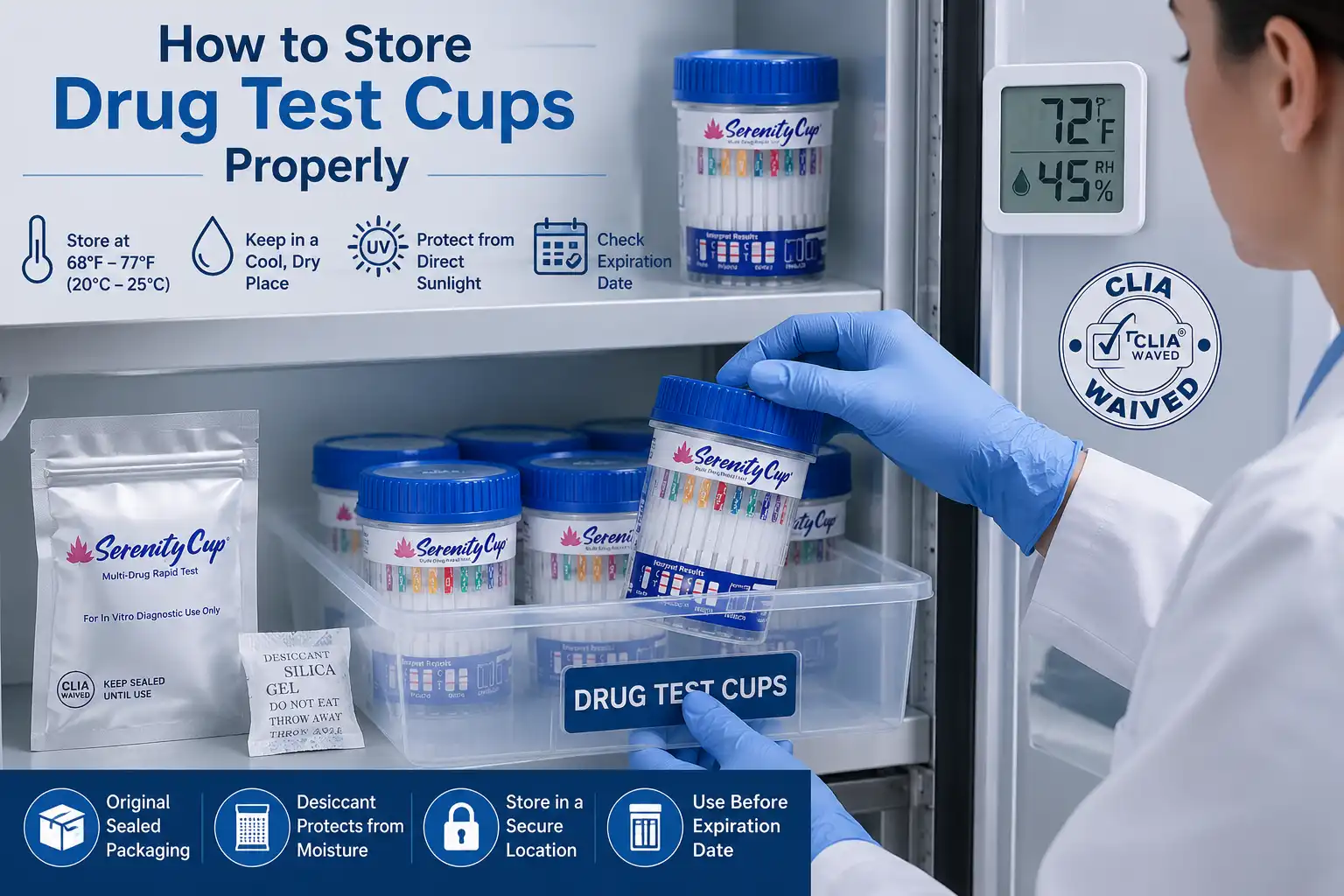
Most manufacturers recommend storing unopened drug test strips and cups at room temperature, generally between 68°F and 77°F (20°C to 25°C), while avoiding prolonged exposure to extreme temperatures. Consistent storage conditions help preserve the chemical reagents and antibodies responsible for detecting drug metabolites.
A stable indoor environment is usually the safest option.
Ideal Storage Conditions
| Storage Factor | Recommendation |
|---|---|
| Temperature | 68°F–77°F (20°C–25°C) |
| Humidity | Low humidity |
| Light | Keep away from direct sunlight |
| Packaging | Original sealed foil pouch |
| Environment | Clean, dry location |
Avoid storing drug tests in locations where temperatures change rapidly, including:
- Vehicles
- Garages
- Attics
- Outdoor sheds
- Near heaters
- Next to windows
- Laundry rooms
- Bathrooms
These environments may become significantly hotter or colder than recommended, accelerating reagent degradation and reducing test performance.
Should Drug Test Kits Be Refrigerated?
A common misconception is that refrigeration automatically extends shelf life.
For most rapid urine drug tests, the answer is no.
Unless the manufacturer specifically instructs otherwise, drug test strips and cups should not be refrigerated or frozen.
Cold storage may create condensation when the test returns to room temperature. Moisture forming inside the packaging can interfere with sensitive reagents and reduce testing accuracy.
Likewise, freezing temperatures may permanently damage the internal membrane structure, making the device unreliable even after it warms up.
The safest approach is to store drug tests at normal indoor room temperature in a climate-controlled area.
Why Heat Can Damage Drug Test Accuracy
Heat is one of the fastest ways to reduce the performance of rapid drug tests.
High temperatures accelerate natural chemical degradation inside the test device. Over time, antibodies become less reactive, reagent coatings weaken, and membrane performance declines.
Even if visible damage is not immediately apparent, prolonged heat exposure may increase the likelihood of:
- Weak control lines
- Inconsistent reactions
- Reduced sensitivity
- Invalid results
- Shortened shelf life
This is especially important during summer months when storage areas or delivery vehicles may reach temperatures far above recommended limits.
If drug test kits have been exposed to excessive heat for an extended period, inspect the packaging carefully and consult the manufacturer’s instructions before use. When there is any doubt about product integrity, replacing the affected tests is generally the safest option.
How Humidity and Moisture Affect Drug Test Performance
Moisture is another major threat to rapid drug testing devices.
The chemical reagents inside each test are designed to react only when a urine sample is introduced during testing. If humidity or water reaches the internal components prematurely, the reagents may begin to deteriorate long before the test is used.
Common sources of moisture exposure include:
- Humid storage rooms
- Bathrooms
- Basements
- Opened foil pouches
- Condensation caused by refrigeration
- Water leaks
Manufacturers include moisture-resistant foil packaging and desiccant packets to minimize these risks. Keeping the packaging sealed until testing is one of the simplest ways to preserve long-term accuracy.
Why Original Packaging Matters
Every drug test strip and cup is packaged in protective foil for a reason.
The original packaging creates a barrier against:
- Moisture
- Oxygen
- Dust
- Light exposure
- Environmental contamination
Many foil pouches also contain a desiccant packet that continuously absorbs moisture inside the package. Removing tests from their original packaging—even if they are stored in another container—may expose them to environmental conditions that shorten their usable life. Properly sealed packaging helps preserve stability until the test is ready to be used.
Never:
- Open the pouch before testing.
- Remove the desiccant packet.
- Use a pouch that is torn or punctured.
- Store loose test strips outside their protective packaging.
-
Best Places to Store Drug Test Strips and Cups
Choosing the right storage location is just as important as maintaining the correct temperature. Even high-quality drug test strips and cups can lose accuracy if they are stored in areas exposed to heat, moisture, or frequent temperature fluctuations.
The ideal storage space should be:
- Climate-controlled year-round
- Dry and well-ventilated
- Protected from direct sunlight
- Free from excessive dust and contaminants
- Secure from children and unauthorized access
Recommended Storage Locations
For most homes and workplaces, these locations provide the best protection:
Recommended Storage Location Why It Works Bedroom closet Stable temperature and low humidity Office cabinet Climate-controlled and secure Medical supply cabinet Designed for healthcare products Laboratory storage room Ideal for bulk inventory Locked workplace cabinet Prevents unauthorized access Climate-controlled supply room Best for large inventories Avoid storing drug test kits:
- Inside vehicles
- In garages
- In attics
- Near windows
- Close to radiators or heaters
- Next to HVAC vents
- In bathrooms
- In kitchens near ovens or dishwashersf
- On outdoor shelves
These locations often experience rapid temperature changes or excessive humidity, which can shorten product shelf life.
How to Store Drug Test Cups vs. Drug Test Strips
Although drug test cups and test strips use similar immunoassay technology, there are slight differences in how they should be handled.
Drug Test Strips
Drug test strips are thinner and contain exposed reagent membranes after opening. Because of this, they are especially vulnerable to:
- Moisture
- Dust
- Oils from fingers
- Air exposure
Always keep strips sealed until immediately before testing.
Drug Test Cups
Drug test cups contain multiple integrated testing components, including:
- Collection cup
- Testing membrane
- Internal reagent system
- Temperature strip (on many models)
- Built-in specimen validity features (on some cups)
Although the plastic cup provides additional physical protection, the internal testing components remain sensitive to environmental conditions. A drug test cup should never be considered durable enough for improper storage.
Why You Should Never Open a Foil Pouch Early
Every unopened pouch creates a controlled microenvironment that protects sensitive reagents from outside conditions.
Once opened, the protective barrier disappears.
Even if the test is not used immediately, exposure to room air begins affecting:
- Humidity levels
- Oxygen exposure
- Dust contamination
- Chemical stability
Opening the pouch “just to check the test” can permanently reduce its reliability.
If a pouch has been opened accidentally, it is generally best to use the test immediately rather than storing it for later.
Why the Desiccant Packet Is So Important
Many people throw away the small packet inside the foil pouch without realizing its purpose.
The desiccant absorbs moisture before it reaches the testing membrane.
Without it, humidity may gradually damage:
- Detection antibodies
- Reagent pads
- Membrane flow characteristics
Never remove the desiccant before using the test, and never use a test if the desiccant packet appears damaged, saturated, or missing.
Proper Handling Before Testing
Proper storage alone cannot guarantee accurate results if the test is handled incorrectly before use.
Before opening any drug test:
Wash Your Hands
Clean hands reduce contamination from:
- Oils
- Lotions
- Dirt
- Chemical residues
Prepare a Clean Surface
Testing should be performed on:
- Clean
- Dry
- Level surfaces
Avoid countertops contaminated with cleaning chemicals or spilled liquids.
Wear Disposable Gloves (Recommended)
In workplaces, clinics, and laboratories, disposable gloves help prevent contamination while supporting hygiene and quality assurance procedures.
Allow the Test to Reach Room Temperature
If the test has been transported during very hot or cold weather, allow it to reach room temperature before opening the pouch.
This reduces condensation and supports proper reagent performance.
Bulk Storage Best Practices for Employers and Clinics
Organizations often purchase hundreds or thousands of drug test kits at one time.
Proper inventory management protects both product quality and operational efficiency.
Use FIFO Inventory Rotation
FIFO means First In, First Out.
The oldest inventory should always be used before newly received inventory to minimize waste and reduce the risk of expired tests.
Example:
- Shipment received in January → Use first
- Shipment received in March → Use second
- Shipment received in June → Use third
Simple inventory rotation significantly reduces unnecessary product loss.
Track Expiration Dates
Maintain records that include:
- Product name
- Lot number
- Expiration date
- Delivery date
- Storage location
Routine inspections help identify products approaching expiration before they become unusable.
Inspect Every New Shipment
When receiving drug test supplies:
Check for:
- Torn foil pouches
- Water damage
- Broken boxes
- Missing labels
- Expiration dates
- Shipping damage
Damaged products should be isolated and reported before being added to inventory.
Transportation and Shipping Tips
Proper storage begins long before the test reaches your shelf.
Transportation conditions can affect product integrity.
During Delivery
Inspect packages immediately after arrival.
Look for:
- Crushed boxes
- Wet packaging
- Torn foil pouches
- Signs of excessive heat exposure
- Signs of freezing
Never Leave Drug Tests Inside a Vehicle
Vehicle temperatures can become extreme.
During summer, parked cars may exceed 140°F (60°C), while winter temperatures can fall below freezing.
Both conditions may permanently damage test reagents.
Transport drug tests indoors as soon as possible.
How to Inspect a Drug Test Before Use
Even properly stored tests should be inspected before use.
Examine the Foil Pouch
Do not use tests if the pouch is:
- Torn
- Punctured
- Wet
- Unsealed
- Swollen
Verify the Expiration Date
Never rely on memory.
Always check the printed expiration date before testing.
Expired drug tests may no longer provide reliable screening results because reagent performance naturally declines over time.
Check for Physical Damage
Discard tests showing:
- Cracks
- Broken plastic
- Missing caps
- Loose components
- Warped housing
Any visible damage may compromise performance.
Common Storage Mistakes That Reduce Accuracy
Many invalid drug test results can be traced back to avoidable storage errors.
The most common mistakes include:
Opening the Package Too Early
Once opened, the test immediately begins interacting with environmental humidity.
Keeping Drug Tests in the Bathroom
Bathrooms experience repeated humidity changes from showers, making them poor storage locations.
Leaving Tests Inside a Vehicle
High heat and freezing temperatures may permanently damage sensitive reagents.
Ignoring Expiration Dates
Even perfectly stored tests eventually expire as chemical components naturally degrade.
Removing the Desiccant
The desiccant is an essential part of moisture protection and should remain with the unopened product until testing begins.
Storing Near Heat Sources
Avoid placing drug tests near:
- Radiators
- Water heaters
- Ovens
- Heating vents
- Direct sunlight
Long-term heat exposure accelerates reagent degradation.
When Should You Discard a Drug Test?
Do not use a drug test if:
- It is expired.
- The foil pouch is damaged.
- The packaging has been opened previously.
- The test was submerged in water.
- The desiccant packet is missing (when included by the manufacturer).
- The device has visible physical damage.
- The product experienced prolonged exposure to extreme heat or freezing conditions.
- The test housing is cracked or warped.
- The control line fails to appear during use, indicating an invalid result.
Replacing a questionable test is generally more reliable than risking an inaccurate screening result.
Quick Drug Test Storage Checklist
Use this checklist to help maintain the quality of your drug test inventory:
Store between 68°F and 77°F (20°C–25°C) unless the manufacturer specifies otherwise.
Keep tests in a cool, dry, climate-controlled location.
Protect products from direct sunlight and UV exposure.
Leave every test sealed in its original foil pouch until immediately before use.
Keep desiccant packets inside unopened packaging.
Never refrigerate or freeze tests unless explicitly instructed by the manufacturer.
Avoid storing tests in vehicles, bathrooms, garages, attics, or near heating and cooling vents.
Inspect every test for damage before use.
Check expiration dates regularly.
Rotate inventory using the FIFO method.
Frequently Asked Questions (FAQs)
1. What is the best way to store drug test strips and cups?
The best way to store drug test strips and cups is in a cool, dry, climate-controlled location at room temperature, typically between 68°F and 77°F (20°C–25°C) unless the manufacturer specifies a different range. Always keep each test sealed in its original foil pouch until you’re ready to use it. The packaging helps protect the sensitive reagents from moisture, oxygen, dust, and light, all of which can affect test performance.
Choose a storage area such as a medical cabinet, office drawer, or supply room that remains dry and maintains a consistent temperature. Avoid bathrooms, garages, attics, vehicles, or windowsills where heat, humidity, or sunlight may accelerate chemical degradation.
If you purchase drug test kits in bulk, organize inventory by expiration date and use the oldest stock first (FIFO method). Before using any test, inspect the foil pouch for damage and confirm that it has not expired.
2. Can drug test strips and drug test cups be refrigerated?
In most cases, no. Drug test strips and cups should not be refrigerated unless the manufacturer specifically instructs you to do so.
Refrigeration can create condensation when the device returns to room temperature. Moisture may reach the testing membrane and chemical reagents before the test is used, reducing accuracy and increasing the likelihood of invalid results.
Freezing is also discouraged because extremely low temperatures may permanently damage the internal membrane and antibody-based reagents used in rapid immunoassay drug tests.
The safest practice is to store drug tests at normal indoor room temperature in a stable environment.
3. How does heat affect drug test accuracy?
Heat is one of the most common causes of premature drug test degradation.
Rapid drug tests rely on carefully formulated antibodies and chemical reagents that detect drug metabolites in urine or oral fluid. Prolonged exposure to high temperatures speeds up natural chemical breakdown, reducing reagent stability and overall sensitivity.
Heat damage may result in:
- Weak control lines
- Reduced detection sensitivity
- Invalid test results
- Shortened shelf life
- Greater chance of inaccurate screening
Never leave drug test kits inside a parked vehicle, near heating vents, or in direct sunlight. Even if the packaging appears undamaged, prolonged heat exposure may compromise the test’s performance.
4. Does humidity damage drug test strips?
Yes. Excessive humidity is one of the biggest threats to rapid drug testing devices.
The reagent pads inside drug test strips and cups are designed to react only after the specimen is applied. Moisture entering the package prematurely can weaken or damage these reagents, affecting the chemical reactions required for accurate screening.
To minimize humidity exposure:
- Keep tests sealed until use.
- Leave desiccant packets inside unopened packages.
- Store tests in dry locations.
- Avoid bathrooms and damp basements.
- Do not use tests from damaged foil pouches.
Maintaining a dry storage environment helps preserve the reliability of the testing device throughout its shelf life.
5. How long do drug test strips and cups last?
The shelf life of most rapid drug tests depends on the manufacturer, product design, and storage conditions.
When stored according to the manufacturer’s instructions, unopened drug test strips and cups generally remain usable until the expiration date printed on the foil pouch. Chemical reagents naturally lose stability over time, which is why manufacturers assign expiration dates based on validated stability testing.
Proper storage can help maximize the product’s usable lifespan, but it cannot extend the expiration date. Once a test expires, it should be replaced even if it appears to be in good condition.
Always verify the expiration date before testing and rotate inventory regularly to minimize waste.
6. What happens if a drug test pouch is opened before use?
Opening the foil pouch exposes the test to air, humidity, dust, and environmental contaminants.
The protective packaging is specifically designed to preserve the chemical stability of the internal testing components. Once the seal is broken, moisture and oxygen can gradually affect the reagents even if the test is not used immediately.
If a pouch has been opened accidentally, the safest approach is to use the test immediately or replace it with a new, unopened device.
Never reseal an opened pouch for future use.
7. How can I tell if a drug test has gone bad?
A drug test should not be used if you notice any signs that its integrity has been compromised.
Common warning signs include:
- Expired product
- Torn or punctured foil pouch
- Missing desiccant packet (if originally included)
- Water damage
- Cracked plastic housing
- Warped components
- Previously opened packaging
- Failure of the control line during testing
If you’re unsure whether a test has been stored properly, replacing it is generally safer than risking an inaccurate result.
8. What are the best storage practices for employers and clinics?
Organizations that use drug testing regularly should implement structured inventory management procedures.
Best practices include:
- Store products in climate-controlled supply rooms.
- Rotate stock using the FIFO method.
- Record lot numbers and expiration dates.
- Inspect shipments immediately after delivery.
- Separate damaged products from usable inventory.
- Train staff on proper handling procedures.
- Conduct routine inventory inspections.
These practices reduce waste, support quality assurance, and help maintain reliable screening programs.
9. Should drug tests be stored differently during shipping or travel?
Drug tests should remain protected from extreme temperatures while being transported.
If you receive a shipment during very hot or cold weather:
- Bring the package indoors promptly.
- Allow products to stabilize at room temperature before opening.
- Inspect every box and foil pouch for visible damage.
- Confirm expiration dates before placing products into storage.
Avoid leaving test kits in delivery vehicles or personal vehicles for extended periods, especially during summer or winter.
10. Why is proper storage important for accurate drug testing?
Proper storage protects the sensitive chemical components that make rapid drug testing possible.
Drug test strips and cups use antibody-based immunoassay technology to identify drug metabolites. These biological reagents can gradually deteriorate if exposed to excessive heat, moisture, light, or repeated temperature changes.
Correct storage helps:
- Maintain reagent stability.
- Preserve antibody performance.
- Reduce invalid results.
- Improve testing consistency.
- Extend usable shelf life.
- Support dependable screening decisions.
Following manufacturer recommendations and maintaining appropriate storage conditions ensures that every test performs as intended.