Do Drug Test Strips and Cups Expire?

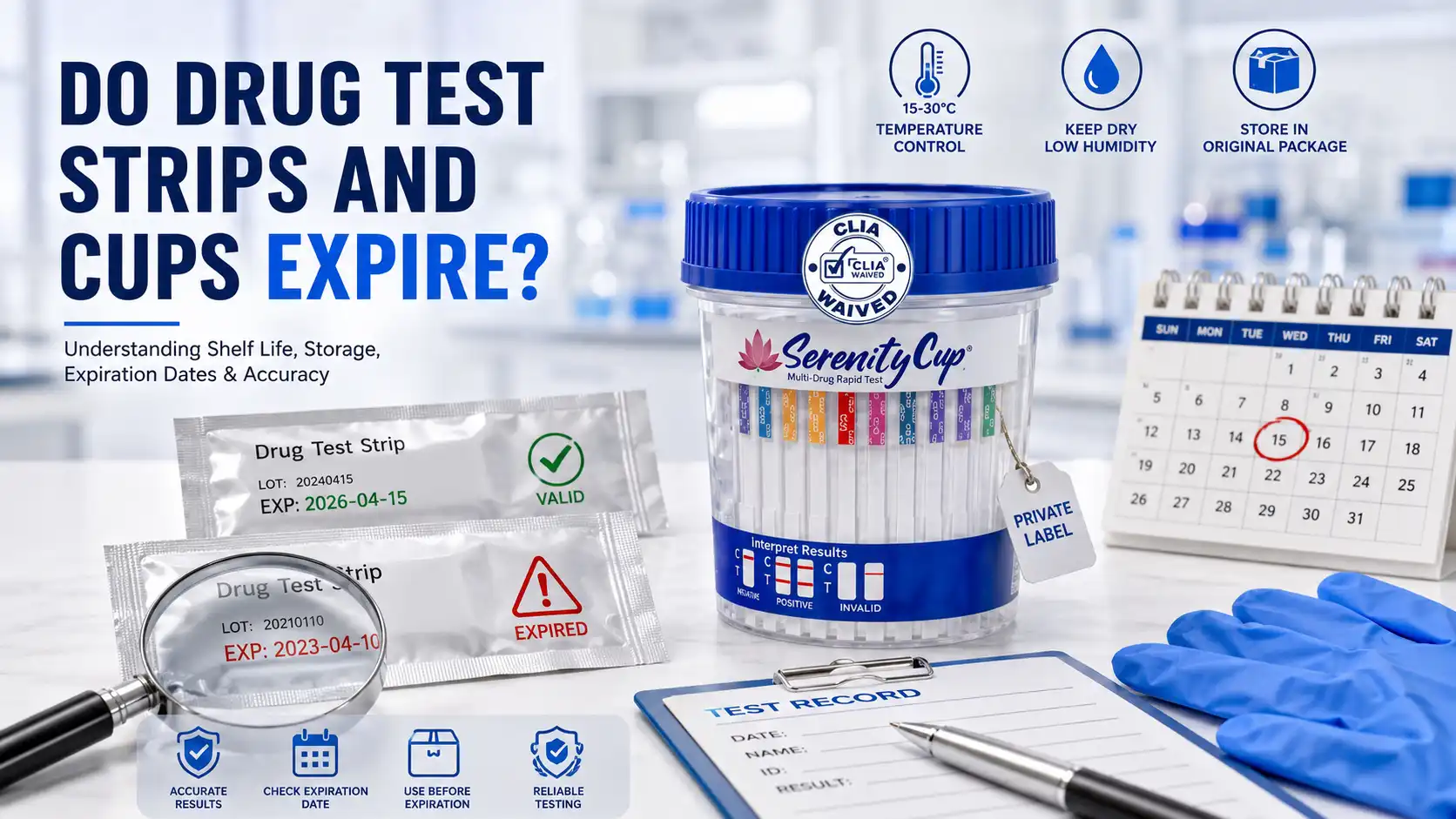
Quick Answer
Yes, drug test strips and drug test cups expire. Like many diagnostic devices, they contain sensitive chemical reagents and antibodies that gradually lose stability over time. Most rapid urine drug tests have a shelf life of 18 to 24 months when stored correctly in their original sealed packaging.
Once a drug test expires, the manufacturer can no longer guarantee its accuracy or performance. Although some expired tests may still produce readable lines, degraded reagents can increase the risk of false-negative, false-positive, or invalid results. For medical, workplace, legal, or compliance testing, always use an unexpired test stored according to the manufacturer’s instructions.
Do Drug Test Strips Expire?
Yes. Drug test strips are manufactured with a defined shelf life because the materials inside the test naturally change over time.
Rapid drug test strips use lateral flow immunoassay technology, a diagnostic method that relies on highly sensitive antibodies and chemical reagents to detect specific drug metabolites in a urine sample. These biological and chemical components remain stable only for a validated period under recommended storage conditions.
As the test ages, the reagents slowly lose their ability to react consistently. Even if the strip appears normal, its performance may no longer match the standards established during manufacturing.
Every reputable manufacturer prints an expiration date on the foil pouch or product packaging. This date represents the period during which the product has been tested and verified to perform according to its specifications when stored correctly.
For dependable drug screening, expired test strips should be replaced rather than relied upon for important decisions.
Do Drug Test Cups Expire?
Absolutely.
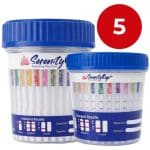
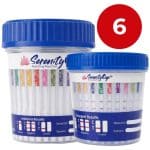
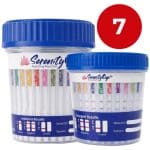
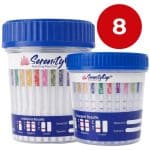
Drug test cups contain the same type of rapid immunoassay technology used in individual test strips, but they integrate multiple testing components into a single collection device.
A typical multi-panel drug test cup may include:
- Drug detection panels
- Sample collection chamber
- Internal testing membrane
- Temperature strip
- Specimen validity indicators (on some models)
- Built-in adulteration testing (on certain products)
Although the plastic collection cup itself does not suddenly become unusable, the chemical reagents inside the testing device continue to age. Over time, these reagents gradually lose sensitivity, making expired drug test cups less dependable for detecting drugs accurately.
Like test strips, every drug test cup should be used before its printed expiration date.
Why Do Drug Test Strips and Cups Expire?
Many people assume expiration dates are simply a manufacturer requirement. In reality, they are based on stability testing, which evaluates how long a diagnostic device maintains reliable performance under recommended storage conditions.
Drug tests expire because the materials responsible for detecting drugs naturally deteriorate with age.
Several changes occur over time:
Chemical Reagents Gradually Degrade
The reagents inside a rapid drug test are carefully formulated to react with specific drug metabolites. As months and years pass, these chemicals slowly become less reactive.
Reduced chemical activity can weaken the test’s ability to detect drugs accurately.
Antibodies Lose Sensitivity
Drug test strips and cups rely on antibodies that recognize target drug compounds.
These antibodies are biological proteins, and like many biological materials, they gradually lose stability as they age. This natural process can reduce the test’s sensitivity and increase the possibility of unreliable results.
Test Membranes Age
The nitrocellulose membrane inside a rapid drug test controls how the urine sample moves through the device.
Over time, environmental exposure and natural material aging may affect the consistency of fluid movement, potentially producing faint lines or incomplete reactions.
Protective Packaging Cannot Stop Time
Foil pouches and desiccant packets help protect tests from moisture, oxygen, and light, but they cannot completely prevent the natural aging of chemical reagents.
Proper storage preserves performance up to the validated expiration date—it does not extend it.
How Long Do Drug Test Strips Last?
Most unopened drug test strips remain usable for approximately 18 to 24 months from the manufacturing date when stored under recommended conditions.
The exact shelf life depends on:
- Manufacturer validation
- Product design
- Reagent formulation
- Packaging quality
- Storage conditions
Always refer to the expiration date printed on the individual foil pouch or product packaging rather than estimating the remaining shelf life.
Typical Shelf Life
| Product Condition | Expected Shelf Life* |
| Unopened, properly stored | About 18–24 months |
| Opened foil pouch | Use immediately |
| Damaged packaging | Do not use |
| Expired product | Replace before testing |
*Always follow the manufacturer’s labeled expiration date and instructions for your specific product.
How Long Are Drug Test Strips Good for After Opening?
This is one of the most common questions—and one of the most misunderstood.
Once an individual foil pouch has been opened, the protective barrier against moisture, air, and environmental contaminants is broken. From that point forward, the internal testing components are no longer protected in the same way.
For individually sealed rapid drug test strips and cups, the safest practice is to use the test immediately after opening the foil pouch. These products are designed as single-use devices, and delaying use after opening may expose the membrane and reagents to humidity, dust, or other contaminants that can affect performance.
If you’re using multi-strip containers (where several strips are stored together in one vial), always follow the manufacturer’s instructions. Some products specify a limited period after the container is first opened, provided the cap is resealed promptly and storage conditions remain appropriate.
The best practice is simple:
- Keep every test sealed until needed.
- Open the pouch only when you’re ready to perform the test.
- Never return an opened strip to storage for future use.
Does Proper Storage Extend the Shelf Life?
Proper storage is essential for maintaining the quality of drug test strips and cups, but it’s important to understand what it can—and cannot—do.
Correct storage helps preserve the test’s performance throughout its validated shelf life by protecting it from unnecessary environmental stress. However, it does not extend the manufacturer’s expiration date or make an expired test reliable again.
To help maximize performance before expiration:
- Store products in a cool, dry location.
- Keep them in their original sealed foil pouches.
- Protect them from direct sunlight and excess humidity.
- Avoid freezing or prolonged exposure to high temperatures unless the manufacturer states otherwise.
- Inspect packaging before use and discard any damaged products.
Think of the expiration date as the period during which the manufacturer has verified the test’s performance under proper storage conditions. Good storage supports that validated period—but it cannot reset or lengthen it.
Can You Use Expired Drug Test Strips?
Technically, an expired drug test strip may still produce visible lines, but that does not mean the result is reliable.
Drug test manufacturers establish expiration dates through stability studies that verify how long the device consistently meets its performance specifications. Once that period ends, the manufacturer can no longer guarantee the test’s sensitivity, specificity, or overall accuracy.
An expired strip may appear to function normally while producing inaccurate results because the chemical reagents have gradually degraded. This degradation is often invisible to the naked eye, making it impossible to determine whether the test is still dependable based solely on its appearance.
For routine home screening, some people may be tempted to use an expired test if no alternative is available. However, for any decision involving employment, healthcare, rehabilitation, legal proceedings, athletics, or regulatory compliance, an expired drug test should never be considered a dependable screening tool.
The safest approach is always to replace expired drug test strips with a new, properly stored, unexpired product.
Can You Use Expired Drug Test Cups?
The same recommendation applies to drug test cups.
Although the plastic collection cup itself may appear undamaged, the internal testing components—including the immunoassay strips, antibodies, and chemical reagents—continue to age over time.
Because multi-panel drug test cups often screen for several drugs simultaneously, degraded reagents may affect one or more panels differently. One drug panel may still function while another produces weak, inconsistent, or invalid results.
For this reason, manufacturers, employers, and healthcare providers generally recommend discarding expired drug test cups rather than relying on them for important screening decisions.
What Happens If You Use an Expired Drug Test?
Using an expired drug test does not automatically mean the result will be incorrect. However, the likelihood of inaccurate or unreliable performance increases as the testing materials continue to age.
The most common risks include reduced sensitivity, weaker reaction lines, and inconsistent performance. Since it is impossible to determine how much the reagents have degraded simply by looking at the device, relying on an expired test introduces unnecessary uncertainty.
Here are the most common outcomes.
1. False-Negative Results
A false negative occurs when drugs are present in the specimen, but the test fails to detect them.
As antibodies and chemical reagents lose sensitivity over time, they may no longer react strongly enough with drug metabolites near the cutoff concentration. This can cause the test to incorrectly indicate that no drugs are present.
False-negative results are especially concerning in workplace, clinical, and legal settings because they may provide a false sense of confidence.
2. False-Positive Results
Although less common than false negatives, false positives can also occur if degraded reagents interfere with the normal chemical reactions inside the device.
Changes in reagent performance may alter the appearance of the test line, potentially creating misleading results that require confirmatory laboratory testing.
3. Invalid Results
Sometimes an expired drug test does not produce a readable result at all.
Examples include:
- Missing control line
- Smudged background
- Incomplete urine migration
- Uneven color development
- Faint or distorted reaction lines
When the control line fails to appear, the test is considered invalid, regardless of the drug detection results.
4. Inconsistent Results
One of the biggest concerns with expired tests is inconsistency.
Two expired tests from the same box may not perform the same way because reagent degradation does not always occur uniformly.
This unpredictability is why expired rapid diagnostic devices should not be relied upon for important decisions.
Why Expired Drug Tests Become Less Reliable
Drug tests do not suddenly stop working the day after the printed expiration date. Instead, their performance gradually declines as the internal testing materials age.
Several scientific processes contribute to this decline.
Antibody Degradation
Rapid drug tests use antibodies that bind to specific drug metabolites. Over time, these proteins naturally lose their ability to bind with the same strength and consistency.
Reagent Instability
Chemical reagents gradually become less reactive due to natural aging, oxidation, and environmental exposure.
Membrane Changes
The nitrocellulose membrane inside the test controls the flow of the urine sample. As materials age, fluid movement may become less consistent, affecting line development.
Environmental Stress
Even before expiration, repeated exposure to:
- Heat
- Moisture
- UV light
- Freezing temperatures
- Air exposure after opening
can accelerate reagent degradation and shorten the functional lifespan of the test.
How to Tell If a Drug Test Has Gone Bad
Not every damaged drug test is expired, and not every expired drug test shows visible damage.
Before using any drug testing device, inspect it carefully.
Replace the test if you notice:
- Expired expiration date
- Torn foil pouch
- Punctured packaging
- Water damage
- Missing desiccant packet (when originally included)
- Cracked plastic housing
- Broken collection cup
- Discoloration
- Warped test device
- Previously opened packaging
Even if the expiration date has not passed, damaged packaging can expose the reagents to moisture and air, reducing reliability.
Drug Test Shelf Life Comparison
| Product | Unopened | After Opening | After Expiration |
| Drug Test Strip | Use until printed expiration date | Use immediately after opening | Replace with a new test |
| Drug Test Cup | Use until printed expiration date | Use immediately after opening | Replace with a new test |
| Drug Test Dip Card | Use until printed expiration date | Use immediately after opening | Replace with a new test |
| Oral Fluid Drug Test | Use until printed expiration date | Use immediately after opening | Replace with a new test |
Factors That Can Shorten Shelf Life
Even before the printed expiration date, poor storage conditions can reduce the performance of a drug test.
Common factors include:
Excessive Heat
High temperatures accelerate chemical degradation.
Never leave drug tests inside:
- Vehicles
- Warehouses without climate control
- Near heaters
- On windowsills
High Humidity
Moisture damages sensitive reagents and membranes.
Avoid storing tests in:
- Bathrooms
- Damp basements
- Laundry rooms
Direct Sunlight
Ultraviolet (UV) light can gradually degrade biological and chemical components.
Store tests away from direct sunlight.
Damaged Packaging
A torn or punctured foil pouch exposes the device to moisture, oxygen, and contaminants.
Discard damaged products immediately.
Improper Handling
Touching the testing membrane, opening the pouch too early, or storing an opened test for later use may compromise accuracy.
Storage Tips to Maximize Shelf Life
Proper storage helps preserve the quality of drug test strips and cups until their expiration date.
Follow these best practices:
- Store at the temperature recommended by the manufacturer.
- Keep products in a cool, dry environment.
- Leave every test inside its original sealed foil pouch.
- Protect products from moisture and direct sunlight.
- Avoid freezing unless specifically instructed.
- Keep tests away from excessive heat.
- Rotate inventory using the First In, First Out (FIFO) method.
- Inspect expiration dates regularly.
- Discard damaged or expired products promptly.
Proper storage cannot extend the manufacturer’s expiration date, but it helps ensure the device performs as intended throughout its validated shelf life.
Who Should Never Use an Expired Drug Test?
Expired drug tests should not be used for situations where accurate results are essential, including:
- Pre-employment drug screening
- Random workplace testing
- Department of Transportation (DOT) testing
- Clinical drug screening
- Rehabilitation monitoring
- Pain management programs
- Court-ordered testing
- Probation and parole programs
- Athletic drug testing
- School or university drug screening
In these settings, using a new, unexpired test helps support accurate screening and appropriate follow-up decisions.
Frequently Asked Questions (FAQs)
1. Do drug test strips expire if they have never been opened?
Yes. Even if a drug test strip remains sealed in its original foil pouch, it still has a manufacturer-assigned expiration date. The protective packaging helps shield the test from moisture, oxygen, dust, and light, but it cannot stop the natural aging of the antibodies and chemical reagents inside the device.
Manufacturers determine expiration dates through stability testing, which verifies how long the test continues to meet its performance specifications when stored under recommended conditions. Once that validated period ends, the manufacturer can no longer guarantee the test’s sensitivity, specificity, or overall accuracy.
If an unopened drug test strip has reached its expiration date, it should be replaced with a new one rather than used for workplace, medical, legal, or personal drug screening.
2. Do drug test cups expire the same way as drug test strips?
Yes. Drug test cups and drug test strips use similar rapid immunoassay technology, so both have a limited shelf life.
Although a drug test cup includes a plastic specimen collection container, the actual testing components inside the cup contain antibodies and chemical reagents that naturally degrade over time. As these materials age, the ability to detect drug metabolites consistently may decline.
Because of this, every drug test cup should be used before its printed expiration date and stored according to the manufacturer’s instructions. Never assume the test is reliable simply because the plastic cup appears undamaged.
3. How long are drug test strips good for after opening?
For individually packaged rapid drug test strips, the best practice is to use the strip immediately after opening the foil pouch.
Once the protective seal is broken, the strip is exposed to air, humidity, dust, and other environmental factors that may begin affecting the testing membrane and reagents. Unlike unopened products, opened strips no longer benefit from the moisture barrier provided by the sealed pouch.
Some multi-strip containers may include manufacturer-specific instructions regarding usability after the vial is opened. In those cases, always follow the product instructions exactly. If no guidance is provided, avoid storing opened strips for future use.
4. Can you use expired drug test strips?
Although an expired drug test strip may still produce visible lines, using one is not recommended because the accuracy of the results can no longer be guaranteed.
As antibodies and reagents naturally degrade, the test may become less sensitive to drug metabolites or produce inconsistent reactions. Since there is no practical way to determine how much the reagents have deteriorated, relying on an expired strip introduces unnecessary uncertainty.
For home use, an expired test should never replace a new one when reliable results are important. For workplace, healthcare, legal, or compliance testing, always use an unexpired drug test.
5. What happens if you use an expired drug test?
Using an expired drug test increases the possibility of inaccurate or unreliable results.
Possible outcomes include:
- False-negative results
- False-positive results
- Weak or faint test lines
- Missing control lines
- Invalid results
- Inconsistent performance
An expired test does not always fail immediately after its expiration date. However, because chemical stability gradually declines, the reliability of the result becomes increasingly uncertain. If an expired test produces an unexpected result, repeat the screening with a new, unexpired device and follow any required confirmation procedures.
6. Can proper storage extend the expiration date of a drug test?
No. Proper storage helps preserve the quality of the test up to the manufacturer’s validated expiration date, but it does not extend that date.
Keeping drug test strips and cups in a cool, dry environment away from direct sunlight and humidity reduces unnecessary stress on the reagents. However, the natural aging process of antibodies and chemical compounds continues over time.
Think of proper storage as protecting the product during its intended lifespan—not extending it beyond the period verified by the manufacturer.
7. Where can I find the expiration date on a drug test strip or cup?
The expiration date is usually printed on one or more of the following:
- Individual foil pouch
- Product box
- Outer packaging
- Manufacturer label
Some products also display the lot number and manufacturing date alongside the expiration date.
Before every drug test, check the printed expiration date rather than relying on purchase records or memory. If the date is missing or unreadable, replace the product.
8. Can heat or moisture make a drug test expire faster?
Heat and moisture cannot change the printed expiration date, but they can reduce the performance of a drug test before that date if storage recommendations are ignored.
Exposure to excessive temperatures, high humidity, or damaged packaging may accelerate the degradation of antibodies and chemical reagents. As a result, a test that has not technically expired may still become unreliable if it has been stored improperly.
To protect drug test quality, store products in a cool, dry location, keep them sealed until use, and avoid leaving them in vehicles, bathrooms, or other environments with extreme conditions.
9. Should employers and clinics ever use expired drug tests?
No. Employers, healthcare providers, laboratories, and organizations conducting workplace or regulated drug testing should never rely on expired testing devices.
Drug screening often influences employment decisions, patient care, legal proceedings, or regulatory compliance. Using expired products increases the risk of inaccurate results, unnecessary repeat testing, and potential challenges to the validity of the screening process.
Implementing routine inventory inspections and using the First In, First Out (FIFO) inventory method helps reduce waste while ensuring only unexpired products remain available for testing.
10. When should I throw away a drug test even if it hasn’t expired?
A drug test should be discarded if there are signs that its integrity may have been compromised, even when the printed expiration date has not passed.
Replace the test if:
- The foil pouch is torn or punctured.
- The package has been opened previously.
- The device has been exposed to water or excessive humidity.
- The housing is cracked or damaged.
- The product has been stored in extreme heat or freezing conditions.
- The desiccant packet is missing (when originally included).
- The packaging shows signs of contamination or deterioration.
Using a questionable test may produce unreliable results. When in doubt, replacing the device is the safest choice.