Drug Test Cups vs. Strips: Which One Should You Choose?”

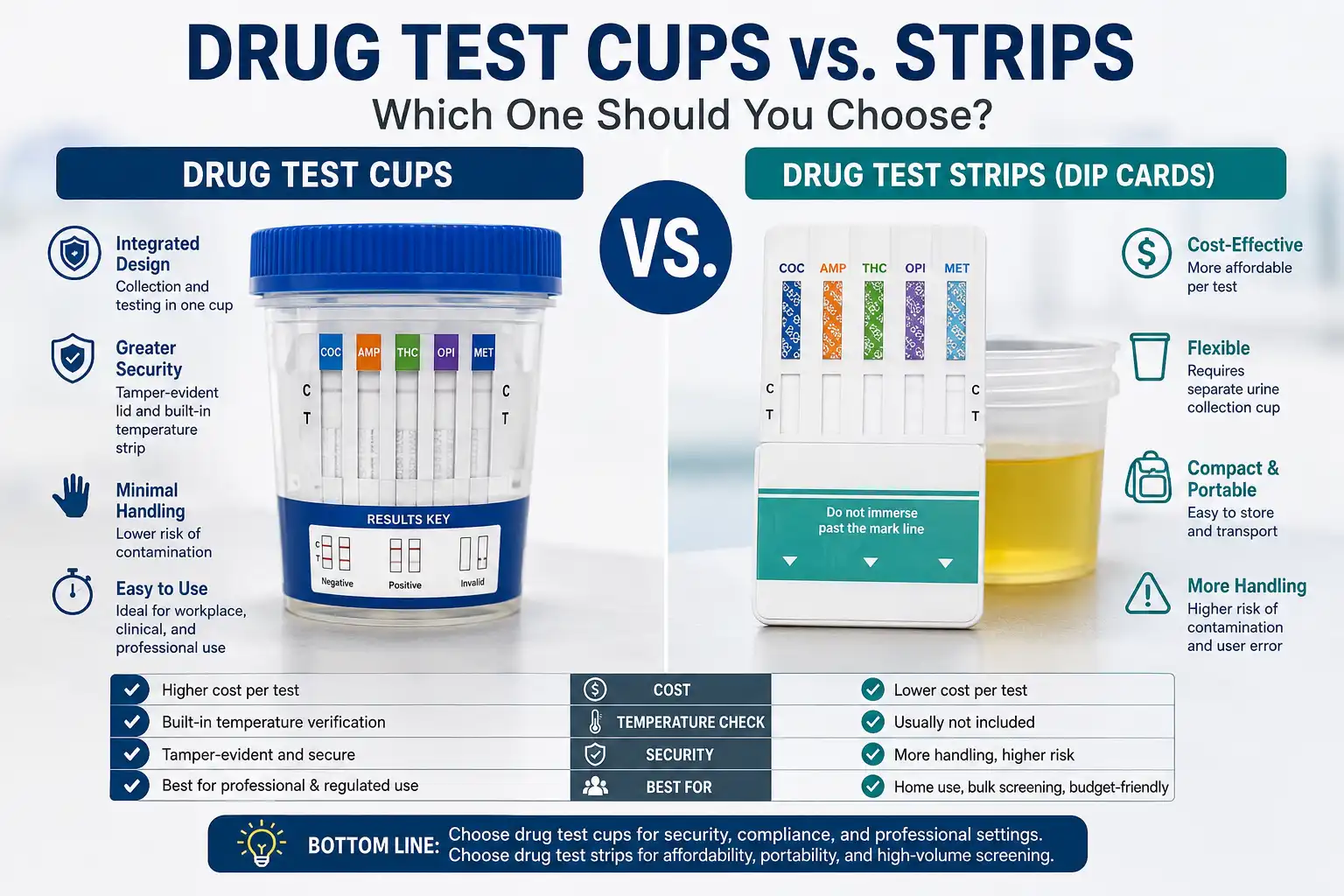
Quick Answer
If you need secure, professional, and tamper-resistant drug screening, drug test cups are usually the better choice because they combine specimen collection and testing in one sealed device while offering features like temperature verification and specimen validity testing.
If your priority is low cost, portability, and frequent screening, drug test strips or dip cards are often the better option. They use the same rapid immunoassay technology as many drug test cups but require a separate urine collection container and more manual handling.
The right choice depends on your testing environment, workflow, budget, compliance requirements, and the level of specimen security you need.
Drug Test Cups vs. Strips: Which One Should You Choose?
Choosing between drug test cups and drug test strips is one of the most common decisions faced by employers, healthcare providers, rehabilitation centers, schools, and individuals performing urine drug screening.
At first glance, both products appear to accomplish the same goal—they detect drugs in urine within minutes. However, their design, workflow, specimen handling, and security features make each option better suited for different situations.
Rather than asking “Which test is better?”, the more useful question is:
Which drug test is better for your specific testing program?
The answer depends on several factors, including:
- Number of people being tested
- Testing frequency
- Budget
- Risk of specimen tampering
- Need for documentation
- Testing environment
- Staff experience
- Regulatory requirements
Understanding these differences helps you choose a solution that improves efficiency while maintaining reliable screening results.
Understanding Drug Test Cups and Drug Test Strips
Before comparing the two products, it’s important to understand that both drug test cups and drug test strips use the same basic scientific principle.
Most rapid urine drug tests rely on lateral flow immunoassay technology, which uses specialized antibodies and chemical reagents to detect drug metabolites in a urine specimen. When the urine moves across the testing membrane, the device produces visible control and test lines that indicate whether the sample is negative or requires confirmatory laboratory testing.
This means the primary difference between cups and strips is not necessarily the detection chemistry. Instead, the distinction lies in how the specimen is collected, handled, protected, and interpreted during the testing process.
What Is a Drug Test Cup?
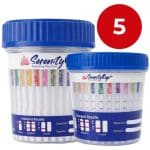
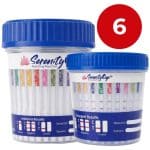
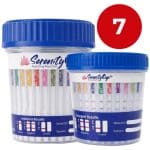
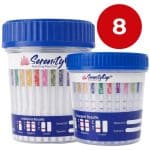
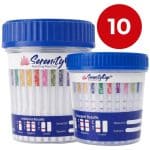
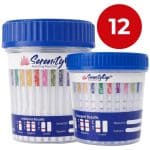
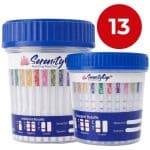
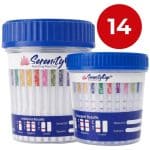
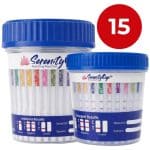
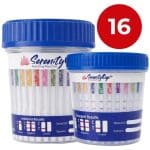
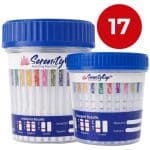
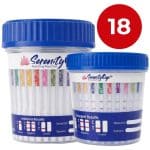
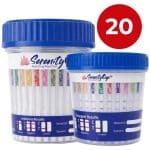
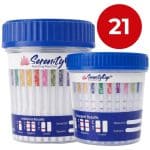
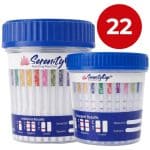
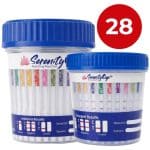
A drug test cup is an integrated urine drug screening device that combines specimen collection and testing into one sealed unit.
Instead of collecting urine in one container and transferring it to another testing device, the donor urinates directly into the collection cup. The built-in testing panels then analyze the specimen, and results become visible through result windows after the recommended waiting period.
Many professional drug test cups also include additional features that simplify testing while helping protect specimen integrity.
Common features include:
- Built-in multi-panel drug tests
- Leak-resistant collection cup
- Tamper-evident lid
- Temperature verification strip
- Specimen validity testing (on selected models)
- Adulteration test panels (on selected models)
- Clearly labeled result windows
Because collection and testing occur within one device, there is less handling of the specimen and fewer opportunities for contamination or accidental spills.
Where Are Drug Test Cups Commonly Used?
Drug test cups are widely used in environments where documentation, consistency, and specimen security are priorities.
Examples include:
- Workplace drug testing
- Occupational health clinics
- Hospitals
- Pain management clinics
- Rehabilitation centers
- Probation programs
- Correctional facilities
- Government agencies
- Manufacturing facilities
- Transportation companies
- Construction sites
- Staffing agencies
Organizations that conduct frequent testing often choose drug test cups because they simplify the collection process while reducing handling errors.
What Are Drug Test Strips (Dip Cards)?
Drug test strips—also called dip cards or urine drug test strips—are compact testing devices that require a separate urine collection container.
After collecting the specimen, the administrator removes the strip or dip card from its protective packaging and briefly immerses it into the urine sample according to the manufacturer’s instructions. Once removed, the strip is placed on a flat surface until the results develop.
Although this process involves more manual steps than using a drug test cup, many organizations continue to use strips because they are economical, portable, and easy to store.
Drug test strips are available in a variety of configurations, including:
- Single-drug tests
- Multi-panel dip cards
- Five-panel tests
- Ten-panel tests
- Custom drug combinations
Because they are lightweight and require minimal storage space, they are especially useful for high-volume screening programs and organizations managing large inventories.
Where Are Drug Test Strips Commonly Used?
Drug test strips are often selected for situations where affordability and flexibility are more important than advanced specimen security.
Common applications include:
- Home drug testing
- Family monitoring
- Educational institutions
- Rehabilitation follow-up
- Community screening programs
- High-volume screening events
- Preliminary workplace screening
- Research environments
When used correctly, drug test strips provide fast preliminary screening results while keeping overall testing costs lower.
Drug Test Cups vs. Drug Test Strips: Side-by-Side Comparison
| Feature | Drug Test Cups | Drug Test Strips / Dip Cards |
|---|---|---|
| Specimen Collection | Integrated collection and testing | Separate collection cup required |
| Sample Handling | Minimal | More manual handling |
| Ease of Use | Very easy | Requires additional steps |
| Temperature Verification | Usually available | Not typically included |
| Adulteration Testing | Available on many models | Rarely available |
| Risk of Contamination | Lower | Higher |
| Tamper Resistance | Higher | Lower |
| Storage Space | Larger | Compact |
| Cost Per Test | Higher | Lower |
| Best For | Professional testing | Home and bulk screening |
Which Test Is Easier to Use?
Ease of use depends on who is performing the test and the environment in which it is being administered.
Drug Test Cups
Drug test cups simplify the process because specimen collection and testing occur within a single device. There is no need to transfer urine or dip separate testing strips into the sample, reducing the number of steps required.
This streamlined workflow makes drug test cups especially suitable for busy clinics, occupational health providers, and workplace testing programs where efficiency is important.
Drug Test Strips
Drug test strips require additional handling. The urine must first be collected in a clean container before the strip or dip card is immersed for the specified time.
Because there are more manual steps, users must carefully follow the manufacturer’s instructions to avoid errors such as dipping beyond the maximum line or reading results outside the recommended time window.
For experienced users, these extra steps are usually manageable. However, organizations testing large numbers of people may prefer the simplicity of integrated drug test cups.
Are Drug Test Cups and Drug Test Strips Equally Accurate?
One of the biggest misconceptions is that drug test cups are automatically more accurate than drug test strips.
In reality, both devices generally rely on the same rapid immunoassay technology and are designed to detect specific drug metabolites at established cutoff concentrations. When manufactured to quality standards and used according to their instructions, both can provide reliable preliminary screening.
The practical difference often comes from the testing process rather than the chemistry itself.
For example, drug test cups reduce specimen handling, lowering the chance of accidental contamination or procedural mistakes. Drug test strips, while capable of similar analytical performance, require more manual interaction, which may increase the potential for user error if instructions are not followed carefully.
Regardless of the device used, any non-negative (presumptive positive) result that will influence employment, legal, or medical decisions should be confirmed using an appropriate laboratory confirmation method.
Drug Test Cups vs. Drug Test Strips for Workplace Testing
Selecting the right drug testing device is about more than obtaining a rapid result. Employers, occupational health providers, staffing agencies, and safety-sensitive industries need a testing solution that protects specimen integrity, simplifies administration, and supports consistent documentation.
While both drug test cups and drug test strips can identify drug metabolites using rapid immunoassay technology, their design influences how securely and efficiently a workplace drug screening program operates.
For organizations where test results may affect hiring decisions, workplace safety, or regulatory compliance, the testing process is just as important as the analytical performance of the device.
Why Many Employers Choose Drug Test Cups
Drug test cups combine urine collection and testing into a single enclosed device, reducing the amount of specimen handling required throughout the screening process.
This integrated design offers several operational advantages:
- Less direct contact with the urine specimen
- Simplified collection and testing workflow
- Reduced opportunity for accidental spills
- Faster administration during high-volume testing
- Better specimen protection during on-site screening
Many professional drug test cups also include features such as temperature verification strips and specimen validity indicators, allowing administrators to perform an initial assessment of sample authenticity before interpreting the drug screening results.
For businesses conducting routine employee screening, these additional safeguards can help create a more standardized testing process.
When Drug Test Strips May Be the Better Workplace Choice
Although drug test cups are often preferred for professional environments, drug test strips remain valuable in many workplace programs.
Organizations may choose strips when they:
- Perform large numbers of screenings each month
- Need a lower cost per test
- Already use separate specimen collection containers
- Require flexible panel configurations
- Conduct preliminary screening before laboratory confirmation
Because dip cards require separate urine collection, administrators should carefully follow collection and handling procedures to minimize contamination and procedural errors.
When trained personnel perform the testing correctly, drug test strips can provide dependable preliminary screening while helping organizations manage testing costs.
Drug Test Cups vs. Drug Test Strips for Home Drug Testing
Home users have different priorities than employers or healthcare providers.
Instead of maintaining chain-of-custody documentation or managing high-volume screening programs, families and individuals often focus on convenience, affordability, and ease of interpretation.
Drug Test Cups for Home Use
A drug test cup may be the better choice if you want a simpler testing experience with minimal specimen handling.
Advantages include:
- Collect and test using one device
- Less contact with the urine specimen
- Easy-to-read result windows
- Reduced chance of accidental spills
- Suitable for users with little testing experience
These features make drug test cups attractive for parents, caregivers, and individuals monitoring recovery at home.
Drug Test Strips for Home Use
Drug test strips are often selected by people who perform occasional or frequent personal testing.
Reasons include:
- Lower purchase cost
- Compact packaging
- Easy storage
- Multiple panel options
- Convenient for purchasing in larger quantities
However, users should carefully follow the manufacturer’s instructions regarding immersion depth, timing, and result interpretation to obtain the most reliable screening outcome.
Cost Comparison: Looking Beyond the Price Tag
Many buyers compare only the purchase price of a drug test.
In reality, the total cost of a drug screening program includes much more than the device itself.
Important factors include:
- Staff time
- Collection workflow
- Retesting
- Documentation
- Inventory management
- Waste reduction
- Training requirements
- Administrative workload
A drug test strip may have a lower initial purchase price, but if additional collection cups, increased handling, or repeat testing are required, the overall program cost can increase.
Similarly, although drug test cups generally cost more per unit, they may reduce labor and simplify specimen collection in busy testing environments.
For this reason, organizations should evaluate overall operational efficiency rather than focusing solely on individual test pricing.
Which Option Provides Better Specimen Security?
One of the biggest differences between cups and strips is specimen security.
Drug screening programs rely on maintaining specimen integrity from collection through result interpretation.
Any unnecessary handling creates opportunities for contamination, substitution, or procedural mistakes.
Drug Test Cups
Professional drug test cups are specifically designed to improve specimen security.
Many models include:
- Tamper-evident lids
- Built-in temperature strips
- Leak-resistant construction
- Specimen validity testing
- Integrated adulteration testing
- Secure result windows
These features help administrators identify unusual samples before interpreting the drug screening results.
Drug Test Strips
Drug test strips require a separate collection container.
Because administrators must manually immerse the strip into the urine specimen, there are additional handling steps.
Although these procedures are straightforward when performed correctly, they require careful attention to:
- Clean collection containers
- Proper immersion depth
- Correct timing
- Appropriate reading window
- Safe specimen handling
Organizations with experienced personnel can successfully use dip cards, but programs concerned about specimen security often prefer integrated testing cups.
Workflow Comparison
Understanding how each testing method fits into daily operations helps buyers choose the most efficient solution.
| Workflow Step | Drug Test Cup | Drug Test Strip |
|---|---|---|
| Collect urine | Directly into test cup | Separate collection cup |
| Prepare test | Minimal preparation | Remove strip and prepare sample |
| Sample handling | Very limited | Manual dipping required |
| Read results | Built-in result window | Remove strip and place flat |
| Risk of spills | Lower | Slightly higher |
| Workflow speed | Faster | Slightly slower |
While neither process is difficult, integrated drug test cups reduce the number of manual steps required during testing.
Which Testing Method Is Better for Different Industries?
Different industries have different priorities.
The best testing solution depends on the level of security, testing frequency, and documentation required.
| Industry | Recommended Option | Why |
|---|---|---|
| Workplace Testing | Drug Test Cups | Better specimen control |
| Occupational Health Clinics | Drug Test Cups | Efficient workflow |
| Hospitals | Drug Test Cups | Reduced specimen handling |
| Rehabilitation Centers | Drug Test Cups | Consistent documentation |
| Probation Programs | Drug Test Cups | Improved specimen integrity |
| Construction | Drug Test Cups | On-site efficiency |
| Manufacturing | Drug Test Cups | High-volume testing |
| Schools & Universities | Drug Test Strips or Cups | Depends on program size |
| Home Testing | Drug Test Strips | Cost-effective |
| Family Monitoring | Drug Test Strips | Affordable and portable |
| Community Screening | Drug Test Strips | Lower cost for bulk testing |
Common Buying Mistakes
Selecting the wrong testing device often leads to unnecessary costs or operational challenges.
Avoid these common mistakes:
- Choosing the lowest-priced product without considering workflow.
- Ignoring specimen security requirements.
- Purchasing drug strips when temperature verification is important.
- Buying professional testing cups for occasional personal testing when a simpler solution may be sufficient.
- Failing to consider storage requirements and product shelf life.
- Overlooking panel configurations that match your testing needs.
- Not training staff on proper specimen collection and result interpretation.
Choosing the right product begins with understanding how and where the tests will be used, not simply comparing prices or panel counts.
Decision Matrix: Which Drug Test Should You Choose?
Choosing between a drug test cup and a drug test strip isn’t about finding a universally “better” product—it’s about selecting the device that best fits your testing environment, workflow, and compliance needs.
Use the matrix below to make an informed decision.
| If Your Priority Is… | Best Choice | Why |
|---|---|---|
| Workplace drug testing | Drug Test Cup | Better specimen security and streamlined workflow |
| Home drug testing | Drug Test Strip | Affordable and simple for occasional use |
| High-volume screening | Drug Test Strip | Lower cost per test |
| Occupational health clinics | Drug Test Cup | Faster collection and reduced handling |
| Random employee testing | Drug Test Cup | Temperature verification and tamper resistance |
| Schools & colleges | Depends on program | Cups for supervised testing, strips for budget-conscious programs |
| Rehabilitation centers | Drug Test Cup | Better specimen integrity |
| Parents monitoring at home | Drug Test Strip | Cost-effective and easy to store |
| Probation & corrections | Drug Test Cup | Enhanced specimen control |
| Mobile testing programs | Drug Test Strip | Lightweight and portable |
Expert Buyer’s Checklist
Before purchasing drug testing devices, ask these questions:
Testing Requirements
- How many people will be tested each month?
- Is testing supervised or unsupervised?
- Will testing occur at one location or multiple sites?
- Is chain-of-custody documentation required?
- Are temperature verification or specimen validity checks necessary?
Budget Considerations
- What is your budget per test?
- Are you purchasing in bulk?
- Do you need multiple drug panel configurations?
- Will lower-priced tests increase handling time?
Operational Needs
- Who will administer the tests?
- Do staff members have drug testing experience?
- Is reducing urine handling important?
- How much storage space is available?
Answering these questions before purchasing helps ensure the chosen device aligns with your organization’s goals and testing procedures.
Drug Test Cups vs. Drug Test Strips: Comparison Summary
| Feature | Drug Test Cups | Drug Test Strips |
|---|---|---|
| Collection & Testing | Integrated in one device | Separate collection container required |
| Cost | Higher upfront cost | Lower upfront cost |
| Ease of Use | Very easy | Requires additional handling |
| Temperature Verification | Commonly available | Usually unavailable |
| Specimen Validity | Available on many models | Rarely included |
| Sample Handling | Minimal | More manual handling |
| Risk of Contamination | Lower | Slightly higher |
| Storage | Requires more space | Compact and portable |
| Best For | Professional, workplace, and clinical settings | Home users, schools, and bulk screening |
| Workflow Efficiency | Excellent | Good |
| Overall Convenience | High | Moderate |
Frequently Asked Questions
1. Are drug test cups more accurate than drug test strips?
Not necessarily. Both drug test cups and drug test strips generally use rapid immunoassay technology to detect drug metabolites at established cutoff concentrations. When manufactured to quality standards and used correctly, both can provide reliable preliminary screening.
The key difference lies in specimen handling. Drug test cups reduce manual handling, which may lower the risk of contamination or user error during the testing process.
2. Which option is better for workplace drug testing?
Drug test cups are generally preferred for workplace testing because they combine specimen collection and testing into one device. Many models also include temperature verification strips, tamper-evident lids, and specimen validity features that help support consistent testing procedures.
For organizations where documentation and specimen integrity are important, these additional features can simplify the overall workflow.
3. Are drug test strips suitable for home use?
Yes. Drug test strips are a practical choice for personal and family drug screening because they are affordable, compact, and easy to store.
Users should carefully follow the manufacturer’s instructions for specimen collection, dipping depth, timing, and result interpretation to obtain reliable preliminary results.
4. Which test is more cost-effective?
Drug test strips usually have a lower purchase price, making them economical for high-volume or routine screening.
However, organizations should also consider total operational costs, including staff time, specimen handling, training, documentation, and potential retesting. In some professional settings, drug test cups may reduce overall program costs by improving workflow efficiency.
5. Can both tests detect the same drugs?
Yes. Both drug test cups and drug test strips are available in a variety of panel configurations that screen for common drugs of abuse and certain prescription medications.
Available drug panels vary by manufacturer, so buyers should select a product that matches their specific screening requirements.
6. Which test reduces the risk of specimen tampering?
Drug test cups generally provide better specimen security because many include built-in temperature strips, tamper-evident lids, and optional specimen validity testing.
Drug test strips require separate specimen collection and manual handling, which introduces additional opportunities for procedural errors if proper protocols are not followed.
7. Can drug test strips replace drug test cups in professional settings?
They can be used in many professional environments, particularly for preliminary screening or high-volume testing. However, organizations that prioritize specimen integrity, streamlined workflow, or enhanced documentation may find drug test cups better suited to their operational needs.
The choice should be based on program requirements rather than assuming one device is universally superior.
8. What happens if a drug test result is non-negative?
A rapid urine drug test provides a preliminary screening result. If a test produces a non-negative (presumptive positive) result and the outcome could affect employment, legal matters, or medical care, the specimen should be sent to a qualified laboratory for confirmatory testing using validated analytical methods.
9. Do drug test cups and strips have the same shelf life?
Most rapid urine drug testing devices have a shelf life determined by the manufacturer. While many products remain stable for approximately 18 to 24 months when stored correctly, buyers should always follow the expiration date and storage instructions provided with the specific product.
10. Which drug test should I choose?
The best choice depends on your testing goals:
- Choose drug test cups if you need secure specimen collection, reduced handling, and professional workflow for workplace, healthcare, or compliance testing.
- Choose drug test strips if affordability, portability, and high-volume screening are your primary priorities.
Evaluating your testing environment, budget, and operational requirements will help you select the most appropriate solution.