What Is BAR in a Drug Test?

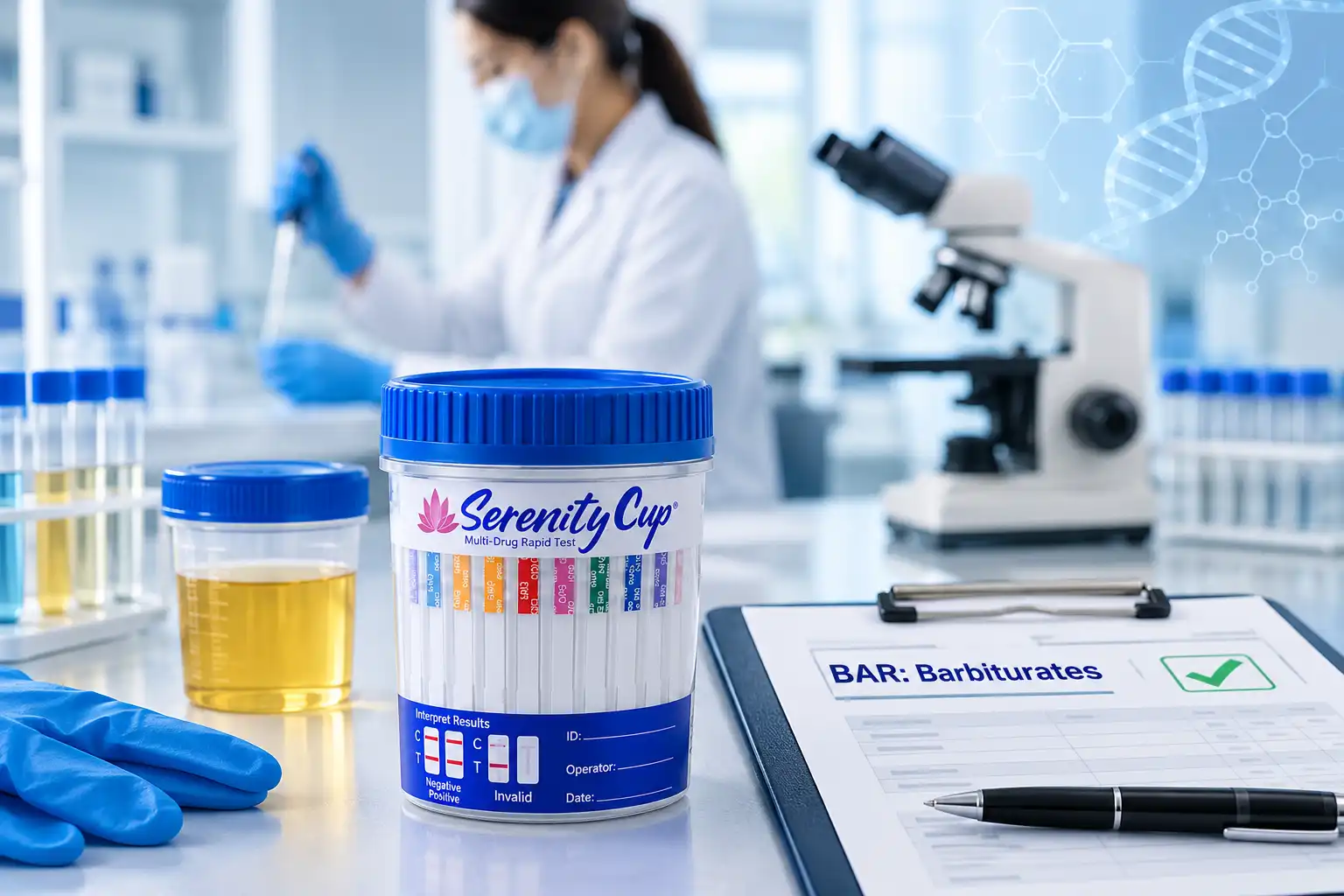
When reviewing a drug test panel, BAR stands for barbiturates, a group of central nervous system depressants that are screened for in urine and other biological samples. A BAR drug test checks whether certain barbiturate compounds or their metabolites are present above a specific cutoff level.
Barbiturates were once commonly prescribed for conditions such as anxiety, insomnia, and seizures. Today, their medical use is more limited because of their potential for dependence, tolerance, and overdose. However, some barbiturates are still prescribed for specific medical conditions, making accurate drug testing and result interpretation important.
What Does BAR Stand for on a Drug Test?
BAR means barbiturates on a drug test panel.
Unlike a test that looks for only one specific substance, a BAR screening detects a class of related drugs that belong to the barbiturate family. These medications affect the central nervous system by slowing brain activity and producing calming, sedative effects.
A BAR result on a drug test indicates whether barbiturate compounds have been detected in the sample.
Common samples used for BAR testing include:
- Urine specimens
- Oral fluid samples
- Laboratory-confirmed testing samples
What Are Barbiturates?
Barbiturates are prescription medications classified as central nervous system depressants. They work by slowing activity in the brain and nervous system, which can create effects such as relaxation, drowsiness, and sedation.
Historically, doctors prescribed barbiturates for:
- Anxiety disorders
- Sleep problems
- Seizure disorders
- Surgical anesthesia
- Certain migraine treatments
Because of their narrow safety range and risk of dependence, many barbiturates have been replaced by newer medications with improved safety profiles.
Which Drugs Does a BAR Drug Test Detect?
A BAR drug test may detect several types of barbiturates, including:
| Barbiturate | Common Medical Use |
| Phenobarbita | Seizure control and epilepsy treatment |
| Pentobarbital | Sedation and medical procedures |
| Secobarbital | Sedative medication |
| Butalbital | Certain headache and migraine medications |
| Amobarbital | Historical medical sedative use |
The exact substances detected depend on the testing method, cutoff level, and laboratory procedure.
How Does a BAR Drug Test Work?
A BAR drug test works by identifying barbiturate metabolites in a biological sample.
Most rapid BAR tests use an immunoassay screening method, which detects whether the concentration of barbiturate-related compounds reaches or exceeds a predetermined cutoff level.
The testing process generally includes:
- Collection of a urine or oral fluid sample
- Initial screening using a rapid test device or laboratory method
- Comparison of detected levels against the cutoff concentration
- Confirmation testing if the initial result is positive
A preliminary positive result may require additional laboratory confirmation using advanced methods such as mass spectrometry.
What Is the Cutoff Level for a BAR Drug Test?
The cutoff level is the minimum concentration required for a test to report a positive result.
A commonly used BAR urine screening cutoff is:
300 ng/mL
Some testing systems may use different cutoff values depending on:
- Test type
- Laboratory standards
- Regulatory requirements
- Sample type
A result below the cutoff is generally reported as negative, while a result at or above the cutoff may be reported as presumptive positive.
What Does a Positive BAR Drug Test Mean?
A positive BAR drug test means that barbiturate compounds were detected at or above the test’s cutoff level.
However, a positive result does not automatically indicate illegal drug use.
Possible reasons for a positive BAR result include:
- Use of a prescribed barbiturate medication
- Recent exposure to a barbiturate-containing medication
- Misuse of prescription drugs
For this reason, positive screening results are often confirmed through laboratory testing before final decisions are made.
How Long Do Barbiturates Stay Detectable?
The detection window for barbiturates depends on several factors, including:
- Type of barbiturate
- Dose taken
- Frequency of use
- Individual metabolism
- Testing method
General detection ranges include:
Short-Acting Barbiturates
Examples:
- Secobarbital
Typical detection:
- About 1–3 days
Intermediate-Acting Barbiturates
Typical detection:
- Several days to about one week
Long-Acting Barbiturates
Example:
Typical detection:
- Several weeks in some cases
Because long-acting barbiturates remain in the body longer, they may be detectable for extended periods compared with short-acting medications.
BAR Drug Test Results: Negative vs Positive
Negative BAR Result
A negative result generally means:
- No barbiturates were detected
- Levels were below the cutoff
- No significant evidence of recent barbiturate use was found
Positive BAR Result
A positive result means:
- Barbiturate compounds were detected
- The concentration exceeded the cutoff level
- Additional confirmation may be required
BAR vs Other Drug Test Categories
Drug tests often screen for multiple drug classes at the same time.
| Drug Code | Drug Class |
| BAR | Barbiturates |
| BZO | Benzodiazepines |
| THC | Marijuana/Cannabinoids |
| OPI | Opiates |
| AMP | Amphetamines |
| COC | Cocaine |
BAR specifically refers to barbiturates and should not be confused with benzodiazepines, which are another category of sedative medications.
Why Are BAR Tests Used?
BAR testing may be included in drug screening programs for several reasons:
Workplace Testing
Employers may screen for substances that could affect:
- Safety
- Alertness
- Workplace performance
- Operation of vehicles or machinery
Healthcare Monitoring
Medical providers may use testing to monitor:
- Medication compliance
- Prescription use
- Potential misuse
Treatment and Recovery Programs
Drug testing may help evaluate medication use and support treatment plans.
Can Prescription Medication Cause a Positive BAR Test?
Yes. Some prescription medications containing barbiturates can produce a positive BAR result.
Examples include medications containing:
- Phenobarbital
- Butalbital
Individuals taking prescribed medications should provide accurate medical information when required and follow appropriate confirmation procedures.
How Accurate Are BAR Drug Tests?
Rapid BAR screening tests are designed to provide reliable preliminary results when used correctly.
Accuracy depends on:
- Proper sample collection
- Correct testing procedure
- Test quality
- Appropriate cutoff levels
- Laboratory confirmation methods
A laboratory confirmation test provides additional verification when a screening result is positive.
Frequently Asked Questions About BAR Drug Tests
What does BAR mean on a drug test?
BAR on a drug test stands for barbiturates, a category of prescription medications that act as central nervous system depressants. A BAR screening looks for the presence of barbiturate compounds or their metabolites in a biological sample, most commonly urine.
Barbiturates slow activity in the brain and nervous system, which can produce calming, sedative, and sleep-inducing effects. Although they were widely prescribed in the past for anxiety and insomnia, their use is now more restricted because of the risks of dependence, tolerance, and overdose.
A BAR result on a drug panel does not identify one specific drug. Instead, it indicates whether substances from the broader barbiturate family have been detected.
2. What drugs does a BAR drug test detect?
A BAR drug test can detect several medications that belong to the barbiturate class. Common barbiturates that may trigger a positive BAR result include:
- Phenobarbital – commonly used for seizure control
- Pentobarbital – used in certain medical settings
- Secobarbital – a short-acting sedative
- Butalbital – sometimes found in prescription headache medications
- Amobarbital – an older barbiturate medication
The exact substances detected depend on the test technology, laboratory method, and cutoff level used by the testing provider.
3. Why is BAR included in a drug test panel?
BAR is included in many drug testing panels because barbiturates can affect alertness, coordination, judgment, and reaction time.
Testing programs may screen for barbiturates in situations such as:
- Workplace safety programs
- Healthcare monitoring
- Prescription medication compliance programs
- Substance abuse treatment programs
- Legal or probation-related monitoring
The purpose of testing is usually to identify potential impairment, monitor medication use, or ensure compliance with safety requirements.
4. How does a BAR urine drug test work?
A BAR urine drug test works by detecting barbiturate metabolites that the body produces after processing these medications.
The process typically involves:
- Collecting a urine specimen
- Applying the sample to a rapid test device or laboratory screening method
- Detecting barbiturate-related compounds
- Comparing detected levels against a specific cutoff value
If the concentration reaches or exceeds the cutoff level, the test may produce a positive screening result. Positive screening results may require confirmation through more advanced laboratory testing.
5. What is the cutoff level for a BAR drug test?
The cutoff level is the minimum amount of a substance required for a test to report a positive result.
A commonly used BAR urine drug test cutoff is:
300 ng/mL
This means the test is designed to identify barbiturate concentrations at or above that level.
Cutoff values can vary depending on:
- The testing device
- Laboratory standards
- Regulatory requirements
- Sample type
A result below the cutoff is generally reported as negative.
6. How long do barbiturates stay in your system?
The detection time for barbiturates depends on the specific medication, dosage, frequency of use, metabolism, and the type of test performed.
General detection ranges include:
- Short-acting barbiturates: Approximately 1–3 days
- Intermediate-acting barbiturates: Several days to around one week
- Long-acting barbiturates: Two weeks or longer in some cases
Phenobarbital, for example, has a longer half-life than many other barbiturates and may remain detectable for an extended period.
7. Does a positive BAR drug test mean someone abused drugs?
No. A positive BAR result does not automatically mean drug abuse.
A positive result only means that barbiturate compounds were detected above the test cutoff level.
Possible explanations include:
- A valid prescription medication
- Recent medical treatment involving barbiturates
- Non-prescribed use
Because some barbiturates are legitimate medications, positive screening results are often reviewed through confirmation testing and medical evaluation.
8. Can prescription medication cause a positive BAR test?
Yes. Certain prescription medications containing barbiturates can result in a positive BAR drug test.
Examples include medications containing:
- Phenobarbital
- Butalbital
If someone is taking a prescribed medication, they may be asked to provide documentation or prescription information during the review process.
Confirmatory testing helps distinguish between legitimate medical use and other sources of exposure.
9. What is the difference between BAR and BZO on a drug test?
BAR and BZO are two different drug categories.
BAR:
- Detects barbiturates
- Includes medications such as phenobarbital and pentobarbital
BZO:
- Detects benzodiazepines
- Includes medications such as diazepam and alprazolam
Although both drug classes can produce calming effects, they are chemically different and are tested separately on many drug panels.
10. What happens after a BAR positive screening result?
A positive BAR screening result is usually considered a preliminary finding.
The next steps may include:
- Laboratory confirmation testing
- Review of medication history
- Medical evaluation when applicable
- Final interpretation of results
Confirmation testing methods such as mass spectrometry provide a more specific identification of the detected substance.
11. Are BAR drug tests accurate?
BAR drug tests are designed to provide reliable screening results when used correctly.
Accuracy depends on:
- Quality of the testing device
- Proper sample collection
- Correct testing procedure
- Appropriate cutoff levels
- Confirmation methods
Rapid tests are commonly used for initial screening, while laboratory testing provides additional verification for positive results.
12. Can a BAR test detect one specific barbiturate?
A BAR test generally detects the presence of the barbiturate drug class rather than identifying only one medication.
To identify a specific substance, confirmatory laboratory testing may analyze individual compounds such as:
- Phenobarbital
- Pentobarbital
- Secobarbital
- Butalbital
This provides more detailed information about which barbiturate was detected.
13. What type of samples can be used for BAR testing?
BAR testing can be performed using different biological samples, including:
Urine Testing
Most common method because it provides a practical detection window.
Oral Fluid Testing
Can detect more recent drug exposure and is less invasive.
Laboratory Testing
Used when detailed confirmation is needed.
The sample type affects the detection period and testing method.
14. Are barbiturates still commonly prescribed today?
Barbiturates are prescribed much less frequently today compared with previous decades because safer alternatives are available for many conditions.
However, certain barbiturates are still used medically for specific purposes, including:
- Seizure management
- Certain neurological conditions
- Specialized medical procedures
Because they remain controlled substances with potential risks, their use is carefully monitored.
15. What should you know before taking a BAR drug test?
Before a BAR drug test, individuals should understand:
- The test is checking for barbiturate compounds
- Prescription medications may affect results
- Positive screens may require confirmation
- Results should be interpreted in context
Providing accurate medication information and following proper testing procedures helps ensure fair and accurate interpretation of BAR test results.