Does Kava Show Up on a 12 Panel Drug Test?

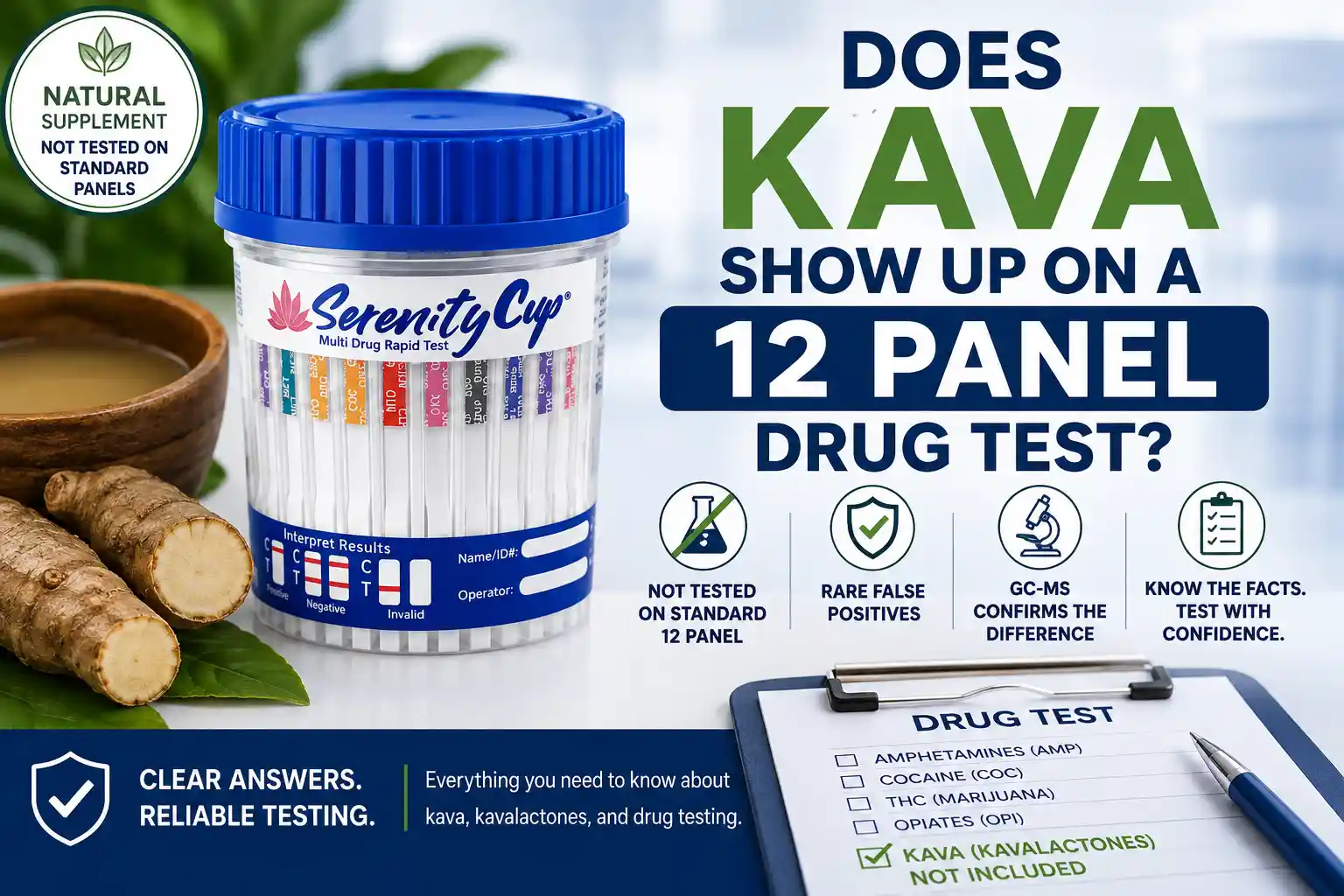
Many people use kava to reduce stress, promote relaxation, or improve sleep. If you’re facing an employment screening, DOT exam, military test, probation drug test, or random workplace urine screening, you may wonder whether drinking kava tea or taking kava supplements could affect your results.
The short answer is reassuring for most people—but there are a few important exceptions involving false positives, immunoassay screening, and confirmatory laboratory testing that everyone should understand.
This guide explains exactly how kava interacts with modern drug testing using evidence from toxicology, laboratory science, and workplace testing standards.
Quick Answer
No. Standard 12 panel drug tests do not test for kava or its active compounds (kavalactones).
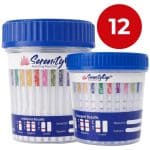
A typical 12 panel urine drug test screens for controlled drugs such as:
- Amphetamines
- Methamphetamine
- Cocaine
- THC (marijuana)
- Opiates
- PCP
- Benzodiazepines
- Barbiturates
- Methadone
- Oxycodone
- Buprenorphine
- MDMA (or similar depending on the panel)
Because kava is a legal herbal dietary supplement, it is not included in standard workplace drug testing panels.
However:
- Rare immunoassay cross-reactivity has been reported.
- Specialized toxicology laboratories can test specifically for kavalactones if requested.
- Unexpected screening results should always be verified using GC-MS or LC-MS/MS confirmation, which can distinguish kava from illicit drugs.
What Is Kava?
Kava (Piper methysticum) is a tropical shrub native to the South Pacific, including:
- Fiji
- Tonga
- Samoa
- Vanuatu
- Hawaii
For centuries, Pacific Island cultures have prepared beverages from the plant’s root for:
- ceremonial use
- social gatherings
- stress relief
- anxiety reduction
- relaxation
Today, kava is commonly sold as:
- Kava tea
- Capsules
- Extracts
- Powder
- Liquid tinctures
- Ready-to-drink beverages
In the United States, kava is generally marketed as a dietary supplement, not a prescription medication or controlled substance.
Unlike cannabis, opioids, or amphetamines, kava is not listed among the substances routinely screened by workplace drug testing programs.
What Are Kavalactones?
The calming effects of kava come from naturally occurring compounds called kavalactones.
Major kavalactones include:
- Kavain
- Dihydrokavain
- Methysticin
- Dihydromethysticin
- Yangonin
- Desmethoxyyangonin
These compounds interact primarily with:
- GABA neurotransmission
- Voltage-gated ion channels
- Glutamate pathways
- Dopamine pathways (indirectly)
Unlike opioids or amphetamines, kavalactones have an entirely different chemical structure.
That distinction is important because modern drug tests identify drugs by their molecular characteristics—not simply by whether they cause relaxation.
Does a Standard 12 Panel Drug Test Test for Kava?
No.
A standard 12 panel drug test does not include kava or kavalactones.
Employers purchase standardized testing panels that detect drugs associated with:
- workplace impairment
- abuse potential
- federal compliance
- safety-sensitive occupations
Kava is not classified as:
- an opioid
- an amphetamine
- a cannabinoid
- cocaine
- PCP
- methamphetamine
- fentanyl
Therefore, laboratories do not routinely screen for it.
Unless a physician, court, rehabilitation center, or toxicologist specifically orders testing for kavalactones, kava will not be part of the analysis.
Why Kava Usually Does NOT Appear
Several reasons explain why kava is absent from routine drug screening.
It isn’t a targeted drug
Drug panels only search for predefined drug classes.
No standard workplace panel contains an assay for:
- Kava
- Kavain
- Dihydrokavain
- Methysticin
It’s regulated differently
Kava is generally sold as an herbal supplement rather than a scheduled controlled drug.
Testing is expensive
Each additional laboratory assay increases testing costs.
Because employers have little reason to screen for kava, laboratories don’t include it in standard panels.
Different chemical structure
Kavalactones differ chemically from:
- THC
- Cocaine
- Methamphetamine
- Morphine
- PCP
This reduces the likelihood of direct detection.
Can Kava Cause a False Positive?
Usually no.
However, rare scientific reports have shown possible false-positive amphetamine screening results after kava use.
This does not mean the laboratory found amphetamine.
Instead, the initial immunoassay screening test reacted unexpectedly with certain kavalactones.
Researchers have reported isolated cases involving kavain producing preliminary amphetamine-positive immunoassay results.
These cases are uncommon.
More importantly:
Confirmatory laboratory testing eliminates this problem.
Once the specimen undergoes GC-MS or LC-MS/MS, the laboratory can identify the exact molecule present and determine whether amphetamine is actually present.
So a rare screening reaction should not automatically lead to a failed drug test.
How Immunoassay Drug Tests Work
Most workplace drug tests begin with an immunoassay.
This screening method uses specially designed antibodies that recognize drug families.
The process works like this:
- Urine specimen collected
- Immunoassay screening performed
- Antibodies bind to target drugs
- Result reported as:
- Negative
- Presumptive Positive
- Positive specimens move to confirmation testing
Immunoassays are:
- Fast
- Affordable
- Highly sensitive
- Excellent for high-volume workplace testing
However, because antibodies recognize similar molecular features, cross-reactivity occasionally occurs.
This explains why some medications—or very rarely, herbal compounds like kavain—can trigger a preliminary positive result.
A screening result alone is not considered definitive proof of drug use.
Can GC-MS Confirm the Difference?
Yes.
If an initial immunoassay drug screen produces a presumptive positive result, certified laboratories perform a confirmatory test using either:
- Gas Chromatography-Mass Spectrometry (GC-MS)
- Liquid Chromatography-Tandem Mass Spectrometry (LC-MS/MS)
These analytical methods identify the exact molecular structure of compounds present in the specimen rather than simply detecting similar chemical patterns.
Because kavalactones have a completely different chemical fingerprint than amphetamine, methamphetamine, MDMA, or other controlled substances, confirmatory testing can accurately distinguish between them.
Why confirmation testing matters
GC-MS and LC-MS/MS can:
- Identify individual compounds with extremely high accuracy
- Eliminate most false-positive screening results
- Measure drug metabolites rather than relying on antibody reactions
- Meet forensic laboratory standards
- Support legally defensible drug testing results
For this reason, employers, hospitals, courts, and certified laboratories do not make final decisions based solely on an immunoassay screen.
If kava contributes to a rare preliminary positive result, confirmation testing should determine whether an actual controlled substance is present.
Bottom line: A positive screening test is only the first step. GC-MS or LC-MS/MS confirmation can reliably differentiate kava compounds from illicit drugs.
What Drugs Are Included in a Standard 12 Panel Drug Test?
Although manufacturers may vary slightly, most 12 panel urine drug tests screen for the following drug classes.
| Drug Class | Common Abbreviation | Typical Cutoff | Examples |
|---|---|---|---|
| Amphetamines | AMP | 1000 ng/mL | Adderall®, Dexedrine |
| Methamphetamine | MET | 1000 ng/mL | Crystal Meth |
| Cocaine Metabolite | COC | 300 ng/mL | Benzoylecgonine |
| Marijuana | THC | 50 ng/mL | Cannabis |
| Opiates | OPI | 300 or 2000 ng/mL | Morphine, Codeine |
| Oxycodone | OXY | 100 ng/mL | Percocet®, OxyContin® |
| Methadone | MTD | 300 ng/mL | Methadose® |
| Buprenorphine | BUP | 10 ng/mL | Suboxone® |
| Benzodiazepines | BZO | 300 ng/mL | Xanax®, Valium®, Ativan® |
| Barbiturates | BAR | 300 ng/mL | Phenobarbital |
| Phencyclidine | PCP | 25 ng/mL | Angel Dust |
| MDMA / Ecstasy | MDMA | 500 ng/mL | Ecstasy, Molly |
Notice what is missing: Kava and its active compounds (kavalactones) are not part of a standard 12 panel drug test.
Some specialty laboratories can create custom toxicology panels to detect herbal compounds, but this is uncommon and generally limited to research, forensic investigations, or specialized clinical settings.
Will Kava Affect…
5 Panel Drug Test
No.
A standard 5 panel drug test screens for:
- THC
- Cocaine
- Opiates
- Amphetamines
- PCP
Kava is not included.
Only in extremely uncommon circumstances could a preliminary immunoassay produce a false-positive result, which should then be ruled out by confirmation testing.
10 Panel Drug Test
Generally, no.
A 10 panel drug test expands testing to include additional prescription medications such as:
- Benzodiazepines
- Barbiturates
- Methadone
- Propoxyphene (older panels)
It still does not test for kava.
12 Panel Drug Test
A standard 12 panel drug screen does not include:
- Kava
- Kavain
- Kavalactones
- Piper methysticum
Routine workplace laboratories are not searching for these compounds.
14 Panel Drug Test
No.
Even expanded 14 panel drug tests usually add substances such as:
- Fentanyl
- ETG (Alcohol)
- Tramadol
- Synthetic opioids
Kava remains absent from the panel.
DOT Drug Test
The Department of Transportation (DOT) follows SAMHSA-regulated federal testing standards.
DOT urine drug testing only screens for:
- Marijuana (THC)
- Cocaine
- Amphetamines
- Opioids
- Phencyclidine (PCP)
Kava is not part of federally regulated DOT drug testing.
If you’re a commercial driver, pilot, railroad employee, pipeline worker, or another safety-sensitive employee, drinking kava alone should not cause a verified positive DOT result.
Military Drug Test
In most cases, no.
Routine military drug testing focuses on controlled substances and prohibited drugs.
Kava is generally not included in standard military urine drug panels.
However, each military branch can establish its own policies regarding herbal supplements and fitness for duty. Certain commands may restrict supplements that impair alertness or performance, even if they are not part of routine drug testing.
Probation Drug Test
Usually no, but this depends on the court or supervision program.
Standard probation drug tests typically screen for:
- THC
- Cocaine
- Amphetamines
- Methamphetamine
- Opiates
- PCP
- Benzodiazepines
- Barbiturates
- Methadone
Kava is rarely included.
However, some probation offices, rehabilitation programs, or specialty courts may prohibit the use of psychoactive herbal products regardless of whether they appear on a drug test. Always follow the specific rules of your supervising agency.
How Long Does Kava Stay Detectable?
Unlike controlled drugs, there is no standardized detection window for kava because routine drug tests do not normally analyze kavalactones.
If a laboratory specifically tests for kava, the detection period depends on:
- Dose
- Frequency of use
- Body composition
- Liver metabolism
- Type of laboratory assay
Available research suggests that kavalactones are metabolized relatively quickly, although heavy or repeated use may prolong elimination.
Urine
If a specialized laboratory specifically analyzes urine for kavalactones, they may be detectable for approximately:
- 1–3 days after occasional use
- Several days longer after frequent or heavy use
Routine workplace urine drug screens do not test for them.
Blood
Blood testing reflects recent exposure.
Kavalactones are generally present in blood for a relatively short period after consumption, making blood testing uncommon outside research or clinical toxicology.
Saliva
Routine oral fluid drug tests are designed to detect common drugs of abuse—not herbal supplements like kava.
There is no widely accepted workplace saliva test for kavalactones.
Hair
Hair testing for kava is not part of standard employment drug testing.
Although advanced forensic laboratories could theoretically analyze hair for kavalactones, this is extremely uncommon and not used in routine workplace, DOT, or pre-employment screening.
Factors Affecting Detection Time
If a laboratory specifically tests for kavalactones, several biological and lifestyle factors can influence how long they remain detectable. Although routine workplace drug tests generally do not measure kava, understanding these variables helps explain why detection windows differ from person to person.
Dosage
Larger amounts of kava introduce more kavalactones into the body. Higher doses generally require more time for the liver to metabolize and eliminate these compounds.
Frequency of Use
Someone who drinks kava occasionally will usually clear it faster than a person who consumes it daily or several times each week. Repeated use may allow kavalactones to accumulate temporarily in body tissues.
Body Fat Percentage
Kavalactones are relatively lipophilic (fat-soluble) compounds. Individuals with a higher body fat percentage may retain them slightly longer than leaner individuals.
Liver Function
The liver performs most of the metabolism of kavalactones through enzyme pathways.
People with:
- liver disease
- impaired liver function
- chronic alcohol use
- certain metabolic disorders
may eliminate kava more slowly.
Age
Older adults often metabolize medications and supplements more slowly than younger adults, potentially extending elimination times.
Hydration
Staying hydrated supports normal kidney function but does not instantly remove kava from the body or help someone “beat” a drug test.
Overall Metabolism
Metabolic rate varies between individuals based on genetics, physical activity, nutrition, and general health. Faster metabolism may shorten elimination time, while slower metabolism may prolong it.
Product Type
Different preparations contain different concentrations of kavalactones.
Examples include:
- Traditional kava beverages
- Instant kava powder
- Capsules
- Liquid extracts
- Concentrated tinctures
Highly concentrated extracts often contain more active compounds than traditional water-based preparations.
Key takeaway: Even though these factors influence how long kavalactones remain in the body, standard workplace drug tests still do not routinely analyze for kava.
Should You Tell the Drug Testing Facility?
In most situations, yes—especially if you’re taking kava regularly or consuming other herbal supplements.
Although kava is not part of a standard 12 panel drug test, it’s good practice to disclose all:
- Prescription medications
- Over-the-counter medicines
- Vitamins
- Herbal supplements
- Dietary supplements
before specimen collection.
Providing this information helps laboratory staff and the Medical Review Officer (MRO) interpret unexpected screening results if questions arise later.
Disclosing kava use does not mean you will fail the test. Instead, it provides additional clinical context should further review become necessary.
Medical Review Officer (MRO)
A Medical Review Officer (MRO) is a licensed physician specially trained in workplace drug testing and toxicology.
The MRO serves as an independent expert who reviews positive drug test results before they are reported to an employer.
Their responsibilities include:
- Reviewing laboratory findings
- Verifying chain of custody documentation
- Contacting donors when necessary
- Evaluating legitimate medical explanations
- Reviewing prescription medications
- Ordering or reviewing confirmatory laboratory testing
- Determining whether the positive result is verified
If an initial immunoassay screen unexpectedly reacts after kava use, the MRO may:
- Review your medications and supplements.
- Examine the GC-MS or LC-MS/MS confirmation report.
- Determine whether the positive screen represents actual drug use or laboratory cross-reactivity.
Because confirmed testing identifies the exact compound present, kava alone should not produce a verified positive result for amphetamine or other controlled substances.
Can You Fail a Pre-Employment Drug Test?
In almost every case, no.
Taking kava by itself should not cause you to fail a standard pre-employment drug test because employers generally do not test for kavalactones.
However, there are a few situations worth understanding.
Most applicants pass without issues
Typical pre-employment testing includes:
- 5 panel drug tests
- 10 panel drug tests
- 12 panel drug tests
- Expanded workplace panels
- DOT testing (when applicable)
None of these standard panels include kava.
Rare screening reactions
Very rarely, an immunoassay screening test may produce a presumptive positive because of cross-reactivity with another compound.
If that occurs:
- The specimen is sent for GC-MS or LC-MS/MS confirmation.
- The laboratory identifies the actual substance present.
- False positives are ruled out.
Follow employer instructions
If the employer asks you to disclose supplements before testing, provide accurate information.
Never attempt to alter, dilute, substitute, or adulterate a urine specimen, as specimen validity testing can detect abnormalities in:
- Creatinine
- Specific gravity
- pH
- Oxidants
- Temperature
Attempting to tamper with a drug test may have far more serious consequences than honestly reporting supplement use.
Kava vs Kratom vs CBD
Many people confuse these three natural products because all are marketed as wellness supplements. However, they differ significantly in drug testing.
| Feature | Kava | Kratom | CBD |
|---|---|---|---|
| Primary Active Compounds | Kavalactones | Mitragynine, 7-Hydroxymitragynine | Cannabidiol |
| Standard 12 Panel Detection | ❌ No | ❌ Usually No | ❌ No |
| Specialized Laboratory Testing Available | ✅ Yes | ✅ Yes | ✅ Yes |
| May Cause Rare False Positive | Rarely | Rarely | Uncommon (product dependent) |
| Psychoactive Effects | Mild relaxation | Stimulant/Sedative (dose dependent) | Non-intoxicating |
| Controlled Substance? | No (U.S. federal level) | Varies by state | Hemp-derived CBD is federally legal within THC limits |
| Major Concern | Rare immunoassay cross-reactivity | Some employers specifically test for kratom | THC contamination in full-spectrum CBD products |
Important difference
The biggest concern with CBD is THC contamination, not CBD itself.
Similarly, kratom is not included in standard workplace panels but is increasingly tested in certain pain management clinics, rehabilitation programs, correctional settings, and specialized toxicology laboratories.
Kava remains the least likely of the three to affect a routine employment drug test.
Common Myths
Myth: Every drug test checks for kava.
Fact: Standard 5, 10, 12, and most 14 panel drug tests do not include kava or kavalactones.
Myth: Drinking kava automatically causes a positive amphetamine result.
Fact: Only isolated reports have described possible immunoassay cross-reactivity. Confirmatory GC-MS or LC-MS/MS testing can distinguish kava compounds from amphetamines.
Myth: Kava is illegal in the United States.
Fact: Kava is generally sold legally as a dietary supplement in the U.S., although safety advisories exist regarding excessive use and potential liver toxicity.
Myth: Drinking extra water removes kava from your body before a drug test.
Fact: Hydration supports normal body function but does not rapidly eliminate kavalactones or help someone pass a drug test.
Myth: All herbal supplements appear on workplace drug tests.
Fact: Drug testing targets specific controlled substances. Most herbal supplements—including kava—are not part of routine testing panels.
Myth: A preliminary positive result means you automatically failed.
Fact: Screening tests are only the first step. Confirmatory laboratory testing and MRO review determine the final verified result.
Frequently Asked Questions
Does kava show up on a 12 panel drug test?
No. Standard 12 panel drug tests do not screen for kava or its active compounds, known as kavalactones.
Can kava cause a false positive for amphetamines?
Rarely. A few published studies have reported possible immunoassay cross-reactivity involving kavain, but confirmatory GC-MS or LC-MS/MS testing can distinguish kava from amphetamine.
Does the DOT drug test include kava?
No. DOT drug testing follows federally regulated SAMHSA guidelines and does not test for kava.
Will drinking kava tea make me fail a pre-employment drug test?
In most cases, no. Routine pre-employment drug tests do not include kava, and verified confirmation testing protects against rare false positives.
How long does kava stay in urine?
Research suggests kavalactones may remain in the body for 1–3 days after occasional use, with potentially longer detection after frequent or heavy use if a specialized laboratory specifically tests for them. Standard urine drug tests do not analyze for kava.
Can probation drug tests detect kava?
Most probation drug panels do not include kava. However, individual courts, probation offices, or treatment programs may prohibit the use of psychoactive herbal supplements regardless of laboratory testing.
Is kava safer than kratom for workplace drug testing?
From a testing perspective, yes. Kava is rarely included in workplace drug panels, whereas some rehabilitation programs and specialty laboratories specifically test for kratom.
Should I tell the testing facility that I use kava?
Yes. It’s good practice to disclose all prescription medications, over-the-counter medicines, vitamins, and herbal supplements before testing, especially if requested on the collection form.
Can laboratories specifically test for kava?
Yes. Although uncommon, specialized forensic and toxicology laboratories can analyze urine or other specimens for kavalactones when specifically requested.
Can drinking large amounts of water remove kava before a drug test?
No. Water does not flush kavalactones from the body or guarantee a negative drug test. Attempting to dilute or adulterate a specimen may result in an invalid or rejected sample.