The Best Nicotine Tests for Employee and Insurance Screening (Ranked)

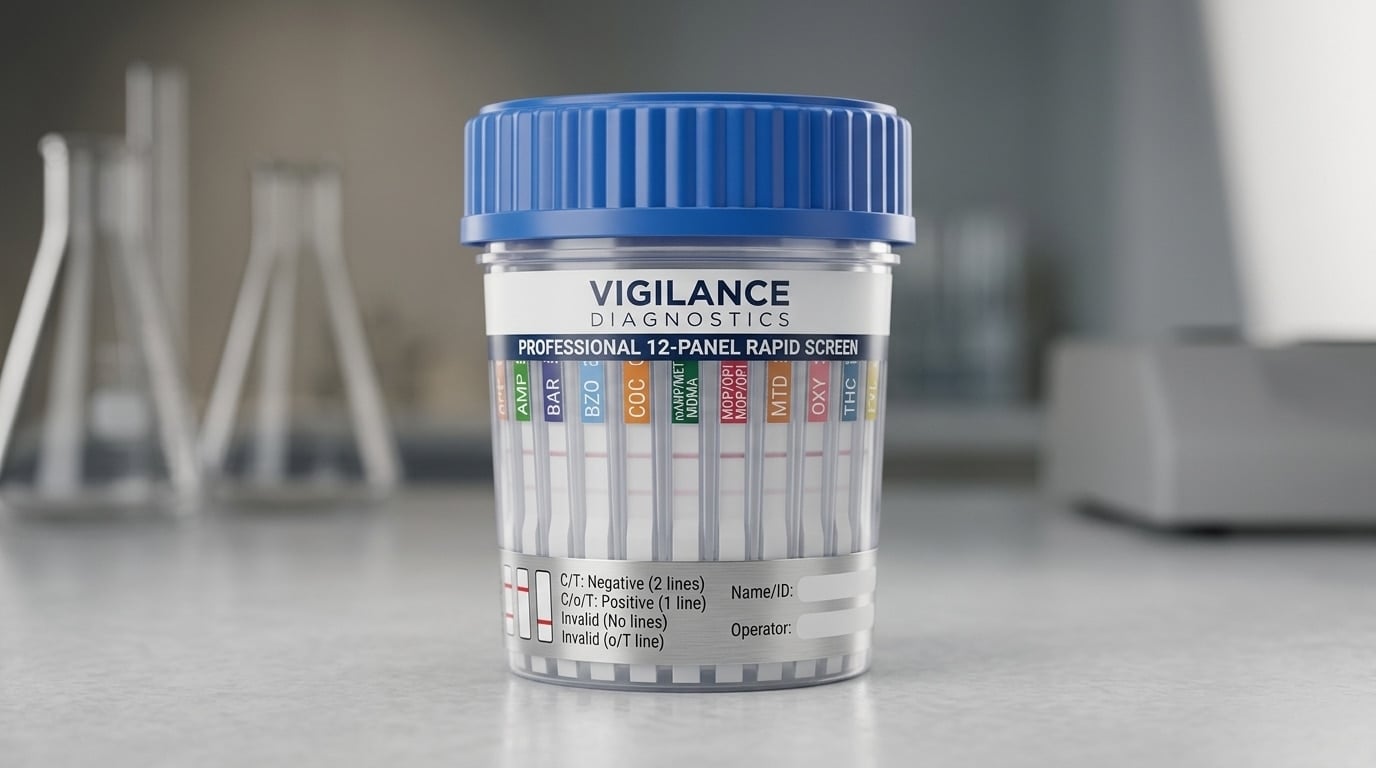
A nicotine screen doesn’t actually test for nicotine. It tests for cotinine — the metabolite the body makes after nicotine exposure — because cotinine stays in the system far longer and gives a truer picture of whether someone is a regular user. That single fact should shape your entire buying decision: you want a cotinine test, and you want one with a cutoff that separates an actual tobacco or vape user from someone who caught secondhand smoke at a bus stop. Here’s how to choose, built around our cotinine urine test strips.
Two screening contexts drive most of this search, and they want slightly different things. Employers testing for tobacco-free hiring policies or wellness-program eligibility need a clear pass/fail at a defensible cutoff. Insurers (and applicants being screened for life or health premiums) need the same, with documentation that holds up. Both are served by a good cotinine test — the difference is in how you run it, not which strip you buy.
What Is the Best Nicotine Test for Employee or Insurance Screening?
The best nicotine test for employee or insurance screening is a cotinine urine test strip at a 200 ng/mL cutoff. A nicotine screen actually measures cotinine, the metabolite that stays in the system far longer than nicotine and reliably indicates a regular user, and the 200 ng/mL cutoff is set to catch genuine users while filtering out incidental secondhand exposure. From there, buy the same strips in bulk for high-volume hiring or enrollment, use an integrated cotinine cup for point-of-collection screening, add lab confirmation for documentation-heavy insurance decisions, and offer single strips for wellness-program self-checks. Keep the cutoff consistent, apply testing uniformly, account for nicotine-replacement therapy (patches and gum still produce cotinine), confirm non-negatives at a lab, and check your state law, since some jurisdictions protect lawful off-duty tobacco use.
Why the cutoff is the whole decision
The standard cotinine screening cutoff is 200 ng/mL, and it’s set there deliberately: high enough that incidental secondhand exposure typically doesn’t trigger a positive, low enough to catch a genuine user. A test with a much lower cutoff risks flagging non-users exposed to environmental smoke — a fair-hiring and accuracy problem. Confirm the cutoff on any nicotine test before you standardize on it; it matters more than any other spec.
1. Best overall: Cotinine Urine Test Strips at 200 ng/mL
The default for both employer and insurance screening. The cotinine urine strips give a clear result at the 200 ng/mL cutoff, read quickly, and cost little enough to screen at volume. Urine is the most established matrix for cotinine screening and the easiest to confirm at a lab if a result is challenged. For most programs, start and end here.
2. Best for high-volume hiring or enrollment: Cotinine Strips in bulk
Employers rolling out a tobacco-free policy across many hires, or insurers screening a book of applicants, should buy the same 200 ng/mL strips in bulk. Per-test cost drops, and standardizing on one strip and one cutoff keeps the program consistent and defensible — everyone measured the same way.
3. Best for on-site or point-of-collection screening: Integrated Cotinine Cup
If you collect and test in one step on-site, an integrated cotinine cup streamlines the process and reduces handling. Same cotinine target and cutoff logic; the cup format just makes point-of-collection screening cleaner for a busy HR or clinic workflow.
4. Best for documentation-heavy insurance use: Cotinine screen + lab confirmation
When a premium decision or a rescinded offer rides on the result, run the instant cotinine strip as the screen and send non-negatives for lab confirmation (which can also quantify the level). The instant strip is the inexpensive first pass; the lab confirmation is what makes an adverse decision stand up. This is the configuration for insurance underwriting and any high-stakes employment decision.
5. Best for wellness-program self-checks: Single Cotinine Strips
For wellness programs that let employees verify tobacco-free status for a premium discount, single cotinine strips are a low-friction option employees can use as a pre-check before a formal screen. It keeps the program supportive rather than purely punitive.
How to run a nicotine screening program that holds up
Pick the 200 ng/mL cutoff and keep it consistent. Apply the policy uniformly — inconsistent testing is where fair-hiring challenges start. Confirm non-negatives at a lab before any consequence, and be aware that nicotine-replacement therapy (patches, gum) and even some environmental exposure can affect results, which is exactly why confirmation matters. And check your state law: some jurisdictions restrict or prohibit employment decisions based on lawful off-duty tobacco use, so a tobacco-free hiring policy isn’t legal everywhere. Verify before you build the program.
A programming note if you’ve hit our site before: the nicotine category filter and a duplicate product URL have caused some confusion — the cotinine urine test strips product page is the canonical place to buy, and this guide is the screening-focused resource the topic was missing.
FAQ
What does a nicotine test actually detect?
Cotinine, the metabolite of nicotine. It gives a longer, more reliable detection window than testing for nicotine directly.
How long does cotinine stay detectable?
Commonly a few days in regular users, and longer in heavy users. It reflects recent, habitual use rather than a single exposure.
Will secondhand smoke cause a positive?
At the standard 200 ng/mL cutoff, incidental secondhand exposure usually won’t trigger a positive — that’s why the cutoff is set there.
Can an employer or insurer legally screen for nicotine?
Often yes, but some states protect lawful off-duty tobacco use. Confirm your state law before implementing a policy.