Does MRO Call If You Pass a Drug Test

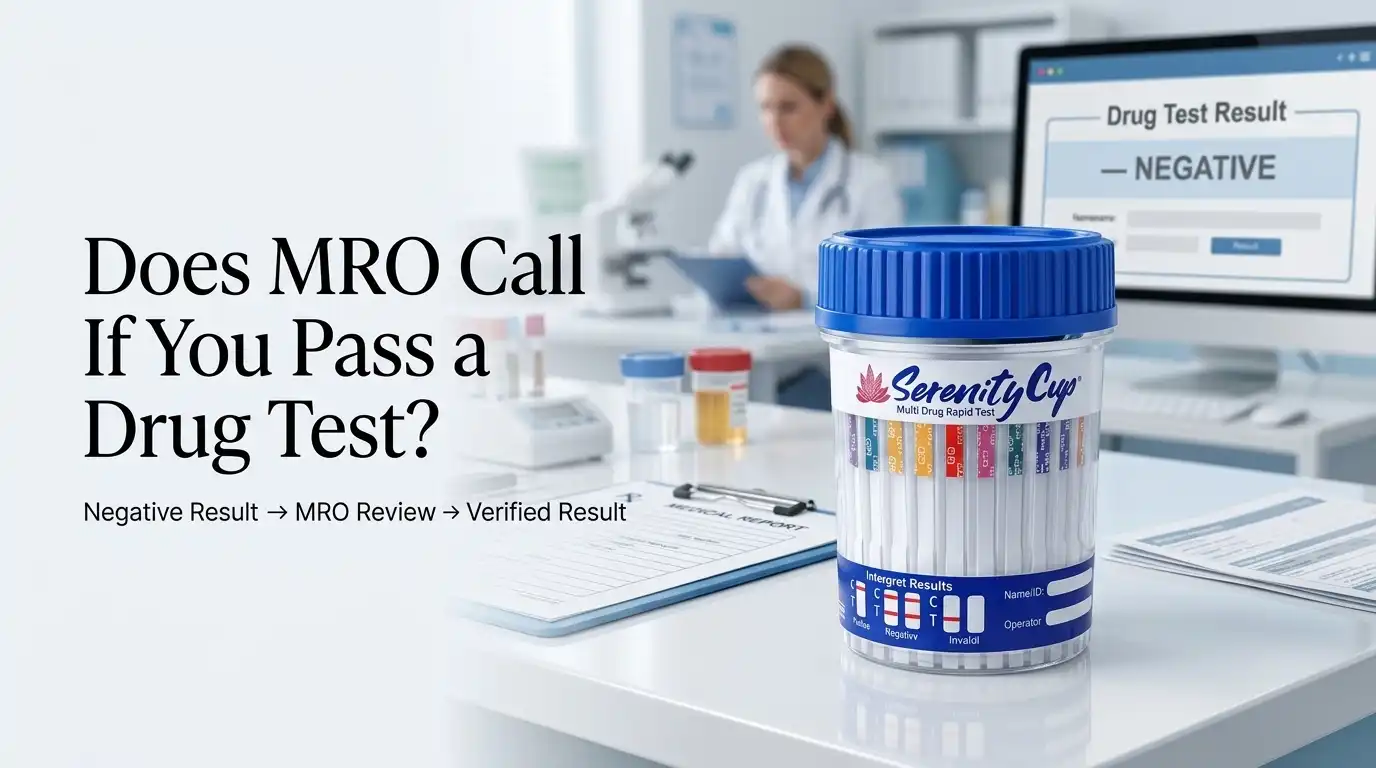
Usually, no. If your drug test is reported as negative, you generally should not expect a Medical Review Officer (MRO) to call you personally just to tell you that you passed. In DOT-regulated testing, however, the MRO still reviews negative laboratory results before the result is verified and released to the employer. Direct employee contact is generally associated with confirmed positive, adulterated, substituted, or invalid results that require an MRO verification process.
If you’re waiting for a drug test result and wondering whether silence from an MRO is a good or bad sign, the important thing to understand is how the MRO process works and what different types of results trigger a phone call.
Important: “MRO” procedures discussed below primarily refer to DOT-regulated drug testing under 49 CFR Part 40. Non-DOT workplace testing can follow employer policies and applicable state or federal requirements.
Does an MRO Call If You Pass a Drug Test?
In most cases, an MRO does not need to call you when your drug test is negative.
For DOT testing, a negative laboratory result still goes through the MRO’s review process. The MRO checks the documentation and laboratory result, verifies the negative result, and reports it confidentially to the employer or designated employer representative.
That is different from the situation in which a laboratory sends the MRO a confirmed positive, adulterated, substituted, or invalid result. In those circumstances, DOT regulations require the MRO to make direct contact with the employee as part of the verification process.
So, if you completed your test and haven’t received an MRO call, that alone does not prove your result is negative. But a routine negative result generally does not require the type of employee verification interview associated with a non-negative result.
What Does MRO Mean in Drug Testing?
MRO stands for Medical Review Officer.
An MRO is a physician who performs an independent medical and administrative review of drug-testing results within the applicable testing program.
For DOT testing, the MRO acts as an independent and impartial part of the drug-testing process. Their responsibilities include reviewing testing documentation, evaluating certain laboratory results, determining whether there is a legitimate medical explanation for qualifying findings, protecting testing information, and ensuring that results are reported appropriately.
The MRO is therefore not simply the person who calls employees when they fail a drug test.
The MRO has responsibilities involving negative results as well as results that require additional verification.
What Happens After You Take a Drug Test?
A simplified DOT drug-testing process looks like this:
1. You provide the specimen
↓
2. The laboratory analyzes the specimen
↓
3. The laboratory produces a result
↓
4. The MRO reviews the result and required documentation
↓
5. The result is verified
↓
6. The verified result is reported to the employer
The exact process depends on the type of result.
For a routine negative result, the MRO reviews the negative laboratory result and the associated Chain of Custody Form (CCF) before verifying and releasing the result.
For certain non-negative findings, the MRO initiates a verification process that can involve direct communication with the employee.
Does the MRO Review a Negative Drug Test?
Yes.
This is an important distinction.
It would be inaccurate to say that an MRO has nothing to do with a negative drug test.
Under 49 CFR §40.127, an MRO receiving a negative DOT drug-test result must review the relevant documentation and laboratory result before verifying the result and releasing it to the designated employer representative. The MRO also verifies the result confidentially.
So the process can be:
Negative laboratory result → MRO review → verified negative → employer receives result
The employee does not ordinarily need a phone interview for this routine negative-result process.
Why Would an MRO Call You?
An MRO call generally occurs when the laboratory result requires additional verification.
Under DOT rules, when an MRO receives a laboratory-confirmed positive, adulterated, substituted, or invalid drug-test result, the MRO must contact the employee directly on a confidential basis to begin the verification process.
Possible reasons for an MRO call include:
- A confirmed positive drug-test result
- An adulterated specimen
- A substituted specimen
- An invalid test result
- A finding that requires a legitimate medical explanation
- Questions about prescription medication relevant to the result
- Documentation or medical information needed for the verification process
An MRO call therefore does not automatically mean the final result will be reported as positive.
The purpose of the verification process is to determine what the laboratory finding means under the applicable rules.
Does an MRO Call Mean You Failed the Drug Test?
No.
An MRO call means that there is something the MRO needs to address through the applicable verification process. It does not by itself establish the final outcome.
For example, a laboratory finding may be associated with a medication that was legitimately prescribed. The MRO’s role includes determining whether there is a legitimate medical explanation for certain laboratory findings.
The MRO may ultimately verify a result as negative when the applicable requirements are satisfied.
On the other hand, if there is no legitimate medical explanation for a confirmed positive result, the applicable rules can require the result to be verified as positive.
The important point is:
MRO call ≠ automatically failed
and
No MRO call ≠ guaranteed negative result.
The official result reported through the testing program is what matters.
What Happens If Your Drug Test Is Negative?
If your DOT drug test is negative, the MRO reviews the negative laboratory result and associated documentation.
Under §40.127, the MRO must review the CCF for relevant errors, review the negative laboratory result, verify the result, and report it confidentially.
The general sequence is:
Step 1: Laboratory completes the testing
Your specimen is analyzed by the laboratory.
Step 2: A negative laboratory result is produced
The laboratory reports the negative result through the testing process.
Step 3: MRO reviews the result
The MRO checks the required documentation and result information.
Step 4: MRO verifies the negative result
The MRO completes the required verification.
Step 5: Result is reported
The verified result is reported to the employer through the applicable process. DOT §40.163 describes MRO reporting requirements for drug-test results.
In this ordinary situation, you generally don’t need an MRO phone call.
How Long After a Drug Test Will the MRO Call?
There is no single universal number of hours or days that applies to every drug test.
Timing depends on factors such as:
- The type of test
- Laboratory processing
- Whether the result is negative
- Whether confirmation testing is necessary
- Whether the result requires MRO verification
- Whether the MRO needs to contact the employee
- Whether additional documentation is required
- Whether the testing program is DOT or non-DOT
For DOT testing, when §40.131 applies, the MRO or MRO staff must make reasonable efforts to contact the employee. The regulation specifies a minimum of three attempts, spaced reasonably over a 24-hour period, using the telephone numbers listed on the CCF.
Therefore, you should not assume that a particular number of hours without a phone call proves that you passed.
What If You Don’t Hear From the MRO?
If you don’t receive an MRO call, there are several possible explanations.
1. Your result may be negative
A routine negative result generally does not require the employee verification call described in §40.131.
2. The result may still be processing
Laboratory and administrative processing can take time.
3. The employer may receive the result through the normal reporting process
The MRO reports verified results to the employer through the applicable system.
4. Your test may be subject to another administrative step
For example, certain specimen-validity issues can require additional action.
Therefore, not receiving a phone call should not be treated as an official test result.
The employer or testing program should provide the applicable result through the normal process.
Can an MRO Call After a Negative Result?
A routine negative result normally does not require the type of employee verification call used for a confirmed positive, adulterated, substituted, or invalid result.
However, DOT regulations contain additional provisions concerning medical information and safety-sensitive duties. For example, §40.135 addresses circumstances involving medications and potential medical qualification or safety concerns in connection with the MRO process.
This is one reason it is better to avoid the absolute statement:
“An MRO will never call you if you pass.”
A more accurate statement is:
A routine negative DOT drug test generally does not require a direct MRO verification call to the employee, although specific circumstances can result in additional MRO-related communication.
What Does an MRO Ask When They Call?
If an MRO contacts you as part of a DOT verification process, the conversation can involve the laboratory finding and information relevant to determining the final result.
The MRO must explain the verification process and tell the employee about the applicable laboratory finding.
Depending on the circumstances, you may be asked about:
- The substance identified by the laboratory
- Prescription medications
- Medical explanations
- Relevant medical information
- Prescription documentation
- Information needed to verify a legitimate medical explanation
If you are taking a legitimately prescribed medication, having accurate prescription information available can make it easier to respond to questions from the MRO.
What Is a Legitimate Medical Explanation?
A legitimate medical explanation is a medically valid explanation for a laboratory finding that the MRO can consider under the applicable testing rules.
For example, a prescription medication may be relevant when a laboratory detects a substance associated with that medication.
The MRO’s responsibility under DOT rules includes determining whether a legitimate medical explanation exists for confirmed positive, adulterated, substituted, and invalid laboratory results.
This is why an MRO call should not automatically be interpreted as a final failed drug test.
What Happens If the MRO Cannot Reach You?
If a DOT MRO receives a result that requires employee contact, the regulations establish a specific contact procedure.
The MRO or staff working under the MRO’s supervision must make reasonable efforts to reach the employee. The minimum reasonable efforts include three attempts spaced reasonably over a 24-hour period at the day and evening telephone numbers listed on the CCF.
If the MRO cannot reach the employee, the MRO can involve the Designated Employer Representative (DER) in directing the employee to contact the MRO.
The DER is not supposed to be told the specific result simply because the MRO is trying to reach the employee.
This is different from a routine negative result, where an employee verification interview generally isn’t required.
What Are the Possible MRO Drug-Test Outcomes?
Depending on the circumstances, the reported outcome can include:
Verified Negative
The result is reported as negative after the applicable review.
Verified Positive
The MRO verifies a positive result under the applicable rules.
Refusal to Test
Certain circumstances can result in a refusal-to-test determination.
Test Cancelled
A test can be cancelled when the applicable requirements for producing a valid result are not satisfied.
DOT §40.163 specifically identifies results such as positive, negative, dilute, refusal to test, and test cancelled in its MRO reporting requirements.
What If the Drug Test Is Negative but Dilute?
A negative dilute result is a special situation.
A dilute result means the specimen has characteristics indicating dilution, and what happens next depends on the specific result and MRO instructions.
DOT’s employer guidance explains that a negative dilute result can be handled differently depending on whether the MRO directs an immediate recollection under direct observation.
So:
Negative ≠ always the end of every possible testing requirement.
If your result is reported as negative dilute and the MRO directs another collection, follow the instructions provided by the testing program.
Does the MRO Tell Your Employer Everything You Discuss?
MRO information is subject to confidentiality requirements under the applicable DOT rules.
The MRO has responsibilities to protect the confidentiality of drug-testing information.
The information that can be reported depends on the applicable regulation and circumstances.
For example, §40.163 specifies the information included in MRO reports, while §40.135 addresses circumstances in which certain medical information related to safety-sensitive duties may need to be communicated.
Therefore, it is better not to assume that every detail discussed during an MRO process is automatically sent to an employer.
Does an MRO Call If You Pass a Pre-Employment Drug Test?
Usually, a routine negative pre-employment DOT drug test does not require an MRO verification call to the applicant.
The MRO can review and verify the negative result before it is reported through the employer’s testing process.
If a result requires employee verification, however, the MRO may need to contact the applicant or employee under the applicable rules.
For non-DOT pre-employment testing, procedures can vary according to the employer, testing provider, applicable state law, and type of testing program.
Does an MRO Call If You Pass a Drug Test for a Job?
If your workplace drug test is reported as a routine negative result, you generally should not expect an MRO to call simply to tell you that you passed.
However, an employer may use an MRO as part of its testing program, and the exact process can differ for DOT and non-DOT testing.
For DOT-regulated testing, 49 CFR Part 40 establishes the MRO procedures. For non-DOT testing, you should look at the employer’s drug-testing policy and the rules applicable to your location and industry.
Does an MRO Call If You Fail a Drug Test?
A confirmed non-negative result requiring MRO verification can result in an MRO contacting the employee.
Under DOT §40.131, when the MRO receives a confirmed positive, adulterated, substituted, or invalid result, the MRO must contact the employee directly on a confidential basis to begin the verification process.
But an MRO call should not be interpreted as proof that the final result has already been reported as positive.
The verification process exists to allow the MRO to evaluate the applicable circumstances before the final determination is reported.
Does MRO Call on Weekends?
There is no general rule that says every MRO must or must not call on weekends.
For DOT testing, the relevant requirement is that the MRO make reasonable efforts to contact the employee when §40.131 applies. The regulation specifies the required contact efforts rather than creating a universal “weekday only” rule.
The operating hours of a particular MRO service can therefore affect when you actually receive a call.
If you’re expecting a call, keep the contact information associated with your drug test current and respond promptly if the MRO contacts you.
What Should You Do If an MRO Calls?
If you receive a legitimate MRO call, the best approach is to cooperate with the verification process.
1. Verify who is calling
Ask for the MRO’s name, organization, and appropriate contact information if necessary.
2. Listen carefully
The MRO should explain the reason for the verification process.
3. Answer truthfully
Provide accurate information relevant to the questions being asked.
4. Have prescription information available
If prescription medication could explain the laboratory finding, have accurate information about the medication and prescribing provider available.
5. Follow documentation instructions
If the MRO requests documentation, follow the instructions provided.
6. Don’t assume the result before the process is complete
An MRO call is part of the review process. It is not automatically the same thing as a final positive result.
What Should You Have Ready for an MRO Call?
If you take prescription medication, useful information can include:
- Medication name
- Prescription information
- Prescribing physician’s name
- Pharmacy information
- Relevant prescription documentation
- Dates or other information requested by the MRO
Only provide information requested or relevant to the MRO verification process.
The purpose is to allow the MRO to evaluate whether there is a legitimate medical explanation for the laboratory finding.
MRO vs Drug Testing Laboratory: What’s the Difference?
The laboratory and MRO have different roles.
| Drug Testing Laboratory | Medical Review Officer |
|---|---|
| Analyzes the specimen | Reviews applicable test results |
| Performs laboratory testing | Evaluates qualifying results |
| Produces laboratory findings | Verifies results under the applicable rules |
| Does not make the final MRO determination | Reports the verified result |
| Works with the specimen and laboratory procedures | Reviews medical explanations when required |
The DOT describes the MRO as an independent and impartial part of the drug-testing process.
MRO vs Employer: Who Gives You the Result?
The MRO is responsible for reporting the verified drug-test result through the applicable employer reporting process.
Under §40.163, the MRO reports drug-test results to the employer and the report includes the applicable result and verification information.
That means you should not rely solely on whether you personally receive a phone call from an MRO.
The official result is the result reported through the testing program.
DOT vs Non-DOT MRO Drug Testing
This distinction is important.
DOT Drug Testing
DOT-regulated transportation testing is governed by 49 CFR Part 40, which establishes detailed procedures for MROs and drug testing.
The regulations specify:
- MRO responsibilities
- Negative-result review
- Non-negative-result review
- Employee contact procedures
- Verification interviews
- Reporting
- Specimen issues
- Confidentiality requirements
Non-DOT Drug Testing
Non-DOT testing is different.
A private employer may have its own drug-testing policy, and state or other applicable laws can affect the process.
Therefore, information about DOT MRO calls should not automatically be treated as a universal rule for every workplace drug test.
Why Doesn’t an MRO Usually Call After a Negative Result?
The reason is straightforward.
A routine negative laboratory result does not generally require the employee to provide a medical explanation.
The MRO can review the documentation and negative laboratory result, verify it, and report it.
By contrast, a confirmed positive or another result requiring verification can raise questions that the MRO needs to discuss directly with the employee.
This creates two different pathways:
Routine negative
Laboratory negative → MRO review → verified negative → reported
Result requiring verification
Laboratory finding → MRO review → employee contact → verification → final result
That distinction is the key to understanding the answer to this question.
Does No MRO Call Mean You Passed?
Not necessarily.
This is one of the most important points to remember.
Not receiving an MRO call is not an official drug-test result.
A person may not receive a call because:
- The result was negative.
- The test is still being processed.
- The testing program uses another communication method.
- The MRO does not need to conduct an employee verification interview.
- The employer has not yet communicated the result.
- Another administrative step is still underway.
So don’t use the absence of a phone call as a substitute for your actual test result.
Does an MRO Call Mean You Failed?
No.
A call can mean that the MRO needs to complete a verification process.
For example, a laboratory finding may require the MRO to determine whether there is a legitimate medical explanation. The MRO’s role is specifically designed to evaluate certain results rather than simply forward every laboratory finding directly to an employer.
The final outcome depends on the applicable rules and information available to the MRO.
Frequently Asked Questions
Does MRO call if you pass a drug test?
Usually, a routine negative drug test does not require a direct MRO verification call. In DOT testing, the MRO still reviews negative results before verifying and releasing them.
Will an MRO call if I passed my drug test?
Generally, you should not expect an MRO verification call for a routine negative DOT drug test. However, the absence of a call is not itself an official confirmation that you passed.
Does MRO call if you fail a drug test?
For DOT testing, the MRO must directly contact the employee when receiving a confirmed positive, adulterated, substituted, or invalid result that requires the verification process.
Does an MRO call mean you failed?
No. An MRO call means that the applicable result requires a verification process. It does not automatically establish the final result.
How long after a drug test will an MRO call?
There is no universal timeline for every testing program. When DOT §40.131 applies, the MRO must make reasonable efforts to contact the employee, including at least three attempts over a 24-hour period.
What does MRO mean in drug testing?
MRO means Medical Review Officer. In DOT testing, the MRO is an independent physician responsible for reviewing and verifying drug-test results according to federal requirements.
What happens if an MRO calls?
The MRO will explain the applicable verification process and may ask questions about the laboratory finding and possible medical explanations.
Can an MRO call about prescription medication?
Yes. Prescription medication can be relevant when the MRO is evaluating whether a legitimate medical explanation exists for a laboratory finding.
Do MROs call on weekends?
There is no universal rule requiring all MROs to call only on weekdays. Contact procedures and operating hours can vary.
Does a negative drug test go through an MRO?
For DOT testing, yes. The MRO has specific responsibilities for reviewing negative laboratory results before verifying and releasing them.
Does the MRO report the result to the employer?
Yes. Under DOT §40.163, the MRO is responsible for reporting drug-test results to the employer through the required process.
What if my test is negative dilute?
A negative dilute result can require additional action depending on the circumstances and MRO instructions. DOT’s employer guidance explains different procedures for negative dilute results.
Is an MRO the same as the drug testing laboratory?
No. The laboratory analyzes the specimen, while the MRO performs the applicable medical review and verification functions.
Does MRO Call If You Pass a Drug Test?
Usually, you won’t receive a direct MRO verification call for a routine negative drug test.
For DOT-regulated testing, the MRO still reviews negative laboratory results before verifying and reporting them.
Direct contact with the employee is generally required when the MRO receives certain results that need verification, including confirmed positive, adulterated, substituted, or invalid results.
The most important distinction is:
An MRO reviews negative results, but a routine negative result generally does not require the employee verification phone call used for certain non-negative results.
And remember: not receiving an MRO call is not, by itself, proof that you passed. The official result from your employer or testing program is what confirms the outcome.
For DOT-regulated testing, the controlling rules are found in 49 CFR Part 40, and DOT recommends consulting the regulatory text for authoritative requirements.