Understanding Drug Test Outcomes: A Guide to Specimen Integrity and Medication Effects

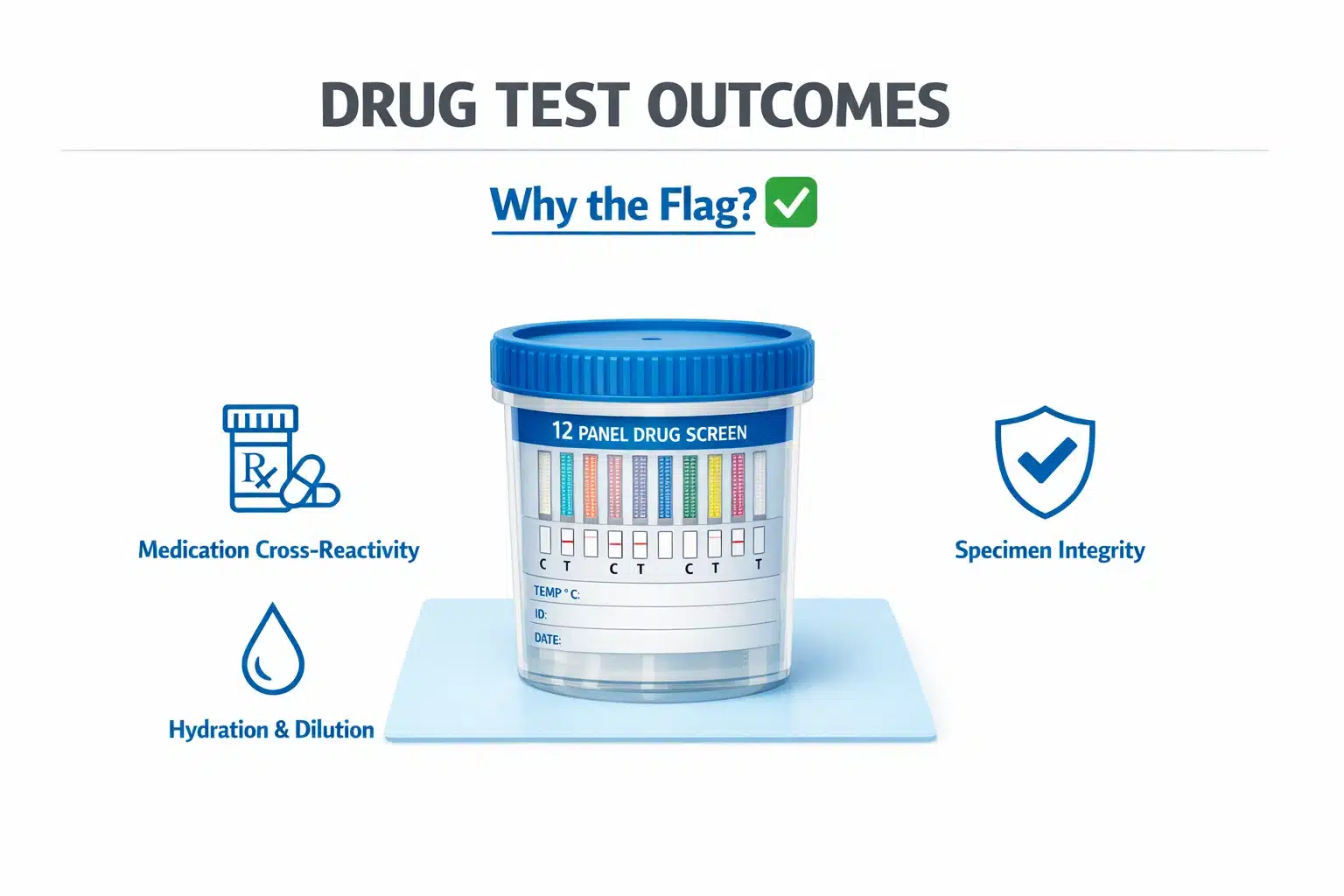
Retrospective studies from sources like Psychiatria Polska reveal a startling fact: up to 35% of initial positive amphetamine tests are actually false positives. For anyone facing a drug screening, that number isn’t just a statistic; it’s a source of immense anxiety. A confusing result can jeopardize a job, a treatment plan, or peace of mind.
This isn’t about finding loopholes. It’s about understanding the science behind the screening process. Whether you’re managing a workplace testing program or preparing for a personal screen, knowing how medications, hydration, and even your own metabolism can influence the outcome is critical. This guide breaks down the technical details so you can navigate the process with clarity and confidence.
The anatomy of a flagged result: dilute vs. invalid
Before a result is even considered positive or negative, its validity is checked. Two of the most common flags are “dilute” and “invalid,” and they mean very different things. Confusing them can lead to unnecessary panic and incorrect explanations.
A “negative-dilute” result means the test was negative for drugs, but the urine sample was too watery. Labs identify this by measuring two key markers. According to official guidelines from bodies like the Department of Transportation, a dilute specimen is strictly defined as having:
-
- Creatinine levels below 20 mg/dL
- Specific gravity below 1.003
This usually happens from drinking excessive amounts of fluid before the test. It isn’t an automatic failure, but it raises suspicion and often requires a second, observed collection.
An “invalid” result is more serious. This means the sample was tampered with or that something is medically wrong. The lab couldn’t get a reading because the specimen’s properties fall outside the range of normal human urine. Research published by the NIH shows a staggering 633% spike in specimen tampering attempts in recent years, making labs highly vigilant for adulterants designed to mask drug use. An invalid result almost always leads to a failed test or a strict, directly observed re-test.

Clear definitions and the exact lab cutoffs help you interpret “dilute” vs “invalid” results and choose the right next step before you panic or over-explain to HR.
The cross-reactivity master list: when your prescription is the problem
Cross-reactivity occurs when an initial immunoassay screen incorrectly identifies a legal prescription or over-the-counter medication as an illicit drug. This happens because the medication’s molecular structure is similar to the target drug’s structure. It’s the primary driver behind false positives, but it’s a problem that is almost always resolved with a confirmation test. You can find additional guidance on interpreting results on our drug testing resource blog.
Bupropion and the amphetamine connection
Bupropion, a common antidepressant, is a major contributor to that 35% false positive rate for amphetamines. Its chemical structure shares similarities with amphetamines, leading to a cross-reactivity rate between 3% and 17% on initial screens. A positive result from someone taking bupropion is not a definitive failure; it’s a flag that requires a closer look.
The Ritalin myth: why methylphenidate doesn’t fail modern tests
A persistent myth is that methylphenidate (Ritalin, Concerta) causes a false positive for amphetamines. While this may have been true with older, less specific testing technology, it’s not the case with modern screens. Research in the Journal of Analytical Toxicology confirms that current immunoassays can distinguish between methylphenidate and amphetamines. Any remaining ambiguity is easily cleared by a gas chromatography-mass spectrometry (GC-MS) confirmation test, which is the gold standard for accuracy.
The Gabapentin question: false positive or expanded panel?
The search for “Gabapentin false positive” is growing, but the situation is nuanced. Gabapentin does not typically cause a false positive on a standard 5-panel or even 12-panel drug test cup. However, it is increasingly being included in expanded panels used by pain management clinics and rehabilitation centers. If Gabapentin is detected, it’s usually because the lab was specifically looking for it, not because of cross-reactivity.

A quick way to separate “screen may flag” from “confirmation proves” so you can talk to an MRO with specifics instead of assumptions.
Beyond medication: specimen integrity and your biology
Your body’s unique characteristics and daily habits also play a significant role in drug test outcomes. Understanding these variables provides crucial context for interpreting any result.
How hydration and diet affect your results
This goes back to the “dilute” result. Drinking a gallon of water right before a test will lower your creatinine and specific gravity, potentially invalidating the sample. While staying hydrated is healthy, extreme fluid intake is a well-known masking method that labs are trained to spot. Conversely, dehydration can concentrate metabolites in your urine, potentially making a substance detectable for a longer period.
The role of your unique metabolism
How quickly your body processes and eliminates substances is not the same for everyone. Liver enzymes, particularly those in the Cytochrome P450 family (like CYP2D6), are responsible for breaking down many drugs. Your genetics, age, liver health, and even your BMI can influence how active these enzymes are, directly affecting the detection window. Someone with a fast metabolism may clear a substance in two days, while a person with a slower metabolism might test positive for four days or more from the same exposure.
Overlooked influences: quinolone antibiotics and more
It’s not just well-known prescriptions that can cause issues. Less common medications, like quinolone antibiotics (used for bacterial infections), have been known to cause false positives for opiates on initial screens. For programs requiring expanded opiate screening, our fentanyl urine drug test strips offer specific detection beyond standard opiate panels. Always disclose all medications you’ve taken, even if they seem unrelated.

Use this as a “context checklist” so your result is interpreted with the right medical and biological details—especially when dilution or metabolism could change the story.
What to expect when you see a non-negative: the MRO process
An initial “non-negative” result from a screen is not a final verdict. It’s simply the first step in a regulated process designed to ensure fairness and accuracy. Here’s what happens next:
- Confirmation Testing: The original sample is sent for a GC-MS test. This highly specific method separates molecules by weight and charge, eliminating any doubt caused by cross-reactivity. It can tell the difference between a poppy seed bagel and illicit substances.
- The MRO Review: If the GC-MS confirms the presence of a substance, a Medical Review Officer (MRO) — a licensed physician — will contact you directly and confidentially.
- The Interview: This is your opportunity to provide a legitimate medical explanation, such as a valid prescription. The MRO will ask for your pharmacy information, prescription number, and prescribing doctor’s details to verify your claim.
- Final Verification: The MRO verifies the prescription. If it’s valid and consistent with the test findings, the MRO will report your result as “Negative” to the employer or requesting party. Your private medical information is not shared. If no valid explanation is found, the result is reported as “Positive.”

Seeing the process reduces fear: most disputes are resolved at confirmation or MRO review when documentation and timelines are clear and consistent.
Take control with reliable information and tools
Navigating a drug test doesn’t have to be a stressful, confusing experience. By understanding how the tests work and what factors can influence them, you can prepare properly, communicate effectively with an MRO, and ensure your results are interpreted accurately.
For organizations and individuals who need clear, immediate, and trustworthy results, starting with the right equipment is essential. Using high-quality, CLIA-waived and FDA-approved drug testing supplies ensures your initial screen is as accurate as possible. Whether you need comprehensive multi-panel urine cups or convenient drug test dip cards, having a reliable tool gives you the first, most important piece of data. Knowledge of the process gives you the rest. If you have questions about which product is right for your situation, contact our team for guidance.