Employee Drug Screening: The Modern Playbook for Balancing Safety with Hiring Speed

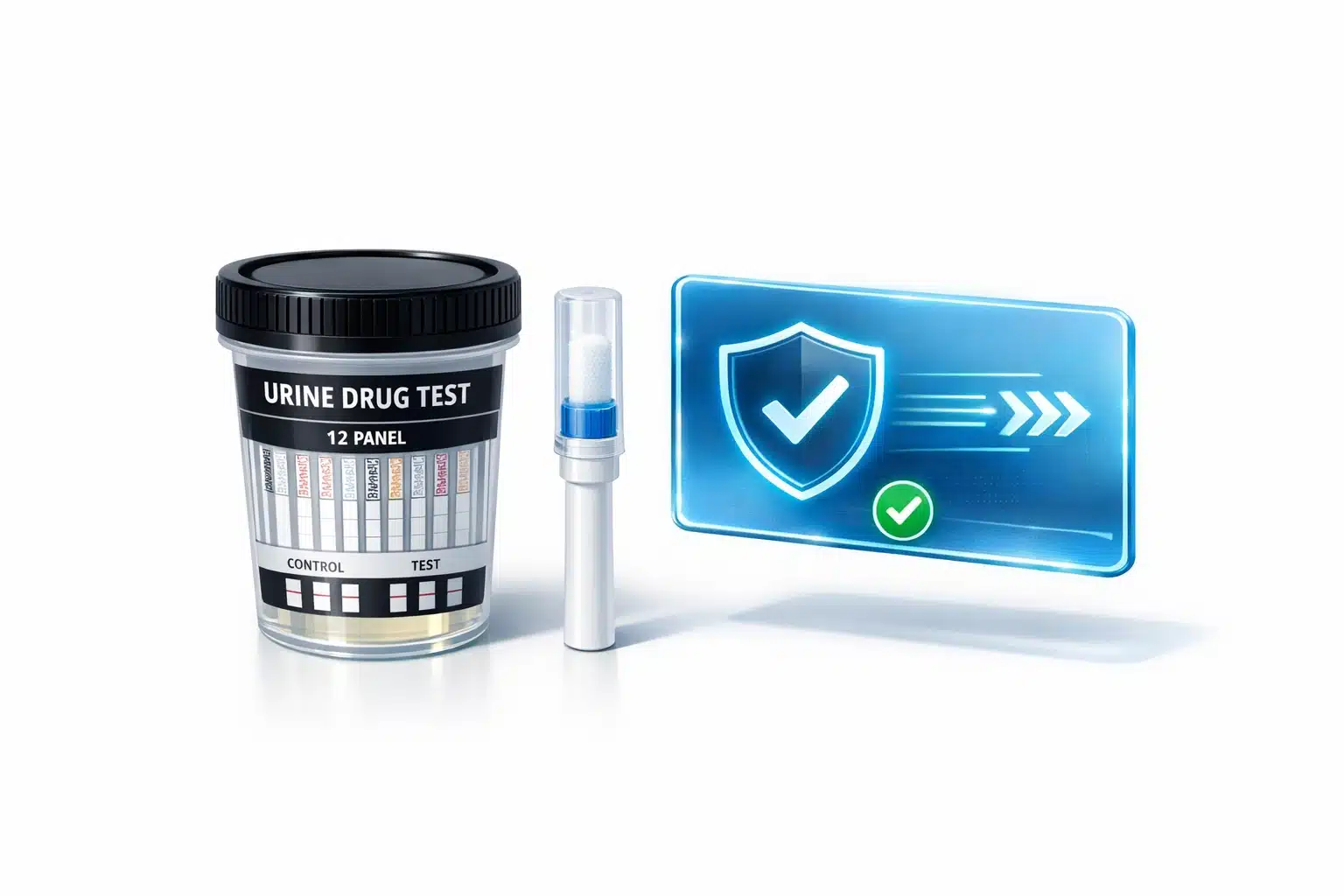
Random employee drug tests in 2024 revealed fentanyl positivity rates 707% higher than in pre-employment screens. This jarring statistic from the 2025 Quest Diagnostics Drug Testing Index confirms a critical shift for employers: the biggest substance abuse risks aren’t just walking in the door, they’re already on the payroll.
For decades, employee drug screening was a simple compliance checkbox. Today, it’s a strategic balancing act. You need to protect your workplace from impairment-related risks, but you also have to compete for top talent in a market where hiring delays can cost you the best candidates.
This guide moves beyond basic compliance to provide a strategic framework for your screening program. We’ll cover how to choose the right testing method, integrate screening into your hiring workflow, and manage the five core types of employee testing for maximum safety and efficiency.
What Is Employee Drug Screening?
Employee drug screening is the process of testing job applicants or employees for the presence of prohibited drugs or controlled substances as part of a workplace safety and compliance program. Depending on organisational policies and regulatory requirements, testing may occur before employment, during active employment, after workplace incidents, when reasonable suspicion exists, or before an employee returns to safety-sensitive duties.
A comprehensive employee drug screening program helps employers reduce workplace accidents, identify potential impairment risks, protect employees, and satisfy industry regulations. Screening programs are commonly used in transportation, healthcare, manufacturing, construction, logistics, education, government, and other industries where workplace safety is a critical operational priority.
Modern employee drug screening combines laboratory testing, documented collection procedures, chain of custody protocols, Medical Review Officer (MRO) oversight, and written workplace policies to ensure consistent and defensible testing practices.
Why Employee Drug Screening Matters
Drug screening supports far more than regulatory compliance. A structured workplace drug screening program contributes to safer work environments, reduces absenteeism, supports productivity, minimises workers’ compensation risks, and helps employers make informed hiring decisions.
For organisations operating safety-sensitive positions, identifying recent drug use may help reduce the likelihood of impairment-related incidents while reinforcing a culture of accountability. Even in non-regulated workplaces, consistent employee drug screening demonstrates a commitment to employee wellbeing and operational risk management.
As hiring competition increases, employers also benefit from integrating drug screening into efficient recruitment workflows that minimise delays without compromising workplace safety standards.
Choosing your tool: Oral fluid vs. urine testing
The first strategic decision is choosing the right tool for the job. Your choice between oral fluid and urine testing depends entirely on what you’re trying to detect: recent impairment or historical lifestyle.
- Urine Testing: The long-standing industry standard, urine tests detect drug metabolites that can remain in the system for days or even weeks. This makes them effective for identifying historical drug use patterns, which is often the focus of pre-employment screening.
- Oral Fluid (Saliva) Testing: A more modern approach, oral fluid testing detects the parent drug, indicating very recent use, often within the last 24-48 hours. This provides a much clearer window into potential on-the-job impairment.
Data from 2026 shows oral fluid testing is highly effective for post-hire screening, with positivity in random tests reaching 6.3%. Its ability to detect recent use makes it a powerful tool for maintaining a safe workplace, especially in safety-sensitive roles.

A quick evaluation view: oral fluid supports faster decisions and recent-use detection, while urine emphasizes historical use. Choose based on role risk and hiring velocity goals.
For many organizations, the optimal strategy is a hybrid approach: using reliable urine tests for pre-employment checks and fast, impairment-focused oral swabs for post-hire scenarios like random or post-accident testing.
Choosing the Right Drug Testing Method
No single testing method is appropriate for every workplace. Organisations should evaluate the nature of each position, applicable regulations, workplace hazards, hiring volume, and testing objectives before selecting a screening methodology.
Employers seeking to identify recent impairment often favour oral fluid testing for post-accident, reasonable suspicion, and random screening. Conversely, organisations focused on identifying historical drug use during recruitment frequently continue using laboratory-based urine testing for pre-employment screening. Many employers achieve the greatest flexibility by combining both testing methods within a comprehensive employee drug screening program.
Integrating screening into your talent acquisition workflow
The biggest frustration for hiring managers isn’t the test itself; it’s the friction it adds to the hiring process. When candidates have to find an off-site lab, schedule an appointment, and wait for results, you create a 48-hour (or longer) delay where they can accept a competing offer. This is where your program can become a competitive advantage.
By integrating your screening process directly into your Applicant Tracking System (ATS), you transform a logistical hurdle into a smooth, measurable step. This approach allows you to:
- Reduce Time-to-Hire: Trigger screening requests automatically once a conditional offer is accepted.
- Improve Candidate Experience: Provide clear, immediate instructions and remove logistical guesswork for the applicant.
- Minimize Drop-Off: A faster, more professional process reduces the chances of candidate “ghosting.”
To make this work, you need a partner that provides accessible and affordable drug testing supplies that can be used on-site or seamlessly coordinated with your hiring stages.

When screening is embedded in the ATS, ordering, scheduling, and result routing become a measurable workflow—helping teams shorten time-to-start and reduce candidate ghosting.
The five pillars of a comprehensive screening program
A robust program uses different types of testing to address risks at every stage of the employee lifecycle.
1. Pre-employment testing
This is your baseline filter. The goal is to ensure candidates meet the company’s substance-free workplace policy before they are hired. The key here is speed and candidate experience. Slow, clunky processes are a major vulnerability.
2. Random testing
This is your most effective deterrent. The data on fentanyl proves that pre-employment screening alone is not enough. A truly random testing pool ensures that safety standards are maintained continuously, not just at the point of hire.
3. Post-accident testing
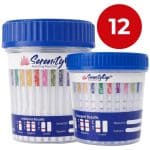
When an incident occurs, you need a clear, defensible protocol. For DOT-regulated employers, the rules are strict: an alcohol test is required within 8 hours, and a drug test within 32 hours (49 CFR 382.303). For non-regulated employers, these timelines serve as a best practice. Your supervisors must know precisely what to document and when to initiate the test. Having reliable 12-panel drug test cups on hand can be critical for meeting these windows.

A supervisor-friendly playbook for the first hour after an incident—what to do, what to document, and how to meet the key testing windows with confidence.
4. Reasonable suspicion testing
This is the most challenging type of testing to administer. It cannot be based on a hunch; it must be based on specific, contemporaneous, and articulable observations of an employee’s appearance, behavior, speech, or body odors. Success hinges on two things:
- Robust Supervisor Training: Managers need training to recognize the signs of impairment and, just as importantly, how to approach the conversation without escalating the situation.
- Consistent Documentation: Every observation must be documented on a standardized form before a test is requested. This protects the company and ensures the employee is treated fairly.

A practical supervisor aid: what to observe, how to speak calmly, and how to escalate consistently—supporting fairness, safety, and defensible documentation.
5. Return-to-duty testing
For employees who have previously violated a drug and alcohol policy, the return-to-duty test is a mandatory step before they can resume safety-sensitive duties. As outlined in DOT 49 CFR Part 40, this test must be conducted under direct observation and is followed by a series of unannounced follow-up tests.
Building an Employee Drug Screening Policy
Every successful employee drug screening program begins with a clearly written policy. The policy should define who is subject to testing, the circumstances under which testing may occur, the substances included in the testing panel, confidentiality procedures, employee consent requirements, and the consequences of policy violations.
Employers should also address state-specific employment laws, collective bargaining agreements where applicable, disability accommodation requirements, and privacy obligations. Maintaining consistent application of the policy across all employees helps reduce legal risk while promoting fairness throughout the organisation.
Policies should be reviewed regularly to reflect evolving workplace regulations, emerging drug trends, advances in testing technology, and changes to organisational operations.
The Role of the Medical Review Officer (MRO)
A Medical Review Officer (MRO) is a licensed physician responsible for reviewing laboratory-confirmed non-negative drug test results before they are reported to an employer. The MRO evaluates whether a legitimate medical explanation, such as a lawfully prescribed medication, accounts for the laboratory findings.
This independent medical review protects both employers and employees by ensuring employment decisions are based on scientifically verified results rather than preliminary screening alone. Incorporating MRO review into an employee drug screening program improves accuracy while reducing the likelihood of false-positive employment actions.
Laboratory Confirmation and Chain of Custody
Every professionally administered employee drug screening program should include documented chain of custody procedures from specimen collection through final laboratory reporting. Chain of custody establishes who handled the specimen at every stage, helping preserve specimen integrity and supporting legally defensible results.
Initial immunoassay screening provides rapid preliminary results, while any non-negative findings should be confirmed using highly specific laboratory technologies such as GC-MS or LC-MS/MS. These confirmation methods distinguish compounds with greater precision and are widely recognised as the standard for employment-related drug testing.
Selecting laboratories that follow recognised quality standards and maintain rigorous quality control procedures further strengthens the reliability of your workplace drug screening program.
DOT and Non-DOT Employee Drug Screening
Although many employee drug screening principles remain consistent across industries, DOT-regulated employers must comply with detailed federal testing requirements governing specimen collection, laboratory analysis, Medical Review Officer review, reporting, and record retention.
Non-DOT employers generally have greater flexibility in designing workplace drug testing programs but should still establish consistent written procedures that comply with applicable state employment laws and industry best practices. Aligning non-DOT policies with recognised testing standards often improves program consistency while simplifying supervisor training.
Navigating the marijuana paradox
With varying state laws, many employers are uncertain about testing for marijuana. The data provides a clear business case for maintaining it in your panel, especially for safety-sensitive roles. Post-accident marijuana positivity remains high at 7.3%, according to Quest Diagnostics. While legalization changes social norms, it doesn’t change the science of impairment. A clear, consistently enforced policy is your best defense against liability.
Choosing the Right Drug Testing Supplies
Reliable testing equipment forms the foundation of every successful employee drug screening program. Selecting FDA-cleared or laboratory-validated testing devices helps improve result accuracy while reducing unnecessary delays caused by invalid specimens or collection errors.
Employers commonly utilise urine drug test cups, multi-panel dip cards, oral fluid swabs, specimen collection kits, adulteration test strips, and chain of custody forms depending on the testing scenario. Selecting the appropriate device should align with workplace policies, testing objectives, specimen type, and applicable regulatory requirements.
Proper storage, inventory management, expiration date monitoring, and staff training also contribute to consistent testing performance. Working with a trusted supplier helps ensure testing materials remain available whenever pre-employment, random, reasonable suspicion, post-accident, or return-to-duty testing becomes necessary.
Common Employee Drug Screening Mistakes
Even well-designed employee drug screening programs can become ineffective if policies are applied inconsistently or administrative procedures are overlooked. Avoiding several common mistakes can significantly improve both compliance and workplace safety outcomes.
One frequent mistake is relying exclusively on pre-employment testing while neglecting random or reasonable suspicion testing. As workplace drug trends continue to evolve, ongoing screening often provides greater protection than hiring-stage testing alone.
Another common issue involves outdated workplace policies that no longer reflect changing state laws, emerging substances, or advances in testing technology. Employers should periodically review their policies to ensure they remain legally compliant and operationally effective.
Insufficient supervisor training also increases organisational risk. Managers responsible for recognising impairment should understand documentation requirements, appropriate communication techniques, and company procedures before requesting reasonable suspicion testing.
Finally, failing to maintain complete chain of custody records, laboratory documentation, and Medical Review Officer reports may compromise the integrity of an employee drug screening program and create unnecessary legal challenges.
From compliance hurdle to strategic asset
A modern drug screening program is no longer just about meeting regulations. It’s an integrated part of your talent management and risk mitigation strategy. By choosing the right testing methods for each scenario, embedding the process into your hiring technology, and training your leaders to act confidently, you can build a safer workplace without sacrificing your ability to attract and hire the best people.
Ready to equip your program with reliable, FDA-approved testing supplies? Explore our full range of urine analysis cups, dip cards, and oral swabs designed for accuracy and ease of use.