Beyond the Box: A Logistics Framework for High-Volume Clinical Drug Testing

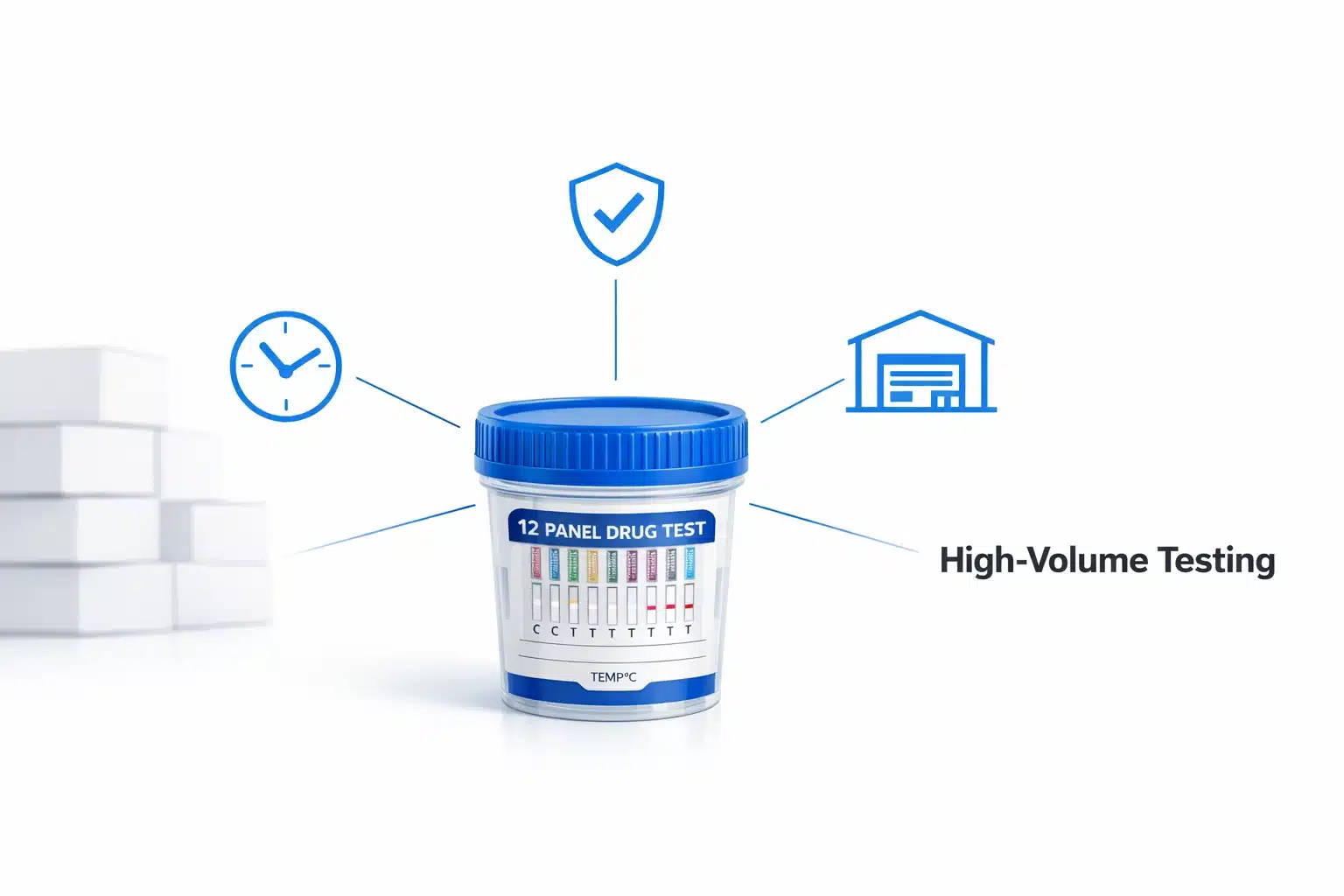
For clinical directors and operations managers, administrative burdens are the primary constraint in high-volume drug testing environments. While the unit price of a test cup is an easy number to focus on, the real costs are hidden in inefficient workflows, staff time, and supply chain friction. As positivity rates reach a 20-year high of 4.6%, the pressure to run an efficient, scalable, and compliant testing program has never been greater.
Focusing solely on the price-per-cup overlooks the larger operational picture. The key to a successful program isn’t just buying cheaper supplies; it’s building a smarter logistics framework that minimizes the total cost per test.
The Real Cost of Drug Testing: Moving from Unit Price to Total Workflow Cost
The sticker price of a drug test, whether it’s $1.69 or $3.00, is only one piece of the financial puzzle. High-volume facilities at rehabilitation centers and multi-location clinics often find their budgets strained by hidden operational expenses. The Total Cost of Ownership (TCO) includes several factors:
- Labor Costs: The time your clinical staff spends administering tests, managing chain-of-custody paperwork, and tracking results.
- Administrative Friction: The hours dedicated to reordering supplies, managing inventory across different sites, and correcting documentation errors.
- Waste and Spoilage: The cost of expired tests due to poor inventory rotation or supplies damaged in cluttered storage.
- Compliance Risk: The financial and reputational cost of a failed audit due to inconsistent procedures or non-compliant supplies.
When you analyze the entire workflow, the few cents saved on a cheaper, less reliable test are quickly erased by hours of lost productivity.

Unit price doesn’t equal total cost. This comparison highlights where high-volume clinics lose money—labor time, paperwork, and waste—so you can choose the right testing model.
Supply Chain Mastery for Multi-Location Clinics
Managing supplies for a single facility is challenging enough. For organizations with multiple clinics, the complexity multiplies. Without a centralized strategy, you face a constant cycle of stockouts at one location and overstocked, expiring inventory at another. This leads to expensive rush shipping fees and unnecessary waste.
A robust supply chain for testing supplies is built on two principles: visibility and rotation.
- Centralized Visibility: Your operations team needs a clear view of inventory levels at every location. This allows you to reallocate stock as needed and make data-driven decisions about when and what to order, preventing reactive purchasing.
- First-In, First-Out (FIFO) Rotation: Drug tests have a shelf life. Implementing a strict FIFO system ensures that older stock is used first, minimizing the risk of having to dispose of expired products. This simple process is critical for clinics that take advantage of bulk purchasing options to lower unit costs.
Adopting a proactive inventory model transforms your supply chain from a recurring problem into a strategic asset.

High-volume programs don’t fail on test selection—they fail on stockouts and expiry. This framework shows how centralized visibility and FIFO reduce rush orders and write-offs.
On-Site Workflow Optimization: The 10-Minute Testing Station
The efficiency of your on-site testing process directly impacts staff workload and patient experience. A disorganized workflow creates bottlenecks, increases wait times, and elevates the risk of human error. The goal is to standardize the process so it becomes routine, repeatable, and fast.
Industry analysis shows that optimizing on-site collection can be transformative. For example, some point-of-care methods like oral swabs can reduce total collection and processing time from a couple of hours to under 10 minutes per person. While every testing method is different, the underlying principle is the same: process discipline saves time.
You can design a high-throughput testing station by defining clear roles and creating a logical flow:
- Station 1: Intake & Verification: Patient check-in and identity confirmation.
- Station 2: Collection: A private, secure area for sample collection, equipped with all necessary supplies like multi-panel urine cups.
- Station 3: Processing & Documentation: A dedicated space for a staff member to read results, complete the chain-of-custody form, and seal the sample if it requires confirmation.
This division of labor prevents one person from becoming a bottleneck and ensures each step is handled with focus and care.

A well-designed station cuts time per test and reduces bottlenecks. Use this layout to standardize roles, speed throughput, and shrink paperwork at scale.
Building a Regulatory and Compliance Shield
In any clinical setting, test results must be legally and medically defensible. This requires a foundation of regulatory compliance, starting with the supplies you use. Using CLIA-waived and FDA-approved products is non-negotiable. It is the first line of defense in ensuring accuracy and protecting your organization from liability.
Beyond the products themselves, a compliance shield requires operational consistency. Every location must follow the same Standard Operating Procedures (SOPs) for collection, documentation, and result management. A documented chain-of-custody is critical for proving that a sample was handled correctly from collection to final result.
Modernizing this process with digital tools can eliminate the administrative burden of paper forms, reducing errors and making records easily auditable. True compliance is achieved when reliable products are paired with a repeatable, documented workflow across your entire organization.

Trust comes from repeatable compliance. This visual summarizes the minimum governance structure—regulatory fit, documented chain-of-custody, and standardized SOPs across sites.
Partnering for Logistical Excellence
Reducing the true cost of your drug testing program requires looking beyond the price tag on a box of supplies. It demands a partner who understands the operational complexities of a high-volume clinical environment.
At 12 Panel Now, we know that reliability, efficiency, and unwavering support are what truly matter. As a family-owned business, we are committed to providing high-quality, FDA-approved testing solutions backed by the logistical expertise to help you streamline your operations.
If you’re ready to build a more efficient and cost-effective testing program, our specialists are here to help you design a supply plan that fits the unique needs of your facilities.
Explore our full range of CLIA-waived drug testing supplies or contact us to discuss your high-volume logistical needs.